A new cat’s first room should make essential resources easy to find and offer somewhere to retreat. Set it up before arrival with food, water, litter, scratching, and resting options. Begin with a manageable space rather than expecting immediate exploration of the whole home.
Choose a room your household can manage
Look for a quiet space with a reliable door and practical cleaning access. Consider foot traffic, other pets, and whether people can avoid disturbing every rest period. A room that becomes a busy storage area during the day may be less suitable than it first appears.
Check windows, cables, small objects, and unstable furniture. Move household chemicals and other unsuitable items out of reach. The room should make supervision straightforward without requiring the cat to remain in a small enclosed container.
Place resources as separate useful stations
- Put food and water where you can check and clean them.
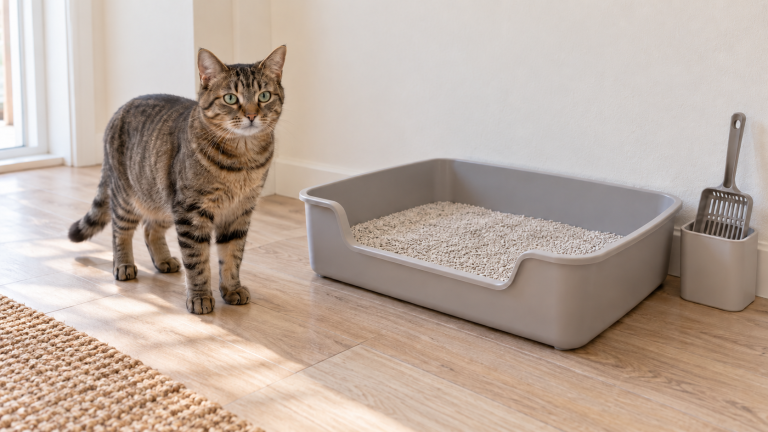
- Keep the litter area separate from feeding.
- Offer a comfortable bed and an accessible retreat.
- Provide an appropriate stable scratching surface.
- Leave clear routes between resources.
Use familiar food and supplies when possible. Avoid making several abrupt changes on arrival day. Our litter-box guide helps assess placement and access.
Let arrival remain simple
Place the carrier securely in the room and allow voluntary exit when appropriate. Stay calm and keep the approach clear. Do not pull the cat out to show them every item.
Offer your presence without insisting on contact. A cat may investigate slowly or choose a retreat first. Set expectations with visitors so the first room does not become a viewing area for the new arrival.

Create a care checklist
Record which resources were checked, food and water offered, and any changes you should discuss with the veterinary team. Agree on responsibility so several people do not independently change the setup.
If other pets live in the home, plan separate access and gradual introductions. Use our cat-introduction overview and seek individualized guidance where necessary.
Expand access according to the cat
When the cat is using resources comfortably and the household can manage the next space, offer gradual exploration with a route back to the starting room. Do not remove the familiar refuge simply because you hoped the cat would settle quickly.
There is no fixed arrival-day deadline for using every room. Veterinary care and any concerning changes in eating or toileting remain separate priorities.
Sources and editorial notes
Preparation context: Cats Protection: bringing a new kitten home. The layout and care checklist are adaptable household suggestions, not a claim that one room arrangement suits every cat.
Featured image: Illustrative cardboard hideout, generated with AI; inspect materials and adapt the setup.