Cats bunny kick by gripping with their front paws and kicking with their hind legs, often during toy play that uses hunting movements. They can also kick when unwanted contact makes them defend themselves. Cats Protection describes the play pattern; the setting and your cat’s whole body matter more than the movement alone.
The useful question is what your cat is kicking and whether everyone can stop. A toy wrestle calls for a different response from a trapped arm or a frightened kitten.
Why do cats bunny kick toys and hands?
A soft toy can give a cat something to catch, grip, and kick during play. A hand on the belly can create a different situation: the cat may want that contact to stop. Do not assume a rolling cat invited a belly rub, or that every kick means the same emotion.
Cats Protection’s guide to rolling over explains that an exposed belly is not an invitation to touch it. A cat may roll while greeting, stretching, or resting. Reaching toward that vulnerable area can lead to gripping, biting, and kicking.
Keep your hands outside the role of prey. Even if a kitten’s feet feel harmless now, using fingers or a moving hand as a toy sets up an awkward habit. Offer toys that separate your skin from the chase and catch.
A brief kick at a toy does not show that your cat is dangerous. Equally, do not call an upset cat playful just because the movement looks familiar. Notice tension, attempts to escape, and what happened immediately before the kick.
Match the response to the situation
Animalia’s decision table starts with the target and the cat’s ability to withdraw. These clues help you choose a safer response without claiming to know an exact motive.
| Situation | What to check | Your next step |
|---|---|---|
| Cat grips and kicks a soft toy | Toy condition and loose parts | Allow chosen play, then inspect the toy. |
| Cat grabs a hand during petting | Contact location, body tension, attempts to leave | Stop touching; give room instead of restarting the belly rub. |
| Cat catches moving feet or sleeves | Whether body movement has become a game | Pause the movement and offer a suitable toy from a distance. |
| Two cats wrestle | Whether both can leave and return voluntarily | Watch without reaching between them; interrupt calmly if one is trapped or distressed. |
| Kicking starts with a new sensitivity or injury | Other changes in movement or daily habits | Stop the activity and contact your veterinarian. |
Do not provoke another kick to confirm your theory. If you are unsure whether an interaction is welcome, create a pause and observe from outside reach. The safer choice is to allow more space.
How can you redirect bunny kicking safely?
Offer a sturdy, soft kicker toy that your cat can grasp while keeping your hand out of reach of the hind feet. Put it down or move it into the play area, then let the cat choose. Stop using hands, sleeves, and feet as things to chase, bite, or wrestle.
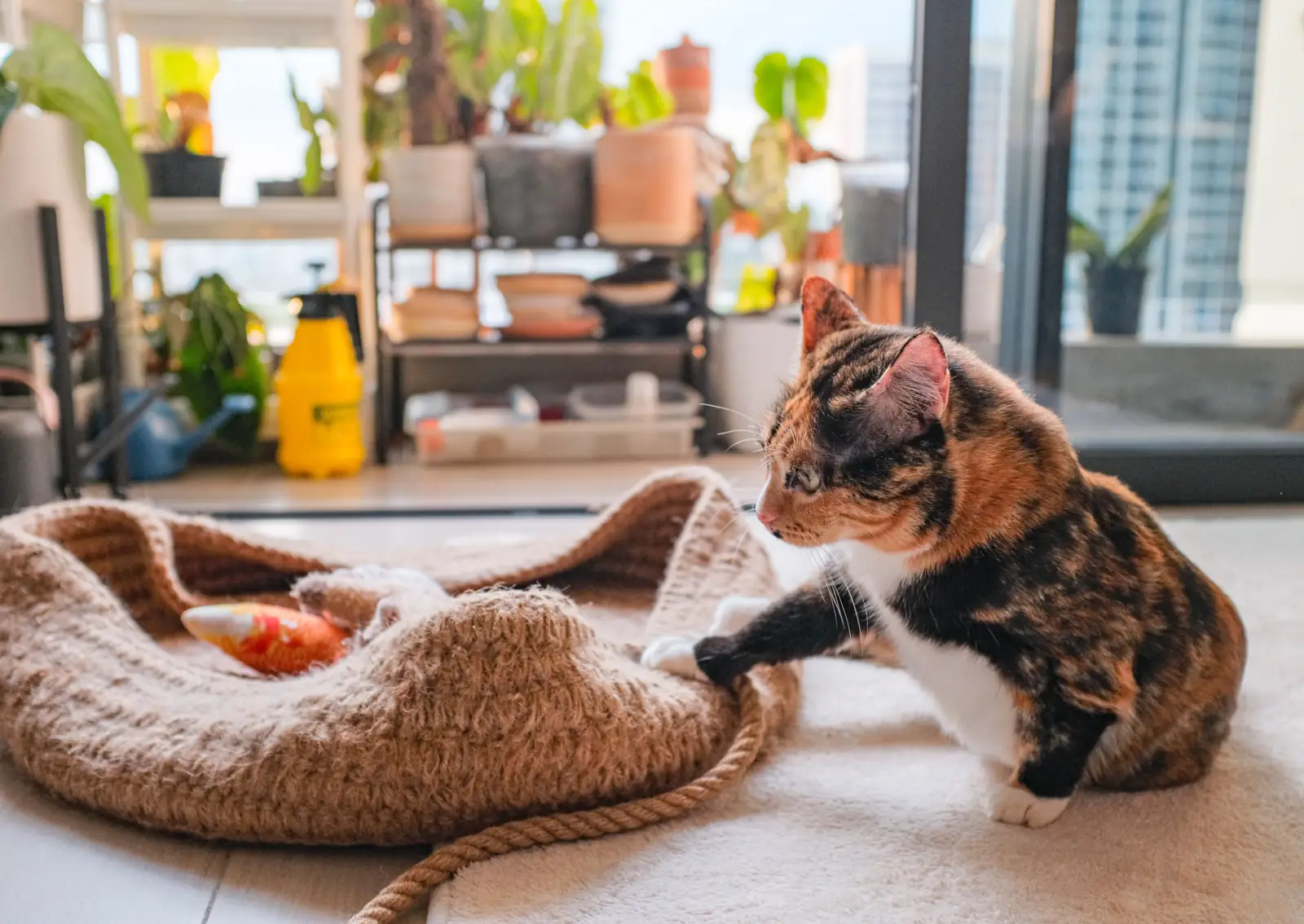
Cats Protection recommends kicker toys for the grasping and kicking part of play. Choose an intact toy without accessible strings or pieces your cat could swallow. Replace a damaged cover or exposed stuffing rather than waiting for the next session.
For chase play, a suitable wand can keep your body away from the catch. Let the cat catch the toy, and put the wand and cord away afterward. Our cat wand toy guide covers safety and fit; our daily cat play routine helps spread activity through the day.
End before play turns into unwanted contact. If the cat moves away, stiffens, or no longer engages comfortably, give them a break. More vigorous movement is not always the answer to rising arousal.
When your arm is already caught
Stop the belly rub or hand game. Avoid wrestling with the cat, shaking them off, shouting, or pulling sharply against the grip. Give the cat the chance to release and move away. If you cannot disengage safely, use help and a barrier rather than another bare hand in reach.
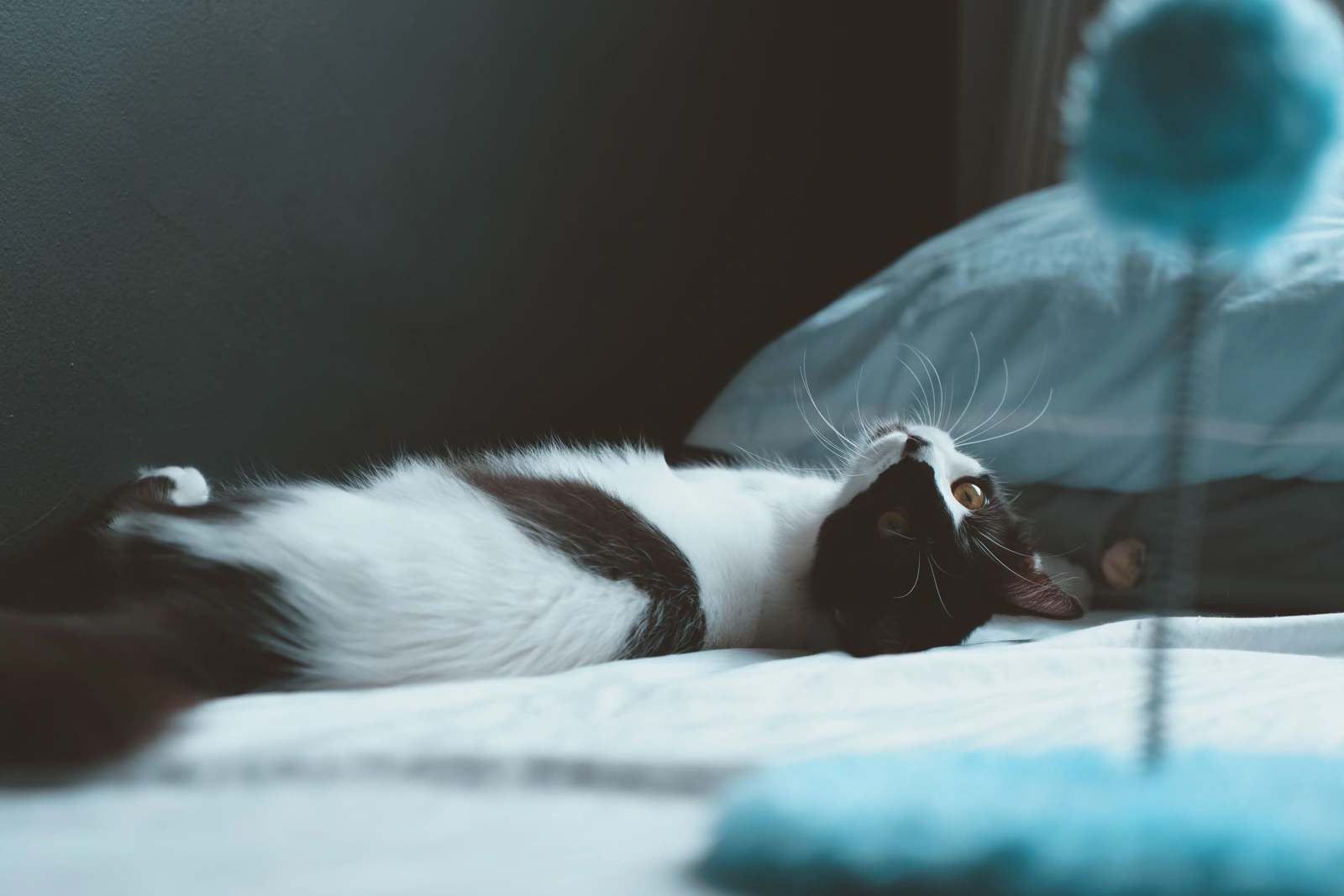
Once free, pause the interaction. Do not immediately put your hand back to see whether the cat has learned. Check whether your earlier contact ignored a turn away, tense posture, or an attempt to leave. Our petting with choice guide offers a less intrusive way to begin next time.
Prepare the toy before the next interaction rather than repeatedly presenting an arm and exchanging it after a bite. If injuries occur or you feel unable to handle the situation safely, contact your veterinarian and ask for qualified behavior support. Seek appropriate medical advice for an injured person as well.
Animalia’s aim is to change the setup so everyone has room and an exit. Restraining a cat or punishing the kick can make a difficult interaction more frightening.
When does kicking between cats need intervention?
Watch the whole encounter when cats wrestle. Can each cat leave? Does one repeatedly pursue while the other hides, vocalizes, or tries to escape? Kicking alone cannot show whether both cats are comfortable. Avoid putting your hands between them; use distance and a safe barrier if you need to separate them.
If tension repeats, arrange separate access to resting places and other resources while seeking advice. Do not force the cats together to “work it out.” Our gradual cat introductions guide explains how choice and separation support safer relationships.
A cat that suddenly resists previously comfortable touch, changes movement, hides, or loses interest in usual play needs veterinary attention. VCA’s play guidance supports toy-based play and veterinary review of unusual behavior. Explain when the change began and what you were doing before it, without recreating the incident.
Frequently asked questions
Is bunny kicking always aggression?
No. Cats can grip and kick a toy during play, and similar movements can appear when they want unwanted contact to stop. Look at the target, the preceding interaction, and the cat’s ability to move away. Do not label your cat from the movement alone. If skin is the target, stop the interaction and change the setup for future play.
Why does my cat kick when I rub their belly?
Showing the belly does not necessarily invite touching it. A cat may roll over while resting or greeting, then grip and kick when a hand enters that space. Stop the belly rub and let the cat leave. Next time, offer contact in an area the cat chooses and pause often, rather than trying to make the cat tolerate belly handling.
Should I let my kitten wrestle with my hand?
Use suitable toys instead of making your hand the object to catch and bite. A small kitten’s game can become painful as the cat grows, so begin with clear play boundaries. Offer an intact soft toy for wrestling and a safely handled wand for chasing. If your kitten disengages or appears tense, let the game end rather than pushing for more.
Can my cat have a kicker toy without catnip?
Yes. The useful feature is a toy that allows chosen gripping and kicking while keeping hands away, rather than a required scent ingredient. Watch your cat’s interest and inspect the toy for loose parts or damage. Some cats prefer other kinds of play. Offer a different safe option if the kicker is ignored, and avoid forcing the toy against the cat.
When should kicking lead to a vet call?
Call when the behavior changes suddenly, occurs with a new reaction to touch, causes repeated injuries, or accompanies changes in movement, appetite, hiding, or play. Describe the setting and other signs instead of treating the kick as a diagnosis. If conflict between cats continues, ask your veterinarian about qualified behavior support and keep interactions safe while you arrange help.
Make the next game easier to leave
Put a suitable toy within reach before the game, keep skin out of play, and let your cat stop. Choose the response that fits the setting, then find related practical help in Animalia’s cat care collection.
Sources and editorial notes
- Cats Protection: boredom busters and kicker toys
- Cats Protection: why cats roll on their backs
- VCA: cat behavior and play toys
The situation table is an editorial safety aid. Kicking does not establish a specific emotion or a diagnosis. No behavior plan here requires forced contact or punishment.
Animalia Editorial. Sources last reviewed October 22, 2026. Editorial Policy.
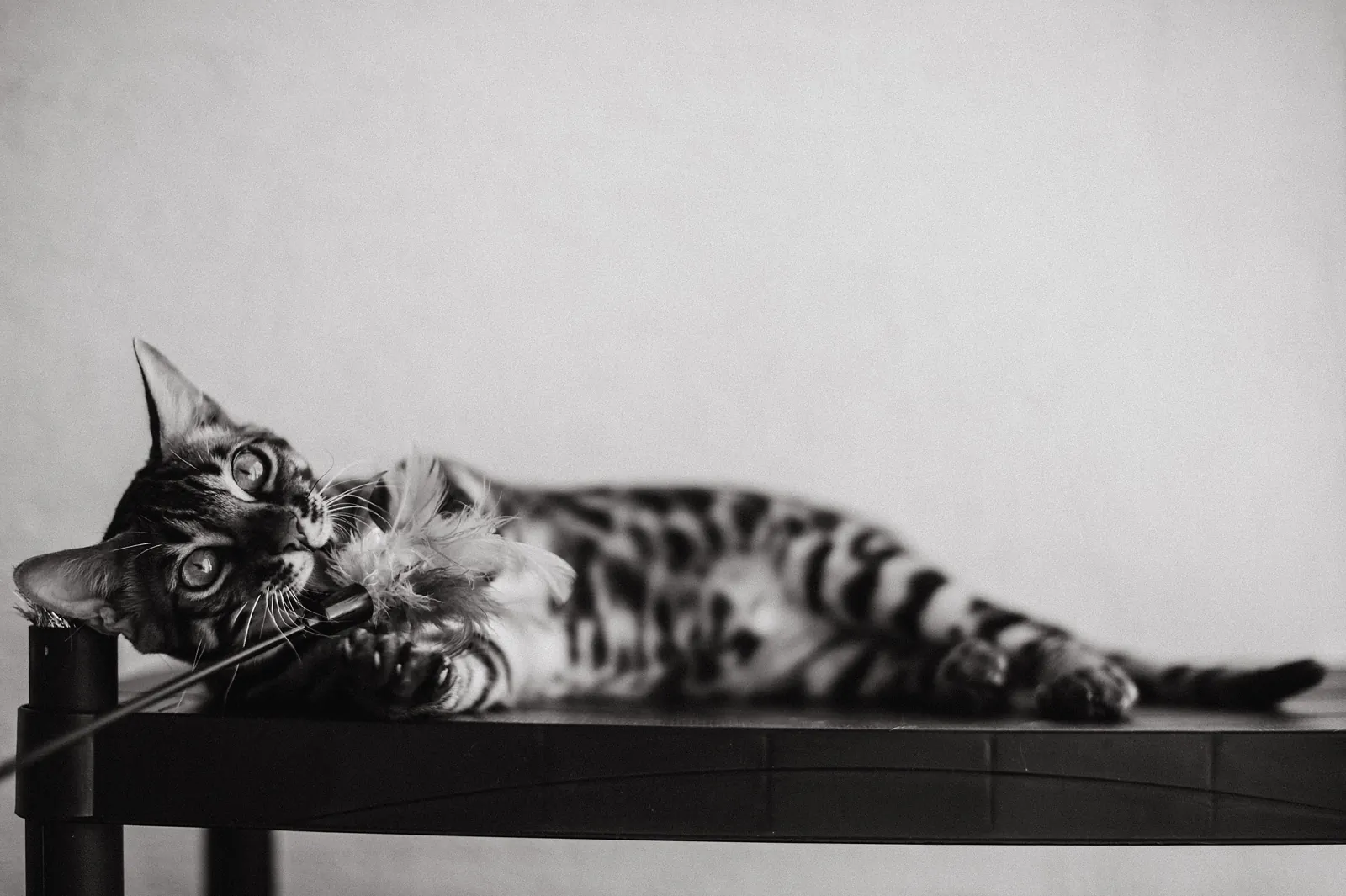
Featured photo: A Bengal cat holds a feather toy while lying on its side. This still photo illustrates toy play, not a confirmed hind-leg kick. Photo: Helena Jankovičová Kováčová / Pexels.
Prepared with AI assistance and reviewed against the sources above.