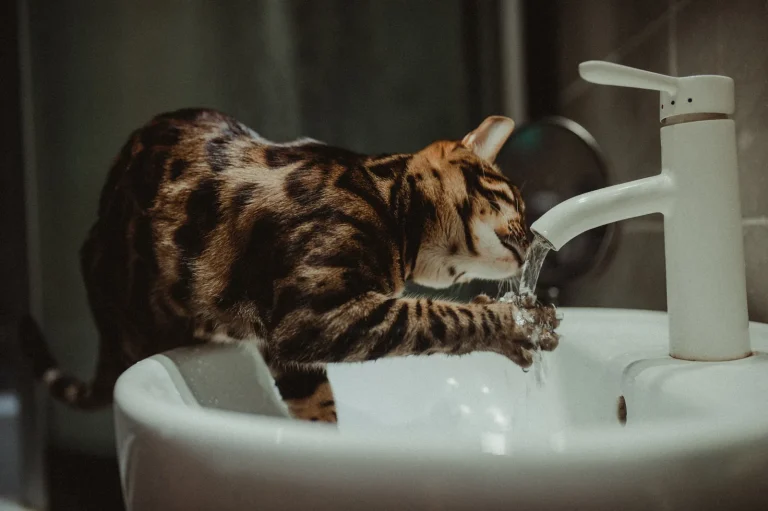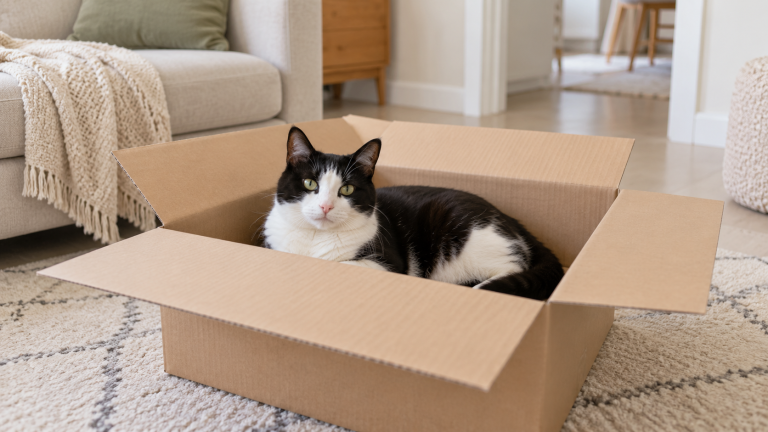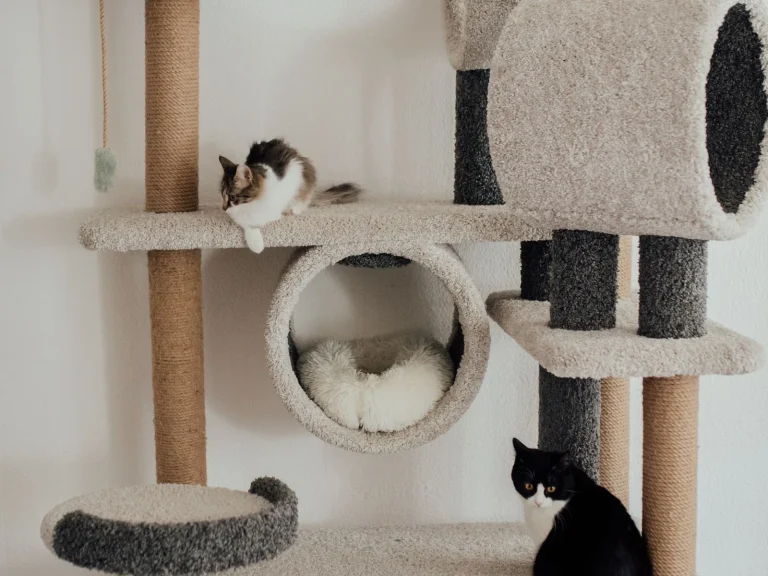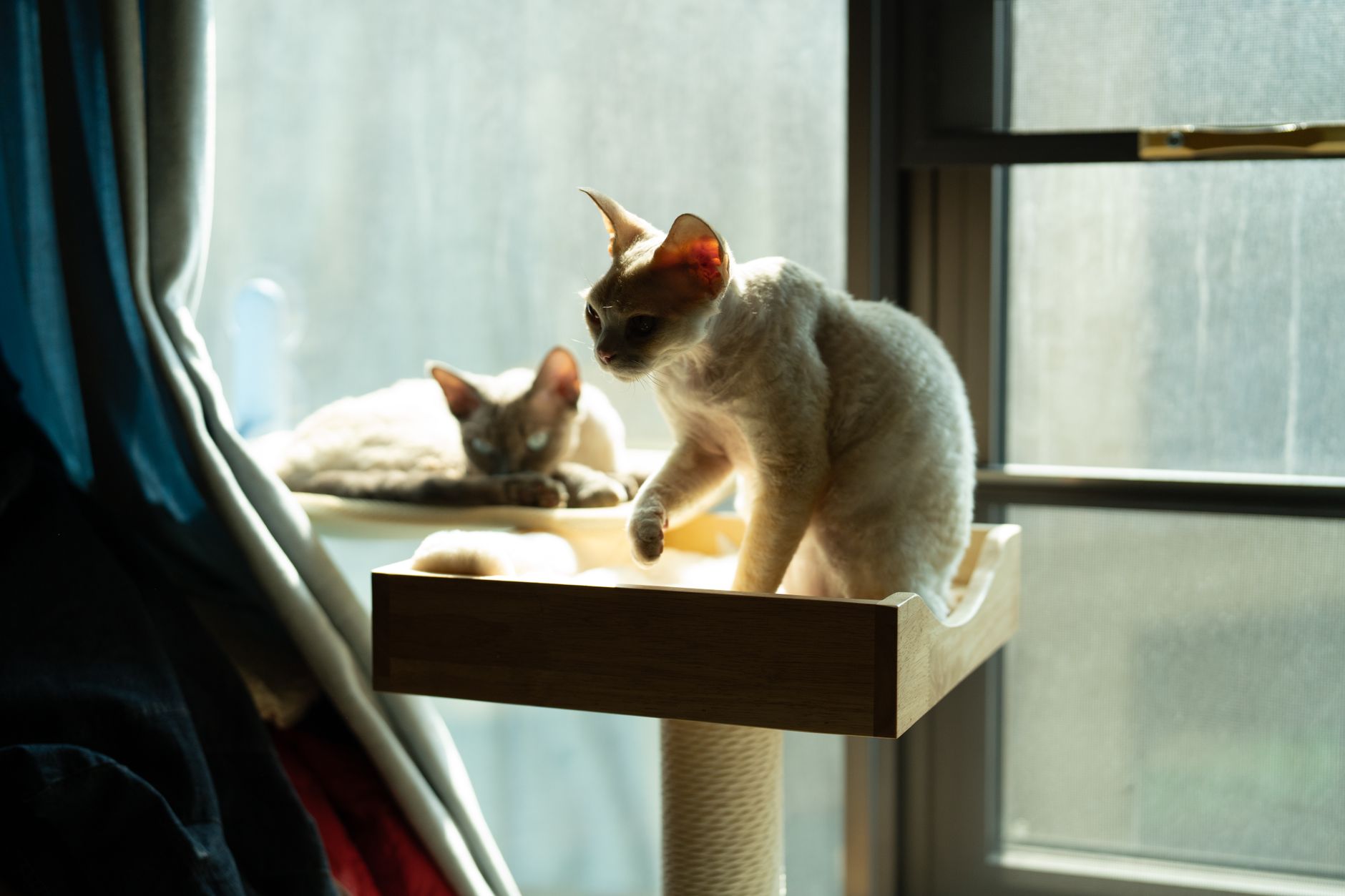
Indoor cat enrichment gives your cat things to chase, explore, scratch, and rest on. Start with a cardboard hideout, an easy food hunt, and short play sessions. In a small apartment, use stable perches and a few toys you can put away afterward.
You do not need to buy a room full of pet furniture. Choose one activity, watch your cat’s response, and make the next session easier or harder as needed. This guide covers everyday enrichment, not treatment for a medical or behavior problem. Ask your veterinarian about sudden changes in appetite, movement, or behavior.
In this guide: Choose a starting point · Seven enrichment ideas · A small-apartment routine · Common questions
What does a good indoor enrichment setup include?
Think about activities and choices, rather than the number of toys you own. A perch, a hiding spot, and a place to scratch serve different purposes. Keep everyday essentials available while adding play around them. Enrichment should never make access to food, water, or the litter box harder.
The Feline Veterinary Medical Association’s indoor-lifestyle guidance includes safe resting areas, hunting and foraging opportunities, play, and vertical space among an indoor cat’s needs. Use that as a broad checklist, then adapt your home to the cat who lives there.
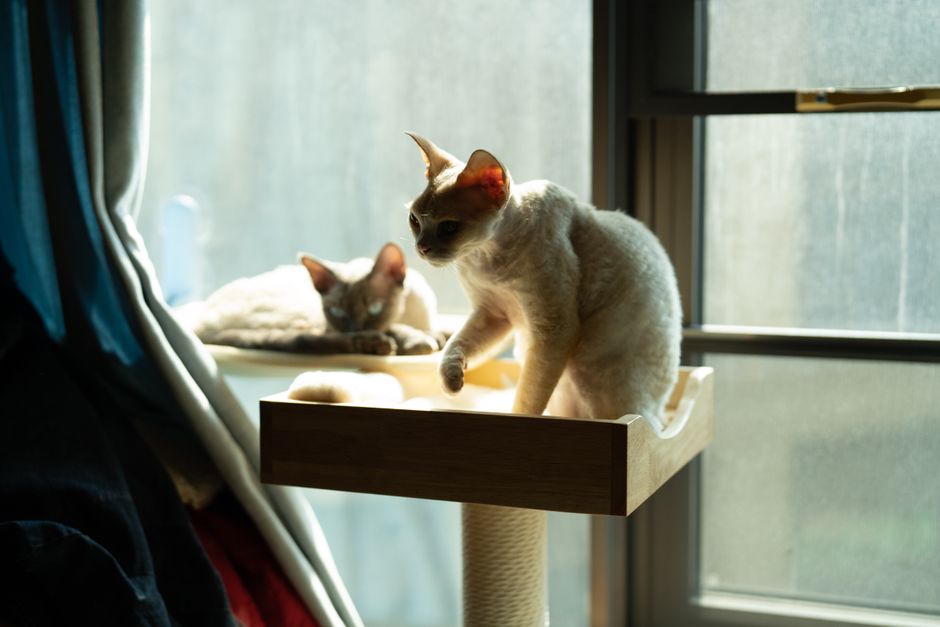
7 indoor cat enrichment ideas to try at home
1. Turn a cardboard box into a quiet hideout
Choose a clean box large enough for your cat to enter and turn around. Remove staples, loose tape, and packing material. Place it on its side in a quiet corner, with the opening clear. A familiar blanket can make the floor comfortable.
Let your cat investigate without being picked up and placed inside. You could set the box near a favorite resting area first, then try another location if it gets ignored. Keep it away from door swings and busy walkways. Replace it when it becomes damp or heavily chewed.
2. Make an easy food-search game
Start with a few pieces of your cat’s usual dry food in an open, shallow tray. Once your cat finds them, spread a small portion across two visible spots nearby. The goal is an easy search, not a test your cat has to pass before eating.
Use food from the normal daily allowance. Keep usual meals available while introducing the game, and do not change a prescribed diet without your veterinarian’s guidance. The association’s feline feeding guidance discusses puzzle and forage feeding as part of a plan tailored to each household.
3. Offer a simple supervised puzzle
For a first puzzle, place a little dry food in a clean, shallow container that your cat can reach into. Stay nearby and check that the edges are smooth. Avoid sealed compartments, tiny loose parts, and materials your cat tries to eat.
If your cat walks away or seems frustrated, uncover the food or return to the open tray. DIY cat enrichment ideas should be easy to adjust. A washable commercial feeder may be more practical if your cat destroys cardboard, but you do not need one to begin.
4. Use a wand toy your cat can catch
Move a purpose-made wand toy along the floor, pause, and let your cat approach. Try a short movement behind a cushion rather than waving it in your cat’s face. Allow catches during the game. Stop while your cat is still comfortable, and let them choose whether to join in again.
Ohio State University’s Indoor Pet Initiative describes toys that support chasing and catching, and recommends variety. Match the pace to your cat rather than aiming for a fixed play quota. Put wand toys away after supervised use.
5. Add a stable lookout
Small apartment cat trees can add a perch when floor space is limited. Before choosing one, measure the available area, check the weight rating, and follow the installation instructions. Keep the route up and down clear. Do not improvise a high shelf from furniture that can tip.
A view through a closed window may be enough to make a resting spot interesting. Watch how your cat responds to outdoor activity. If the view seems upsetting, move the perch or cover part of the window. For a cat who avoids climbing, offer a comfortable lower lookout instead.
If you are considering a homemade lookout, see our low DIY cat perch planning guide. It includes an illustrative cut list, assembly steps, and checks to discuss with a skilled woodworker before use.
6. Place a scratcher where it will be used
Offer a stable scratching surface near a spot your cat already visits. Some cats prefer an upright post; others choose a flat pad. Try the orientation your cat appears to like, and check that the surface will not slide or wobble.
Leave room for your cat to stretch and approach it. If a scratcher sits untouched behind a door, move it somewhere accessible before buying another one. In a shared home, spread resting and scratching options across the space rather than putting every resource in one crowded corner.
7. Rotate a small selection of safe toys
Set out a few sturdy toys and store the rest out of reach. Change the selection when interest fades, while leaving a favorite comfort toy available. Keep a small note of which toys your cat approaches, carries, or ignores. That helps you choose the next activity without guessing.
Check toys before each session. Remove damaged items and anything with parts your cat can chew off. VCA’s veterinary safety guidance explains the hazards of swallowed string and ribbon. Do not leave these items available for unsupervised play; contact a veterinarian if you suspect an ingestion.
How can you fit enrichment into a small apartment?
Keep the setup simple enough to use on an ordinary day. For example, offer a food-search game near breakfast, leave the hideout and scratcher available, then have a short wand session when you are home. This is a sample routine, not a required schedule.
- Start small: try one new activity at a time.
- Watch the response: note whether your cat joins in, ignores it, or leaves.
- Adjust: change the location, pace, or difficulty before adding more equipment.
- Finish safely: clear food leftovers and put supervised toys away.
Keep pathways, litter-box access, and resting places clear. In a home with more than one cat, let each cat take part without being cornered by another. A quiet exit from a game is useful information, not a reason to force participation.
Common questions about indoor cat enrichment
How long should a play session last?
Use your cat’s response as the guide. Try a short session and stop if your cat disengages or seems uncomfortable. There is no single duration that suits every cat. You can offer another opportunity later rather than extending a game your cat no longer wants.
What if my cat ignores the new toy?
Change one detail, such as how it moves or where you offer it. Leave time for your cat to investigate. If a normally playful cat suddenly stops taking part, ask your veterinarian rather than assuming boredom.
Can I leave homemade puzzles out when I go to work?
Supervise a new homemade puzzle first. Put it away if your cat tears pieces off or tries to swallow them. Follow the maker’s instructions for commercial toys, and choose unattended options based on how your own cat uses them.
Your next step: choose one of these seven ideas and try it today. Browse Animalia’s Cat Care guides for related topics. Our editorial policy explains how we use sources and AI assistance.
Build your cat-friendly home
Explore our detailed guides to choosing a cat tree for a small apartment, beginner DIY food puzzles, scratching-post placement, and apartment litter-box setup.
More practical cat-care guides
Choose the guide that fits your household and the next manageable step.
- How to Build a Daily Cat Play Routine
- How to Choose and Use a Cat Wand Toy
- Cat Hideout Ideas: Give Your Cat a Place to Retreat
- How to Plan a Comfortable Cat Window Perch
- How to Rotate Cat Toys Without Buying More
- How to Choose a Cat Puzzle Feeder
- A Practical Resource Layout for a Multi-Cat Home
- Introducing Cats: Plan a Gradual Start
- Cat Carrier Training: Make the Carrier Familiar
- Cat Sitter Instructions: A Simple Care Note Template
- New Cat Room Setup: A Calm First Space
- How to Choose a Cat Bed Your Cat Can Use Comfortably
- Cardboard Box Games for Cats: 3 Simple Setups
- How to Introduce a Grooming Brush to Your Cat
- A Simple Litter Box Cleaning Routine
- Cat Travel Packing Checklist: Organize the Essentials
- Cat Resources for a Rental Home: Plan Before You Buy
- How to Pet a Cat While Giving Them a Choice
- Non-Food Cat Enrichment: 5 Ways to Add Choice
- A Simple Cat Care Log for Shared Households