A shared cat care log should answer three questions: what was done, who did it, and what needs attention next. Keep it short enough that caregivers will actually use it. Record established care tasks rather than inventing scores for the cat’s behavior or health.
Choose the few fields that matter
- Date and caregiver.
- Normal feeding tasks completed.
- Water checked.
- Litter boxes checked and cleaned.
- Optional familiar play offered.
- Supplies needing replacement.
- Changes or questions to report.
Separate instructions from the daily log. The instructions explain the normal plan; the log records completion. Mixing them makes it easy to mistake yesterday’s note for a permanent routine change.
Use clear names in multi-cat homes
Identify cats and resource locations consistently. “Blue bowl in kitchen” is more useful than “the usual one” when a sitter is learning the home. Add a simple map if several trays or feeding areas exist.
Do not assume one cat eating means every cat has eaten. Where individual care requirements differ, follow the veterinary team’s plan and arrange appropriate observation.
Keep observations factual
Write what you saw rather than a diagnosis. For example, “did not finish the usual meal” communicates more clearly than “being fussy.” Include time and context when useful, then follow the agreed contact plan.
The log is not a reason to delay veterinary advice about reduced eating, toileting concerns, or discomfort. Medical tracking instructions should come from the veterinary team.
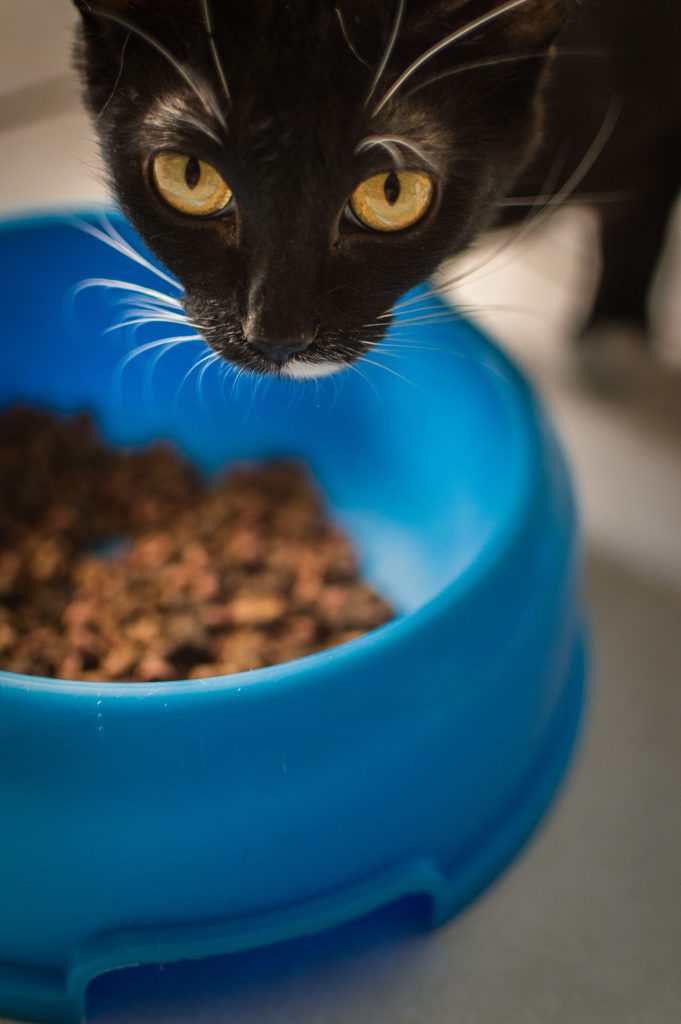
If water intake becomes a handoff question, use our cat drinking and water-access guide to organize bowl, food, and observation notes for a conversation with your vet.
Make handoffs easy
Choose one place for the current record, whether paper or a private shared document. Avoid parallel versions across several messaging apps. Confirm that the next caregiver can find both the routine and the latest update.
Use our cat-sitter note template to organize contacts and supplies. Store access codes and other private information securely.
Review the system after a week
Remove fields nobody uses or understands. Keep tasks that prevent missed care or duplicate work. A log should reduce confusion rather than become a new source of household disagreement.
For routine cleaning responsibilities, see the litter-box cleaning guide. For optional activity, record a familiar offered session without requiring the cat to participate.
Sources and editorial notes
The log is an Animalia organization template. General care-resource context: Ohio State University: indoor cat needs. It is not a medical monitoring protocol, diagnostic record, or replacement for professional care.
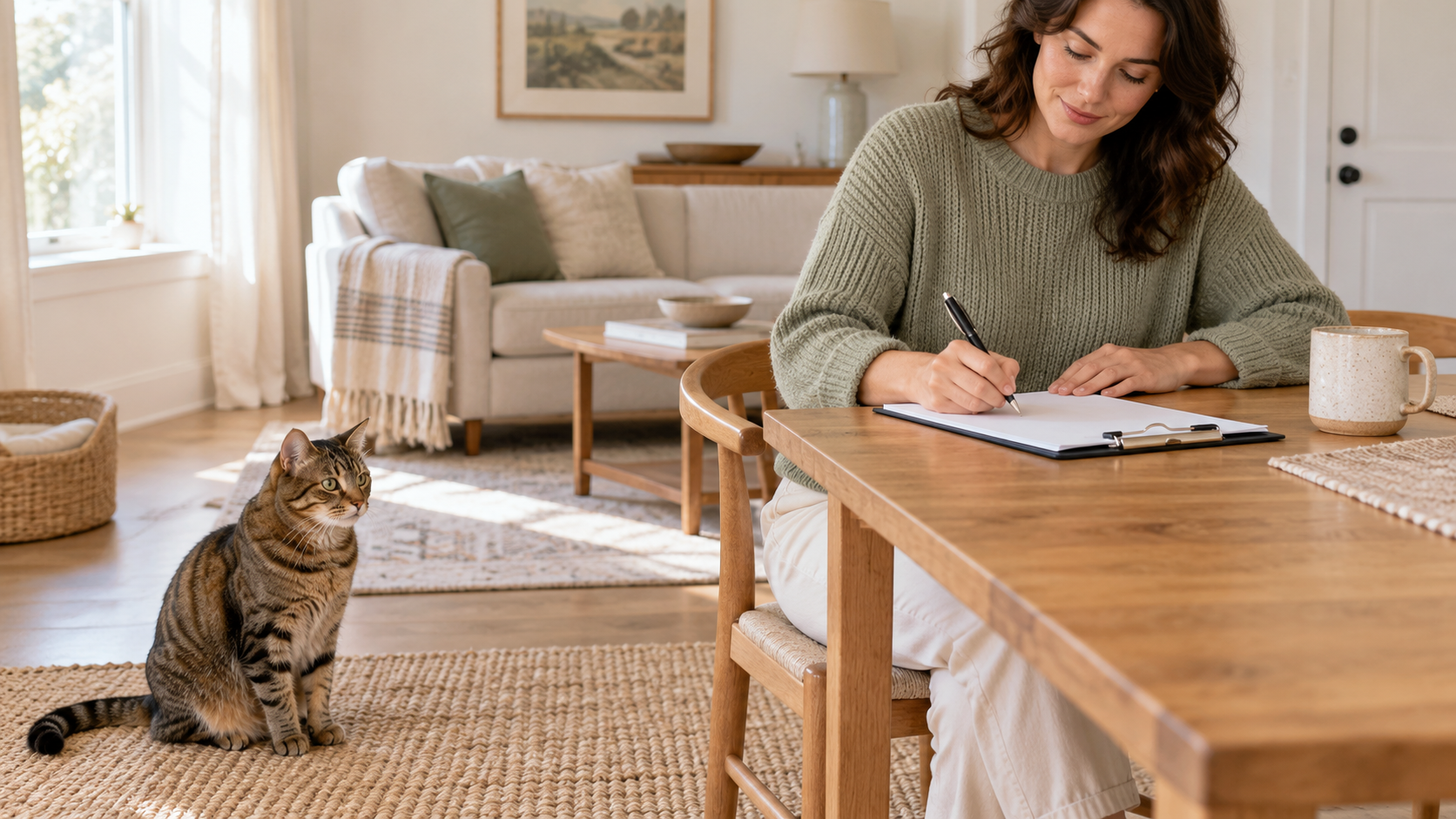
Featured image: Illustrative caregiver planning scene, generated with AI; the image does not show a real care record.