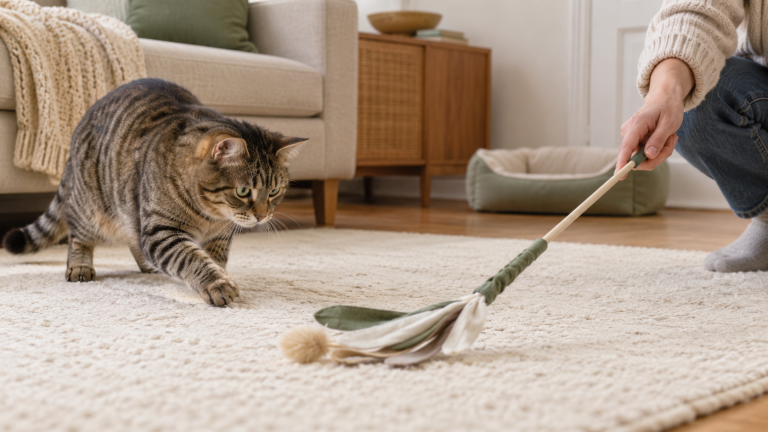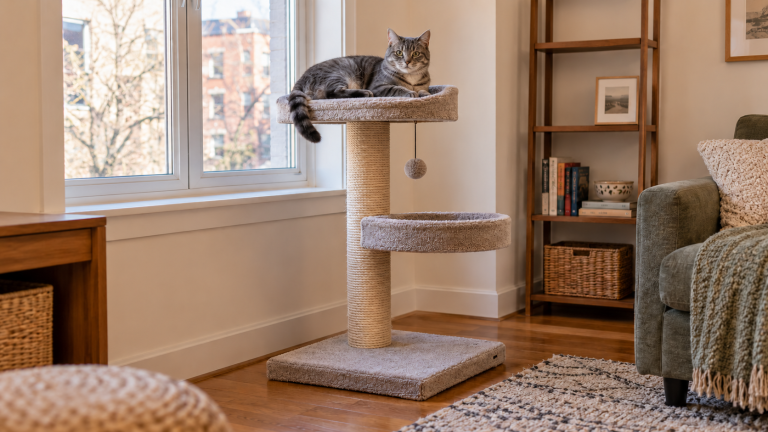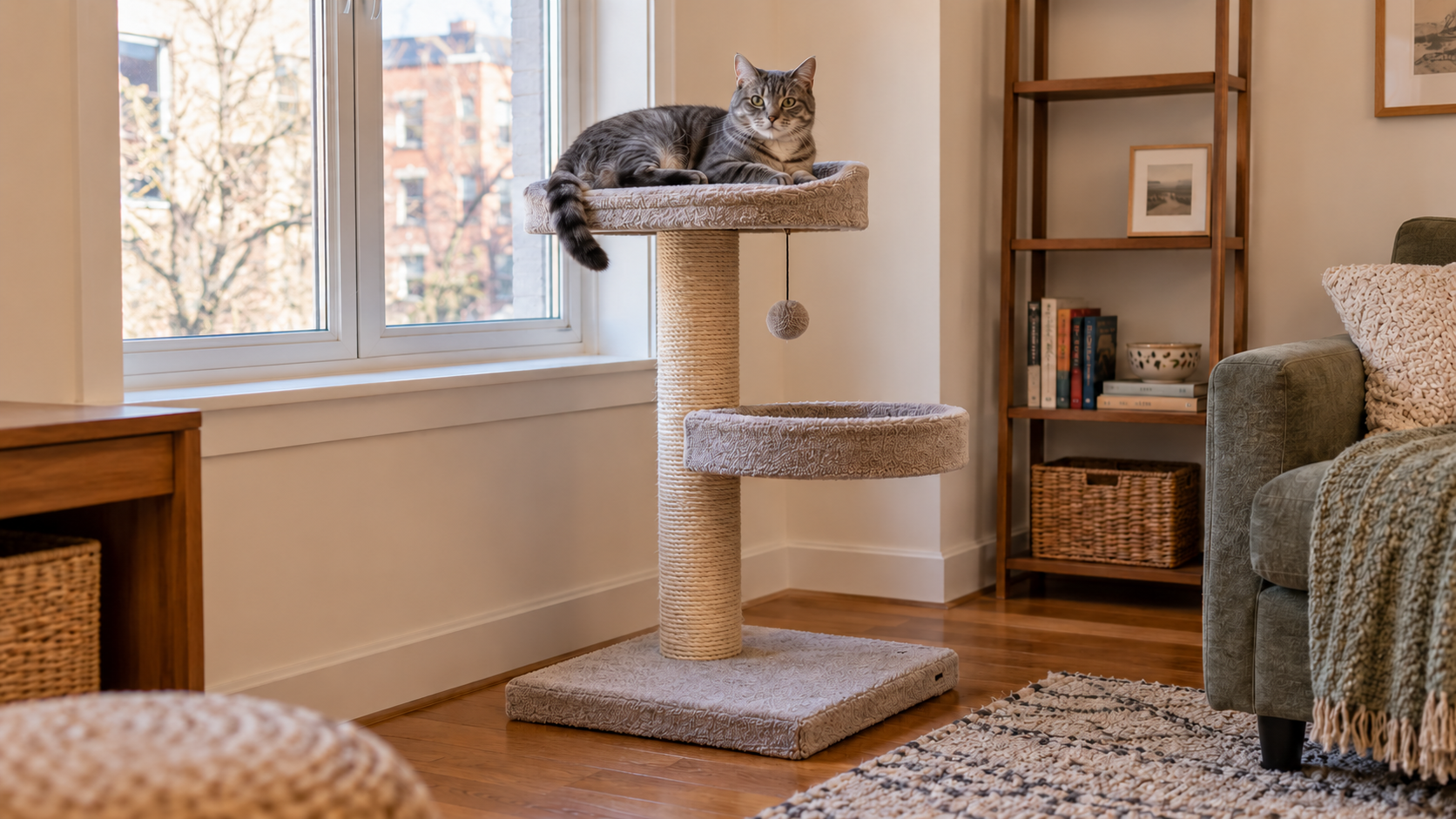
Planning cat resources in a rental home begins with the cat’s needs, the available routes, and any restrictions on installation. Prioritize accessible feeding, toileting, scratching, resting, and play options. Buy for the actual layout rather than trying to recreate a large-room product display.
Map the space you can use
Mark doors, walking routes, quiet areas, and existing furniture on a simple sketch. Note where the cat already spends time. Avoid putting every resource into the only unused corner if that makes access crowded or inconvenient.
Think about cleaning and everyday movement too. A large tree that blocks a cupboard may become a nuisance even if it fits the advertised floor footprint.
Separate essentials from optional upgrades
- Reliable food and water arrangements.
- Accessible litter-box locations.
- Suitable scratching surfaces.
- Comfortable resting and retreat options.
- Manageable supervised play.
Once those are practical, consider extra perches or enrichment items. A decorative shelf does not replace a stable scratching surface or a clean accessible litter area.
Check before installing
Confirm applicable tenancy permissions and consult an appropriate professional for wall or window installations. This article cannot determine what a particular lease allows or whether a wall can support a jumping cat.
A stable freestanding option may be simpler to assess. Our compact cat-tree guide compares usable platforms, base stability, and access.
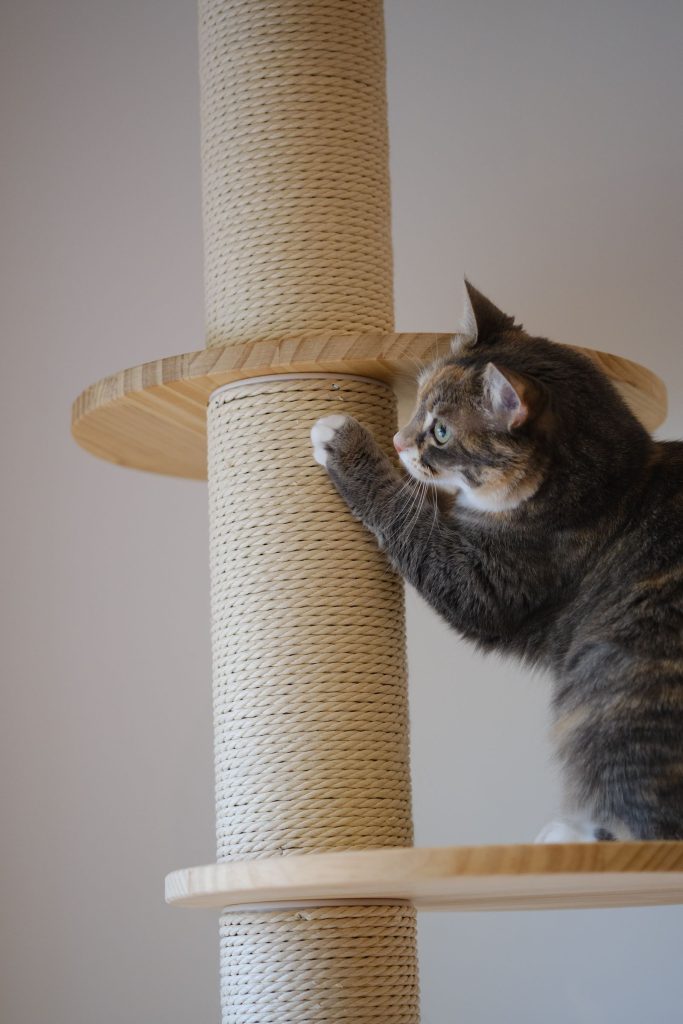
For a homemade option to consider alongside ready-made furniture, our low wooden cat perch plan outlines an illustrative freestanding build. Review its measurements and construction limits with a skilled woodworker before buying materials.
Spend around an observed need
Identify one practical problem first: an awkward scratching location, a crowded resting route, or a feeder that is difficult to clean. Compare products against that problem instead of purchasing a bundle of accessories with overlapping functions.
Use a private shortlist with size, installation, cleaning, and replacement notes. Prices vary, so compare current offers yourself rather than relying on a generic promised budget.
Review the setup after furniture changes
A moved sofa or closed door can change the cat’s route. Recheck access whenever the room layout changes. Preserve familiar choices while introducing a new item.
For resource placement, combine our scratching-post guide with the litter-box layout checklist. Sudden changes in behavior or comfort should be discussed with your veterinarian.
Sources and editorial notes
General resource context: Ohio State University: indoor cat needs. This is a planning framework, not tenancy advice, a structural assessment, or a product ranking.
Featured image: Illustrative apartment setup, generated with AI; not a tested product.