A comfortable cat window perch combines a secure resting surface with a view your cat enjoys. Check stability, window security, and an easy route before adding a bed or cushion. Keep another resting option available so the cat can leave when the view or temperature becomes uncomfortable.
Assess the surface and support
Existing stable furniture may offer a useful resting place near a window. A purpose-made perch is another option, but follow its installation instructions exactly. Do not assume a suction fitting or narrow shelf will remain suitable without inspection.
Check the actual resting dimensions against a place your cat already uses comfortably. The cat should be able to settle without balancing at an edge. Consider how the surface behaves when the cat climbs onto it, not only when empty.
Plan the route as carefully as the perch
Keep the approach clear and avoid requiring a large jump from a slippery surface. A lower resting place may suit a cat that prefers easy access. Never lift a reluctant cat onto an unfamiliar high platform to demonstrate how it works.
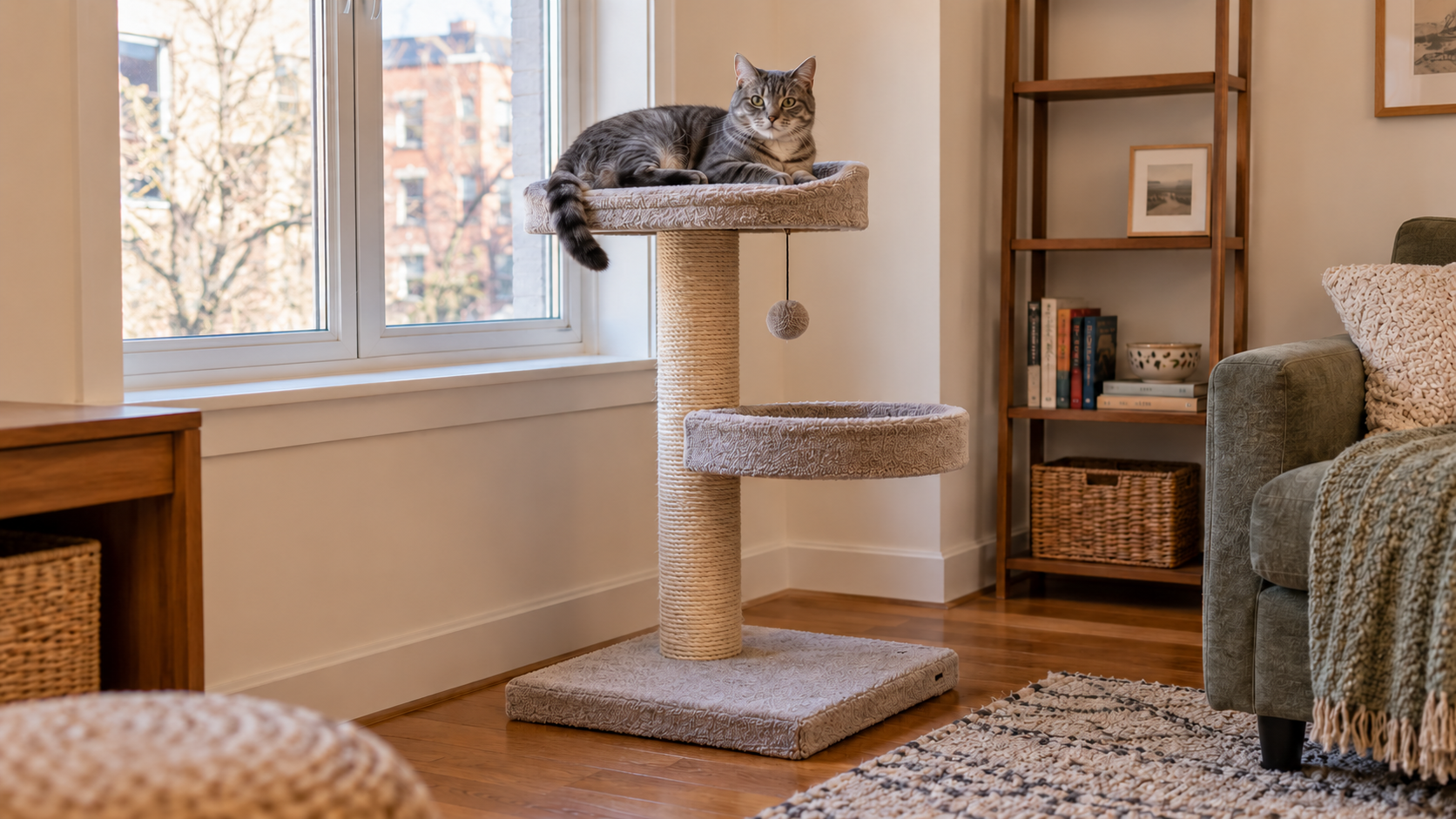
If you are comparing freestanding options, our small-apartment cat-tree guide covers platform size and stability. Use the cat’s choices to guide the layout.
Check the window area
- The window remains securely closed or protected by an appropriately installed pet-safe arrangement.
- Blind cords and loose fabric cannot become entangled around the cat.
- Nearby objects cannot be pulled down during climbing.
- The perch does not block a doorway or necessary household access.
- The surface remains comfortable as sunlight changes.
This checklist cannot assess a building’s window system. Consult an appropriate professional for installations or security concerns rather than improvising support.
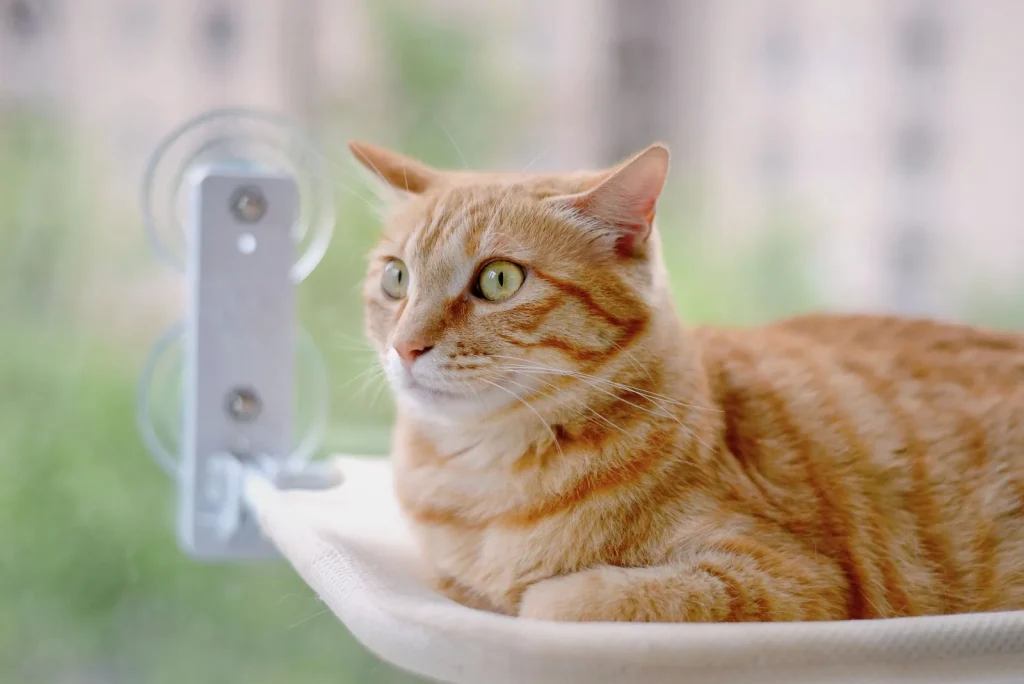
Observe whether the view is enjoyable
Some cats spend comfortable time watching outside; others may become unsettled by activity near the window. Watch the cat’s actual response. A view is not automatically enriching simply because it is busy.
Try a different position or a quieter window if the cat repeatedly avoids the perch. Preserve an alternative place to rest, and do not prevent the cat from leaving to get a better photograph.
Make maintenance part of the routine
Inspect the support, fastenings, cushion, and surrounding area regularly. Follow cleaning instructions and replace damaged equipment. If a perch moves unexpectedly, stop using it until the problem is resolved.
A household care note can assign the check without turning it into a complicated schedule. For broader resting choices, see cat hideout ideas.
Sources and editorial notes
Supporting guidance: Ohio State University: perches. This is a planning framework, not an installation certification or endorsement of window-mounted products. Sudden changes in climbing or comfort deserve veterinary advice.
Featured image: Illustrative apartment setup, generated with AI; not a tested product.