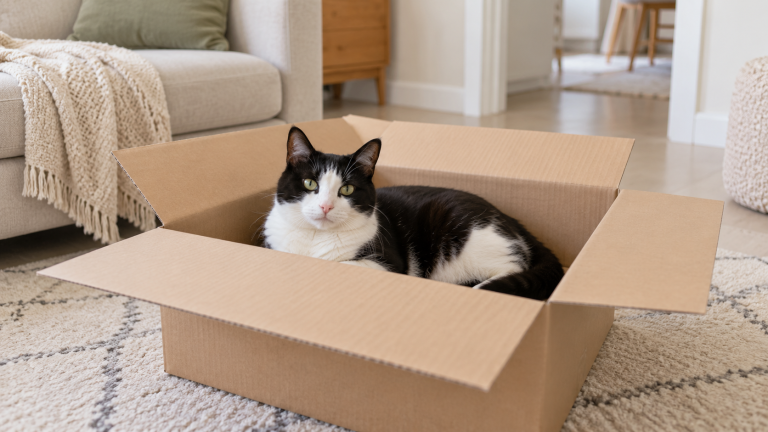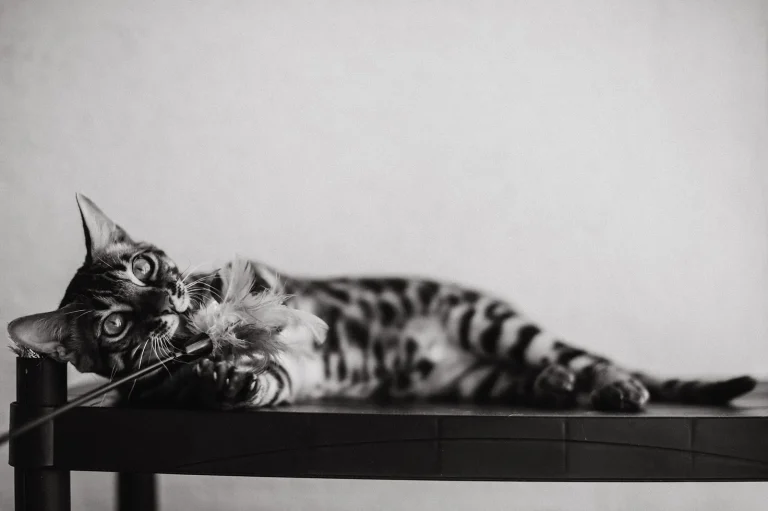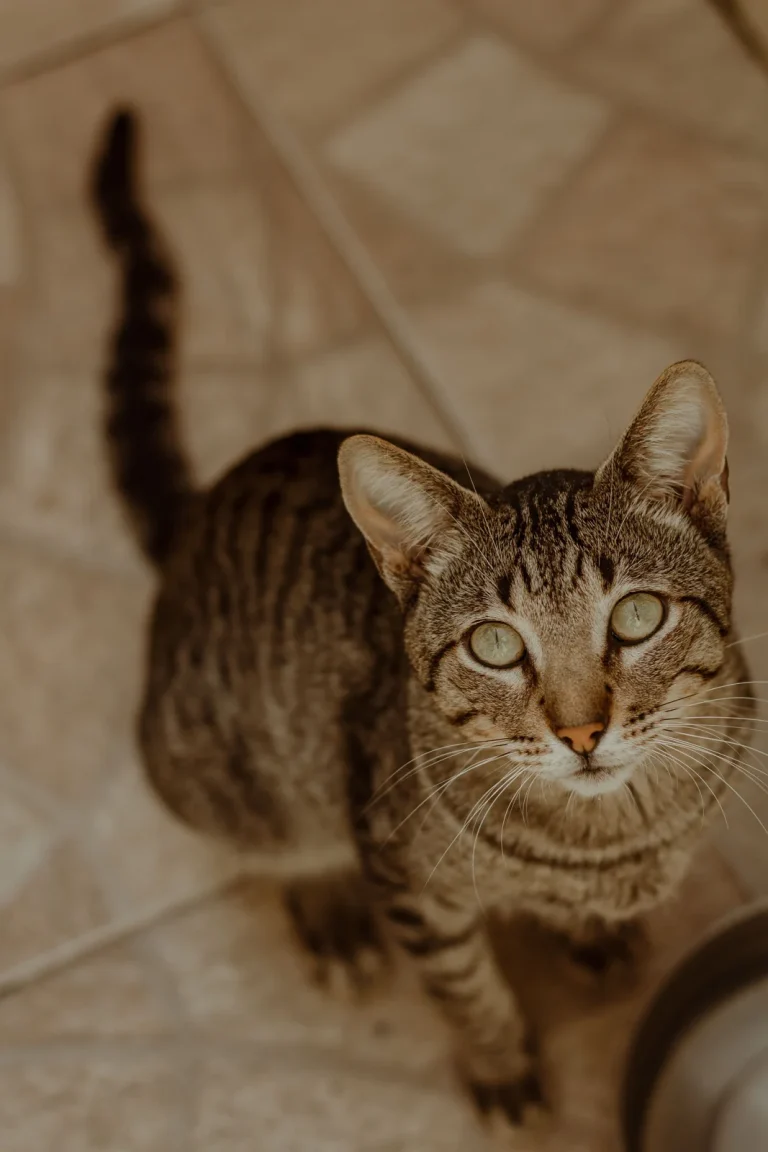
To pet a cat respectfully, let the cat approach, keep the first contact brief, and pause so they can choose whether to continue. Leave an easy exit. A cat being nearby does not automatically mean they want prolonged touching or to be picked up.
Begin by offering space
Stay calm and allow investigation rather than reaching across a resting cat. A cat may prefer sitting nearby without contact. Respect that choice instead of repeatedly presenting a hand or following them around the room.
For an unfamiliar cat, ask the caregiver about preferences. Do not assume a friendly greeting means every body area can be touched.
Keep the first interaction small
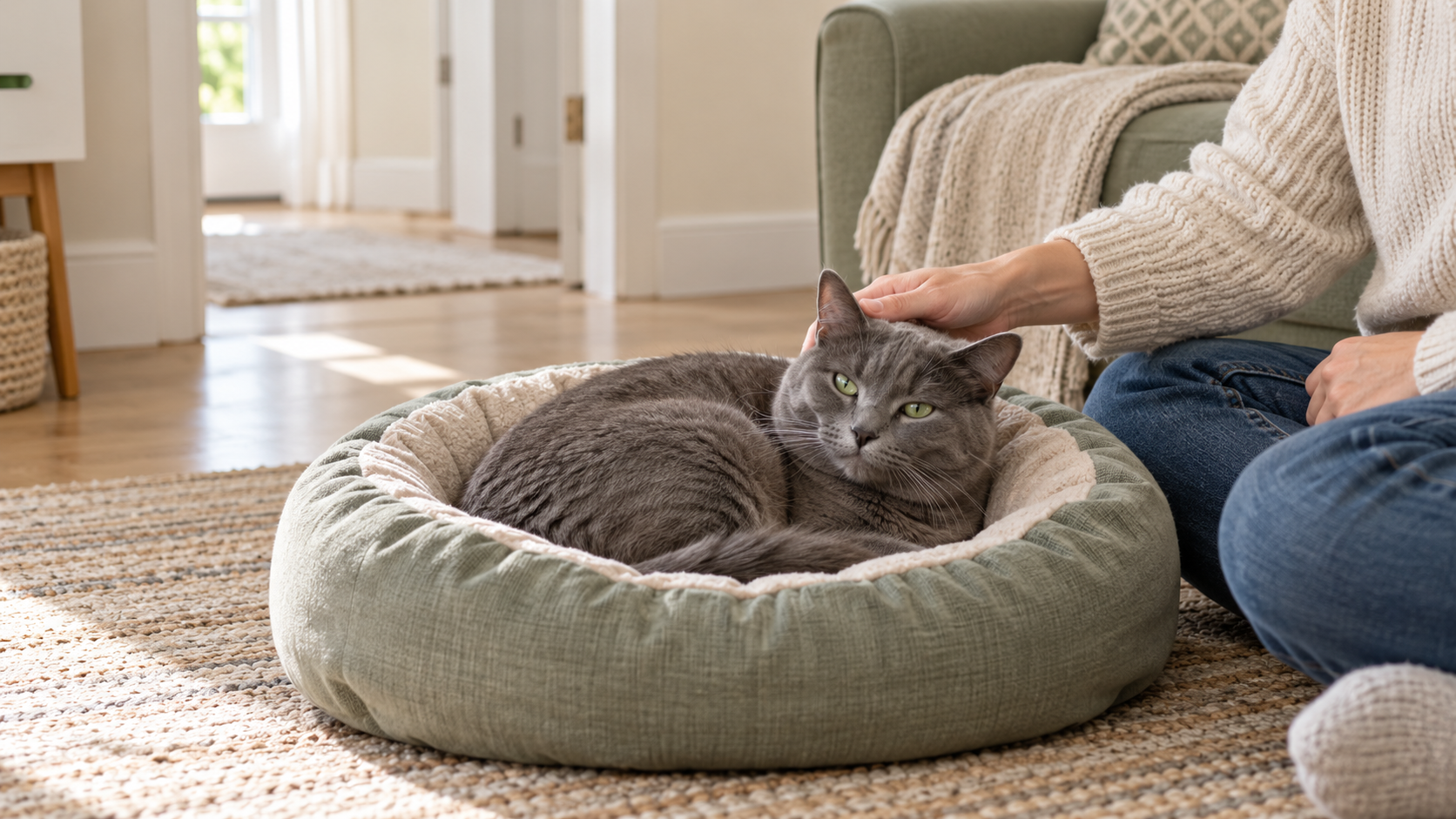
If the cat voluntarily approaches and appears comfortable, offer gentle brief contact in an area they normally accept. Pause after a little interaction and observe whether they remain engaged or move away.
Cats Protection’s petting guidance emphasizes paying attention to the individual cat. You do not need a fixed stroke count or a universal list of body areas every cat must enjoy.
Use pauses as part of the interaction
- Stop your hand rather than increasing contact automatically.
- Let the cat stay, reposition, or leave.
- Avoid blocking the route with your body.
- Do not hold the cat still to finish petting.
- End when the cat repeatedly avoids the interaction.
A pause helps you notice changes early. If you cannot tell whether the cat is comfortable, give more space and ask a knowledgeable caregiver or professional for guidance.
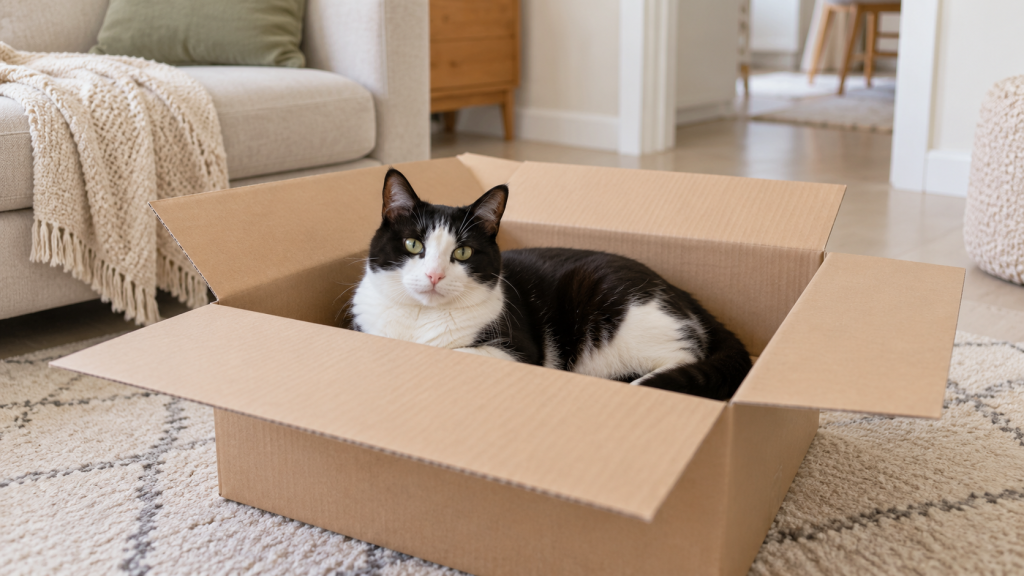
Explain the approach to visitors
Tell visitors where the cat can retreat and make that space off limits for touching. Children need close adult supervision and clear instructions to avoid pursuing, squeezing, or crowding the cat.
A quiet hideout works only when people respect it. Do not remove a cat from a retreat so everyone can greet them.
Separate petting from necessary care
Enjoyable social contact is different from grooming or a veterinary examination. For tools, use gradual brush familiarization and appropriate professional advice.
A sudden change in tolerance can have several causes and deserves veterinary attention. Do not assume the cat simply needs firmer handling or more forced exposure.
Sources and editorial notes
Supporting guidance: Cats Protection: how to pet a cat. This guide describes everyday voluntary contact and does not diagnose body language, pain, or behavior disorders.
Featured image: Illustrative resting and interaction scene, generated with AI; allow the cat to choose contact.