Introduce a grooming brush by letting your cat investigate it and building toward brief, comfortable contact. Start when the cat is relaxed and able to move away. Brush familiarity is a separate task from removing tangles or treating a coat problem.
Choose the tool with the right help
A brush suitable for one coat may be inappropriate for another. Ask your veterinary team or a qualified cat groomer about your cat’s needs, especially for a long coat, sensitive skin, or existing tangles.
Inspect the tool for damaged parts and follow its instructions. This article does not recommend a technique for cutting mats, clipping fur, or treating skin. Those situations need appropriate professional advice.
Begin without brushing
Place the tool nearby at a comfortable distance and let the cat look or sniff voluntarily. You can pair calm investigation with an appropriate reward. Do not hold the cat still to make an introduction happen.
Pick a quiet location with good footing and an easy exit. A familiar resting area may be convenient, but respect a cat that chooses to keep resting rather than participate.
Add tiny amounts of contact
Once the cat is comfortable with the tool nearby, try a very brief gentle contact in an area the cat normally tolerates being touched. Pause and watch the response before doing more. Keep the goal small enough that stopping is easy.
Repeated avoidance or tension means the current step is too much. Move back to an easier introduction and seek guidance if you cannot maintain comfortable participation.

Make a stopping plan
- The cat can leave without being pursued.
- You stop if the cat repeatedly turns away or resists.
- You do not use restraint to complete a practice quota.
- You do not work through painful or difficult tangles.
- You obtain help for skin, coat, or comfort concerns.
Never assume a cat’s reluctance is merely a training problem. A sudden change in handling tolerance deserves veterinary advice.
Share a simple progress note
Record the tool used and the small interaction the cat accepted comfortably. Another caregiver should not interpret “sniffed brush” as permission for a full grooming session.
For everyday contact, review our choice-based petting guide. For broader cooperative familiarization, see carrier training basics.
Sources and editorial notes
Supporting guidance: Cats Protection: grooming your cat and Feline VMA: caregiver training techniques. This guide covers tool introduction only and is not a coat-treatment procedure.
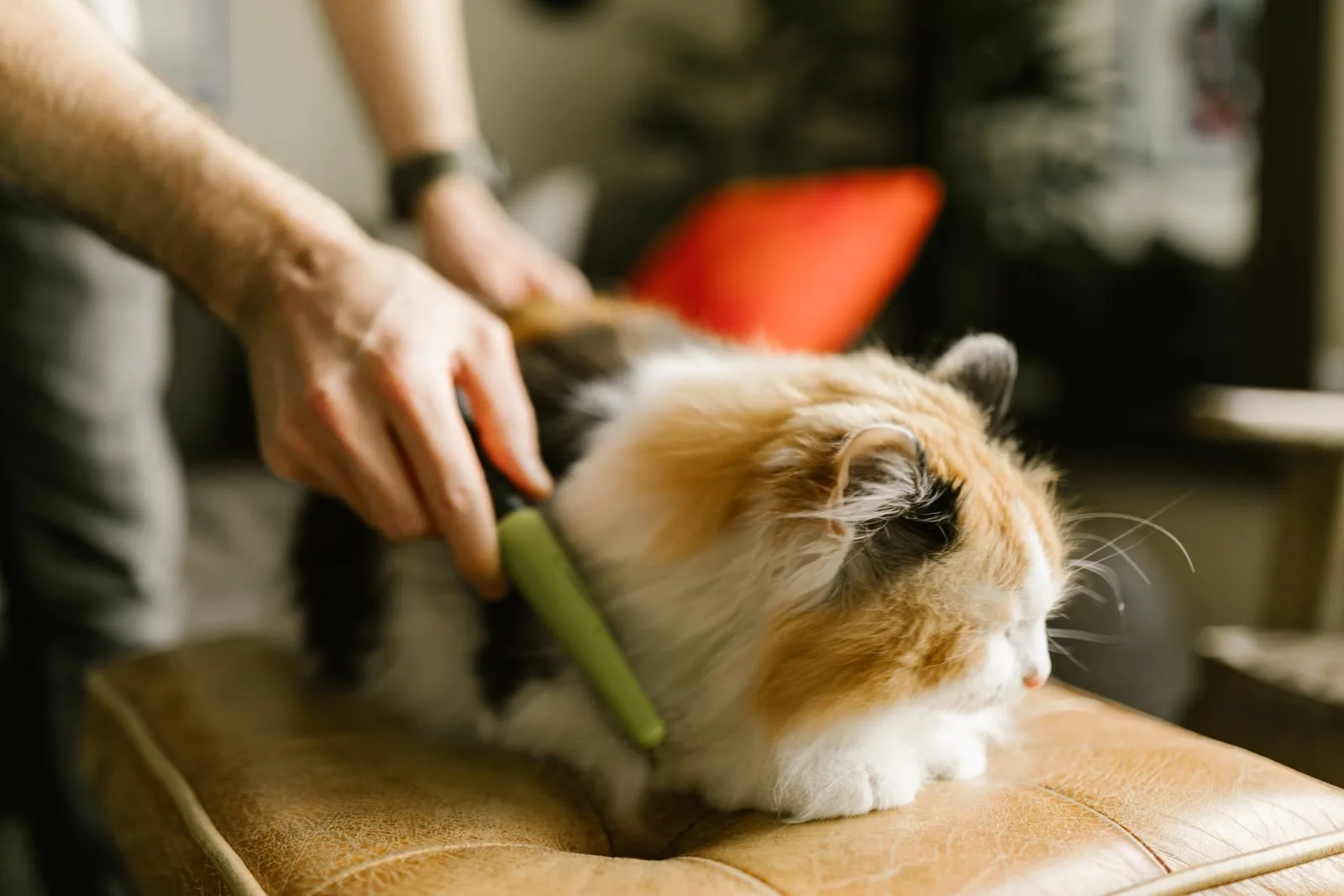
Featured image: A relaxed calico cat being gently combed while lying on a cushion. Photo: RDNE Stock project / Pexels