A useful dog toy storage system makes it clear which items are ready, which need cleaning, and which should never return to play. Separate those groups and follow each product’s care instructions. A tidy basket alone does not tell another caregiver whether a toy is suitable.
Inspect before organizing
Check seams, edges, removable parts, filling, and any surface the dog mouths. Remove items that are damaged or unsuitable for the dog’s actual use. Keep them out of the cleaning pile so they are not mistaken for toys awaiting a wash.
A dog may handle different materials differently. Review the collection based on observed chewing and carrying, not a generic durability label.
Create clear storage groups
- Clean, inspected toys for the current rotation.
- Clean reserve items stored out of reach.
- Used toys awaiting maintenance.
- Supervised items with their instructions.
Choose storage that cannot itself become a chewing or entanglement hazard. Keep lids, cords, and cleaning products away from the dog.
Follow the individual care label
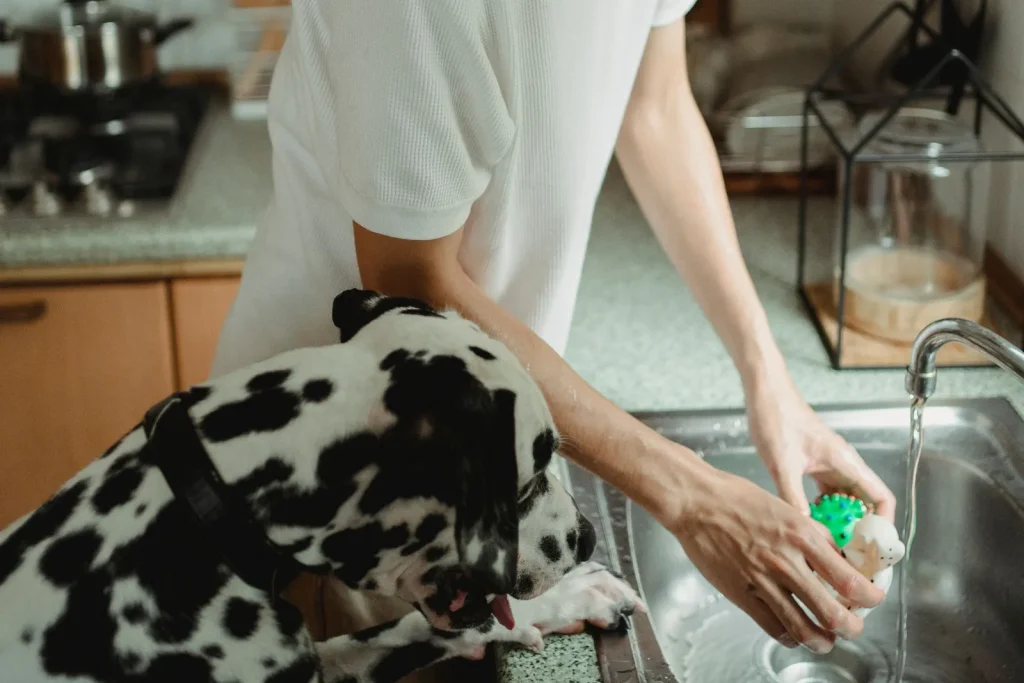
Read the manufacturer’s washing and drying instructions. Avoid inventing one cleaning recipe for every fabric, rubber, rope, and food-contact component.
Rinse and dry as directed, then inspect again before returning an item to the clean group. If you cannot maintain a product properly, choose a different option rather than relying on appearance or fragrance.
Make the household reset easy
After play, collect the current items and put them in the correct group. Tell other caregivers which toys require supervision and which have been removed.
Our toy-rotation guide helps keep the active collection manageable. The point is reliable upkeep, not a complicated inventory of every purchase.
Keep food equipment separate
Follow food-contact cleaning instructions for puzzles and feeding toys. Remove leftover food promptly according to the relevant food and equipment guidance. See choosing a beginner puzzle before adding another product.
If you suspect swallowed material or injury, contact your veterinary team instead of treating it as a storage problem. Do not keep a damaged favorite in circulation because the dog enjoys it.
Sources and editorial notes
General enrichment context: Dogs Trust: enrichment activities. This is an organization checklist, not a disinfection protocol or product-safety certification.
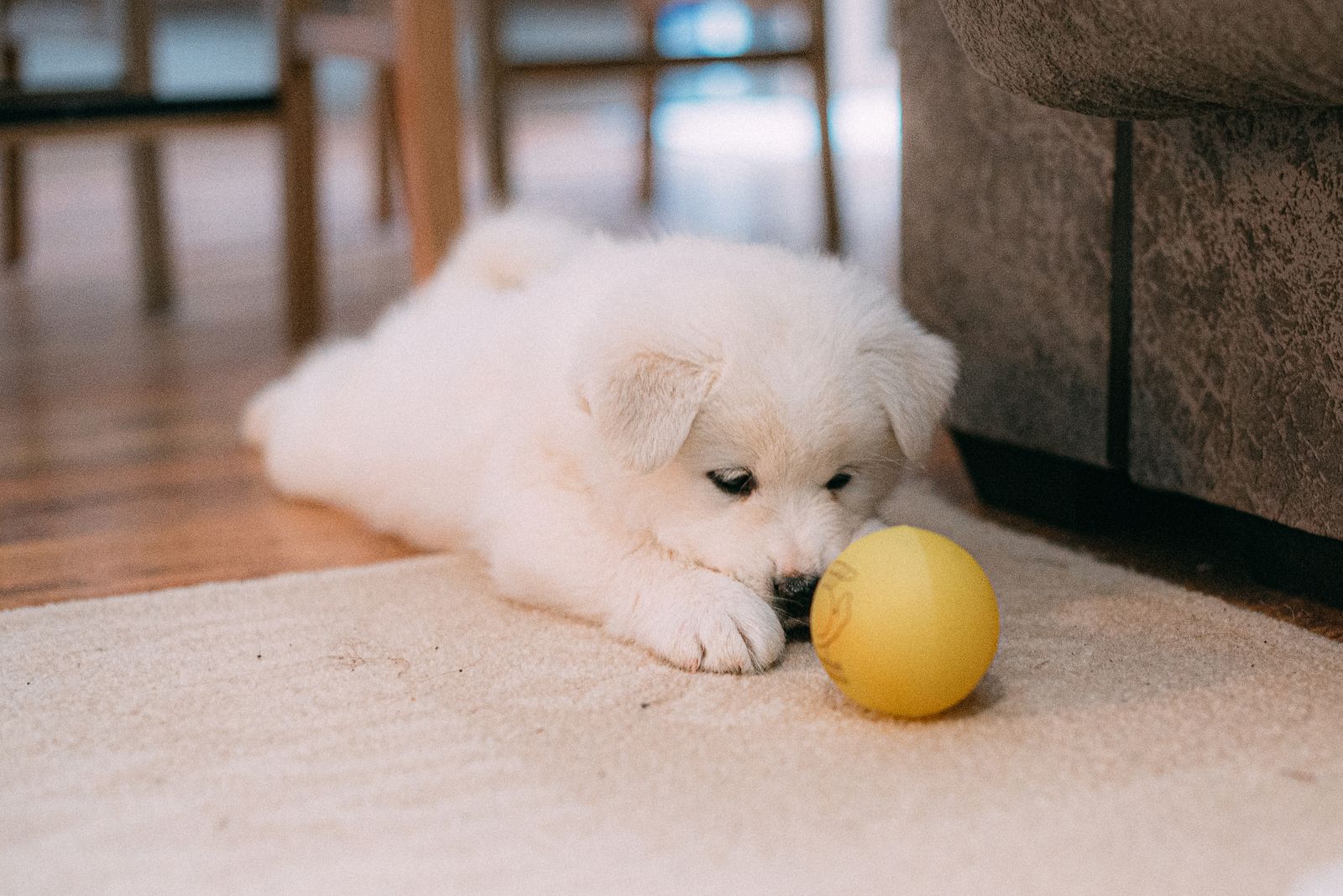
Featured image: A puppy exploring a toy at home; choose toys suitable for the individual puppy. Photo: Tanya Gorelova / Pexels.