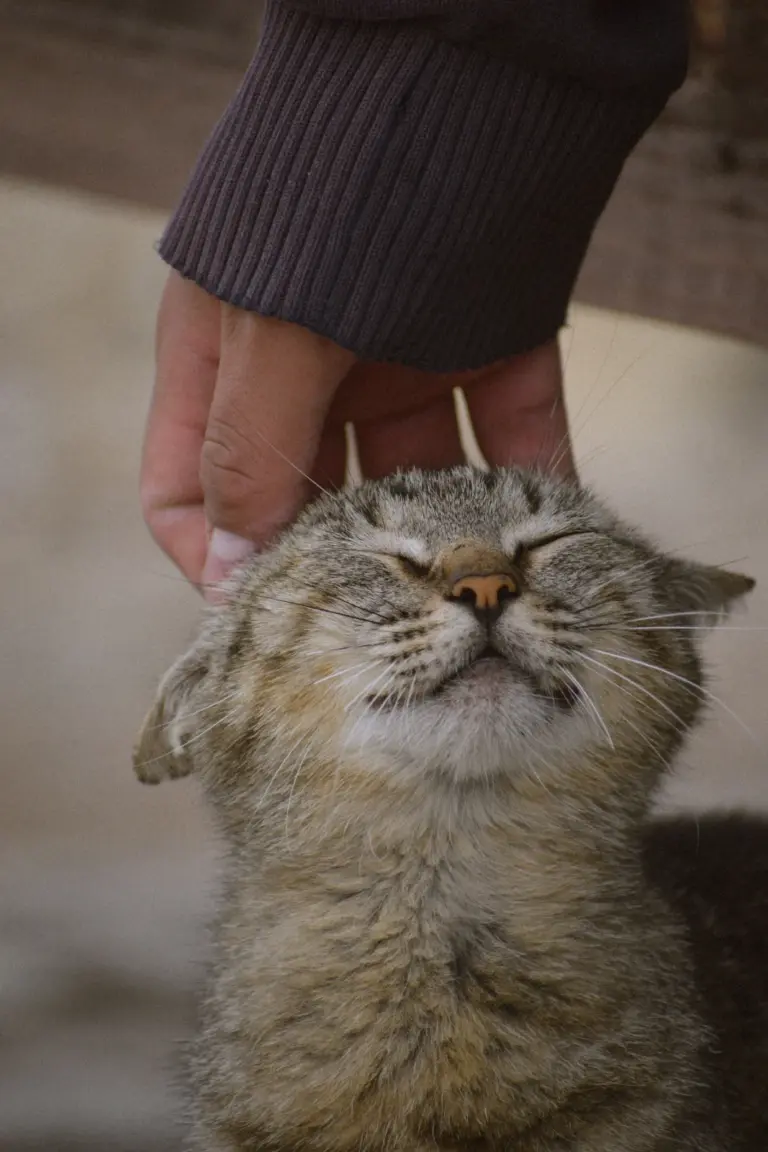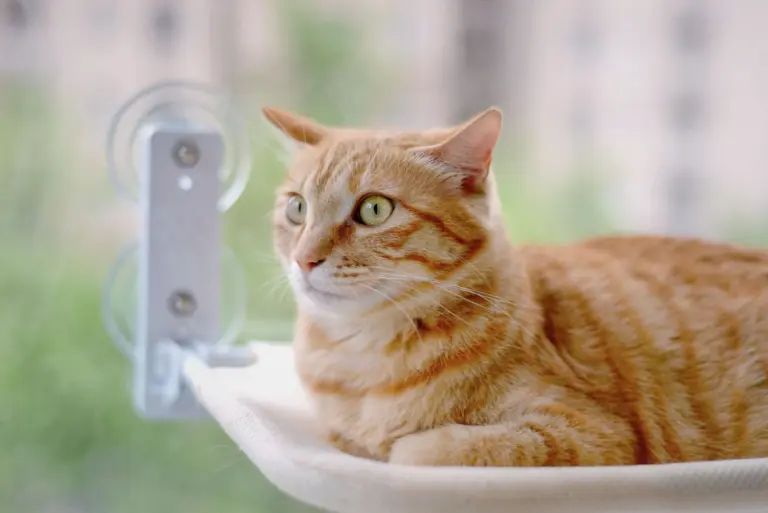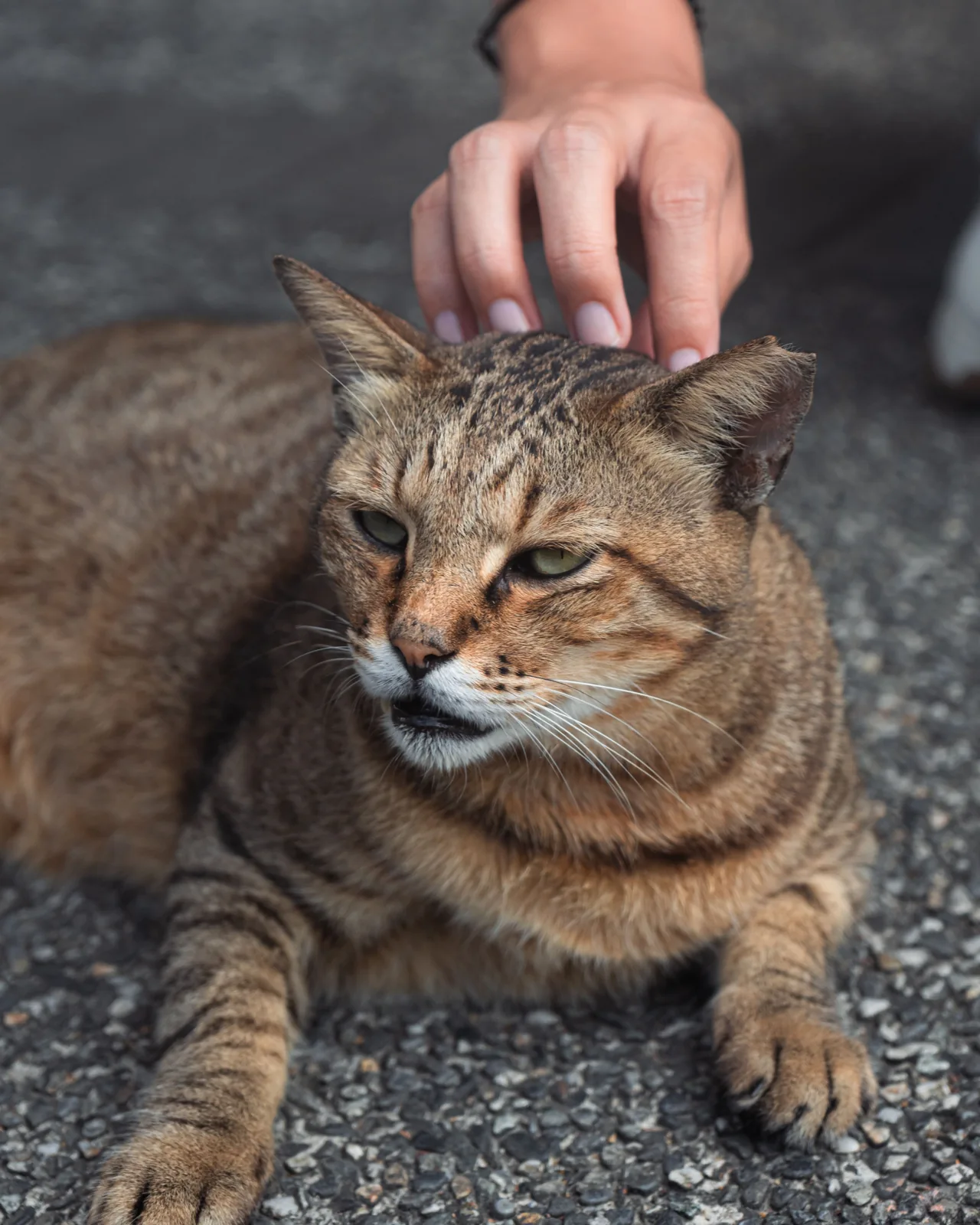
A cat may nip during petting when contact has become too much, during play when skin becomes a target, or when a learned interaction brings attention. The ASPCA explains that gentle nips can signal a petting limit. Stop contact calmly, check the context, and seek veterinary advice for a new or painful pattern.
Why does my cat nip during friendly moments?
Friendly company and a wish for more touch are different things. A cat can choose to sit beside you, then object to a stroke, a moving finger, or being lifted. A brief nip may be the moment you notice that change. It does not tell you everything the cat was feeling.
The word “gentle” describes the force you noticed, not the cause or a guarantee of safety. Some owners call light mouth contact a love bite. That label can hide the useful question: what was happening just before the teeth touched skin, and what could make the next interaction easier?
Cat Friendly Homes notes that location, duration, speed, and force of petting can matter. Different cats also have different limits. Avoid comparing your cat with another animal that likes long cuddles. You can respect a short-contact preference without treating the cat as unfriendly or insisting that they get used to more.
Separate petting from play
When your cat is already chasing a lure or watching moving feet, keep hands away from the game. A hand that strokes, wiggles, and then becomes a wrestling target gives mixed information. Use a suitable toy at a distance from skin, and finish play before you offer calm company nearby.
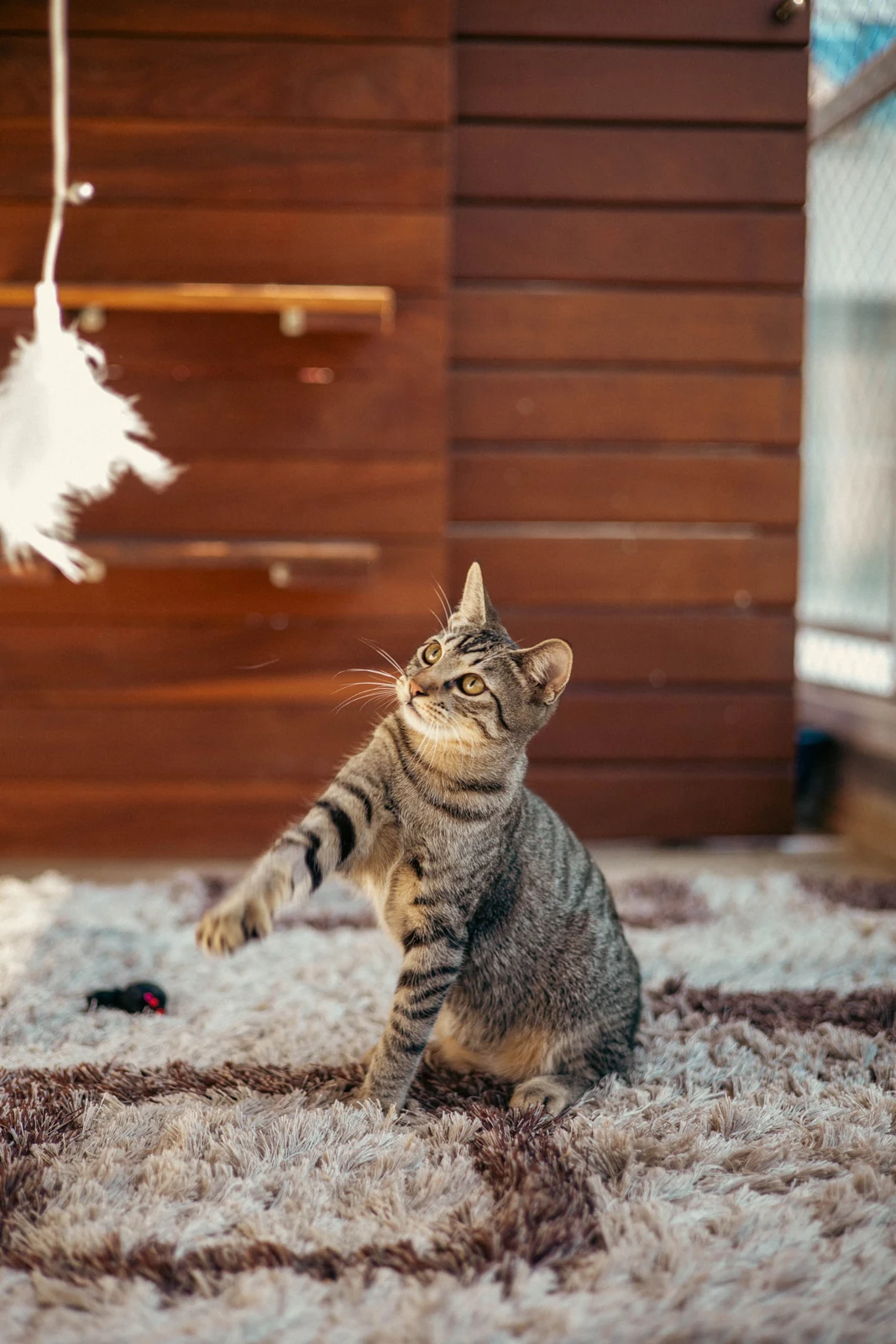
Cats Protection describes how hunting play can be directed onto hands and feet. Do not wave fingers at a kitten and expect that game to remain harmless as the cat grows. Our wand-toy guide helps you choose an activity with space between the lure and your hand.
For petting, let the cat approach and keep the contact easy to stop. Pause before another stroke and allow them to leave. Follow the choice-based cat petting guide for the technique. Here, your aim is to spot whether touch or moving play is the setting that usually comes before a nip.
What can you change before the next nip?
Change the setup before teeth make contact. Shorten a touch session, stop moving fingers as toys, or give the cat a clear route away. Choose one change so you can see whether it helps. Do not repeat the situation at greater intensity to test how much your cat will tolerate.
Use this Animalia worksheet to turn a vague concern into a specific household action. It is not a diagnostic scale, and the examples do not establish why your own cat nips.
| Before the nip | One change to try | What to watch next time |
|---|---|---|
| Several strokes in one spot | Pause sooner and withdraw the hand | Does the cat choose to return for contact? |
| Fingers or toes moving under fabric | Stop body-part games and use a suitable toy | Can play stay directed away from skin? |
| Cat sitting on your lap while you work | Offer quiet company without repeated touching | Can the cat rest while your hands stay separate? |
| Someone picks the cat up | Avoid uninvited lifting | Does voluntary nearby contact remain comfortable? |
| Contact has recently changed or hurts | Call the vet instead of repeating the test | What other changes should the clinic know about? |
Avoid using an exciting toy as a reason to keep approaching a tense cat. First end the interaction and give space. Plan the next calm opportunity later. For hands-free activities, see our non-food cat enrichment ideas, selecting only options that suit your cat and home.
When nipping centers on ankles, shoes, or socks, see why cats focus on feet for a closer look at the setting. Keep the notes about the interaction rather than assigning intent from one nip.
Keep a small interaction record
Record what you did rather than what you think the cat meant. An illustrative note might read: “Cat lay beside me. I stroked the back while reading. Tail began moving; cat turned to my hand. I stopped.” This describes an early change without waiting for the nip to happen again.
A useful record can be brief. Include the person involved, what their hands were doing, the area touched, and any change in the cat’s posture. Note whether the cat left freely. If there was no touch, describe the nearby movement or activity instead of forcing a petting explanation onto the event.
Agree on the same response with caregivers: stop the current contact calmly, keep hands out of play, and avoid punishment. If one person allows finger wrestling and another discourages it, the cat is facing different rules. A shared plan should make interactions clearer rather than demanding that the cat guess which rule applies.
When does a gentle nip need more help?
Call your vet if nipping is new, becomes more frequent or forceful, or comes with a change in movement, eating, hiding, grooming, or toilet habits. A cat can be affectionate at other times and still have a health or comfort problem. Do not press on a sensitive area to check it yourself.
Cat Friendly Homes recommends veterinary input for biting and changes in normal behavior. Ask about a qualified feline behavior professional when repeated contact remains hard to manage. They can review the context and help create a plan without forced handling, spraying, yelling, or holding the cat down.
If a bite or scratch breaks skin, wash the wound with soap and warm water and seek medical advice promptly. Bites to the hand, foot, face, or head need urgent medical advice; severe wounds or bleeding that will not stop need emergency care. Keep the cat away from the injury. Contacting a clinician is separate from understanding the cat’s behavior.
FAQ: cat nipping
Is a light nip always a sign of affection?
No. A light nip can occur during an interaction that began pleasantly, but it can also mark a touch limit or a shift into play. The force alone does not reveal the cause. Stop calmly and look at the moments before contact instead of using the phrase “love bite” as reassurance.
Why does my cat nip when I pet her?
Petting may have lasted too long, moved too quickly, or reached an area the cat dislikes. A change in comfort can also matter, especially if the pattern is new. Pause sooner and let the cat choose contact. Ask your vet about new sensitivity rather than repeatedly touching the area to confirm it.
Why does my cat nip my nose or face?
Close contact places sensitive skin within reach of the cat’s mouth, but the location does not establish a special message. Avoid bringing your face close when the cat is excited or mouthy. Offer company at a little distance and record the setting. Repeated or painful contact needs professional advice, not another test.
Should I hiss at my cat or tap their nose?
No. Those responses can add fear, confusion, or excitement rather than explain the behavior you want. End the contact calmly, give space, and change the next interaction before a nip occurs. Use toys away from skin and reward suitable calm activity. Ask a professional for help if the pattern is hard to manage.
Can I teach my cat to enjoy longer petting?
Longer petting need not be the goal. Some cats prefer brief contact or nearby company without touch. Respect that preference and choose activities the cat willingly enjoys. If handling is needed for care, ask your vet or a qualified professional for a gradual cooperative plan suited to that specific task.
Begin with one shared change, such as shorter strokes or ending finger play, and watch the next ordinary interaction without provoking a nip. Animalia’s cat care hub includes related routines for play, resting places, and a home where the cat can choose space.
Sources and editorial notes
- ASPCA: Aggression in cats
- Cat Friendly Homes: Preventing unwanted behaviors
- Cats Protection: Why does my cat bite me?
- NHS: Animal and human bites
Animalia Editorial. Last reviewed: October 22, 2026. The tables and worked examples are editorial planning aids, not a diagnosis or reported result. See the Animalia Editorial Policy.
Featured photo: A person touches a tabby cat’s head. Use the cat’s whole response to decide whether to continue, rather than a photo or label. Photo: Sam Tan / Pexels.
Prepared with AI assistance and reviewed against the sources above.