Why does my cat want me to watch him eat? Some cats eat more readily with human company, a pattern the San Francisco SPCA calls affection eating. Quiet presence may help, especially in a new home, but it does not explain every case. Contact your veterinarian promptly if your cat eats poorly, stops eating, or changes behavior.
The useful distinction is between a comfortable meal preference and inadequate food intake. Animalia’s guide helps you observe what is actually eaten, offer company without pressure, and arrange dependable care without testing how hungry your cat will become when you leave.
Does wanting company mean a cat feels unsafe?
It may be part of adjusting to unfamiliar surroundings or a preference for company, but the behavior alone cannot establish fear, trust, or a particular condition. Notice the setting and actual intake. A cat who eats only a little while you stand nearby still needs assessment if appetite is poor or different from usual.
Avoid assuming that your cat wants a bodyguard, sees you as a parent, or is deliberately training you. Those stories can obscure the practical questions: is the cat eating enough on their individual plan, is the food accessible, and has anything changed? Record what you see without turning one preference into a diagnosis.
The SPCA’s guidance describes company during adjustment, while also separating this pattern from medical causes of not eating. A newly adopted cat may benefit from a suitable quiet care area and familiar routines. That context should guide support, rather than justify waiting through poor intake because you expect the cat to settle eventually.
Check food intake before interpreting the ritual
Use this Animalia table to separate a visible meal from assumptions about the rest of the day. It supports a care conversation, not a calorie prescription or a test of whether your cat is hungry. If intake is poor or absent, prioritize contacting your veterinarian over completing the record.
| What you observe | Useful note | What to avoid assuming |
|---|---|---|
| Eats their usual meal while you sit nearby | Amount offered and left, setting, and any change | Company proves that health is normal |
| Approaches the bowl but eats little | What was actually eaten and any difficulty you noticed | Approaching food means the meal was completed |
| Food disappears while you are away | Which animals had access and what remains uncertain | This particular cat definitely ate it |
| Another animal approaches the station | Access routes and whether the cat leaves | The cat simply dislikes eating alone |
| A caregiver cannot be present | Who can provide the usual care and what the clinic advises | Hunger will teach independence safely |
The SPCA recommends monitoring meals rather than continually topping up an unknown amount. Follow the feeding plan appropriate for your cat and record actual intake as accurately as you can. If several people provide care, share one note so an extra serving or a repeated report does not create a misleading impression.
For example, “offered the planned meal, saw some eating, could not identify which cat finished the rest” is useful information. It is better than “ate fine” when you did not observe that. Our household care log helps you hand over the same information to a caregiver or veterinary team.
How can you offer company without forcing touch?
Sit quietly nearby if your cat welcomes your presence and can eat comfortably, while preserving space to approach or leave. Company does not require stroking, holding, hand-feeding, or standing directly over the bowl. If eating is poor or changes, seek veterinary advice rather than escalating your encouragement or making the cat tolerate more contact.
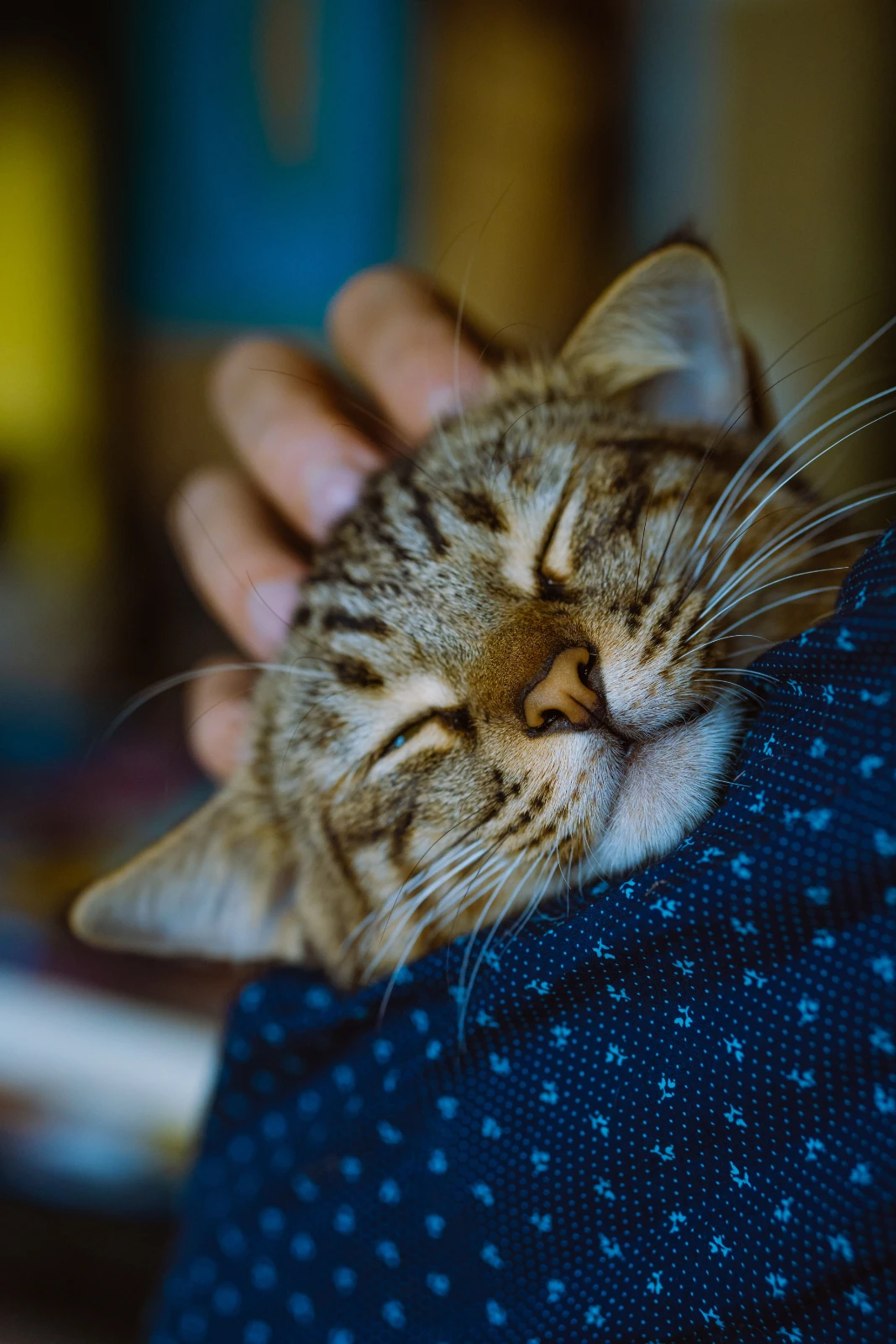
If your cat chooses gentle contact, pause and watch their response. Our petting-with-choice guide explains that separate interaction. A cat who enjoys a head stroke away from the bowl may not want one during a meal, and a cat who wants quiet company need not be touched at all.
Keep other animals from restricting access and review the station’s routes. Our multi-cat resource guide covers that practical task. Move carefully rather than repeatedly relocating food as an experiment. Ask your veterinary team about an individual feeding concern before treating a change of bowl, room, or product as the solution.
Plan meals when another caregiver takes over
If your cat normally eats with you present, tell the caregiver before you leave. Share the usual food plan, setting, what intake to record, and when to call the clinic. An automatic feeder or a full bowl does not prove that your cat ate adequately. Check actual intake rather than relying on food delivery alone.
A familiar, manageable routine is more useful than asking the caregiver to invent a new training exercise. Our new-cat room guide can help with ordinary access and resting arrangements. Keep veterinary contact details and any existing care instructions available, particularly when the cat’s appetite or comfort has recently changed.
If the routine cannot be provided reliably, ask for individual help before trying to make the cat eat alone through hunger. Do not withhold food, repeatedly leave during a poor meal to test tolerance, or assume that a louder protest is the only problem. Actual intake remains the priority while any longer-term behavior plan is developed.
When should you contact your veterinarian about eating?
Contact your veterinarian promptly if your cat is eating poorly, refusing food, or showing a change in appetite or other behavior. Cornell advises immediate consultation for signs of appetite loss. Do not wait for a fixed deadline, assume stress explains everything, or use a little hand-fed food as proof that the concern is resolved.
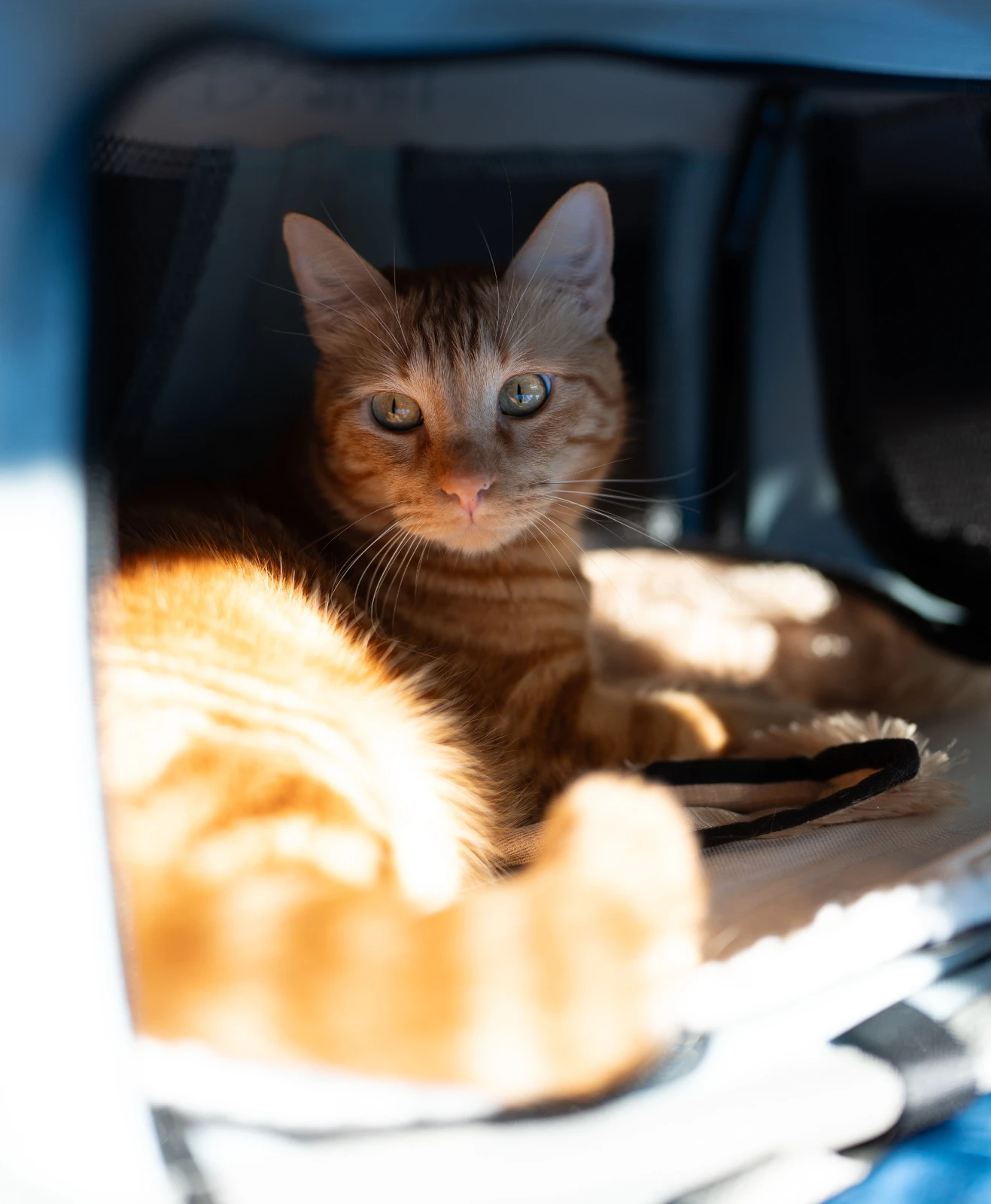
Describe when the change started, what was offered and eaten, relevant medication or care history, and any other signs you noticed. Follow the clinic’s guidance about assessment and nutrition. Avoid force-feeding, syringe-feeding, adding remedies, or changing prescribed care on the basis of an online explanation of affection eating.
Animalia’s next step is simple: protect reliable meals and request appropriate help when intake is uncertain or poor. Return to our cat behavior hub for related questions. An explanation of company at mealtimes should make care easier to organize, rather than persuade you to dismiss a change that needs assessment.
Frequently asked questions
Is affection eating a diagnosis?
It is a descriptive label for a cat who eats more readily with company, rather than an explanation of every cause of poor intake. A cat may need support in a new setting, but medical concerns still need consideration. If appetite is poor, absent, or different from usual, contact your veterinarian instead of assigning the label and waiting for adjustment.
Should I pet my cat throughout every meal?
Not necessarily. Quiet presence may be enough, and the cat’s response should guide any ordinary gentle contact. Avoid holding or repeatedly stroking a cat who moves away or seems uncomfortable. A preference for company does not establish a need for touch. If adequate eating depends on elaborate encouragement or intake is poor, discuss the situation with your veterinarian.
Will my cat eat when hungry enough if I stop watching?
Do not use hunger as a training test. Arrange reliable food access and support, monitor actual intake, and ask for an individual plan if the routine is difficult to provide. A cat who is not eating needs prompt veterinary advice. Waiting for hunger to overcome the problem can delay care and does not establish why the cat avoids the meal.
Can an automatic feeder replace a person at meals?
A feeder can deliver food, but delivery alone does not establish that a particular cat ate it or felt comfortable accessing it. Consider the individual cat, other animals, and the support already needed. Share a monitoring plan with the caregiver and seek veterinary advice about poor intake. Do not make a new device the only plan for an uncertain eater.
Why does my cat lead me to a bowl that already contains food?
The sequence may fit a familiar meal interaction, but it does not establish one exact message. Check freshness, access, and what the cat actually eats without assuming the bowl’s contents prove adequate intake. Quiet company may be welcome. If the cat approaches repeatedly but eats poorly or the pattern has changed, contact your veterinarian for advice.
Sources and editorial notes
Animalia Editorial. Reviewed November 4, 2026. The meal record and examples are organizational aids, not feeding prescriptions or behavior diagnoses. See our editorial policy.
San Francisco SPCA: affection eaters and intake monitoring; Cornell: appetite loss and prompt assessment.
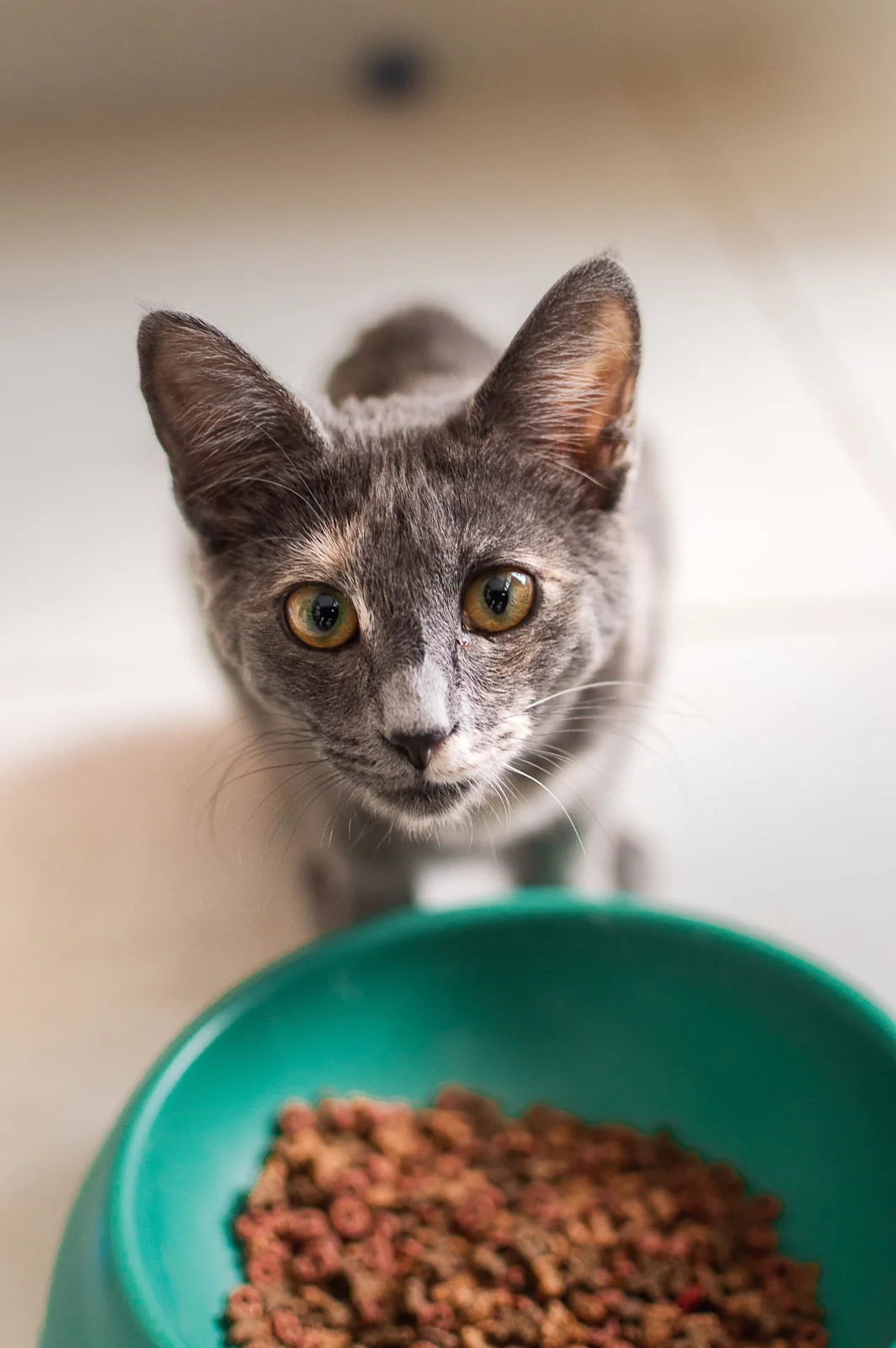
Featured photo: A gray cat faces a green bowl. Food being present does not establish how much a particular cat has eaten. Photo: Eduardo López / Pexels.
Prepared with AI assistance and reviewed against the sources above.