To help a puppy stop whining in a crate, check bathroom needs and comfort first, stay close, and make the next training step easier. PDSA advises against leaving puppies to cry it out. Reward relaxed choices before distress starts, and seek veterinary or qualified behavior help when crying persists, escalates, or suggests illness.
The immediate goal is a comfortable puppy, not silence at any cost. This guide troubleshoots crying during a crate attempt; use the new puppy setup checklist to review the wider home and care plan.
Why might a puppy be whining in the crate?
The puppy may need the bathroom, feel worried about separation or confinement, be uncomfortable, or have another unmet need. Sound alone cannot tell you which explanation applies. Look at when the crying begins, the puppy’s whole body, the setup, and recent care, then respond without testing how long they can endure it.
| What you notice | What to check | Useful immediate response |
|---|---|---|
| Wakes and starts moving or whining | Bathroom access and recent successful trip | Offer a calm bathroom opportunity |
| Cries as the door moves | Whether that step was introduced gradually | Reopen safely and return to easier practice |
| Cries when you move away | Distance and comfort with your absence | Stay closer; reduce the next separation step |
| Hot, cold, tangled, or unable to rest | The physical setup and reachable hazards | Resolve the problem and use a suitable alternative |
| Panting, drooling, frantic scratching, or escape attempts | Distress or possible illness; risk of injury | Stop the trial safely and seek professional advice |
| Sudden unusual crying or signs of pain | Possible health change | Contact your vet rather than treating it as disobedience |
These are observation prompts, not diagnostic categories. A puppy who has just peed can still feel afraid, need companionship, or be unwell. An empty food toy or a quiet moment does not prove that the puppy is ready to be left in a closed crate.
Six steps to reset a difficult crate attempt
Have a safe alternative resting area, water, the puppy’s usual rewards, and an easy route to the bathroom ready. Choose a time when someone can stay available. The steps below adapt PDSA’s gradual crate-training guidance to a session that has already become difficult.
1. Check care needs before repeating the trial
Offer a bathroom trip and check that feeding, water, rest, and suitable activity needs are met. Look for anything caught, a damaged fitting, uncomfortable temperature, or bedding the puppy can shred or swallow. Remove collars, tags, and leads before crate rest. The MidWest manufacturer instructions warn of entanglement from this gear.
If the puppy seems sick, sore, weak, or unusually unsettled, ask your vet for advice instead of assuming the noise is a training problem. Do not give calming products or medicines as a substitute for checking what has changed.
2. Help the puppy leave a distressing situation safely
Stay calm and make the surroundings safe before opening a door, especially if the puppy is pushing against it. Do not require a frightened puppy to achieve a timed period of silence before you respond. If escape attempts risk injury, get immediate professional guidance and stop using that setup.
3. Return to a stage that feels easy
Secure the door open and let the puppy investigate or rest nearby with you present. Reward voluntary interest and relaxed time inside, without pushing or shutting the door behind a lure. If the puppy avoids the entrance, begin farther away or use another comfortable space.
4. Separate door movement from time apart
Only when open-door time is easy, introduce a little door movement, then brief closure while you remain close. Reopen before worry develops. Practice your own small movements separately, because closing the door and walking out together can create a much larger change.
5. Reward relaxation while it is happening
Quietly place a suitable reward when the puppy chooses to remain at ease, rather than waiting for a long crying episode to end. Keep food toys easy and supervise new items. A puppy who refuses a normally valued reward may need a simpler session, but this is not a diagnostic test.
6. Change the care plan before the next real absence
Arrange a caregiver or a suitable puppy-proof space while training catches up with everyday demands. A larger pen also needs gradual introduction, and it will not solve every difficulty with being alone. Use our workday care planner to make responsibility and backup care explicit.
An Animalia example: a puppy rests with the door briefly closed while the caregiver sits beside them, but cries when the person walks toward the kitchen. The next practice stays closer and changes one small movement at a time. The household arranges company during meals instead of repeating the difficult departure.
How should you handle crate crying at night?
Offer a bathroom opportunity, check comfort, and stay close enough to reassure and observe the puppy. A nearby bed or suitable crate can help you notice waking before crying escalates. Keep nighttime care quiet and practical, then settle the puppy again without demanding that they cope alone before they are ready.
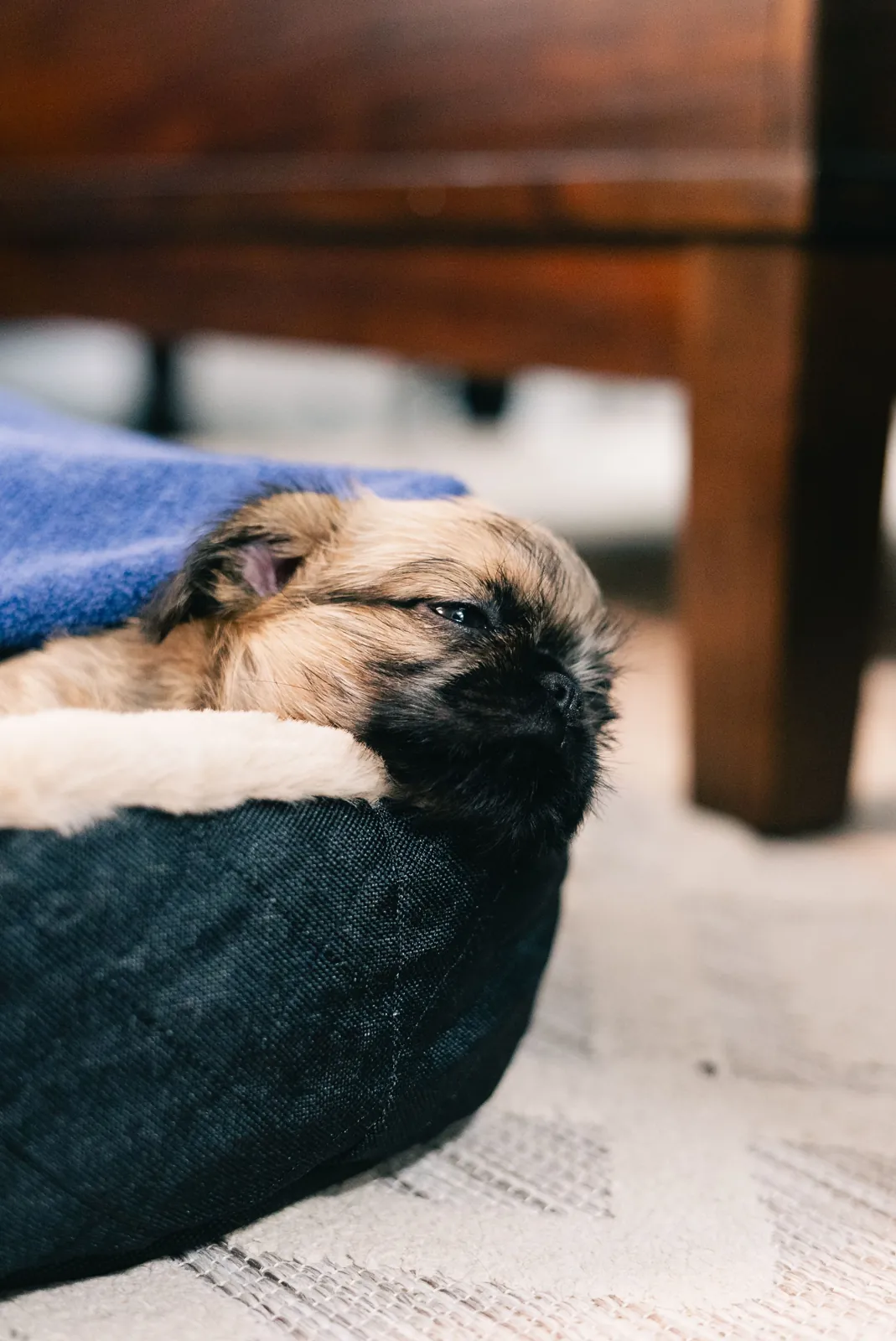
PDSA recommends considering sleeping in the same room when a puppy struggles to settle. That gives you a chance to meet real needs while building confidence gradually. It does not require forcing the puppy to remain in a crate that currently frightens them.
Agree who handles nighttime trips and keep the route clear before bed. A shared care handoff should describe what to do if the puppy wakes, what counts as a concerning change, and which safer sleeping arrangement is available if the crate attempt fails.
Progress, common mistakes, and when to get help
Look for voluntary entry, comfortable resting, and easy recovery after small changes. A silent puppy who remains tense or frozen has not necessarily become comfortable. Compare the puppy’s response with the previous easy session rather than treating fewer minutes of noise as the only measure of success.

PDSA notes that crate training usually takes a few weeks and can take much longer. That is not a deadline or a promise about a puppy already crying. If progress stalls, review the plan before adding more time or distance.
- Do not shout, bang on the crate, spray water, or use a bark collar.
- Do not cover a crate to hide continuing distress; maintain airflow and observe the puppy.
- Do not exhaust the puppy with excessive exercise as a condition of rest.
- Do not use a smaller crate or remove water to suppress bathroom needs.
- Do not repeatedly leave the puppy to rehearse a frightening absence.
AVSAB supports reward-based training. Contact your vet about new crying, possible pain or illness, or severe distress, and ask for a qualified reward-based behavior professional when needed. Crating is not a treatment for separation problems; an individual assessment can guide a safer plan. Find related guides in our dog training hub.
Frequently asked questions
Should I let my puppy cry it out in the crate?
PDSA advises against leaving a puppy to cry it out, especially during early nights in a new home. Check bathroom needs, comfort, and health, then help the puppy settle and make training easier. Quietness after prolonged crying does not establish comfort. Build confidence gradually and seek help if the puppy remains distressed despite a thoughtful plan.
Will comforting my puppy reward fear?
Do not withhold needed care because you worry that all attention rewards crying. You can respond calmly, offer a bathroom trip, and stay nearby without turning nighttime into excited play. Practice and reward relaxed crate behavior in easier sessions. Fear, pain, and unmet needs need a response; they are not reasons to demand a longer silence.
How many minutes should I wait before opening the crate?
There is no universal waiting period that makes a distressed puppy safe or comfortable. Look at the puppy and the situation rather than using a countdown. If crying escalates, the puppy needs the bathroom, or there is a risk of injury, respond promptly and safely. Plan the next session so you can finish before worry begins.
What if my puppy cries only when I leave the room?
That pattern suggests distance or being alone may be part of the difficulty, but it does not diagnose a separation disorder. Return to comfortable nearby practice and arrange care during unavoidable absences. Ask your vet or a qualified reward-based professional for help if the puppy cannot settle, panics, or repeatedly struggles when you move away.
Should I cover the crate to stop barking?
A suitable partial cover may change the surroundings, but it is not a way to conceal distress or force silence. Maintain airflow, prevent chewing or pulling fabric through bars, and watch the puppy’s response. If they remain worried, use an easier training stage or another suitable resting setup rather than adding more coverings.
How long does it take for crate whining to stop?
There is no dependable countdown for an individual puppy. PDSA describes crate training as often taking weeks and sometimes much longer, with progress at the dog’s pace. First resolve unmet needs and avoid repeating distressing attempts. Seek individualized help when crying persists or escalates instead of extending confinement to meet an online training deadline.
Sources and editorial notes
- PDSA vets: responding to puppy crying at night
- PDSA: reward-based crate training and signs to step back
- Dogs Trust: gradual crate and playpen introductions
- AVSAB: humane dog training position
MidWest: manufacturer crate setup and entanglement warning.
Animalia Editorial. Last reviewed: October 22, 2026. The response table and kitchen example are editorial planning tools, not diagnoses or tested outcomes. Crate training and learning to be alone are related but separate skills; no cry-it-out or fixed silence requirement is recommended. Editorial standards: Animalia Editorial Policy.
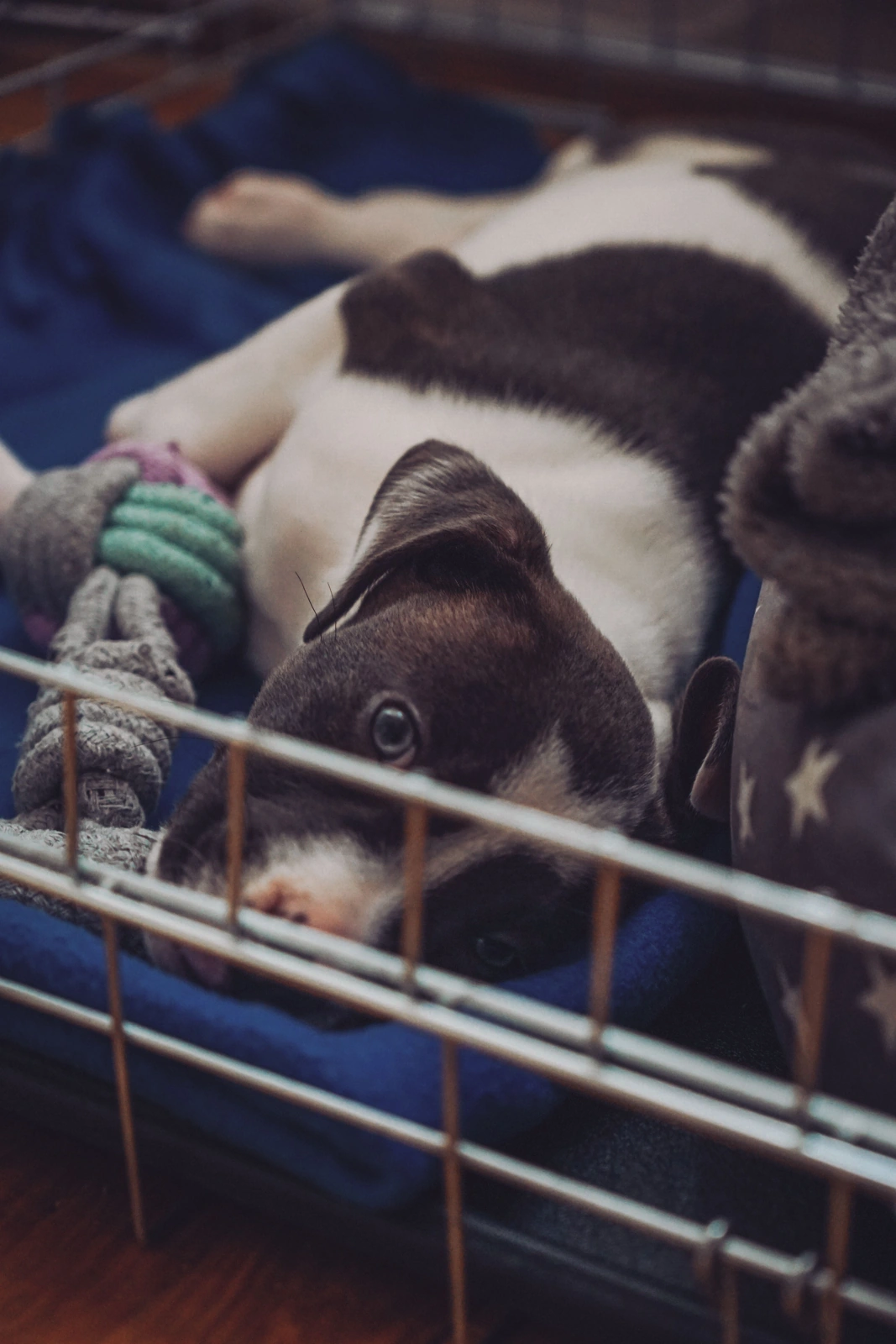
Featured photo: A puppy rests on bedding in a wire crate; the door’s position is not established. Photo: Tibor Szabo / Pexels.
Prepared with AI assistance and reviewed against the sources above.