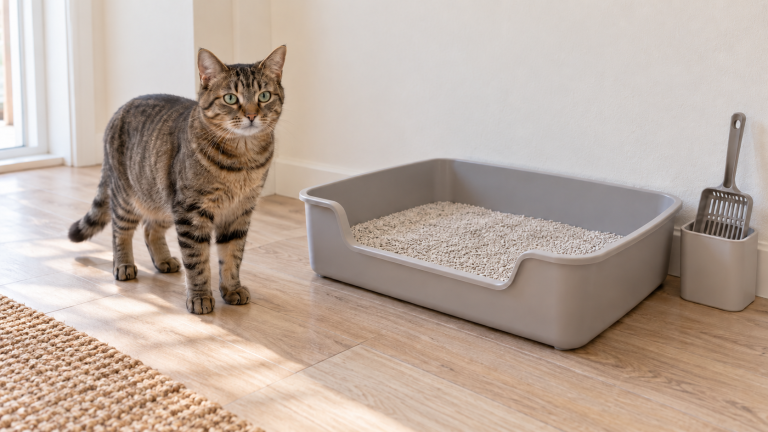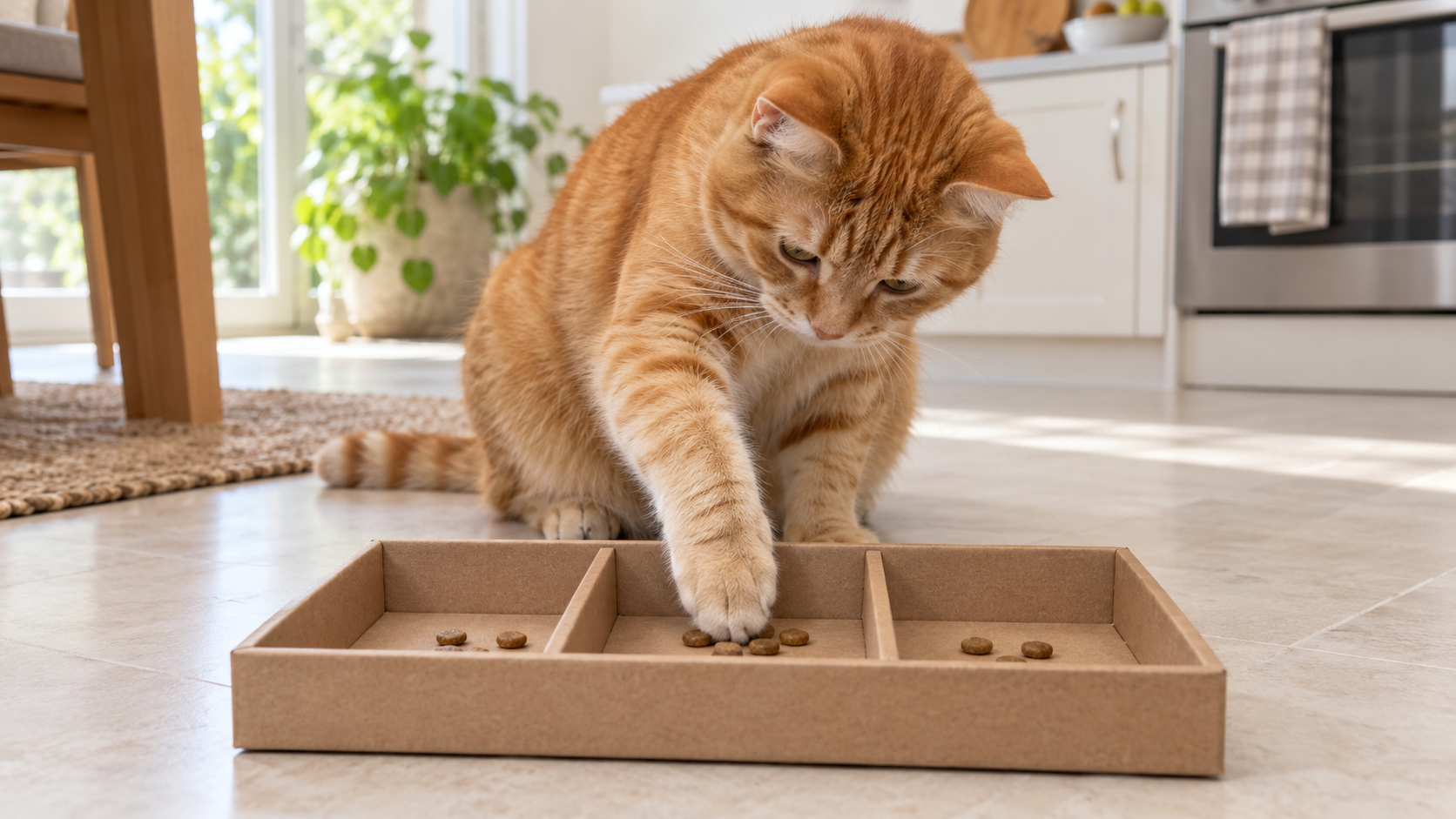
Start a DIY cat puzzle feeder with food that is easy to see and reach. A shallow, stable container with a few pieces of your cat’s usual food is enough for a first game. The aim is gentle exploration, not making a hungry cat solve a difficult puzzle.
These activities expand the feeding ideas in our indoor cat enrichment guide. Stay nearby throughout homemade-food games, and remove the setup when you finish.
Prepare food, materials, and a quiet space
Use a portion of your cat’s normal daily food allowance rather than adding an extra meal. If your cat follows a prescribed diet, keep that diet unchanged and ask your veterinary team about suitable feeding activities. A puzzle should not delay access to food for a cat that needs a particular feeding schedule.
Choose clean, sturdy materials without staples, exposed adhesive, string, elastic bands, sharp edges, or small detachable pieces. Avoid packaging that held chemicals or spoiled food. If your cat chews and swallows cardboard, choose a purpose-made washable feeder instead.
- Put the game on a non-slip surface.
- Keep other pets away during the introduction.
- Make the first food pieces immediately accessible.
- Leave the familiar feeding method available during the transition.
- Stop if the cat becomes frustrated or damages the materials.
Game 1: the open shallow tray
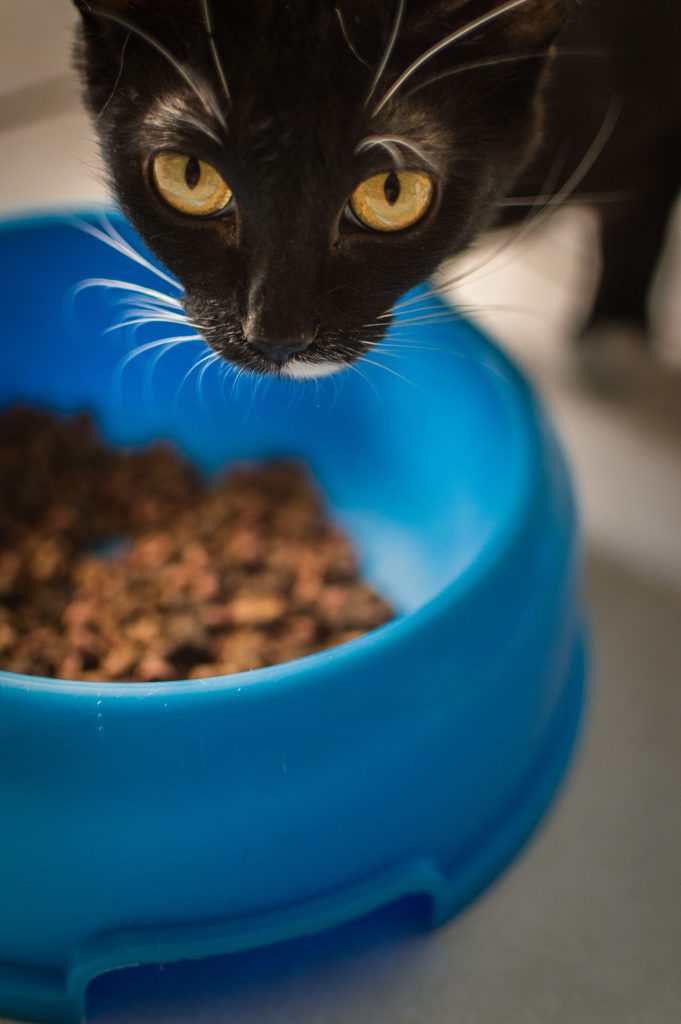
This is the easiest starting point. Place several pieces of dry food across a clean, shallow tray with smooth edges. Leave enough space between them for the cat to eat directly. You are introducing a new feeding surface before adding any obstacle.
When the cat approaches comfortably, place a few pieces against the tray’s inside edge. Watch whether your cat uses a paw, their mouth, or both. All are acceptable. There is no need to force a pawing technique or withhold accessible food until the cat performs one.
Game 2: wide, shallow compartments
A sturdy cardboard tray with broad open compartments can create a small next step. Inspect every edge first. Start with a few pieces in only one or two compartments; do not bury them under filler or close the openings.
The compartments must be large enough for comfortable access without a head or paw becoming trapped. If the cat reaches but cannot retrieve the food, make the task easier immediately. A homemade game is unsuitable if its dimensions are awkward for your individual cat.
Game 3: a simple visible food trail
Use a small portion of dry food to create a short trail across a clean, familiar floor area. Start with pieces in plain sight. Later, place one or two beside a stable object where they remain easy to reach. Keep food away from cleaning products, cables, litter areas, and inaccessible gaps.
This option works when you do not want to build anything. Count the pieces you place, supervise the search, and pick up leftovers afterward. In a multi-cat home, offer separate games with space between them rather than inviting competition over one trail.
Increase difficulty only when the cat stays comfortable
Change one feature at a time: the spacing of food, the number of open compartments, or the location within the same quiet room. Do not jump from a visible snack to a tightly closed container. Successful practice looks like voluntary investigation and comfortable eating.
If your cat walks away, that is useful information. They may prefer a different time, surface, or activity. Try an easier version later rather than following the cat around with the puzzle. The feline feeding consensus supports feeding arrangements that account for cats’ behavior and individual needs; it does not make every puzzle appropriate for every cat.
Troubleshooting and cleanup
| What you see | What to try |
|---|---|
| Cat ignores the game | Offer familiar food on the plain tray before adding compartments |
| Cat paws repeatedly without getting food | Open access and lower the difficulty |
| Cat chews the container | Remove it and use a suitable washable feeder |
| Another pet approaches | Separate the feeding areas |
| Food remains afterward | Collect leftovers and clean the surface |
Discard cardboard when it becomes damp, dirty, or damaged. Use wet food only on a surface suitable for prompt washing, and follow its storage instructions. Do not leave food in an absorbent homemade container.
Common questions
Should every meal come from a puzzle?
No. Keep feeding practical and suited to your cat’s needs. Introduce games gradually and maintain reliable access to appropriate food.
Can I leave a homemade puzzle out while I am away?
These homemade activities are designed for supervision. A cat’s response to new materials can change, so put the game away after use.
What should I do if my cat stops eating?
Return to the familiar feeding setup and contact your veterinarian promptly about a reduced appetite. Do not treat lack of eating as a puzzle-training problem.
Sources and editorial notes
These are suggested beginner setups, not tested products or medical feeding plans. Supporting guidance: Feline Veterinary Medical Association: feeding consensus and Ohio State University: toys and food-related activities. For another small-space resource, see choosing an apartment cat tree.
Featured image: Illustrative beginner food-puzzle setup, generated with AI; supervise homemade activities.