A useful cat scratching post is stable, suits the way your cat likes to scratch, and stands in a location your cat already visits. Start by observing the surface and position your cat chooses. That information is more useful than choosing a post only because it matches your furniture.
Scratching is normal cat behavior. Your goal is to provide a practical outlet and protect household surfaces while your cat learns where that outlet is.
Watch how your cat scratches
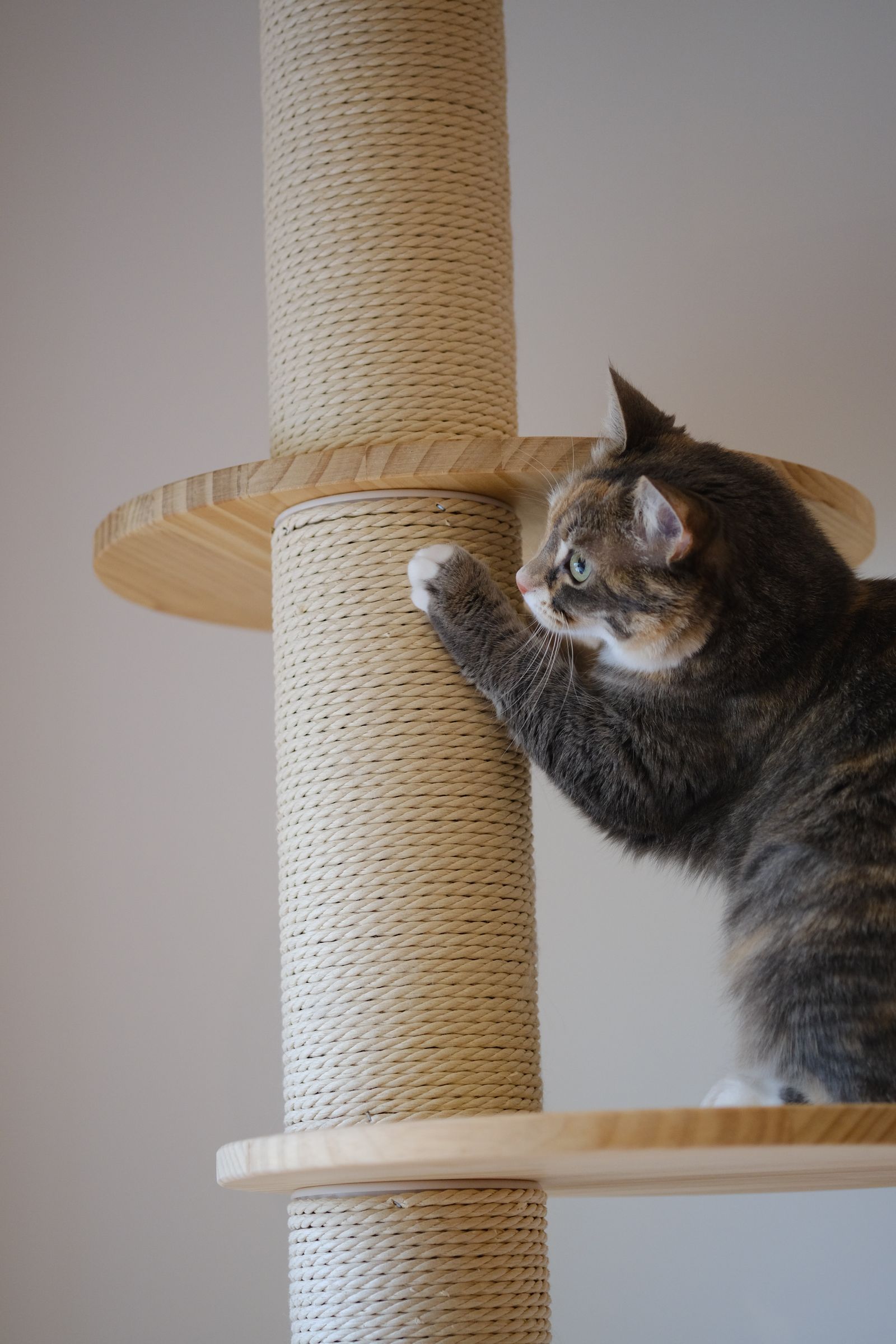
Does your cat stretch upward against a chair, lean into a sofa corner, or scratch along a rug? These patterns suggest different starting options. A vertical post may suit an upward stretch; a horizontal pad may suit a cat that works along the floor. Some cats use both.
Notice the location too. A post hidden in an unused spare room may be less appealing than the sofa beside a favorite resting place. Make a short note of the chosen surface, direction, and nearby activity before shopping. Avoid interpreting every scratch as deliberate misbehavior.
Match the shape and surface
| Observed preference | Option to consider | Important check |
|---|---|---|
| Full upward stretch | Tall vertical post | Cat can extend comfortably without the post rocking |
| Scratching along the floor | Horizontal pad | Pad stays put and has room around it |
| Angled scratching | Stable inclined scratcher | Angle and surface remain secure during use |
| Several surfaces in different rooms | More than one scratching option | Resources are accessible in the locations the cat uses |
Sisal, cardboard, and other purpose-made surfaces offer different textures. There is no single material every cat will prefer. If possible, start with a surface resembling one your cat already chooses, then offer an alternative nearby.
Check stability on your actual floor
Assemble the post according to its instructions. Test for movement without your cat on it, and check that the base lies flat. A pad should not slide away when the cat pushes against it. Recheck fittings as the item wears.
Remove loose threads, broken pieces, and damaged hardware by following the manufacturer’s maintenance guidance. Replace the scratcher when you cannot keep it safe. Do not leave dangling cords or exposed fasteners near a scratching area.
Place the first post where it solves a real problem
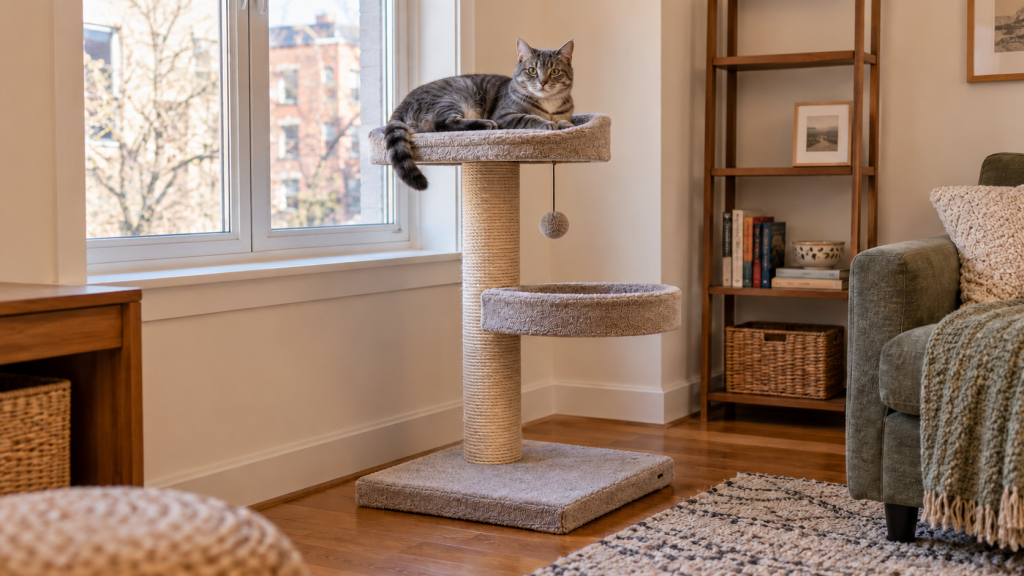
Ohio State’s guidance recommends making scratching surfaces available in useful locations and tall enough for an extended scratch. In practice, begin close to the furniture your cat already targets, or near a familiar resting area. Keep the approach clear.
If you eventually want to move the post, first establish that your cat uses it. Then try small changes in location and observe the result. Moving a successful post into a distant corner may remove the very feature that made it useful.
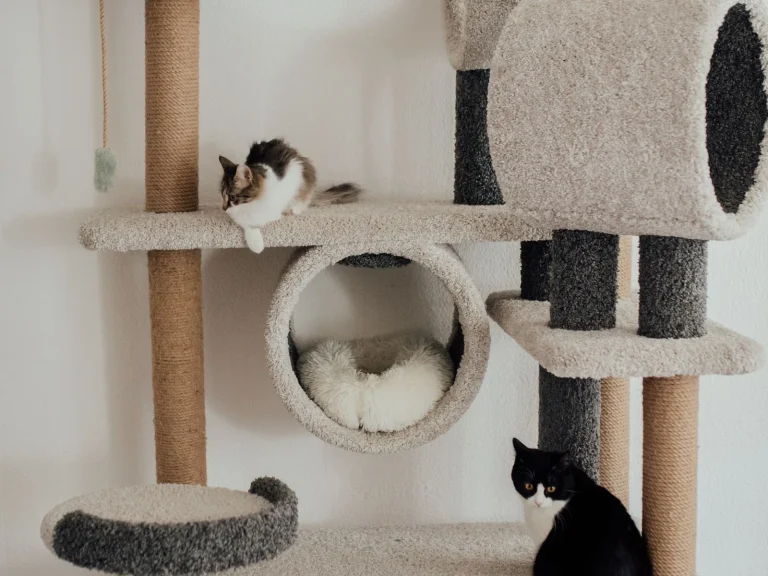
In a small apartment, think about routes rather than unused gaps. A low pad can sit beside a resting area without crowding a doorway. A compact cat tree may add a vertical scratching surface, provided its post is usable and stable.
Encourage use without forcing your cat’s paws
Allow investigation and reward voluntary scratching if your cat welcomes the reward. A supervised play session near the post can help your cat notice it. Do not hold the cat’s paws against the surface or punish scratching elsewhere.
Protect the original furniture with a suitable cover while the alternative becomes familiar. Check any protective product’s instructions and keep loose plastic away from pets. Protection alone does not teach a new location; the accessible alternative is the central part of the setup.
What to change if the post is ignored
- Location: put it beside a scratching spot the cat already chooses.
- Direction: offer a horizontal option if the cat prefers a floor surface.
- Movement: check for wobbling or sliding.
- Reach: make sure furniture does not block a full stretch.
- Texture: try a different purpose-made surface.
Change one feature at a time so you can see what helps. A second inexpensive scratcher may provide a more useful choice than repeatedly relocating the only one.
Common questions
Can I keep the scratching post out of sight?
You can experiment, but the cat must find the location useful. Begin where scratching already happens, then consider gradual moves once the post is being used.
How many scratching posts do I need?
There is no universal count for every home. Offer accessible options in the areas your cats use, especially when they have different preferences or avoid sharing.
What if scratching changes suddenly?
Check the resource and household changes. If your cat also seems uncomfortable, withdrawn, or reluctant to move, ask your veterinarian for advice.
Sources and editorial notes
Supporting guidance: Ohio State University: scratching resources and basic indoor cat needs. For a complete room plan, combine scratching resources with the choices in our indoor enrichment guide. This article provides home-setup guidance and does not diagnose behavior changes.
Featured image: A cat using a vertical scratching surface. Photo: Jasmine Pang / Pexels.