A practical multi-cat layout offers useful resources in more than one location and clear routes between them. Start by mapping where each cat rests, eats, scratches, and uses the litter box. Count access and choice, not just the number of items you own.
Draw a simple household map
Sketch rooms, doors, narrow passages, and existing resources. Add the locations each cat actually uses. You do not need precise measurements to notice that every important item sits beyond the same hallway.
Observe ordinary activity without staging interactions. Note when one cat waits for another to leave, changes direction, or avoids a resource. The map is a practical discussion tool, not a diagnosis of their relationship.
Separate choices instead of building one resource station
A row of beds or feeding bowls in one corner may still require cats to share a single approach. Consider offering resting and scratching choices in different familiar areas. Keep toileting resources apart from feeding areas.
Provide one litter box per cat, plus one extra, in separate locations rather than side by side. Cornell’s Feline Health Center recommends as many boxes as cats plus one, placed in different areas of the house. Our litter-box setup guide covers placement checks. The number on paper does not replace observing whether each cat can use the boxes comfortably.
For the water part of your household map, our guide to planning cat water stations walks through bowl locations, familiar choices, and notes about what each cat actually uses.
Review access to high and low resting places
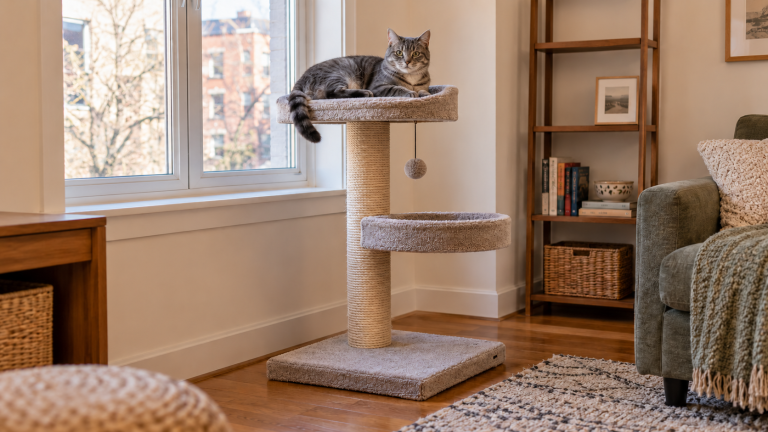
Provide options appropriate to the cats’ preferences and movement. A stable elevated perch may be attractive to one cat; an accessible floor-level bed may suit another. Avoid making all desirable resting places depend on one difficult jump.
Keep exits and approaches clear. A cat should not have to pass close to another cat’s resting body to reach every resource. Where practical, offer another route or another equivalent resource elsewhere.
Use a resource checklist
- Can every cat reach food and water without being crowded?
- Are litter-box approaches reliable at busy times?
- Are scratching surfaces placed where cats already spend time?
- Are there quiet retreat options in separate areas?
- Can a cat leave a resting place without being cornered?
- Are cleaning and maintenance practical for caregivers?
Review the checklist again after furniture moves or a new household member arrives. Small layout changes can alter access even when all the original resources remain.
Change one problem area first
Begin with an observed bottleneck rather than replacing everything. For example, add a resting option outside a crowded room and watch whether it gets used. Keep familiar resources available while you learn.
If conflict persists or you notice health or behavior changes, seek veterinary and appropriately qualified behavioral advice. A layout guide cannot establish why cats avoid each other. For newcomers, see planning gradual cat introductions.
Sources and editorial notes
Supporting resource guidance: Ohio State University’s Indoor Pet Initiative and Cats Protection: living with other cats. The map and checklist are household planning tools.
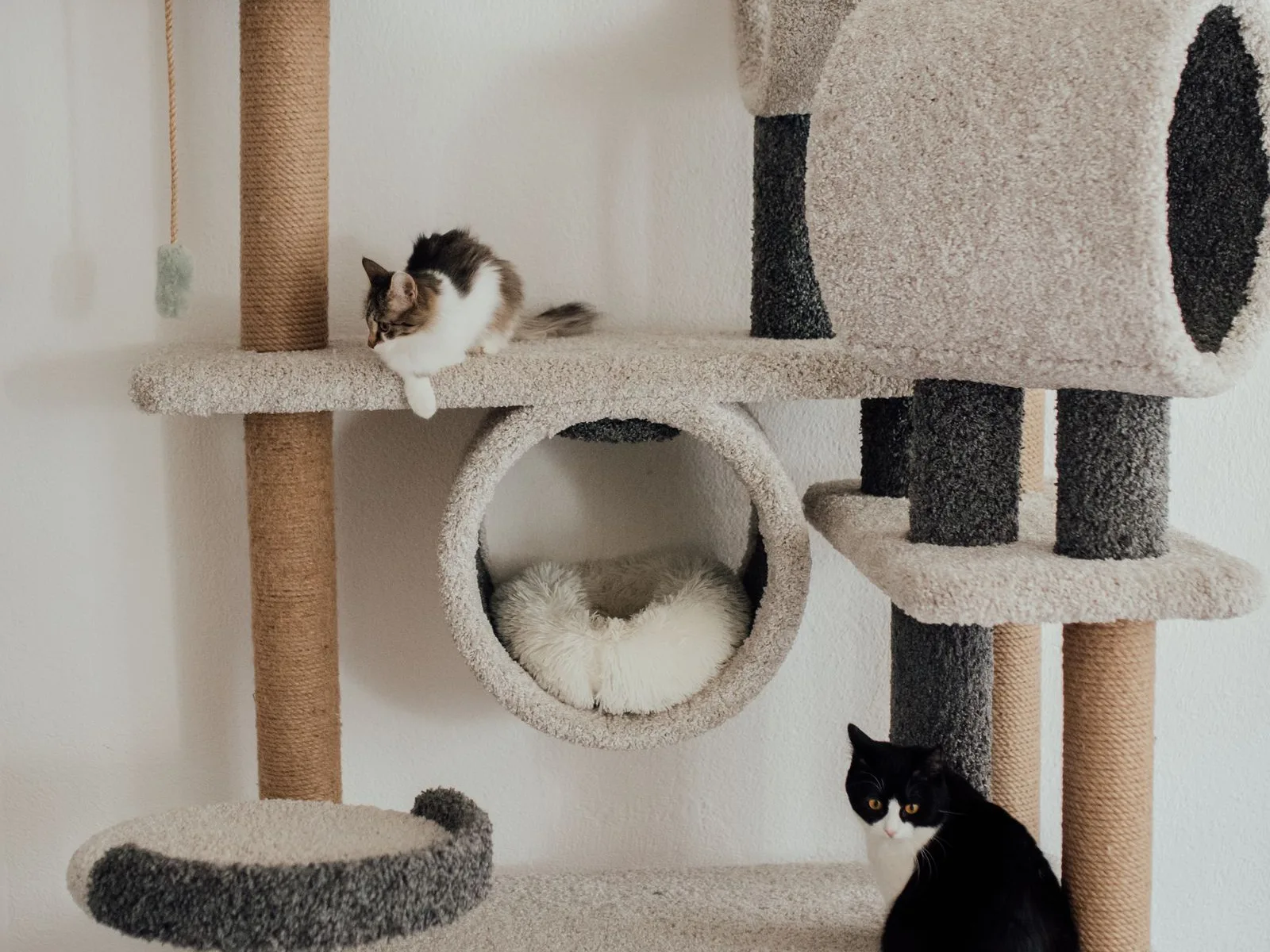
Featured image: Cats using separate levels of a multi-level cat tree. Photo: Arina Krasnikova / Pexels