A puppy sleep schedule should offer quiet naps between active periods, a calm bedtime routine, and prompt care when your puppy wakes. PDSA recommends a consistent sleeping place and reassurance during the first nights. Use the plan below as a flexible sequence, not a timetable that overrides bathroom needs, distress, or illness.
Animalia focuses here on settling and night waking. This is a practical sleep plan rather than a full meal schedule or an age-by-age quota of sleep hours.
Puppy sleep schedule: a flexible starting plan
| Point in the routine | What to offer | What to watch |
|---|---|---|
| After waking | A bathroom opportunity and calm contact | Whether the puppy needs care before play |
| After suitable activity | A quiet, familiar place to nap | Signs the puppy is tired before more activity |
| As the household winds down | Calmer activity, lower disturbance, and a comfortable bed | Whether the space is too busy or the puppy is still unsettled |
| Before bed | A bathroom opportunity and a familiar settling sequence | The last care check and who responds overnight |
| During night waking | Prompt check for bathroom needs, comfort, fear, or illness | What happened and what helped the puppy settle |
| The next morning | Review the pattern and adjust the next night’s care | Changes from the puppy’s own normal behavior |
This Animalia example uses events rather than fixed clock times. Young puppies differ in their ability to settle and manage overnight bathroom needs. A planned nap is an opportunity for undisturbed rest, not permission to confine a distressed puppy until the next row of the schedule says it is time to respond.
How do you build a bedtime routine your puppy can use?
Choose a comfortable resting place, keep the lead-up calm, and give your puppy a bathroom opportunity before settling. Stay close enough to respond while they learn the new routine. Repeat a simple sequence that your household can manage. If the puppy struggles, change the setup or make the transition smaller.
1. Choose a sleeping place before the night begins
Blue Cross recommends keeping a new puppy nearby at first so they feel reassured and you can hear when they need care. A suitable bed, pen, or comfortably introduced crate may work. Check that the space is secure, clear of hazards, and allows comfortable movement. Keep the puppy within a care plan, rather than relying on distance to make crying harder to hear.

2. Help the household become quieter
Move from busy play toward a calmer activity before bed. Keep lights and noise at a level that lets the puppy rest comfortably, and ask everyone to leave the sleeping place alone. Dogs Trust notes that overtired puppies can also struggle to settle. More vigorous exercise is not always the useful next step when a puppy becomes restless.
3. Check bathroom needs and comfort
Offer a bathroom opportunity before bed, then return calmly to the resting place. Check the bedding for damage and choose materials the puppy can use safely. Keep water available; do not remove it to make the timetable work. If your vet has given a specific care instruction, follow that plan and ask how it affects overnight arrangements.
4. Agree who responds and what gets recorded
Decide who is on duty before everyone goes to bed. Keep the route for a bathroom trip safe and easy to use. Record the time of waking, whether the puppy toileted, and what helped them settle. Our household consistency guide helps make the response clear when more than one person provides care.
What should you do when your puppy wakes at night?
Check promptly for bathroom needs, discomfort, fear, or signs of illness. Keep a necessary bathroom trip calm, then help the puppy settle again. If they remain distressed, stay close and reassess the setup. Do not make them keep crying to prove they can sleep alone or wait for silence before meeting a need.
Blue Cross advises against leaving a new puppy to cry. A new home and sleeping away from littermates can be a major change. You can offer reassurance while building comfort gradually. If you want to change the sleeping location, make that a small, separate step once the puppy is settled.
If the main problem is distress around the crate, use our puppy crate-whining guide to assess care needs and easier practice. A sleep schedule cannot replace a comfortable introduction. Choose a suitable nearby resting option while you get help with ongoing distress.
When should you adjust the plan or ask for help?
Review the plan when night waking changes, naps are repeatedly disturbed, or your puppy cannot settle comfortably. Start with care and the environment, not a stricter deadline. Contact your vet if the puppy seems unwell, unusually low in energy, painful, or different from their normal self, and describe the change clearly.
PDSA recommends veterinary advice for low energy or a dog who seems not quite right. Resting after play and being too unwell to engage are different concerns. Do not force more exercise to test whether your puppy is simply tired. Your veterinary team can advise whether the change needs assessment.
Try this small review note: “Last night, the puppy woke at __. We offered __. They settled after __. The next change will be __.” Keep the description factual. “Needed a bathroom trip, then rested near us” gives the next caregiver more useful information than “bad sleeper.” Animalia recommends changing one part of the setup at a time when care needs allow.
For example, if visitors repeatedly disturb the early nap, protect that resting period before moving bedtime later. If the puppy wakes when a person leaves, review proximity and gradual comfort rather than adding a longer walk. For a broader transition into quiet time, use our calm evening routine guide.
FAQ: puppy sleep routines
How do I get a puppy to sleep through the night?
Begin with a calm routine, a comfortable nearby sleeping place, and responsive overnight care. Some puppies still need bathroom breaks and reassurance, so do not set a night when they must stop waking. Track the pattern and make small changes. If settling remains difficult or changes suddenly, discuss it with your vet and a qualified reward-based professional.
Should I keep my puppy awake during the day?
No. Offer quiet rest when your puppy needs it rather than removing naps to try to guarantee nighttime sleep. Dogs Trust notes that overtiredness can make settling harder. Provide suitable activity while awake, then allow undisturbed sleep. If the puppy is unusually difficult to rouse or seems unwell, contact your vet instead of treating it as ordinary napping.
Does a puppy need a crate to follow a sleep schedule?
A crate is one possible resting option if the puppy can use it comfortably, but it is not the only choice. A suitable bed or safely managed pen may work better for your situation. Keep the arrangement secure and within reach of care. Do not shut a distressed puppy into a crate simply because it is the planned nap time.
Should I wake my puppy at exactly the same time every morning?
A predictable household rhythm can help, but an exact clock rule should not override the puppy’s care or comfort. Plan who will respond if they wake earlier and need the bathroom. Review your own puppy’s pattern rather than copying another household’s overnight intervals. Ask your vet about any medical care or feeding needs that affect the routine.
Can I move the puppy’s bed out of my room straight away?
A new puppy may find that change difficult. Blue Cross recommends starting nearby and moving the sleeping place gradually when the puppy is settled. Watch the response at each step and slow down if they struggle. You can plan for your preferred location while still giving the puppy reassurance and prompt access to care during the transition.
Start with the next comfortable night
Choose a calm sequence, assign overnight care, and record what actually happens. Animalia recommends adjusting the plan around your puppy’s needs instead of aiming for a perfect chart. Our puppy care and crate training guide explains how to build a resting option through small, positive steps.
Sources and editorial notes
- PDSA: first day and night with a puppy
- Blue Cross: sleeping through the night
- Dogs Trust: helping a restless dog settle
- PDSA: low energy in dogs
Animalia Editorial. Publication date: November 1, 2026. Sources checked October 29, 2026. Editorial Policy.
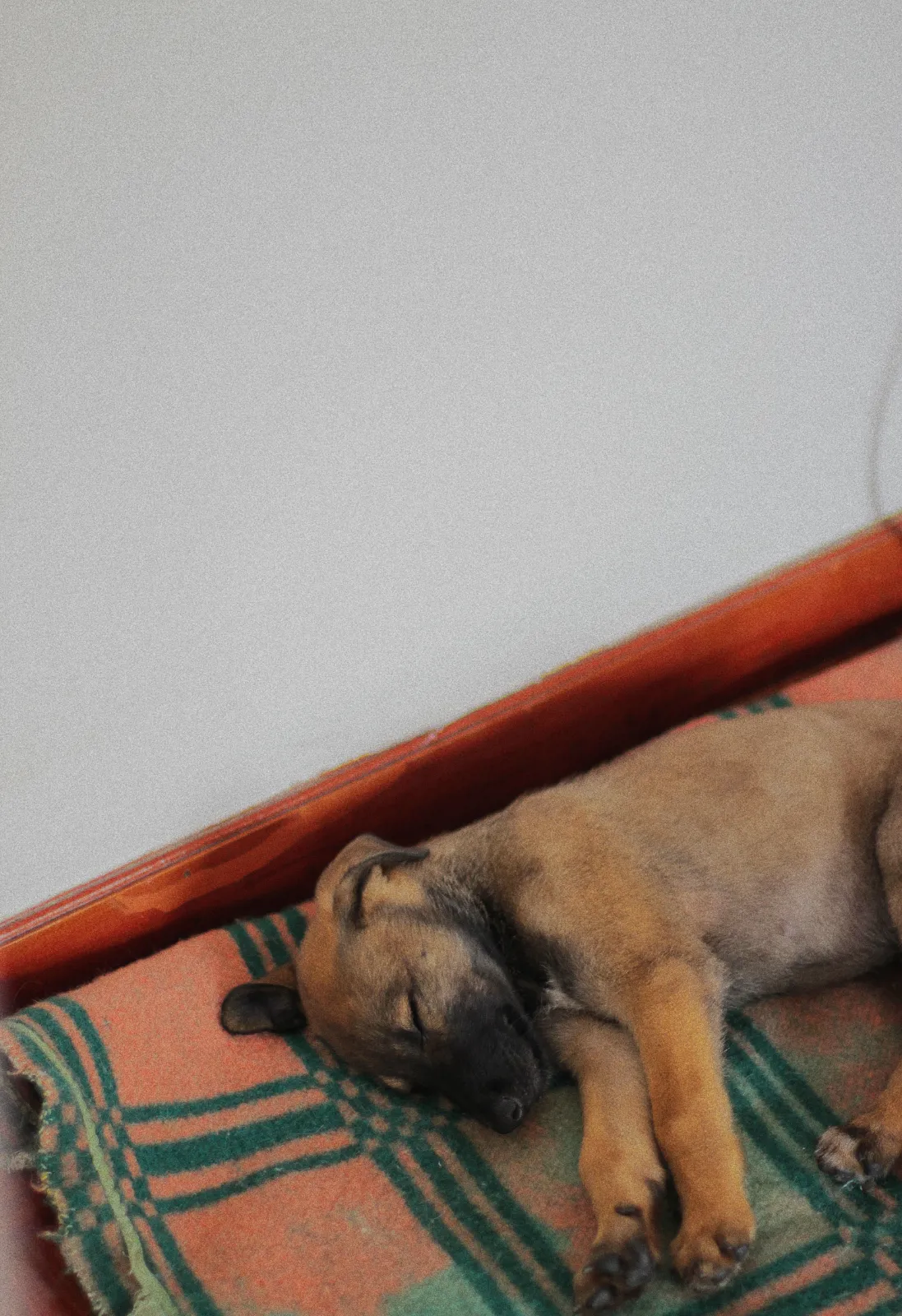
Featured photo: A puppy naps on a blanket. Protect quiet rest while planning responsive overnight care. Photo: Katia Oleksa / Pexels
Prepared with AI assistance and reviewed against the sources above.