Do cats get jealous? Cats can respond when attention, space, or household routines change, but research has not established that these responses are the same as human jealousy. A study of potential rival interactions could not draw a firm conclusion. Focus on what your cat does, protect access to resources, and seek help for concerning changes.
Animalia’s guide separates an understandable human label from the practical care decision. A cat moving between you and another pet is an observation. Deciding that the cat wants revenge is an interpretation that may distract from the situation you can actually change.
Do cats get jealous in the same way people do?
The evidence does not support a confident yes or no about the same subjective emotion. Researchers observed reactions to a toy cat but lacked other expected jealousy indicators. Your cat may still need help with a changed situation. Describing the behavior precisely is more useful than trying to prove the emotion at home.
The 2020 study recruited 52 cats from households and cat cafés. It compared reactions when an owner or an unfamiliar person petted a realistic toy cat or a furry cushion. Cats, especially household pets, reacted more strongly toward the toy previously petted by their owner, but did not respond differently to the two people. The authors called for more realistic procedures.
That result does not prove that cats lack feelings, and it does not turn every interruption into evidence of jealousy. A stuffed rival is different from a new animal sharing a home. Keep the study’s limited conclusion separate from the practical task of making the household comfortable and safe for the animals who live there.
For instance, record “approached while I stroked the other cat, then the other cat left” rather than “demanded that I love only him.” The first note identifies the people, animals, and sequence involved. If it happens again, you can compare the circumstances without assuming the same motive each time.
Review attention, routes, and resources separately
Use this Animalia table as a home review, not an emotion test. Each example pairs an observation with a practical question. Cats Protection explains that changes, conflict, and difficulty sharing territory can affect relationships between cats. A resource is useful only when the individual cat can reach it comfortably.
| Observation | Question to check | Practical next step |
|---|---|---|
| One cat leaves when another approaches | Can each cat choose a separate resting place? | Provide accessible resting choices and review the interaction |
| A pet waits at a narrow doorway | Is another animal blocking a necessary route? | Plan separate routes or supervised access |
| The cat approaches during another pet’s attention | What happens before and after the approach? | Offer individual voluntary time in a comfortable setting |
| The dog reaches the cat’s food | Can the cat eat without meeting the dog? | Arrange protected feeding access |
| Behavior changed with a new arrival | Which routines, spaces, and sounds changed? | Restore usable resources and discuss persistent concerns |
Walk through the home at a normal busy time instead of checking only when the animals are asleep. Note whether a bowl is technically available but reached through another pet’s resting place. Our cat introduction guide and cat hideout guide help you plan separate space without forcing animals to interact.
Choose one change that answers the observed problem, then record what happened. Moving a bowl may solve an access issue while leaving an uncomfortable social interaction unresolved. The table is a way to organize the next action, rather than a promise that more equipment or equal attention will settle every household.
How should you respond when a new pet or person arrives?
Protect each animal’s access to essentials and give them a choice about contact. Dogs Trust recommends supervision, separation when needed, and resources animals can access without meeting. Introduce changes gradually with an appropriate plan. A new pet is not a reliable way to fix attention-seeking, and forced closeness is not a relationship test.
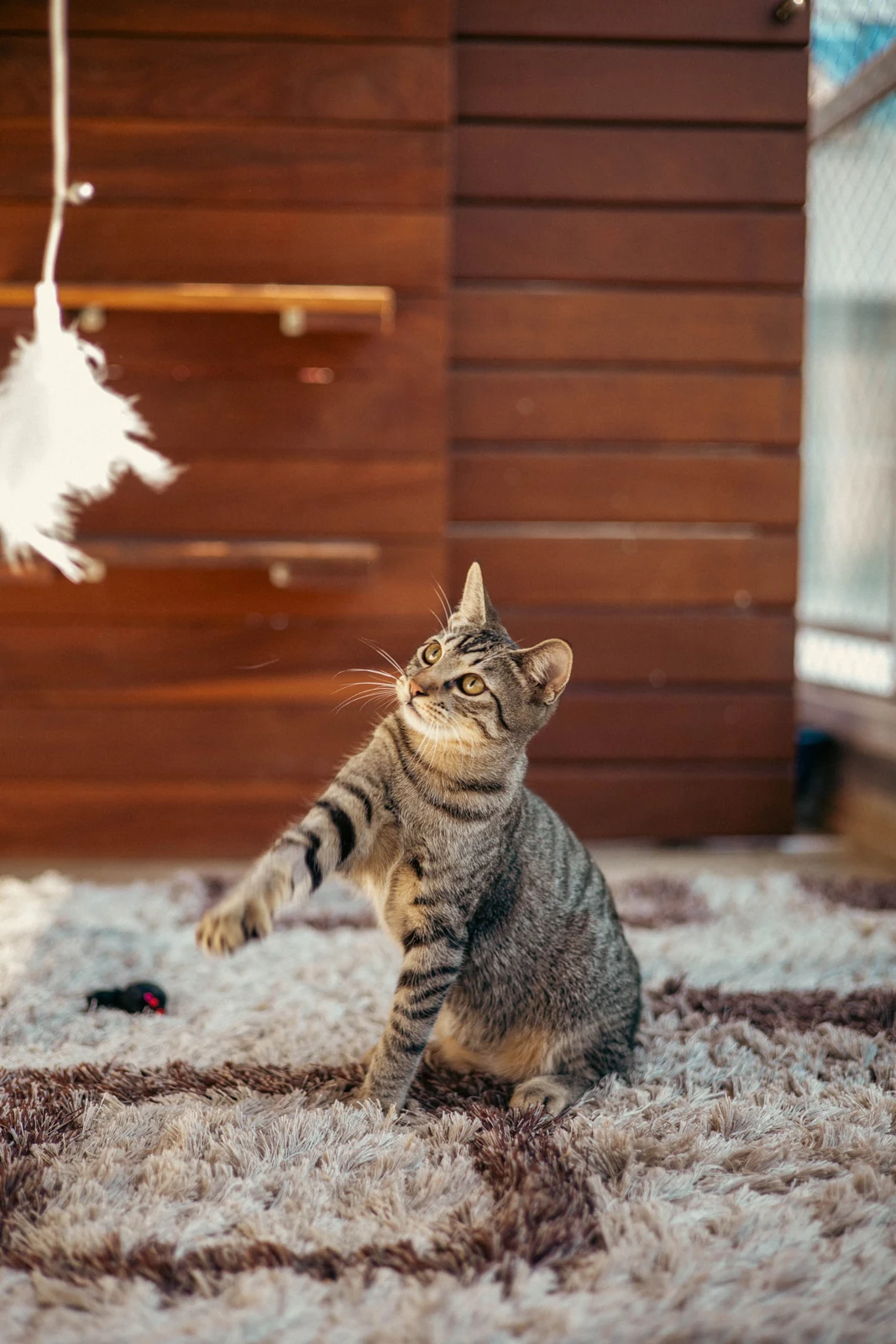
With cats, begin by planning separate comfortable areas and use a gradual introduction method suited to the household. Cats Protection advises taking introductions slowly and seeking qualified behavior help when conflict continues. Do not assume the animals will work out a dangerous interaction on their own, or place your hands between fighting cats.
With a visitor or partner, agree on a quiet arrival and let the cat approach voluntarily. The person can spend time in the room without following the cat or reaching into a hiding place. Keep normal resources accessible while the household becomes busier. If a baby is joining the home, plan supervision and appropriate separation with professional guidance before the arrival.
Individual time can be a practical part of the routine, but it does not need to become a competition measured in identical minutes. One cat may choose play while another prefers resting nearby. Note what each animal comfortably accepts. Our non-food enrichment guide offers options when you want an activity beyond handing out extra treats.
Build a useful record and know when to seek help
Animalia suggests recording the setting, the animals or people present, what happened before the behavior, and what followed it. Include changes in eating, toileting, movement, and normal social contact. Bring sudden or persistent changes to your veterinarian so a household interpretation does not obscure a health or welfare concern.
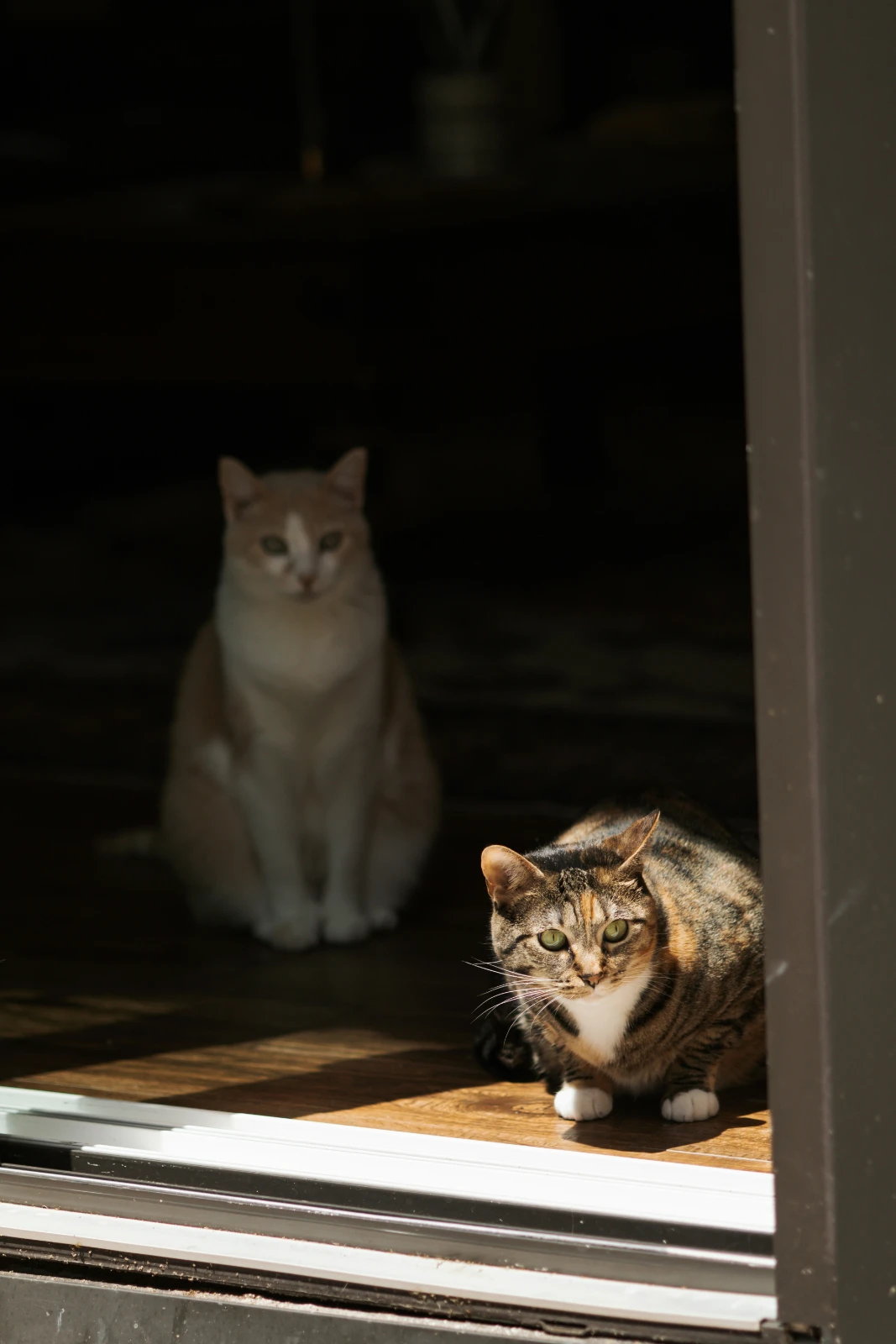
An example entry could be: “After the dog entered the kitchen, the cat left the bowl and went upstairs; food offered separately later.” That record makes the route and feeding arrangement easy to discuss. It does not establish that the cat resents the dog, has a particular disorder, or needs a product advertised for jealousy.
If there is a risk of injury, prioritize safe separation and ask your veterinarian for qualified behavior support. Avoid testing whether the reaction becomes stronger when you pet another animal. Repeatedly provoking the situation gives the animals another difficult experience without answering the emotional question in a reliable way.
Start today with one access check and a short, factual note. For broader context, Animalia’s cat behavior hub connects related owner questions. A useful plan improves the situation your cat is experiencing, even when the exact emotional label remains uncertain.
Frequently asked questions
Is my cat jealous of the other cat’s food?
Watching or approaching another bowl does not establish jealousy. Check whether each cat can eat comfortably without interruption and whether their feeding plans differ. Feed in suitable separate locations when needed, and ask your veterinarian about appetite or diet concerns. Record what you see instead of assuming equal portions or a shared bowl will make the situation fair for every cat.
Can a cat be jealous of a baby?
A baby changes sounds, routines, and access to space, so focus on those practical changes rather than assigning a motive. Plan safe supervision, suitable separation, and reliable access to your cat’s essentials. Seek individual guidance if your cat shows distress or unsafe behavior. A behavior label cannot establish whether a particular interaction is safe, and the animals should not be tested around the baby.
Does peeing outside the litter box prove jealousy?
No. A change in toileting needs veterinary attention and a review of the litter setup; it cannot prove an emotion or deliberate revenge. Tell the clinic when the change began and describe what you actually observed. Keep resources accessible and clean up calmly. Do not punish the cat or delay assessment while trying to identify which household member they supposedly resent.
Should I ignore a cat that interrupts attention?
First look at the whole interaction and whether either animal seems uncomfortable or loses access to you or another resource. You can arrange separate voluntary attention in a calmer setting without turning the moment into a test of persistence. If interruptions include threatening behavior or create a safety concern, ask for qualified help with the household plan rather than relying on one universal response.
Will buying another bed or toy solve the problem?
A useful additional resource may address an access gap, but a purchase does not identify the cause or guarantee improvement. Check placement, routes, and whether the individual cat actually uses the item comfortably. Keep a record of the change and seek help if conflict or distress continues. Sometimes the most practical adjustment is a different arrangement of resources you already own.
Sources and editorial notes
Animalia Editorial. Reviewed November 4, 2026. Behavior examples are illustrative; they are not a home jealousy test or a diagnosis. See our editorial policy.
Bucher and colleagues: potential-rival study; Cats Protection: cats and conflict; Dogs Trust: cats and dogs together.
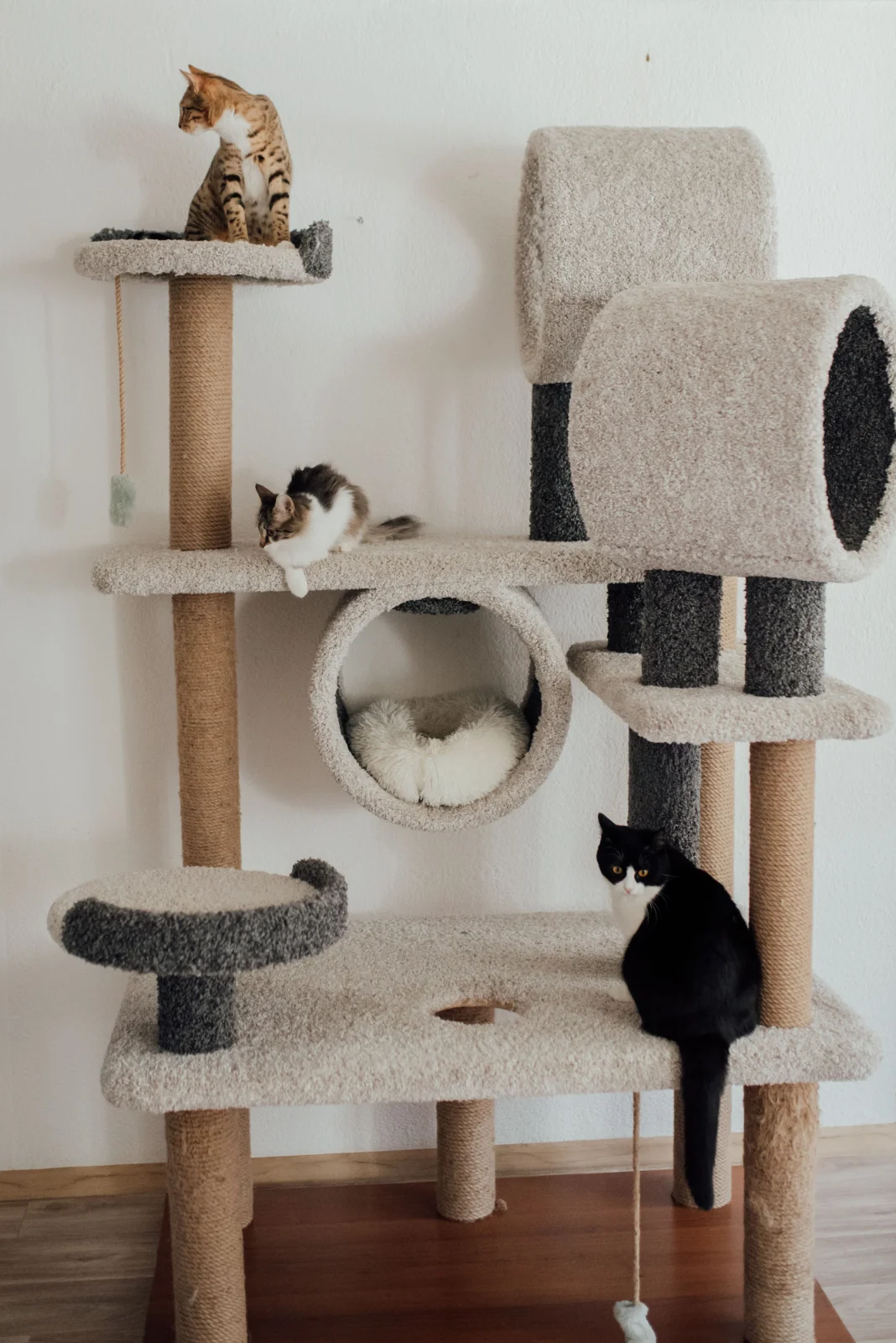
Featured photo: Cats occupy separate levels of indoor cat trees. A photograph cannot identify jealousy. Photo: Arina Krasnikova / Pexels.
Prepared with AI assistance and reviewed against the sources above.