Some cats dislike closed doors because the barrier interrupts access, an expected routine, or contact they want. Battersea identifies restricted access and unmet expectations as possible causes of frustration. Check what the door blocks before deciding your cat is anxious. A meow alone does not reveal one fixed emotion or diagnosis.
You may still need privacy or a safe boundary. Animalia’s approach starts with the cat’s needs on each side, then makes necessary changes predictable. For a whole-home check, use the cat resource layout guide instead of treating every door as a behavior problem.
Why do cats hate closed doors in the first place?
A shut door may block a wanted place, activity, person, or familiar route. Battersea describes frustration when access is restricted or expectations change. The door may matter because of what lies beyond it, rather than because all cats hate doors. Look at the specific situation before choosing a response.
Cats Protection notes that some cats vocalize because they want to follow someone or expected something else. This does not automatically mean separation anxiety. A changed meal routine, blocked resting place, or sudden loss of access deserves attention before a story about jealousy, control, or deliberate misbehavior.
| What the door changes | What to check | A useful response |
|---|---|---|
| Blocks the only litter tray or water | Can the cat reach essentials without that room? | Restore suitable access before working on quiet behavior. |
| Interrupts a familiar resting route | Is an equally comfortable place available? | Prepare an alternative before changing the usual access. |
| Separates the cat from activity | What normally happens around this time? | Keep suitable play, meals, and company predictable. |
| Protects a hazard or another animal | Is the boundary needed for safety? | Keep it secure and arrange care on the cat’s side. |
The table is an original access check, not a way to read your cat’s mind. Use the safe hideout ideas when the missing resource is somewhere quiet to retreat. A busy doorway may not provide the same comfort as a familiar private resting spot.
Prepare a comfortable area before closing the door
The RSPCA advises giving cats easy access to beds, water, litter facilities, and safe hiding places. Check those needs before shutting a room. Keep the route usable without passing an animal who blocks access, and place suitable resources on the accessible side when the boundary must remain closed.
Animalia suggests drawing the door and marking the resources on either side. Include food, water, litter, rest, hiding, scratching, and ordinary company. Then check the actual route from the cat’s level: another pet waiting in the hallway may make an apparently open route difficult to use.
Battersea recommends predictable surroundings and suitable opportunities for play and exploration. Offer activities your cat can use comfortably, rather than relying on one unfamiliar puzzle to occupy them. Keep string toys for supervised play and store them away afterward, as Battersea advises.
Use the toy rotation guide for manageable choices, and preserve quiet rest as well as activity. Avoid moving every resource at once just to clear the room. Necessary boundaries work best alongside practical care; an open door is not the answer when it exposes a hazard or disrupts another animal’s safe space.
How can you make a necessary closed door easier?
Start with needs met and a predictable arrangement, then keep any practice easy enough for the cat to remain comfortable. Battersea recommends avoiding frustrating situations where possible and preserving choice. Do not wait through escalating distress to prove a rule. If the boundary repeatedly causes difficulty, ask for individual professional advice.
Before you need privacy, offer ordinary company or suitable play and make the resting area accessible. For a change that can be introduced gradually, begin with an easier version while you remain available. Watch the whole body and response, rather than increasing the challenge according to a fixed timetable.
A quiet reward can recognize comfortable behavior, but food does not make a difficult situation comfortable by itself. If your cat leaves an activity and fixates on the door, pause and review the setup. Avoid grabbing them away from the threshold or repeatedly closing the door to test their reaction.
The RSPCA advises against shouting at or punishing cats. Do not use sprays, startling noises, or sticky deterrents to make the doorway unpleasant. Keep a safety boundary secure while arranging a workable alternative. For barriers between cats, follow the gradual cat-introduction plan rather than improvising contact through an unsafe gap.
Notice changes and know when to get help
Battersea lists persistent door staring, vocalizing, scratching, and frantic activity among possible signs of frustration. Observe the sequence and what the door prevents. These signs do not identify a medical or behavioral diagnosis, and they do not prove that your cat must always have access to the room.
Cats Protection recommends a vet check for sudden or significant behavior changes. Mention changes in eating, drinking, toileting, sleep, or normal interaction, including new nighttime vocalizing. A cat who seems unwell needs assessment rather than a new door-training routine or an assumption that they are seeking attention.
For recurring difficulty, record the setting, what happened before the door closed, the accessible resources, and what your cat did next. Share that account with your vet, who can advise about a qualified feline behavior professional. Avoid using a fixed waiting period before asking for help with intense distress.
Your next step is one practical access check before the door closes again. Animalia’s cat behavior hub covers related everyday questions, while a professional can assess persistent concerns. Privacy and safe boundaries remain possible when the plan includes the cat’s needs, predictable care, and a response to changes.
Frequently asked questions
Why does my cat ask to enter and then leave again?
Wanting access does not always mean wanting to remain in a room. Your cat may be checking a familiar place, following an activity, or simply changing where they rest. Watch the context rather than assigning a fixed motive. Keep essential resources reachable, and review the setup if repeated door requests come with a new or intense behavior change.
Does crying at a closed door mean separation anxiety?
A meow at a door does not diagnose separation anxiety. Cats Protection explains that cats may want to follow someone or react when an expected routine changes. Consider what the door blocks and whether the behavior is new. Discuss persistent or intense distress with your vet and a qualified feline behavior professional rather than diagnosing the cause yourself.
Should I ignore scratching at the bedroom door?
First check access to essentials, ordinary care, and any new signs of illness or distress. Ignoring escalating behavior is not a substitute for that assessment. Keep necessary boundaries safe while preparing a suitable resting area and predictable care. If scratching persists, seek individual advice rather than using punishment or assuming that every increase means a training method is working.
Can I leave a door partly open for my cat?
Only if doing so preserves the reason for the boundary and the arrangement is secure for everyone involved. A gap may be unsuitable around hazards, children, or animals who need separation. Avoid makeshift setups that could trap paws or allow unwanted contact. Check the actual access route and choose an arrangement that meets the cat’s needs safely.
Why has my older cat started meowing at doors at night?
A new nighttime pattern deserves veterinary advice, especially when it comes with changes in ordinary activity, eating, drinking, or toileting. The door may still affect access or routine, but age does not explain the change by itself. Record what you notice without repeatedly provoking the behavior, and make sure the cat can comfortably reach needed resources meanwhile.
How can I keep a cat out of a room?
Use a securely closed door while meeting your cat’s needs elsewhere. Without a door, a barrier must actually prevent access; a gate the cat can jump is not enough. Avoid scent deterrents: Cats Protection warns that essential oils can harm cats. Plan comfortable separation rather than frightening the cat, and ask your veterinarian about persistent distress or new behavior changes.
Sources and editorial notes
- Battersea: feline frustration: restricted access, expectations, body language, and practical environmental changes
- Cats Protection: separation-related behavior: door vocalizing, routine, uncertainty, and veterinary review
- RSPCA: cat behavior: access to resources, safe retreat, avoiding punishment, and help
Animalia Editorial. Publish date: October 31, 2026. Last updated and sources checked: October 29, 2026. The access table and room sketch are original planning aids. Door behavior alone cannot diagnose anxiety, pain, or another condition. See the editorial policy.
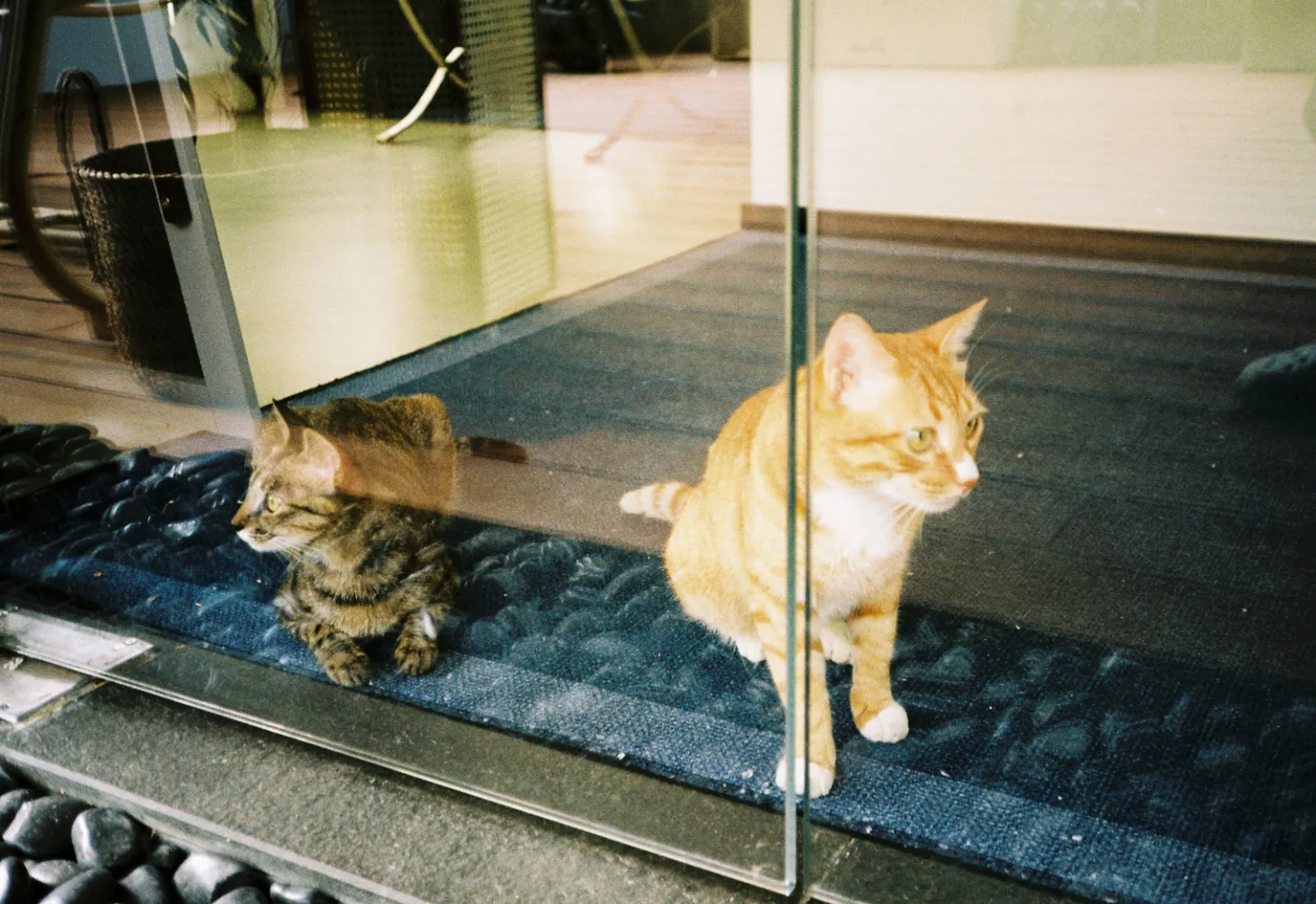
Featured photo: A tabby cat behind a glass door panel and an orange cat sitting calmly next to it. Photo: Xiaoyu Zhang / Unsplash
Prepared with AI assistance and reviewed against the sources above.