Choose a cat puzzle feeder that your cat can use easily and you can clean thoroughly. Start with a simple, stable design that keeps food accessible. An adjustable challenge is more useful than a complicated puzzle that makes the first meal frustrating.
Check the actual food-access route
Look beyond the product photograph. Can your cat reach the openings comfortably? Does food become trapped in corners? Can the difficulty be reduced without modifying the item? A feeder intended for a different animal or food texture may not suit your cat.
For a first purchase, prioritize a design you can observe clearly. Keep the familiar feeding method available while introducing the new option. Do not remove reliable food access to persuade the cat to use a puzzle.
Compare five practical features
- Stability: the feeder stays in place during use.
- Access: openings suit the individual cat.
- Cleaning: every food-contact surface is reachable.
- Compatibility: the intended food type matches your feeding plan.
- Progression: the easiest setting is genuinely easy.
Read the care instructions before buying. A feeder that needs awkward disassembly may be inconvenient for a caregiver with limited time or hand mobility. Product choice should fit the household as well as the cat.
Introduce it as an optional activity
Use a small portion of the usual food allowance when appropriate. Begin with visible, readily available food in the easiest configuration. Stay nearby and watch what the cat actually does.
If the cat repeatedly reaches without retrieving food, simplify access. If they chew unsuitable parts, remove the item. A prescribed diet or particular feeding schedule should remain under veterinary guidance; enrichment should fit that plan.
Record useful feedback
Note whether the feeder slides, food remains inaccessible, cleanup is difficult, or another cat crowds the activity. These observations are more useful than assigning a success score. In a multi-cat home, introduce feeding activities separately.
You can test the idea of food exploration before purchasing with our beginner DIY games. Homemade activities need supervision and may be unsuitable for cats that swallow packaging.
When to keep things simpler
Not every cat needs a complicated food toy. A plain bowl, comfortable feeding location, and another enjoyable activity may be the better arrangement. Do not interpret disinterest as a challenge to overcome through hunger.
Reduced eating requires prompt veterinary advice. For variety beyond feeding, try our non-food enrichment guide.
Sources and editorial notes
Supporting feeding guidance: Feline Veterinary Medical Association: feeding consensus. This is a buyer’s comparison checklist, not a tested ranking, medical feeding plan, or endorsement of a particular product.
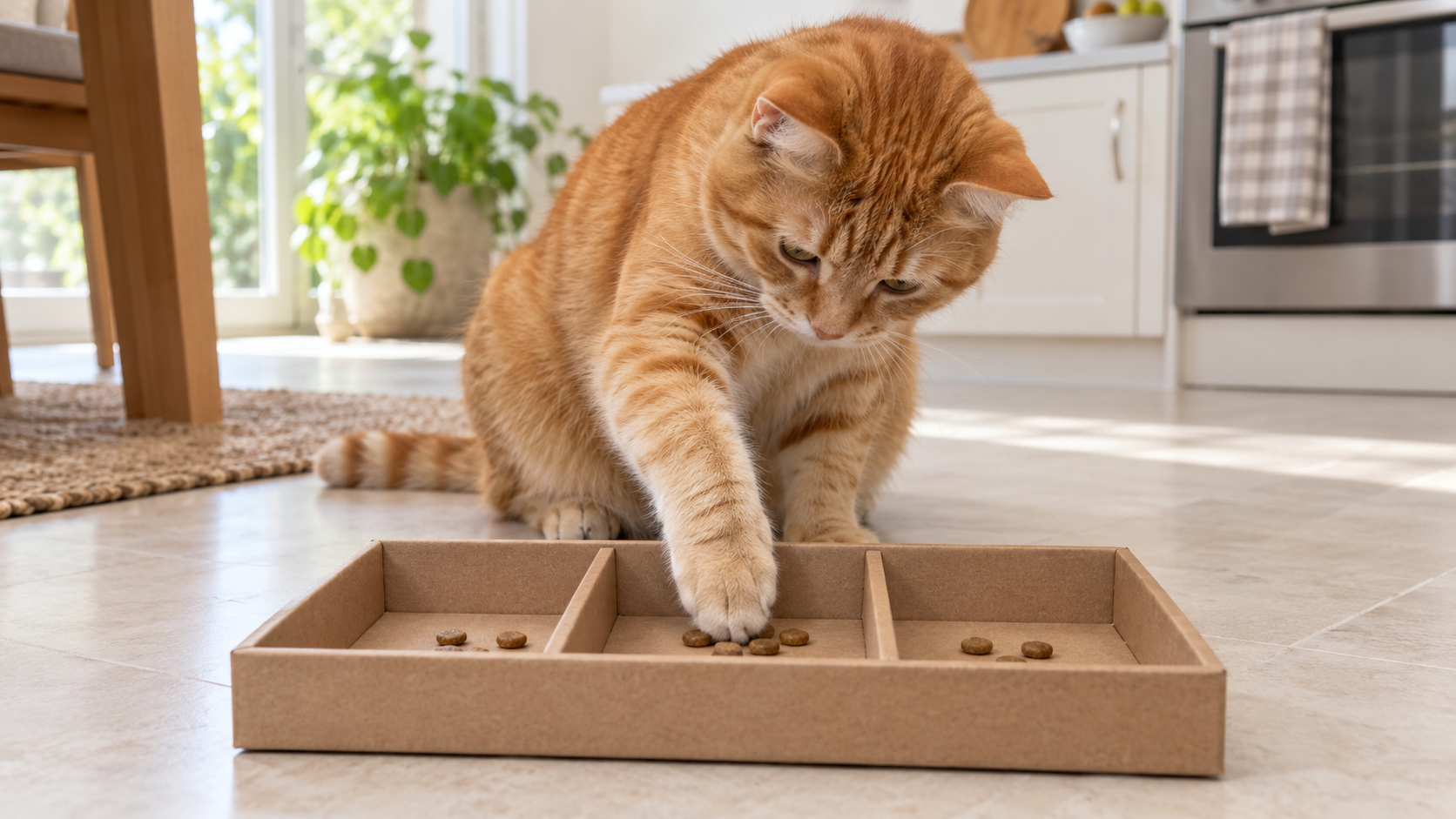
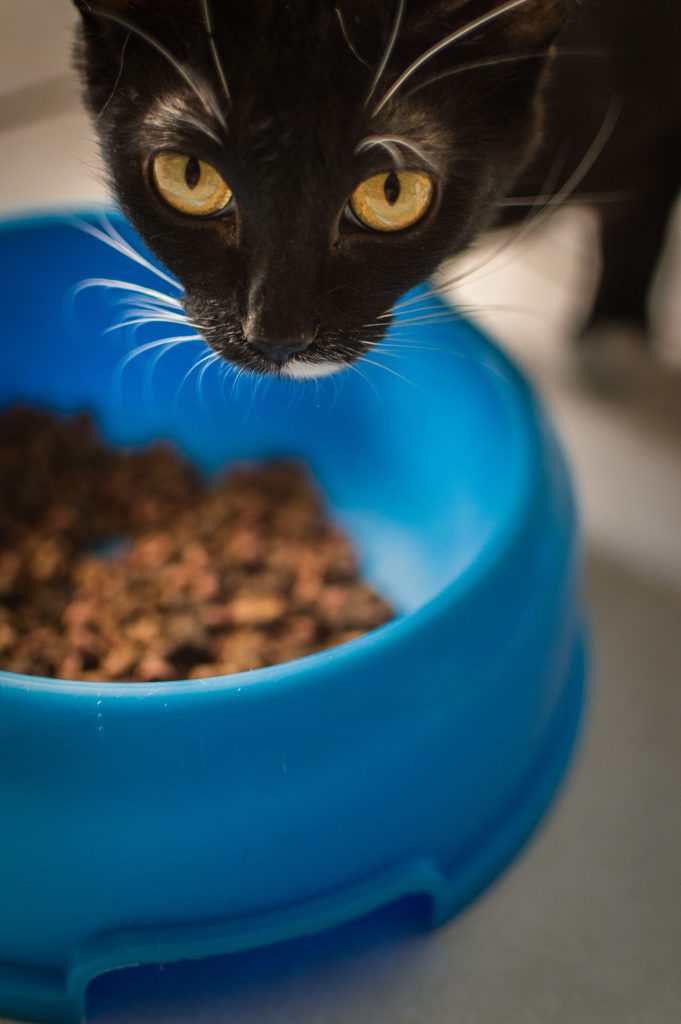
Featured image: Illustrative beginner food-puzzle setup, generated with AI; supervise homemade activities.