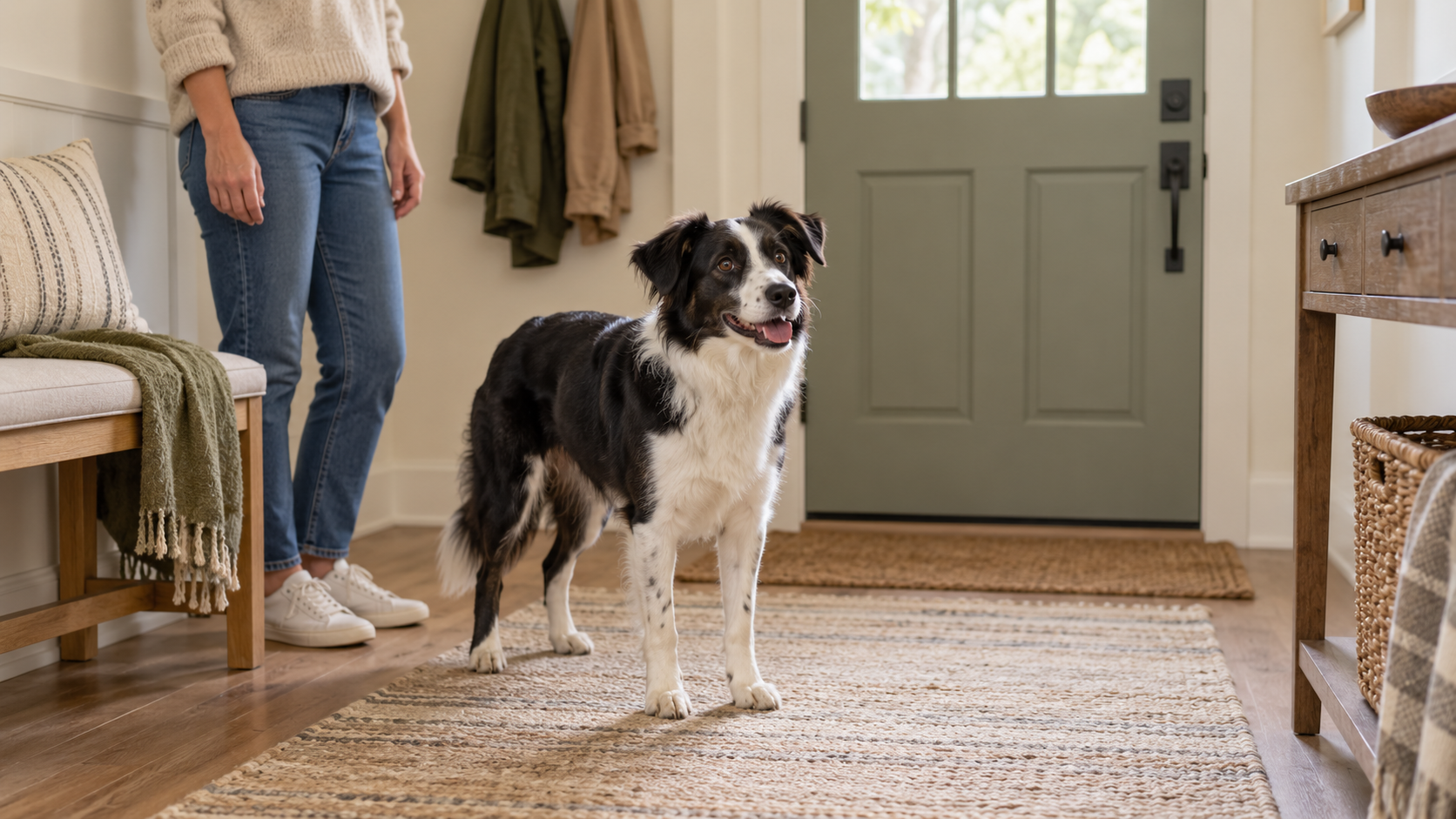
A visitor routine works best when your dog has a comfortable option away from the arrival and the household knows what to do. Prepare before the doorbell rings. Greeting every guest is optional, and separation can remain the right arrangement throughout a visit.
Plan the space in advance
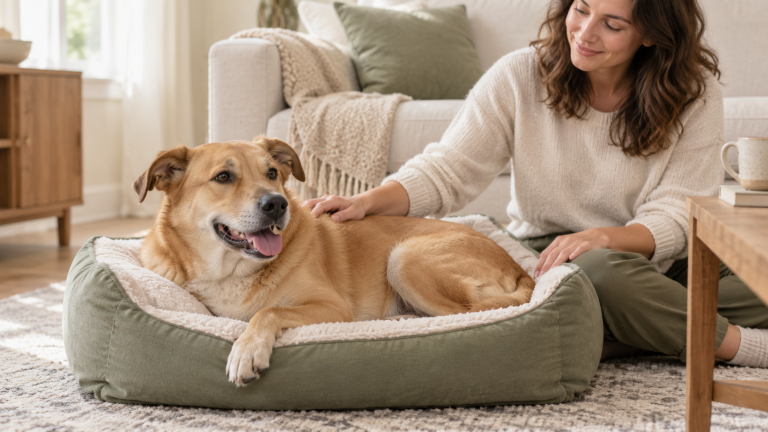
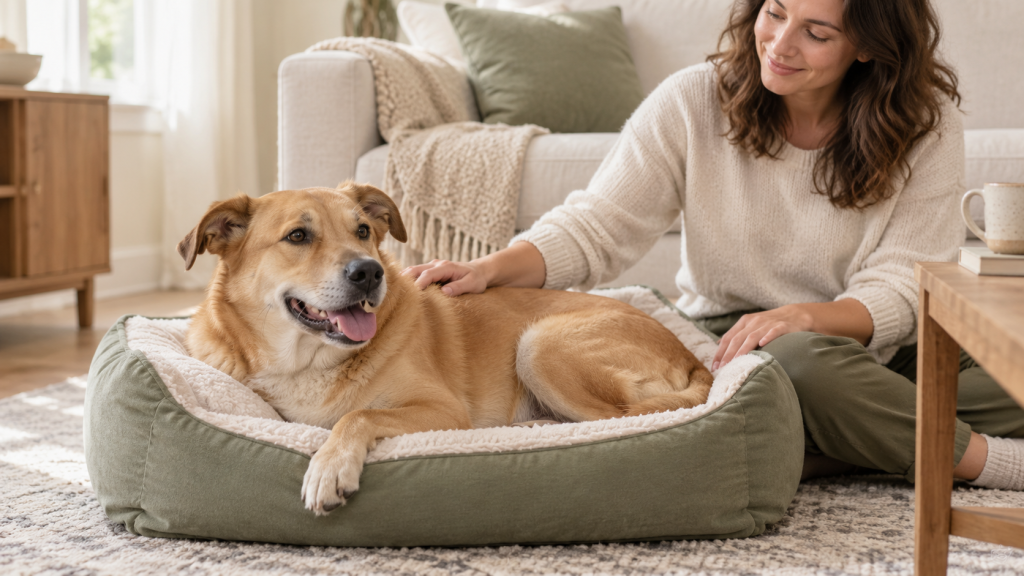
Choose a familiar area with appropriate resources where the dog is already comfortable. A barrier or closed door should prevent unwanted access without leaving the dog distressed.
If the dog cannot relax in the proposed arrangement, seek individual support before using it for a busy gathering. Do not introduce unfamiliar confinement at the same time visitors arrive.
Assign the arrival jobs
- One person manages the exterior door.
- Another checks the dog’s comfortable arrangement.
- Guests receive simple instructions before approaching.
- Children remain under adult supervision.
Keep bags, food, and breakable objects away from the dog. Tell guests where coats and shoes belong so the arrival does not become an improvised obstacle course.
Make greetings optional
If the dog comfortably approaches, ask the guest to remain calm and allow space. Avoid leaning over, reaching immediately, or following a dog who moves away.
For a dog who becomes overexcited during friendly greetings, see our four-paws greeting practice. Practice skills separately rather than making guests into surprise training equipment.
Watch the whole interaction
Look at the situation and the dog’s overall behavior rather than assuming a wagging tail means a greeting is welcome. Give more distance if the dog seems uncomfortable, and do not insist on contact.
Offer a break in the prepared area when appropriate. A guest’s disappointment is not a reason to keep the dog beside them.
Review before the next visit
Note which part was difficult: the door sound, people entering, movement, or extended contact. Change the practical arrangement rather than repeating the same situation to see whether the dog gets used to it.
Our household care plan can help assign responsibilities. Fear, aggression, or persistent distress needs veterinary and qualified behavioral assessment.
Sources and editorial notes
Visitor-management context: Dogs Trust: jumping and visitor situations. This is a preparation checklist, not a treatment for aggression or anxiety.
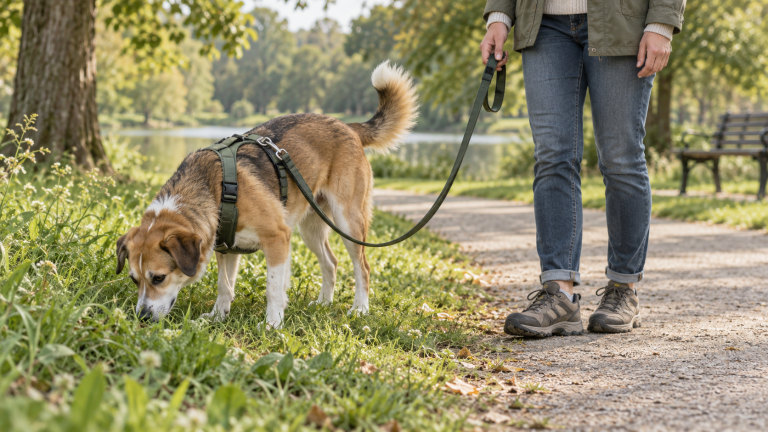
Featured image: Illustrative departure setup, generated with AI; training does not replace physical exit management.