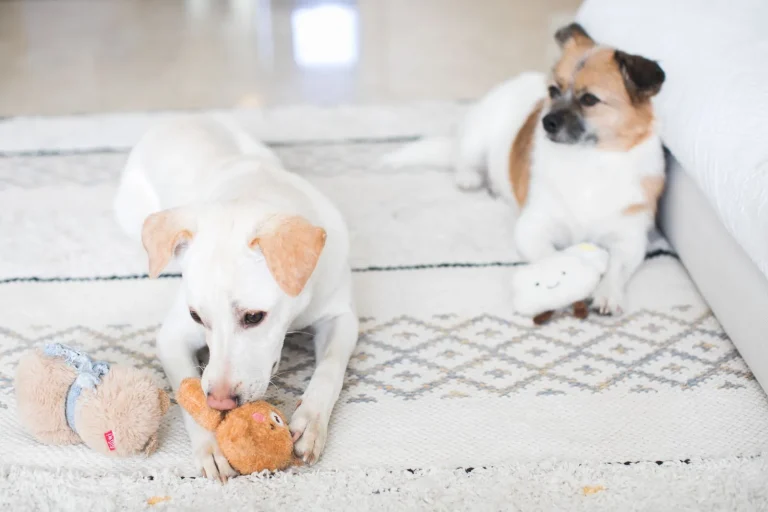
Non-food enrichment can include exploring suitable smells, finding a familiar toy, choosing social contact, and practicing an enjoyable established skill. Start with your dog’s existing preferences. An activity is useful because the dog comfortably engages with it, not because it looks elaborate.
Offer an exploration option
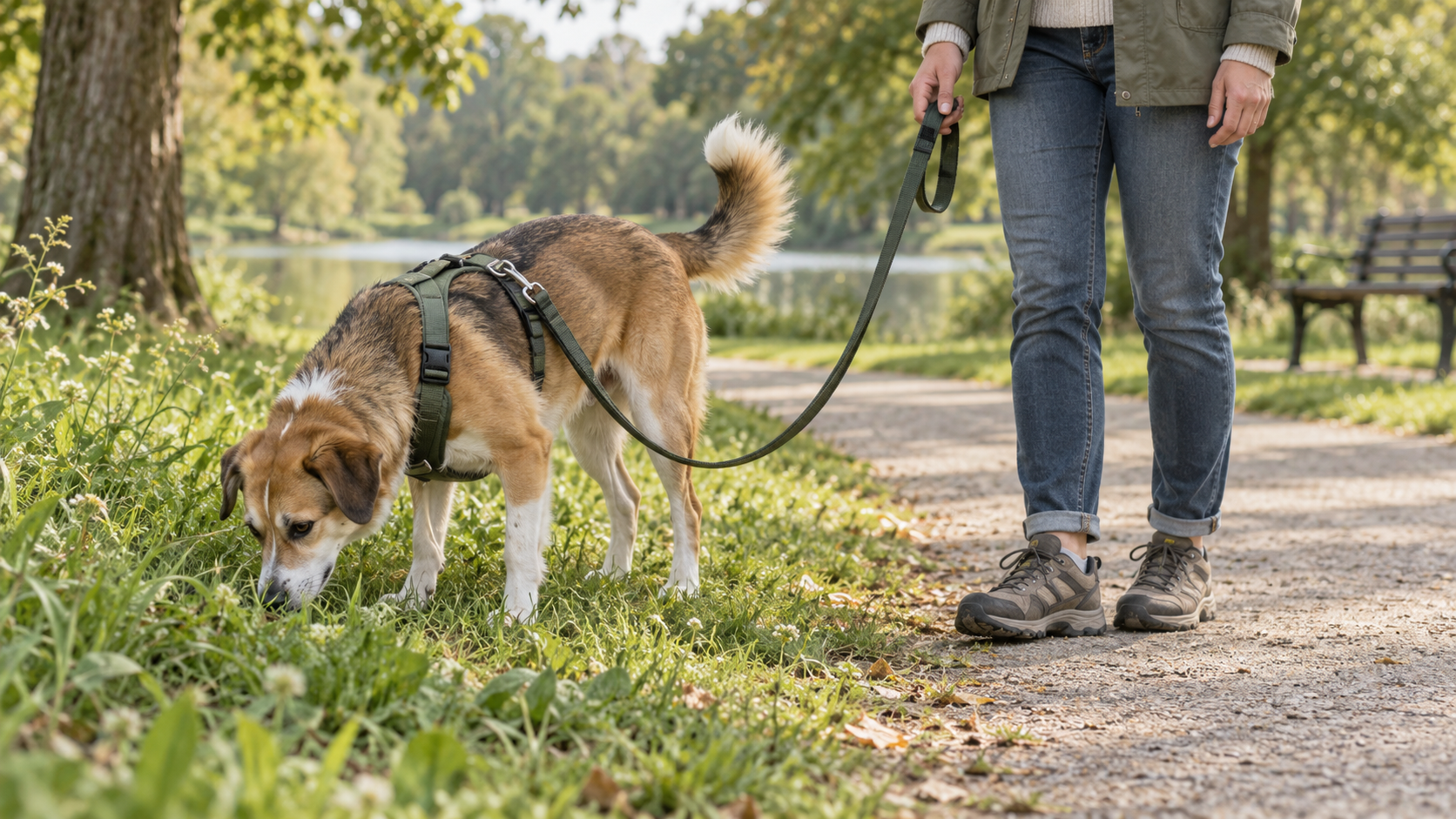
A suitable walk can include time to investigate safe places. Plan the route and equipment carefully; unfamiliar objects, wildlife, and litter are not enrichment materials.
Our sniff-walk guide explains how to organize pauses and space. Adjust the outing to the dog’s health, comfort, and local conditions.
Make a familiar toy easy to find
Place a suitable toy somewhere obvious in a clear indoor area while the dog is elsewhere with a caregiver. Invite a voluntary search and let the dog investigate without constant direction.
If the toy is ignored, bring it back into view or try a different activity. Do not hide it in furniture gaps, elevated places, or containers the dog might damage or swallow.
Practice a known skill together
For a dog who enjoys it, a brief familiar exercise can become a shared activity. Appropriate rewards depend on the individual dog and the behavior; do not stop rewarding a skill simply because this guide concerns non-food options.
- Choose a skill that already feels easy.
- Keep footing and equipment suitable.
- Allow breaks and voluntary participation.
- End before either of you becomes frustrated.

Include social choice and rest
Offer quiet companionship if the dog seeks it. Some dogs enjoy gentle interaction; others prefer resting nearby without touch. Respect movement away and avoid making every free moment a demand for engagement.
The resting-space checklist can help make that choice available. Rest is part of the daily plan rather than a prize earned through exercise.
If you are unsure why your dog seems unsettled, use our guide to boredom signs and other possible explanations before adding more activities. Its observation checklist helps organize the pattern you are seeing for a care review.
Keep a small preference list
Record two or three options that consistently suit the dog and the conditions that help. Rotate between them as appropriate instead of buying a large collection of novelty items.
Discuss persistent withdrawal, distress, or sudden changes with the veterinary team. This list is for everyday variety and does not address a clinical behavior problem.
Sources and editorial notes
Activity context: Blue Cross: enrichment for dogs. The examples are flexible planning ideas, not a tested program or a guarantee of behavioral improvement.
Featured image: Illustrative supervised outing, generated with AI; choose equipment and surroundings for the individual dog.