
Puppy development stages move through neonatal, transitional, socialization, juvenile, and adolescent periods, as Texas A&M’s veterinary guidance explains. The ages are broad guides, not deadlines for perfect behavior. Plan safe exploration, reward-based learning, food, rest, and veterinary care around your individual puppy, and seek help for illness, discomfort, or a marked change.
Animalia’s timeline connects growth with practical care, including normal puppy behavior and what to expect around four months. A birthday can help organize questions, but it cannot prove readiness for longer absences, harder exercise, or a more demanding training task.
Which puppy development stages fit the broad age timeline?
The five-stage timeline below uses Texas A&M’s approximate periods and adds an owner-facing care priority. Merck notes that developmental timing varies with genetic and environmental factors. Overlapping ranges are expected; the table is not a test, an individual medical assessment, or a reason to move a puppy away from needed care.
| Stage | Approximate period in the Texas A&M overview | Practical care priority |
|---|---|---|
| Neonatal | Birth to about 2 weeks | Dependence on mother and appropriate expert care |
| Transitional | About 2–4 weeks | Support developing senses and movement; obtain veterinary guidance |
| Socialization | Can begin around 3 weeks and extend to about 12 weeks | Arrange suitable positive experiences and individual health advice |
| Juvenile | About 3–6 months | Continue gentle learning, suitable chewing outlets and care |
| Adolescent | About 6–18 months | Maintain manageable routines and review changing needs |
Different sources draw some boundaries differently. Do not combine a precise-looking chart with assumptions about a particular puppy’s maturity. Physical growth, sexual development, learned skills, and social behavior are related questions, but they do not all finish on the same birthday or establish the same care arrangements.
Newborn or very young puppy care needs appropriate veterinary and experienced caregiver support. This table does not provide milk-replacer quantities, weaning instructions, or treatment. For a puppy joining your home, begin with a clear health history and an individual care plan rather than applying the neonatal row as a home feeding protocol.
What is normal puppy behavior, and what needs a closer look?
Exploration, chewing, social play, object play, and rest are ordinary puppy needs described in Merck’s guidance. Those categories do not make every individual episode harmless. Look at the object, setting, intensity, and change from usual behavior, then arrange suitable care or help rather than using the word “normal” to dismiss a concern.
For an illustrative comparison, a puppy choosing a suitable inspected toy needs a different response from a puppy swallowing a piece of packaging. A broad developmental label cannot resolve that difference. Our puppy teething guide covers chewing-related questions, including the limits of assuming every mouthy episode comes from teeth.
Offer manageable outlets and teach the action you want without punishment. If play or handling becomes difficult, reduce the task and ask for guidance. Our puppy enrichment guide helps you choose suitable activities while preserving rest. A puppy does not need constant entertainment or increasingly difficult puzzles to progress through a stage.
Avoid interpreting adolescent distraction as a challenge to human rank. Merck explicitly rejects a simple dominance hierarchy as an explanation of dog-human relationships. Describe what the dog does and the circumstances instead, so a reward-based professional can help review the actual skill and management needs.
Your four-month-old puppy: behavior and everyday care
A four-month-old falls within the broad juvenile period in the Texas A&M overview. Chewing, exploration, learning, and changing responses can still need close support. Do not expect adult reliability from age alone. Review the daily care plan and ask your veterinary team about concerns rather than treating every change as a required developmental phase.
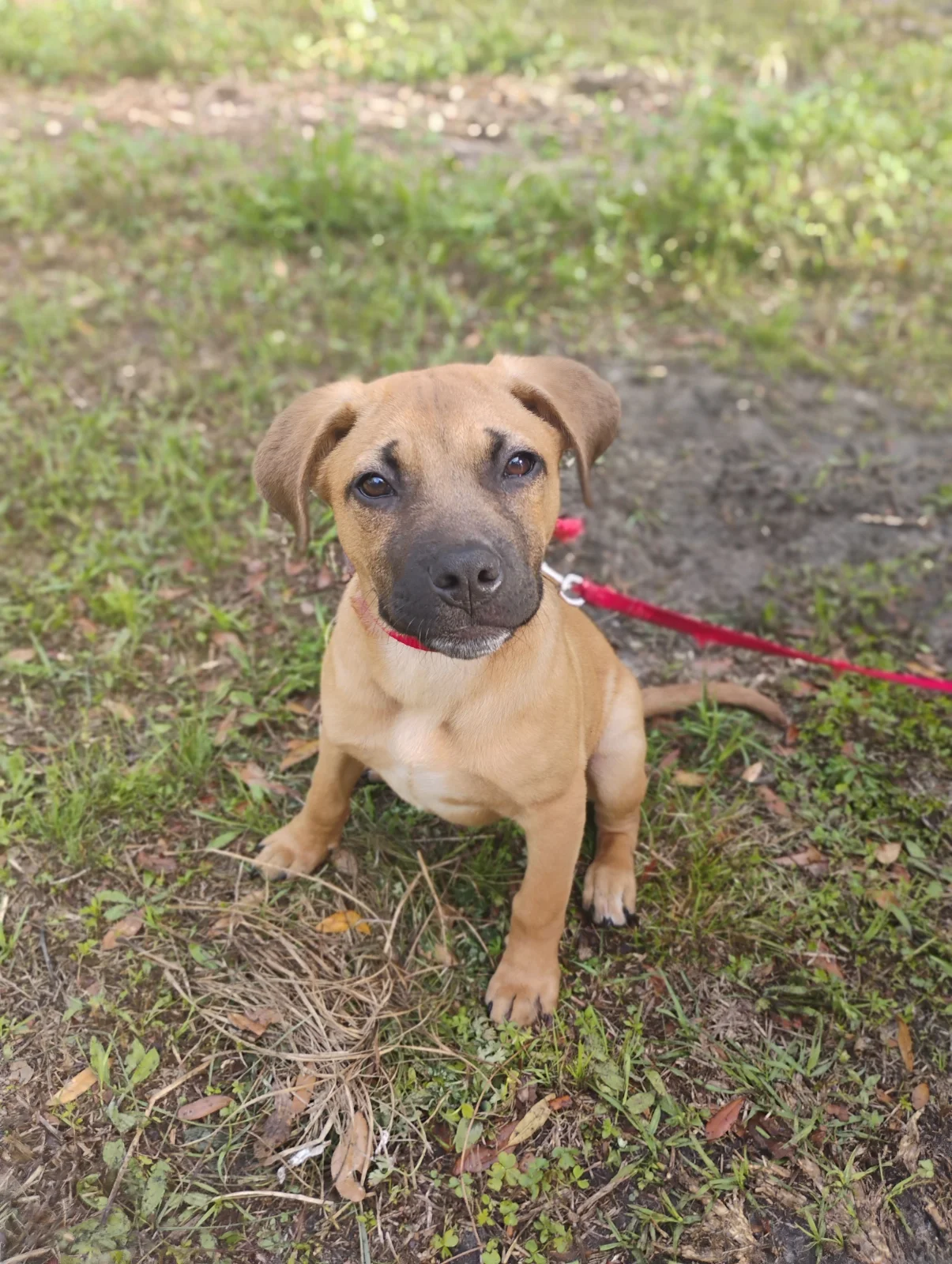
For a useful four-month review, check food and water access, toilet opportunities, rest, supervision, suitable toys, and the easiest familiar training goals. Write down which part of the day is difficult and what the puppy can currently manage. That creates a practical conversation instead of a comparison with another dog’s birthday milestone.
Our puppy toilet-training guide covers the routine and rewards, while the beginner puppy training plan gives a menu of life skills. Revisit an easy version when the setting changes; a successful kitchen lesson does not establish the same response outside or around visitors.
If the puppy seems newly worried, create space and an easier experience rather than insisting they must get over a “fear stage.” PDSA recommends positive, gradual experiences and moving away when a puppy becomes afraid. Ask for individual help when the pattern persists, affects care, or raises a safety concern.
Build a care plan that changes with the puppy
Keep the next practical step observable. An Animalia note can name the situation, the comfortable version, and the next easier adjustment. For example, “watched the quiet street from a suitable distance” gives more useful information than “socialized successfully.” You can then review the next experience without adding intensity to meet a quota.
Ask your veterinarian which places, dog contacts, classes, and activities suit the puppy’s health status and local risks. Early learning and health protection need an individual plan together. Do not treat a chart or a generic vaccine age as clearance for every public surface, crowded place, or unfamiliar animal.
Arrange the household around the puppy’s current needs, including support when you cannot provide supervision or toilet access. Our puppy care and crate-training hub keeps comfort and gradual introduction separate from assumed capacity for long confinement. An apparent milestone should not become an excuse to remove ordinary care.
For a manageable starting point, choose one care problem and one easy skill for today. Keep the observations brief enough that other caregivers can follow them. If the whole routine feels difficult, seek practical support rather than trying to solve every stage through longer training sessions or stricter rules.
When should a developmental or behavior change prompt help?
Contact your veterinarian promptly if the puppy is not eating well, is not moving normally, or seems sick, as Texas A&M advises. Seek appropriate professional support for persistent fear or safety concerns. A developmental stage is background context, not a diagnosis or a reason to wait for a concerning pattern to pass.
Record when the change began, what happens around it, and whether ordinary food, movement, rest, or toileting has changed. Keep video only if it can be obtained without recreating distress or delaying help. Avoid deciding that puberty, teething, or a training failure explains the whole situation from one behavior.
Start with the need you can address safely today and bring unresolved concerns to the appropriate professional. Return to the linked care and training guides for the separate tasks. The goal is a workable, humane plan for this puppy, while the age timeline remains useful background rather than a set of performance requirements.
Frequently asked questions
Are puppy behavior stages different from development stages?
The phrases often describe overlapping parts of the same growth process. Physical changes, social experience, and learning all affect what owners observe, while sources may use different stage names or boundaries. Use the timeline as context for care rather than creating separate expectations for each label. Record the individual behavior and ask for appropriate guidance when a concern needs assessment.
What should I expect from a four-month-old puppy?
Expect continued support with ordinary care, suitable chewing outlets, supervision, and easy reward-based learning. Four months falls within the broad juvenile period used in the Texas A&M overview. The age does not establish adult reliability or a fixed toilet interval. Review your actual routine, and ask your veterinarian about new discomfort, appetite changes, abnormal movement, or other concerns.
Does a fear period explain every sudden worry?
Do not assume that a label explains a new fear or makes it appropriate to wait without reviewing the situation. Create space, reduce difficulty, and consider the wider pattern. PDSA recommends positive gradual experiences rather than overwhelming exposure. Persistent or new concerns, especially those affecting ordinary care or safety, should be discussed with your veterinarian and a suitable reward-based professional.
Should my puppy meet a fixed number of people?
Choose suitable positive experiences around the individual puppy, health advice, and available support rather than a universal visitor quota. An encounter is not successful merely because it happened. Watch whether the puppy can remain comfortable and move away. If an experience becomes worrying, reduce the intensity or leave instead of completing a count for the day.
Is my dog fully mature on the first birthday?
Do not use one birthday to settle every question about maturity. Merck distinguishes developmental periods and notes variation, while physical growth, sexual development, social behavior, and learned skills involve different considerations. Review diet, activity, care, and training with the appropriate professionals. A calendar milestone does not prove readiness for a longer absence or a harder physical task.
Sources and editorial notes
Animalia Editorial. Reviewed November 4, 2026. The timeline summarizes sourced approximate ranges; care notes and examples are planning aids, not individual development tests. See our editorial policy.
Texas A&M: five growth stages; Merck Veterinary Manual: development and behavior; PDSA: gradual positive social experiences.
Featured photo: A golden puppy sleeps. Rest remains part of care throughout development; the photo does not establish age. Photo: ignacio andres yañez grandon / Pexels.
Prepared with AI assistance and reviewed against the sources above.