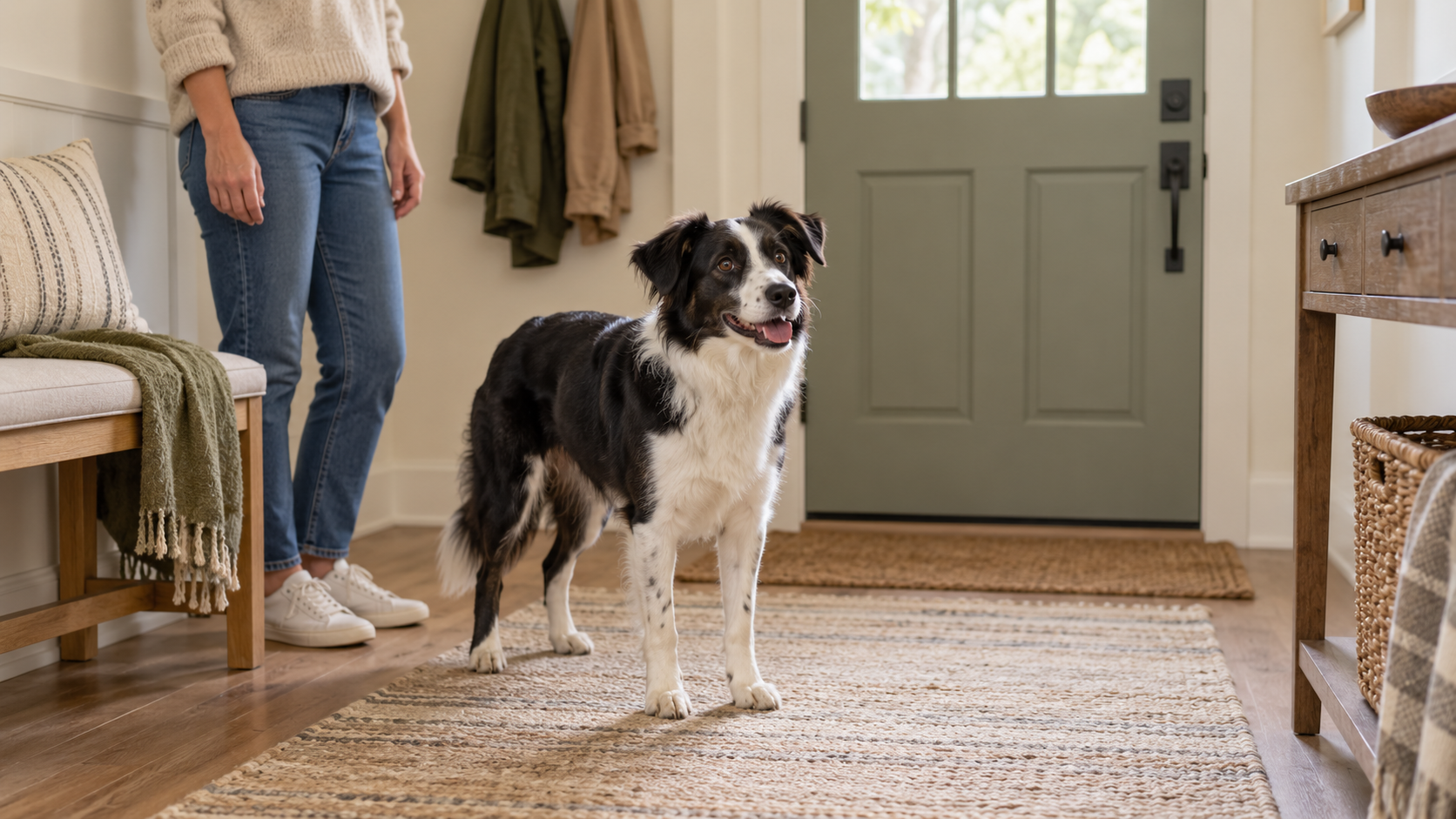
Practice doorway waiting at a safe indoor door before considering an exterior exit. Reward a brief pause while you make a tiny door movement, then use a clear release when it is appropriate to continue. Training supports physical management; it never replaces a secure door or suitable leash.
Make the first doorway safe
Choose an interior space where crossing would not lead to traffic, stairs, another animal, or a hazard. Use suitable management so an unsuccessful repetition is still safe.
Keep fingers, paws, and the leash away from hinges and closing edges. Do not use the door to push the dog backward.
Reward an easy pause
Begin with the door closed and the dog comfortably beside you. Reward a brief stationary moment without requiring a particular position if that is not part of your plan.
- Make a small movement toward the handle.
- If the dog remains comfortably in place, reward.
- Pause and repeat the easy version.
- Later, try a tiny opening movement.
Change the size of the movement gradually. If the dog moves forward, reset the arrangement safely and make the next attempt easier.
Add clear cue meanings
A wait cue asks for the brief pause you are teaching. A release cue tells the dog when that request ends. See our release-cue guide to keep the signals distinct.
Avoid repeating “wait” continuously while increasing the challenge. You need an understandable progression rather than louder instructions.
Practice small variations
After comfortable easy repetitions, change one element: a slightly wider opening, another quiet indoor door, or a different caregiver. Do not add a visitor arrival and an exterior exit at the same time.
Use our household plan to agree on the pause and release.
Keep exterior exits physically managed
For an outside door, secure the dog appropriately before opening and follow the household’s safety arrangement. A trained pause can fail when something unexpected happens.
Fear, frantic door behavior, or safety concerns need individual professional help. This introductory exercise is not a protocol for preventing escape by training alone.
Sources and editorial notes
Doorway-training context: Dogs Trust: doorway training. Animalia starts with an interior practice setting to keep the learning task separate from exterior-exit safety.
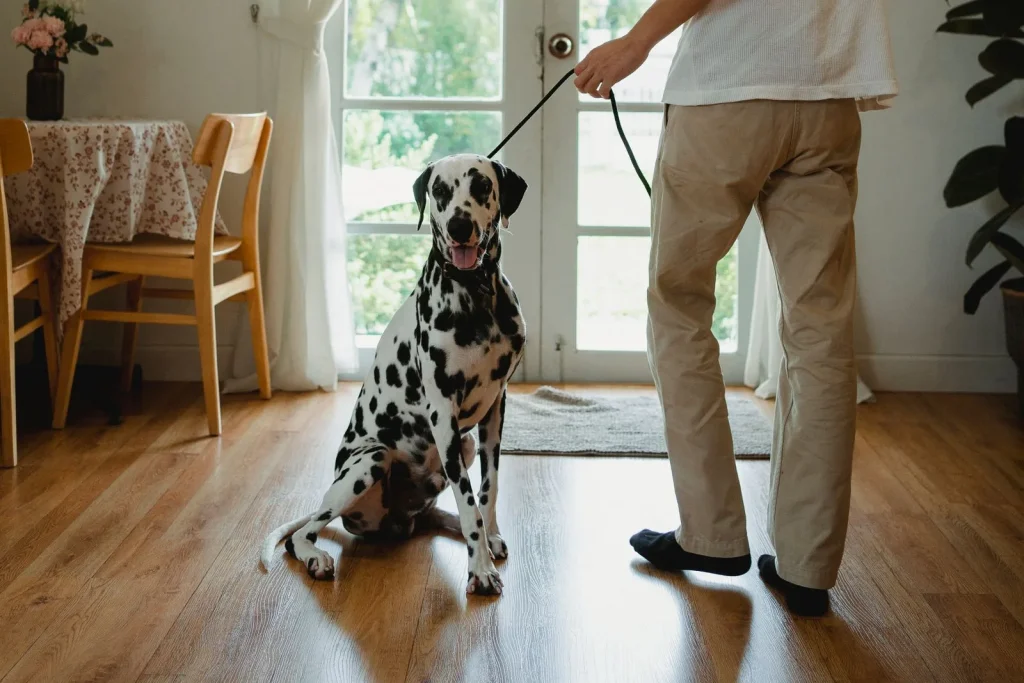
Featured image: Illustrative departure setup, generated with AI; training does not replace physical exit management.