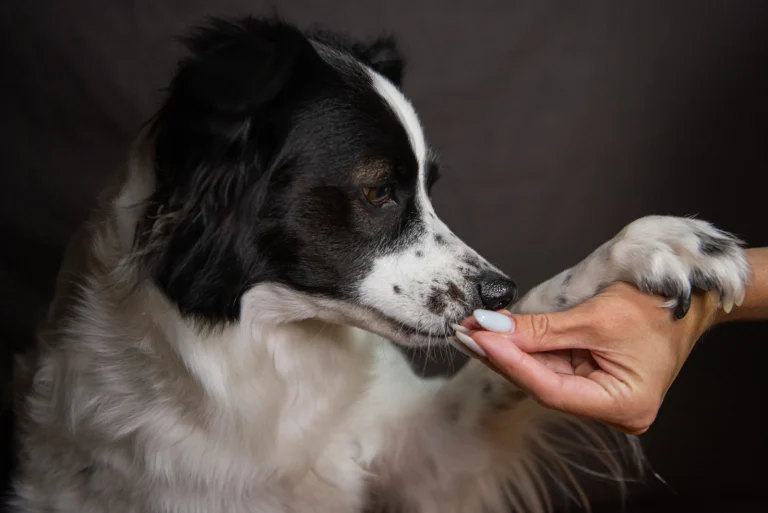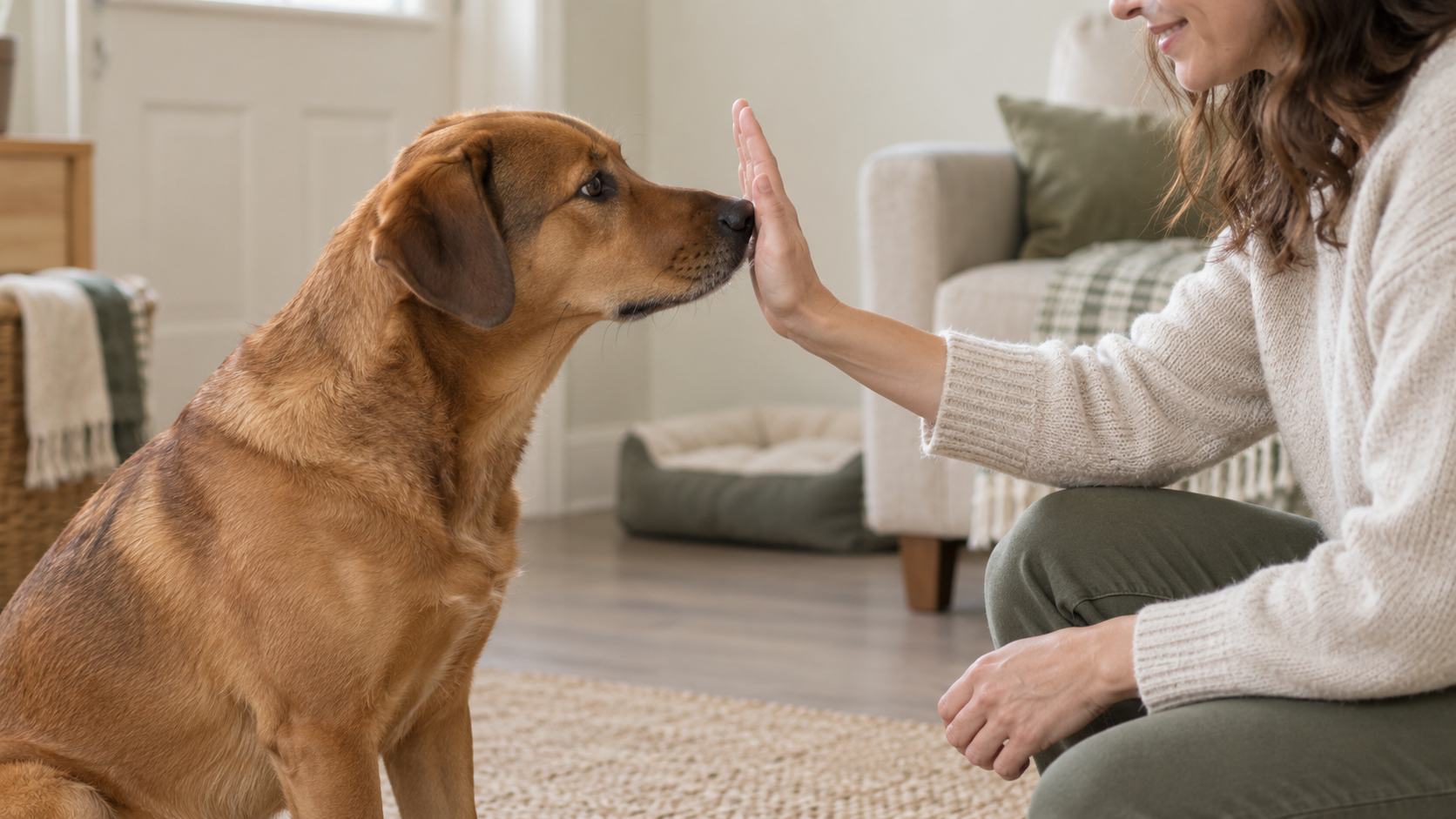
A hand target is a voluntary nose touch to an offered palm. Start with your hand close enough to investigate easily, reward the touch, and build from comfortable repetitions. The exercise gives you a specific action to practice without pushing or positioning the dog.
Set up comfortable practice
Use a quiet familiar space and suitable rewards. Present a relaxed empty palm beside the dog’s nose rather than reaching over their head or pressing toward their face.
Choose a starting position that feels comfortable for both of you. If the dog moves away from an offered hand, stop and review the setup instead of following them with it.
Reward a voluntary touch
- Offer the palm briefly at an easy distance.
- When the nose touches it, mark the moment.
- Remove the target hand and deliver the reward.
- Pause, then offer another easy opportunity.
Keep your target hand still while the dog approaches. If there is no touch, reset rather than rubbing the palm on the nose.
Add a cue after the action is familiar
Once the dog readily touches the offered palm, choose a short cue such as “touch.” Say it just before presenting the familiar target. Continue rewarding the completed action.
Our marker guide explains how to separate the signal for a successful action from the cue that requests it.
Build small variations
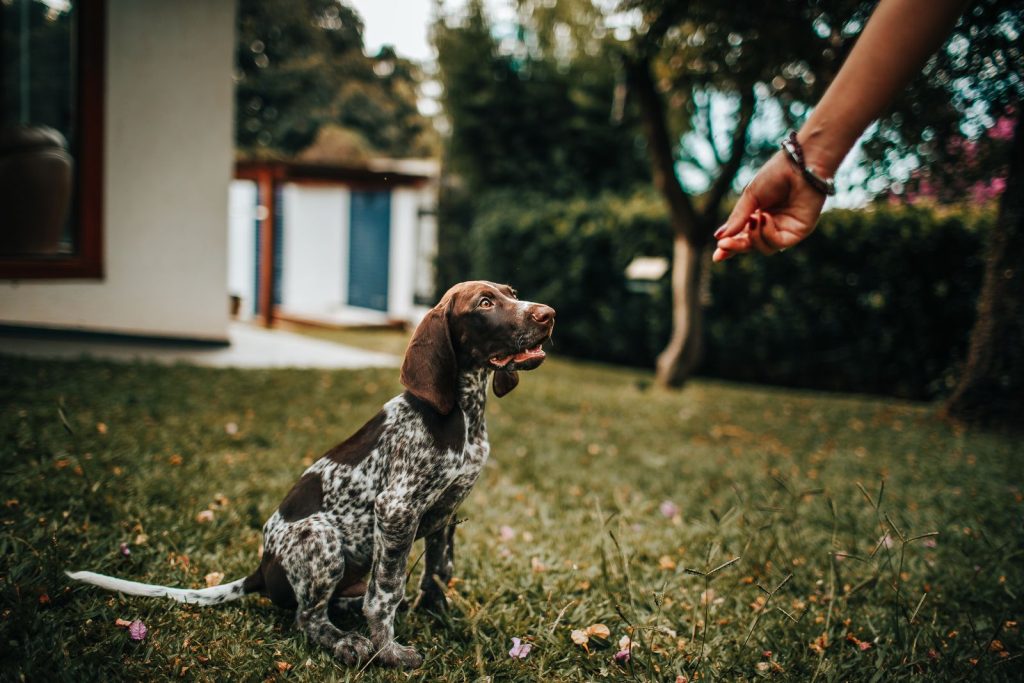
Try the palm slightly to one side or at a modestly different height, while keeping the movement physically comfortable. Ask for one easy touch rather than a long chain of difficult reaches.
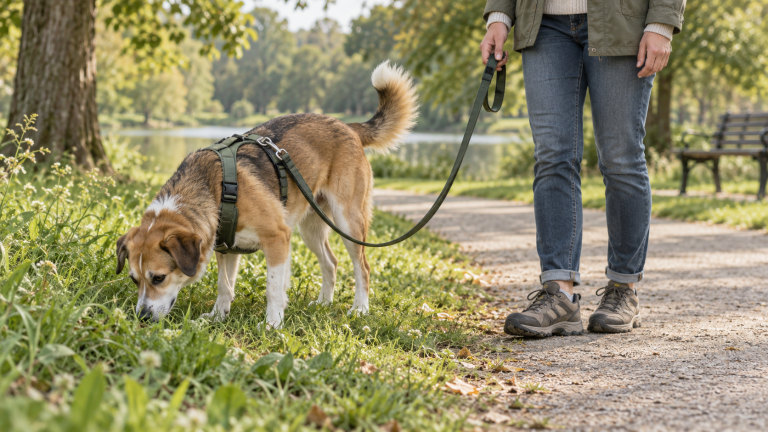
Distance, location, and distractions are separate changes. Practice a new version in a quiet area before asking during an exciting walk or greeting.
For another optional training activity, browse our five gentle trick lessons. The guide covers choosing a comfortable movement and breaking it into small rewarded steps, including simple toy games.
Use it without losing choice
A familiar target can help invite a small movement during training. It is not a reason to lead the dog toward something frightening or use food to draw them into uncomfortable handling.
Share the palm position and cue using our household training plan. Stop if the dog seems uncomfortable and seek professional help where needed.
Sources and editorial notes
Technique reference: American Kennel Club: targeting techniques. This guide concerns a simple nose target, not a clinical cooperative-care protocol.
Featured image: Illustrative hand target, generated with AI; not a documented training result.