Good tricks to teach your dog include a gentle spin, give paw, take a bow, find a toy, and put a toy in a basket. Choose comfortable movements, reward small steps, and keep practice playful. Dogs Trust recommends calm, reward-based trick practice with a setup your dog can enjoy. Start with one clear goal.
Which trick is a good fit for your dog?
Choose a trick around what your dog already enjoys and can do comfortably. A dog that likes carrying toys may enjoy basket work; a dog that offers a relaxed paw lift may enjoy give paw. No dog needs to perform every trick, and a smaller movement can be the finished skill.
Consider the floor, available space, and your dog’s health before picking a movement. Avoid slippery surfaces and tight turns. Ask your veterinarian about appropriate movement if your dog has pain, stiffness, balance problems, or a physical restriction. Stop when a movement causes hesitation or discomfort rather than luring through it.
This table is an editorial selection aid, not a test of intelligence or an exercise prescription. These tricks add skills beyond our separate guides to hand targeting, name response, and leave it.
| Trick | Helpful starting skill | Begin by rewarding | Choose another if |
|---|---|---|---|
| Gentle spin | Following a small hand movement | A comfortable turn | Turning is difficult or restricted |
| Give paw or wave | Comfortable seated balance | Voluntary paw lift | Paw lifting causes discomfort |
| Take a bow | Comfortable standing | Small front-end lowering | Bending seems uncomfortable |
| Find a toy | Interest in a familiar toy | Looking at an obvious toy | Searching causes frustration |
| Toy in basket | Comfortable hold and release | Toy landing in a wide container | Dog guards objects or dislikes carrying |
How do you prepare rewards for dog tricks?
Have suitable bite-sized rewards or a favorite toy ready in a quiet space. Keep sessions short enough that your dog remains interested, and allow breaks. AVSAB recommends reward-based methods; pulling legs, pushing bodies into positions, or scolding mistakes are unnecessary.
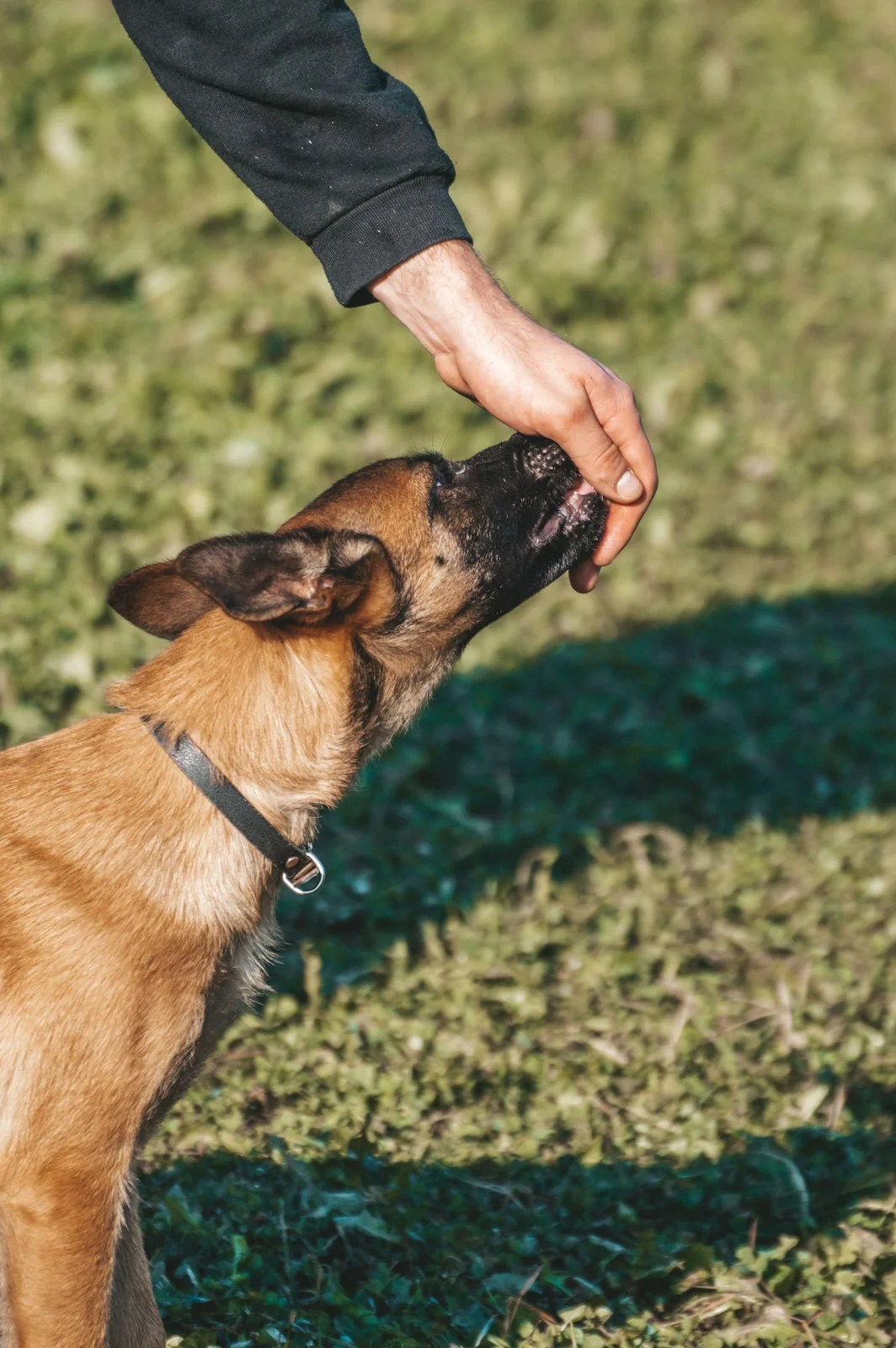
A marker word can identify the exact action that earned a reward. If it is new, see our marker training guide first. Mark the small movement you wanted, then deliver the reward promptly. Do not hold food out of reach while your dog repeatedly struggles to guess.
For a new trick, first help the movement become familiar. Add a word when the action is predictable, then gradually reduce the hand prompt. Our guide to fading a food lure explains how to separate the prompt from the reward. You can remove visible food from your guiding hand while still paying generously afterward.
How do you teach your dog a gentle spin?
Start with your dog standing on a nonslip floor and enough space for an easy turn. Battersea’s spin guide describes guiding with a treat, moving to an empty-hand signal, and adding a verbal cue. The turn should be voluntary and comfortable, with no pulling on a collar or tight twisting.
- Move a treat slowly to one side at nose height. Reward an easy head or shoulder turn first if a whole circle is too much.
- Guide a broad arc only as far as your dog can follow comfortably. Gradually join the movement into a circle.
- Repeat the familiar movement with an empty guiding hand, then reward from the other hand.
- Add “spin” just before the familiar signal. Make the signal smaller only when the action stays clear.
Teach the opposite direction separately if appropriate, using another signal or word. Do not chase speed or repeated circles. If your dog sits, the hand may be too high; lower it and reward a smaller turn. If your dog becomes dizzy, stiff, or reluctant, stop.
Teach give paw, then an optional wave
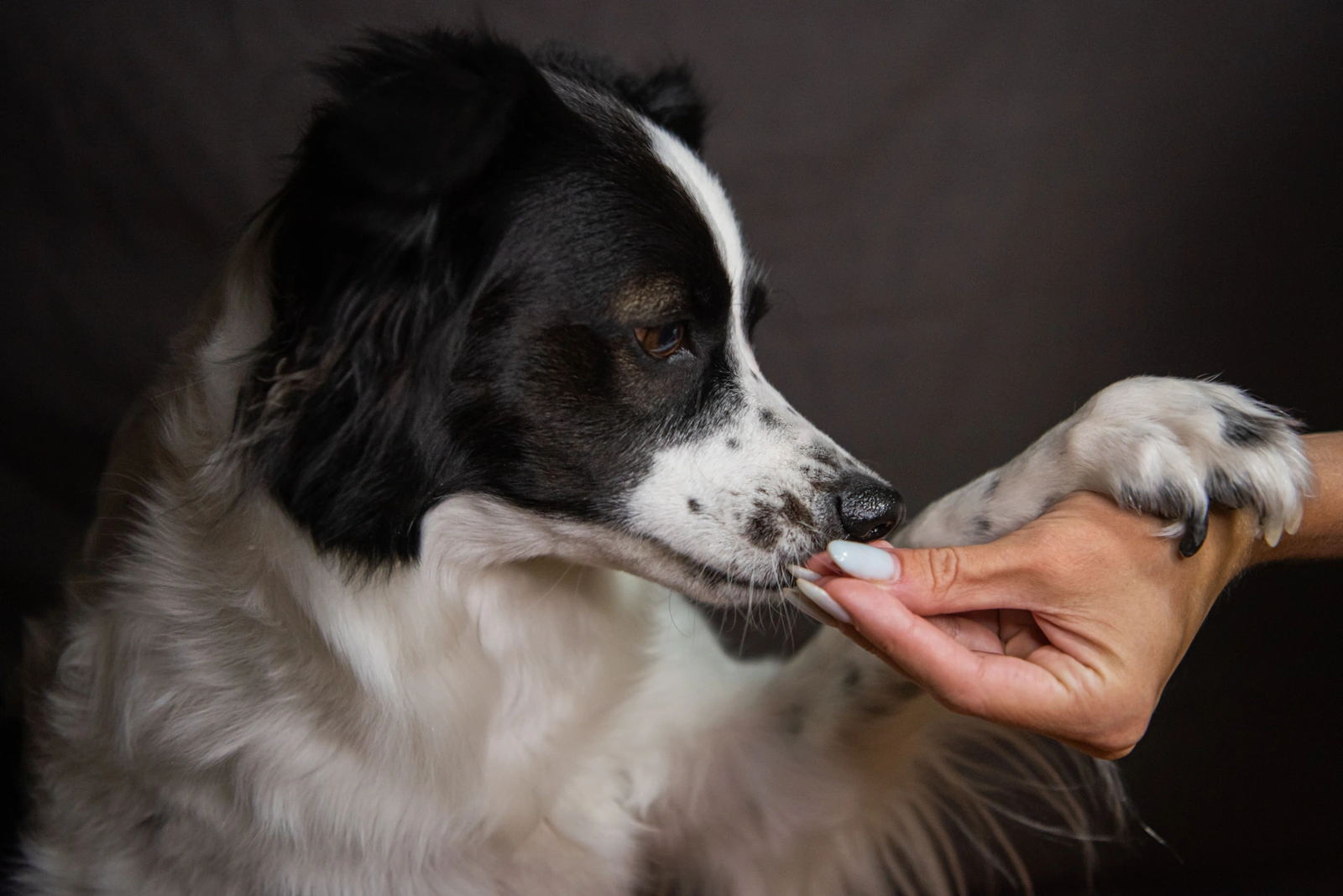
Give paw begins with a voluntary paw movement and a gentle target for it. In the Dogs Trust high-five progression, rewards and gradual changes build the action. Keep your hand low enough for comfortable balance, and allow the dog to withdraw their paw immediately.
- With your dog comfortably sitting, watch for a voluntary paw lift toward your low offered hand. Mark even a small lift and reward.
- When the lift is predictable, reward a light touch of the paw to your open hand. Do not grab, squeeze, or pull the leg.
- Say “paw” just before offering the familiar hand. Reward the soft touch, then withdraw your hand and reset.
- For an optional wave, mark a familiar paw lift just before contact and reward it in the air. Gradually make your hand invitation smaller.
A wave need not become a high reach or repeated pawing. If your dog scratches at you, lower the excitement and reward a tiny, gentle lift. If no paw lift appears, choose another trick instead of repeatedly handling their feet or irritating their face to provoke one.
Teach a small take-a-bow movement
A bow keeps the rear end up while the front lowers. Battersea teaches bow through small rewarded movements from a standing position. Keep the motion shallow at first and do not push on the shoulders or hold the abdomen up to prevent a down.
- Begin with your dog standing comfortably in front of you. Move a treat slowly toward the floor in front of the forefeet.
- Mark a slight bend of the front legs before the rear end lowers. Reward and reset to standing.
- Build the movement gradually, rewarding the front lowering with the rear still raised. A small bow is enough.
- Once the action is predictable, add “bow,” then reduce the lure as you did for spin.
If your dog repeatedly lies down, reward an earlier, smaller bend instead of moving the treat farther. You can also reward a naturally offered, comfortable play bow when you are ready with a marker and reward. Do not interrupt rest or repeat stretches to meet a training quota.
Teach find your toy
Use one familiar toy in an obvious, reachable place. The AKC describes simple finding games as a way to build useful home activities. Your first aim is locating the toy, not retrieving it from a difficult hiding place or distinguishing several toy names.
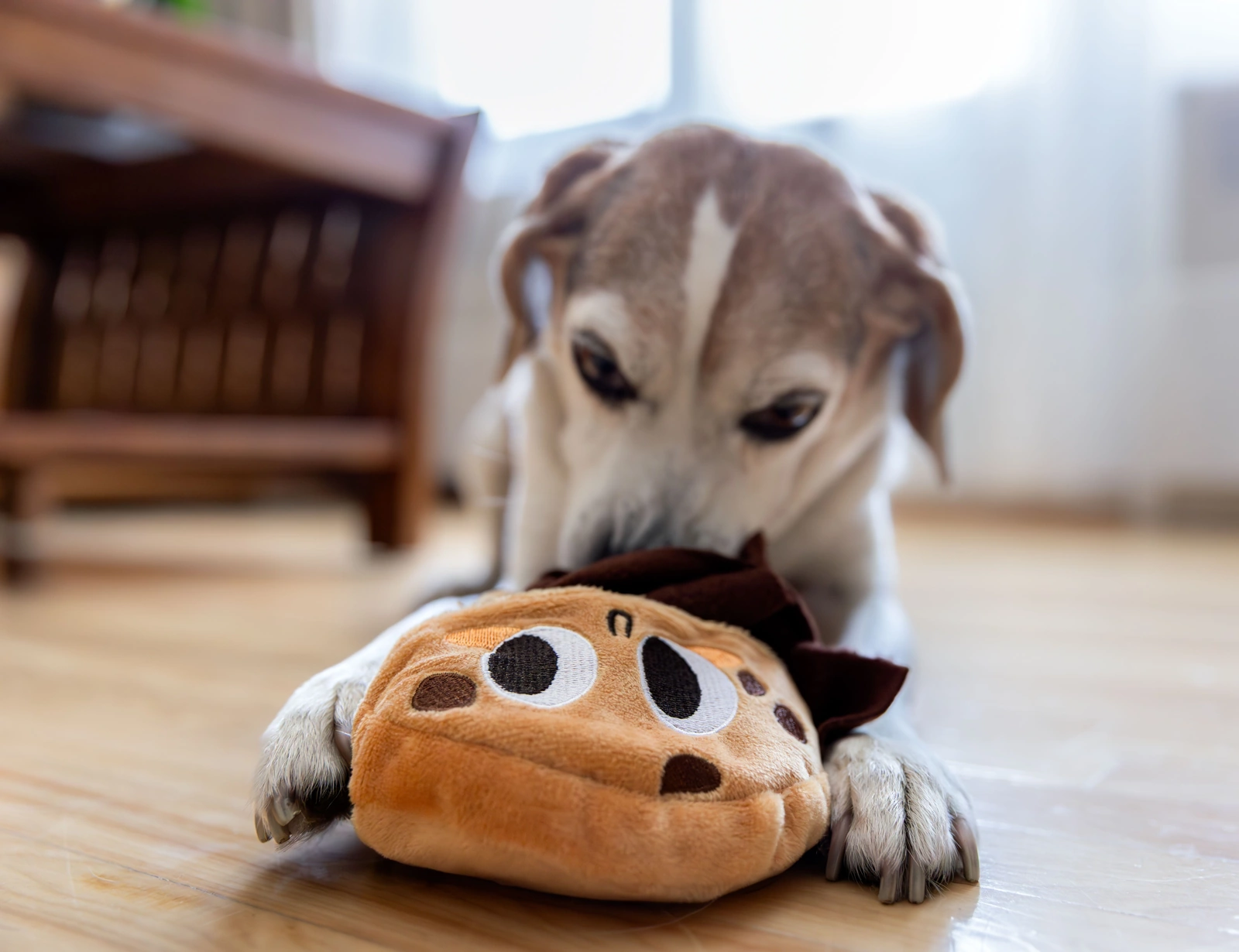
- Let your dog notice the toy on the floor close by. Mark looking toward or moving to it and reward there.
- Reset with the toy still plainly visible. Add “find your toy” before your dog approaches it.
- Change the position slightly while keeping the toy easy to see. Help by moving closer if your dog looks uncertain.
- Later, place the toy partly behind an obvious, safe object with plenty still visible. Keep the search area small.
Avoid hiding toys among medications, cords, laundry, or fragile items. Do not place a prize where your dog must climb or squeeze into a gap. If they search without finding it, show the toy and end with an easy success rather than making the puzzle harder.
How do you teach a dog to tidy toys?
Start with the last part of the finished action: releasing a toy over a wide, stable container. The AKC’s toy-tidying example begins with the dog standing over the toy box. Gradually adding the carry afterward makes the target clearer than scattering toys across the room immediately.
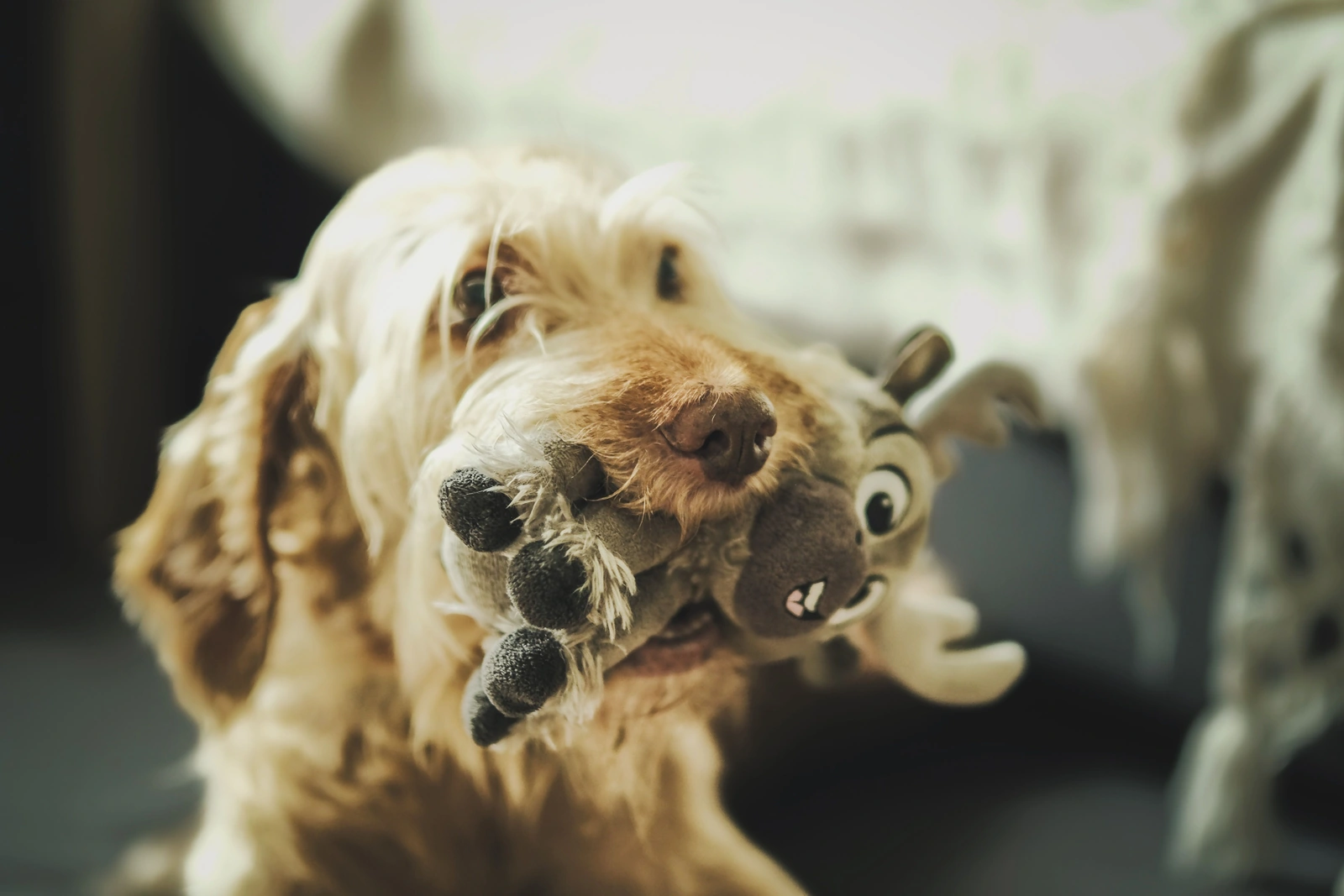
- Choose a familiar, safe toy and a low container with smooth edges. Start with the container directly beneath the toy.
- Offer the toy only if your dog takes it willingly. Use an already learned release, then mark when it lands inside and reward.
- Keep the container close while the landing becomes predictable. Reset calmly if the toy falls beside it.
- Next, place the toy immediately beside the container so your dog can lift and drop it in. Add carrying distance in tiny changes.
- Add a cue such as “tidy” when the sequence is familiar. Reward the completed placement rather than demanding several toys first.
If releasing is new, teach a fair drop-it trade separately. Stop and seek qualified help if the dog stiffens, guards the toy, or worries about your approach. This game never requires prying something from their mouth.
Make the next attempt easier to understand
Illustrative session, not a tested plan: an owner chooses basket work, rewards the toy landing from directly above the container, then offers a play break. On another comfortable attempt, they add a very short carry. They do not add distance, a narrower basket, and a new toy together.
If your dog walks away, allow the break. If they offer every trick they know, pause and simplify the prompt. If the reward makes them frantic, use a calmer delivery and an easier task. A trainer can help review timing without escalating pressure. Browse our training and behavior guides for related foundations.
FAQ: tricks to teach your dog
What is the easiest trick to teach a dog?
It depends on movements your dog already offers. A willing toy carrier may find a nearby basket clearer than a bow; a dog that naturally lifts a paw may prefer give paw. Start with one observable movement you can reward promptly, and choose something else if it does not feel comfortable.
Can older dogs learn new tricks?
Yes, learning can remain a useful shared activity, but choose movements that fit the dog’s comfort and health. Avoid assuming that slow movement means poor motivation. Ask your veterinarian about new stiffness or difficulty, and select a low-demand locating game rather than requiring turns, balancing, or bending. Let your dog rest and choose whether to rejoin.
Does my dog need perfect obedience first?
No. Choose a safe, simple trick and teach any needed foundation separately. Basket work needs a comfortable release, for example, while a small spin needs neither a long stay nor advanced recall. Keep essential safety management in place and use tricks as optional enrichment, without making perfection a prerequisite. Work on the skill your dog currently enjoys.
What if my dog works only when they see food?
Try the same familiar prompt with an empty guiding hand, then reward from your other hand. If that is unclear, return to a smaller step and reduce the lure gradually. Hiding the reward and abruptly demanding the whole finished trick can make the exercise harder to understand. Keep a clear reward available for the successful movement.
How long should trick practice last?
Stop while your dog is comfortable and interested, even after only a few good attempts. There is no universal session length or learning deadline. Allow breaks and watch for fatigue, frustration, or physical difficulty. Repeating a clean, easy step later is more useful than finishing a list of tricks today.
Sources and editorial notes
- Dogs Trust: High-five and give-paw training, voluntary paw movements and gradual progression.
- Battersea: Teach your dog to spin, broad turns, signal fading, and physical suitability.
- Battersea: Teach your dog to take a bow, small rewarded front-end movements.
- AKC: Give your dog jobs at home, finding games and toy-basket foundations.
- AVSAB: Humane dog training position statement, reward-based methods.
Animalia Editorial. Last updated: October 22, 2026. Sources checked on this date. The selection table and example session are editorial aids, not outcome claims. Practice steps are adapted for gentle everyday use; no competition standard is implied. Read the Animalia Editorial Policy. Review reward-based dog training foundations before adding a harder skill.
Featured photo: A Border Collie offers a front paw toward an open hand during a reward interaction indoors. Photo: Mykhailo Petrenko / Pexels.
Prepared with AI assistance and reviewed against the sources above.