A walking U-turn invites your dog to change direction with you. Teach the movement in a quiet easy setting, then practice gradually on suitable outings. It can help you choose a different route, but it does not replace space, secure equipment, or professional support for difficult behavior.
Choose the first practice space
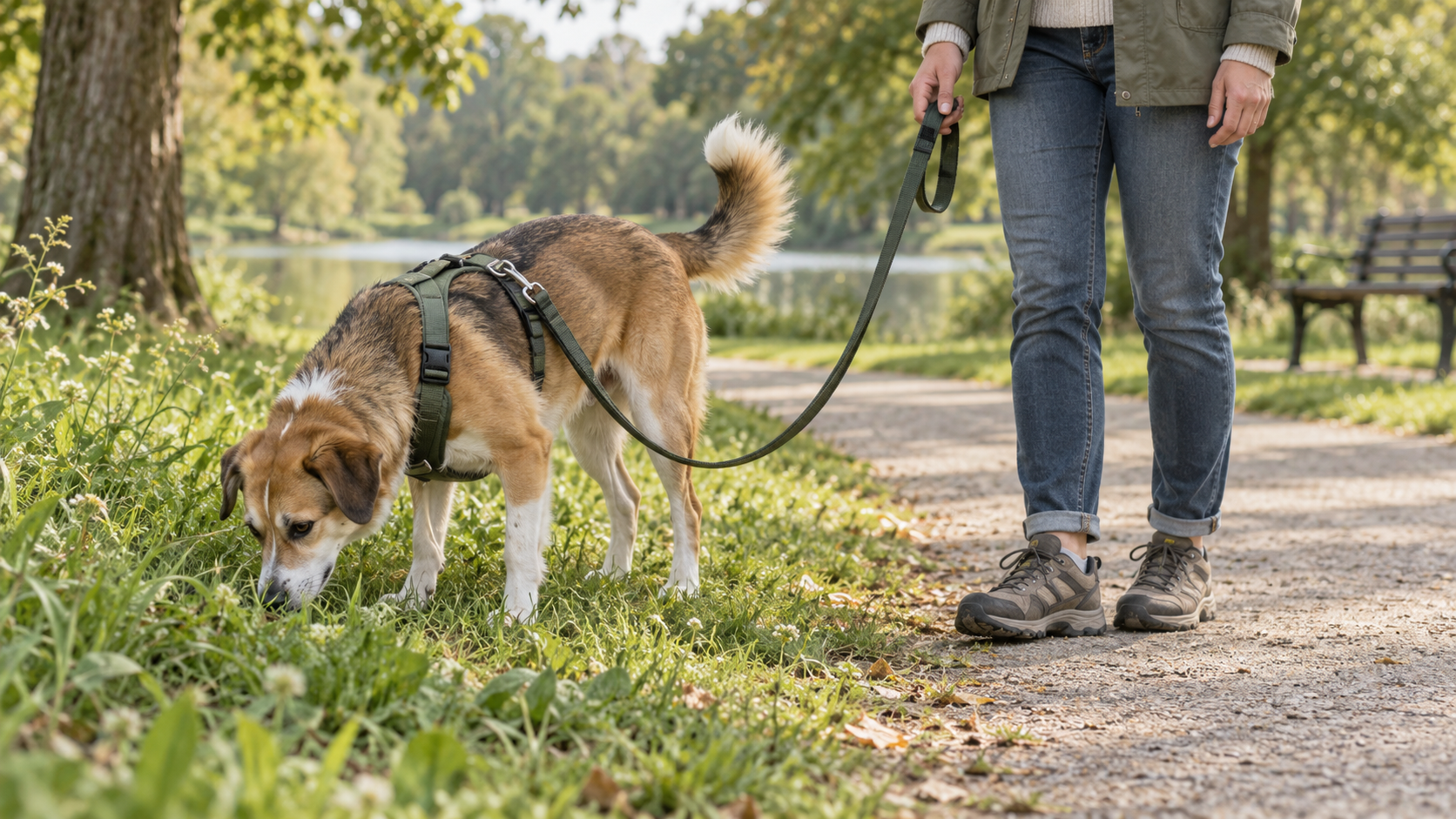
Use a clear area with comfortable footing and enough room to turn. If using a leash, inspect the equipment and keep it loose enough for an easy movement while maintaining suitable control.
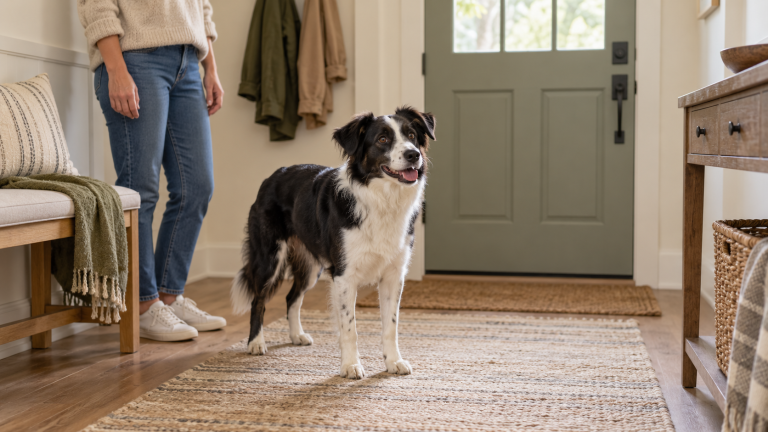
Begin when the dog is already comfortably interacting. A barking dog beside a busy road is not the starting lesson.
Invite the turn
- Take a few easy steps together.
- Say a chosen cue in a friendly tone.
- Turn smoothly and move a short distance in the other direction.
- Reward the dog for moving with you.
- Pause before practicing again.
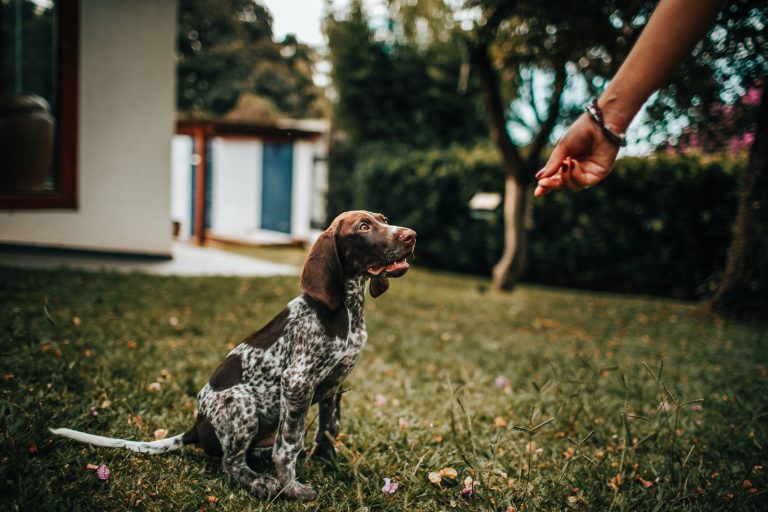
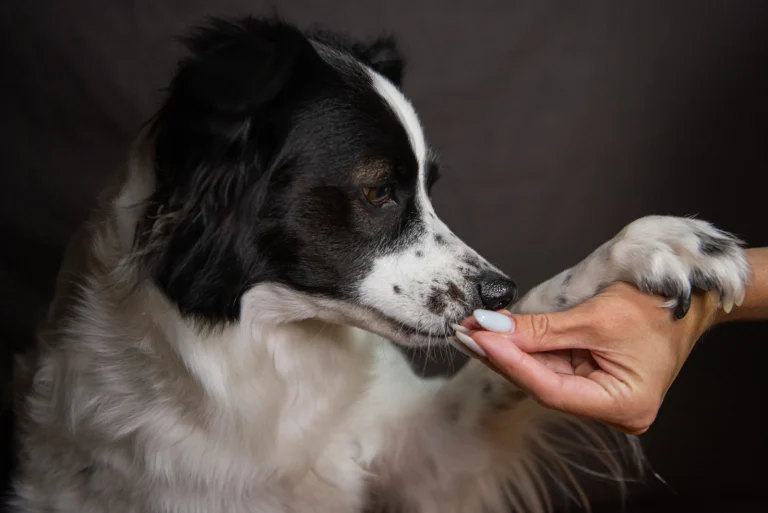
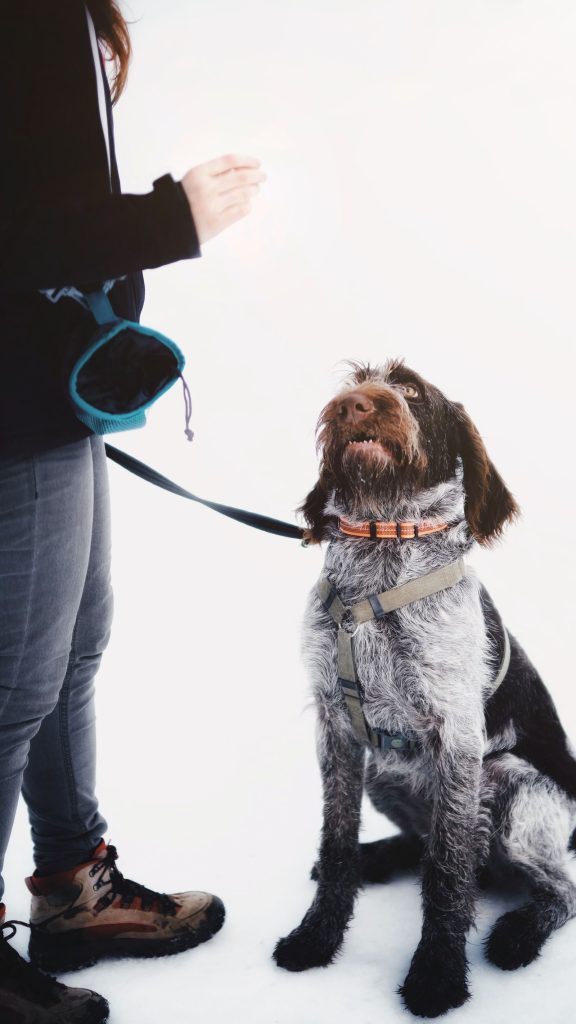
A familiar hand target may help invite the initial movement. Keep any prompt small and comfortable.
Avoid using leash pressure as the lesson
Do not jerk the dog around or drag them through the turn. If they remain interested elsewhere, choose an easier moment and reduce the challenge next time.
Reward where the dog can receive it safely without tangling the leash around either of you. Practice both your own movement and the dog’s response.
Take the skill to an easy outing
Try a quiet permitted route with plenty of space. Practice before you need to avoid something, not only when a difficult situation is already close.
Use our sniff-walk planning guide to think about sightlines and alternative routes.
Keep its limits clear
A successful turn in a familiar place does not establish a reliable response beside every distraction. Notice changes early and choose distance rather than repeatedly testing the cue.
Fear, lunging, or persistent distress needs qualified individual assessment. Do not deliberately approach a trigger to demonstrate the U-turn. Record comfortable practice conditions and build from them.
Sources and editorial notes
Walking context: Dogs Trust: walking nicely. The U-turn sequence is an Animalia movement exercise, not a reactive-dog treatment protocol.
Featured image: Illustrative supervised outing, generated with AI; choose equipment and surroundings for the individual dog.