A training marker is a brief signal that identifies the moment your dog does the action you want to reward. It may be a click or a short word. The marker communicates success; it does not replace the reward or request the behavior by itself.
Choose a comfortable signal
Pick a sound you can use consistently. If a clicker startles the dog, choose a softer suitable alternative and seek guidance if needed. Keep the signal distinct from ordinary conversation.
Agree on the signal with other caregivers. There is no need to choose the loudest option or buy several devices before beginning.
Make the reward connection clear
In a quiet setting, use the signal and promptly provide a suitable reward. Keep this introductory practice short and comfortable. Account for food rewards within the dog’s usual care plan.
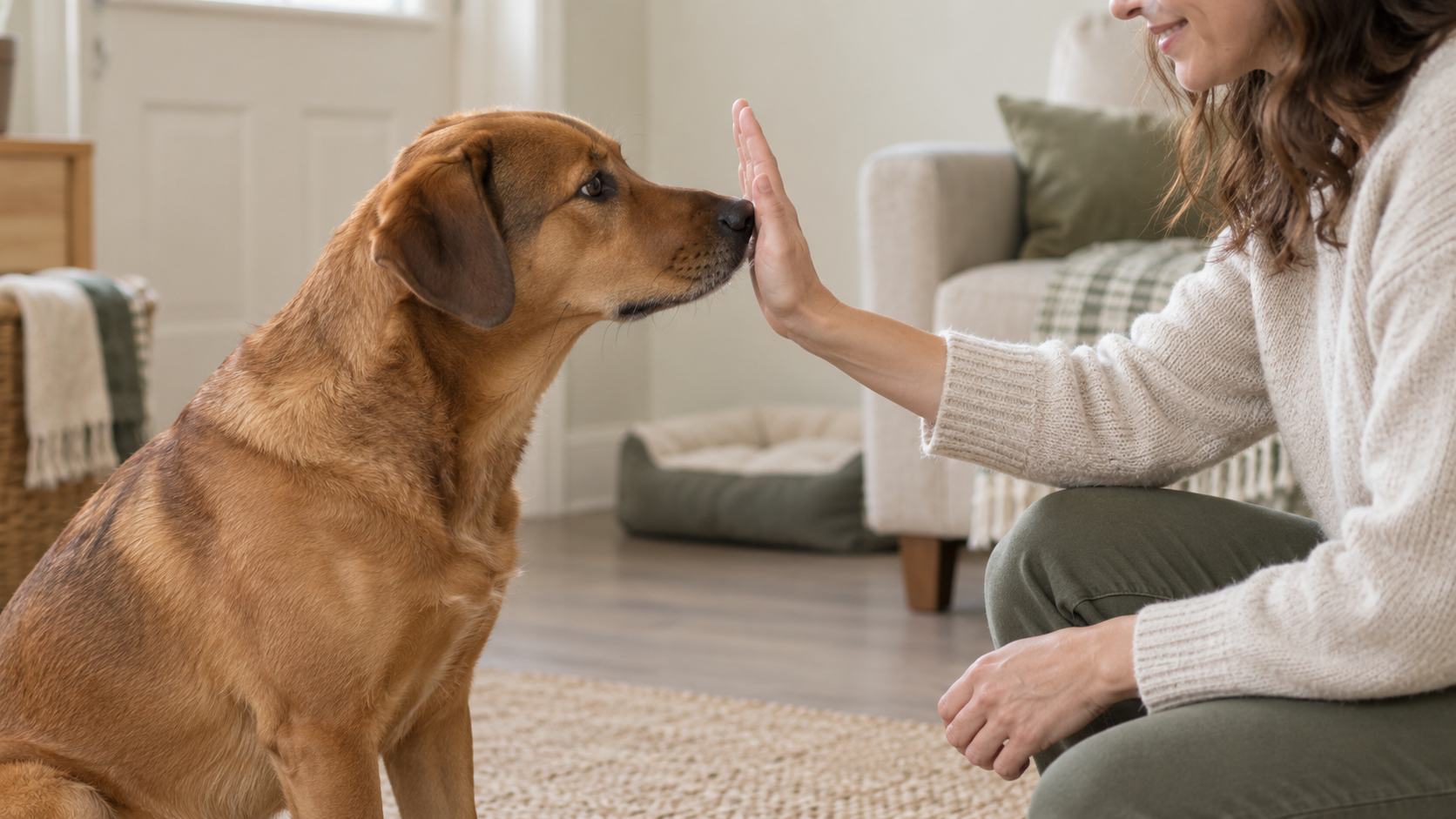
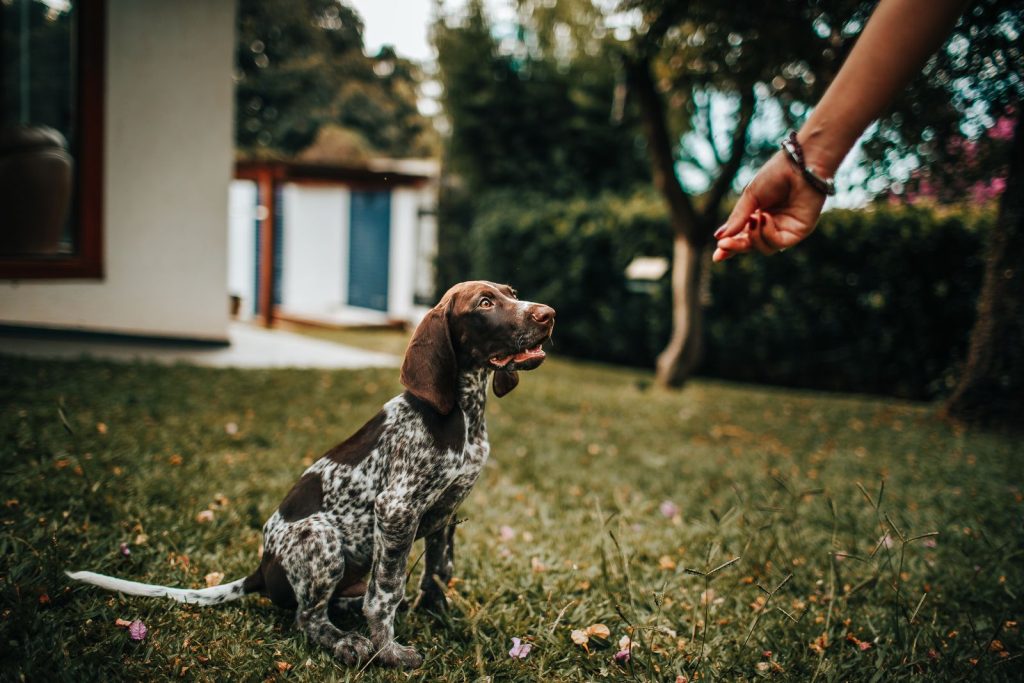
Then use the marker during an easy voluntary behavior. For example, in a hand target, mark the nose touch rather than the moment your hand appears.
Practice your own timing
- Decide the exact action before starting.
- Watch the dog rather than the reward container.
- Signal the action as it happens.
- Deliver the reward without an unnecessary delay.
- Reset before the next attempt.
You can rehearse handling the reward and marker without the dog first. That makes the real session less crowded with human mistakes.
Keep different signals separate
A cue requests an action. A marker identifies a successful moment. A release cue tells the dog when a specific waiting request ends. Do not assume one sound clearly serves all three roles.
If you accidentally mark the wrong moment, still honor the marker with a reward, then improve the next setup. Avoid turning a timing mistake into punishment.
Review the whole sequence
If the dog seems confused, simplify the action, location, and reward delivery. A marker cannot make an unclear or uncomfortable exercise appropriate.
Record one practical adjustment for next time. Seek a qualified reward-based trainer if timing or the behavior itself remains difficult. There is no fixed number of clicks that proves the dog understands every future exercise.
Sources and editorial notes
Technique reference: American Kennel Club: mark-and-reward training. The timing checklist is an introductory editorial aid, not a certification course.
Featured image: Illustrative hand target, generated with AI: a dog touches a person’s open palm, the kind of clear moment a marker can pinpoint; not a documented training result.