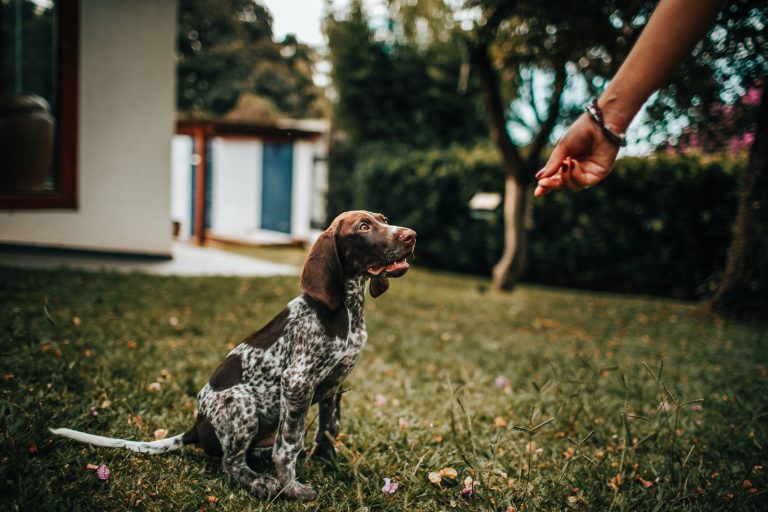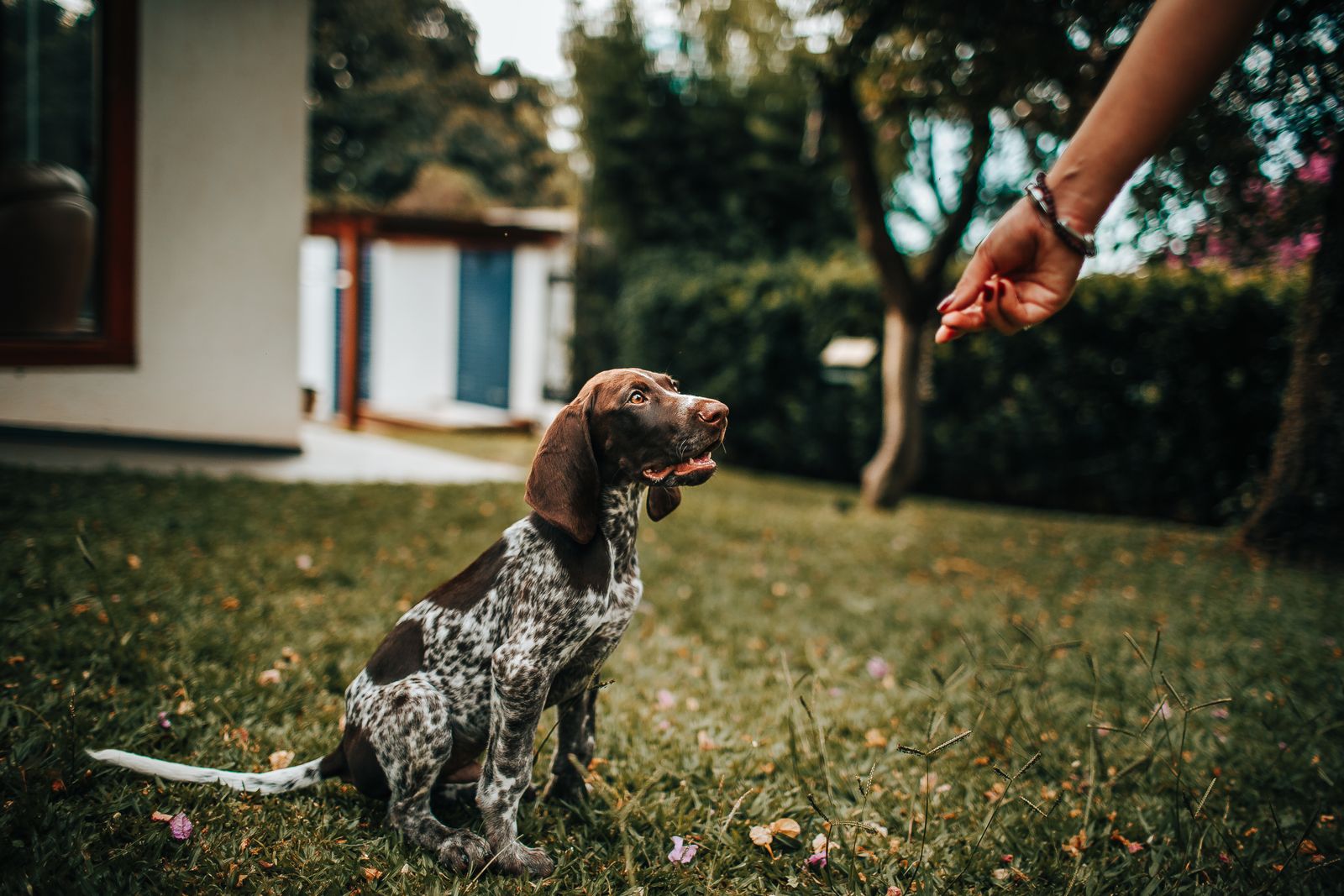
Fading a food lure means removing visible food from the prompt while continuing to reward the completed behavior. It does not mean stopping rewards. Make the transition once the movement is familiar, using a clear hand signal and an easy practice setting.
Separate prompt and reward
A lure guides the initial movement by placing food where the dog can follow it. A reward is delivered after the intended action. Write those roles separately in your plan so you do not confuse removing the lure with removing reinforcement.
Choose one comfortable behavior already being learned. Avoid using a lure to draw the dog into a frightening situation or physically demanding position.
Check the starting behavior
Practice in the familiar quiet location. If the dog still struggles with the movement while following the lure, make the task easier before changing the prompt.
- The movement is comfortable.
- The starting position is familiar.
- The reward is appropriate and ready.
- The hand movement can be reproduced clearly.
Try an empty-hand version
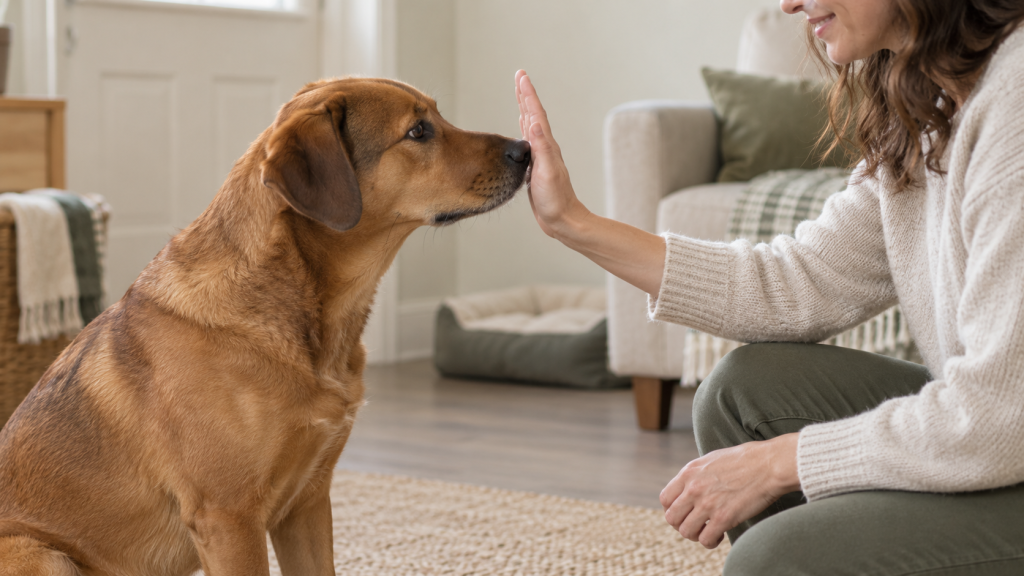
Use the familiar hand movement without food in that hand. When the dog performs the action, mark it if appropriate and deliver the reward from the other hand or a nearby prepared source.
If the dog is unsure, do not wave both hands repeatedly or demand the behavior. Return to an easier step and get guidance on a smaller transition.
Reduce the signal gradually
Once the empty-hand version is comfortable, make a modest change to the hand movement. Keep location and other conditions stable.
Add or refine a verbal cue separately rather than changing the visible lure, hand signal, word, and environment in one session. Our training progression checklist can help isolate the change.
Keep rewarding and recording
Reward successful responses while the new signal is being learned. A dog responding to an empty hand has learned a new prompt; they have not agreed to work indefinitely without worthwhile outcomes.
Use the session log to record which version worked. If you remain stuck, a qualified reward-based trainer can review the movement and timing.
Sources and editorial notes
Technique reference: American Kennel Club: lure-and-reward training. This guide covers prompt reduction, not a general schedule for reducing rewards.
Featured image: Illustrative reward-based interaction, not a documented Animalia training session. Photo: Helena Lopes / Pexels.