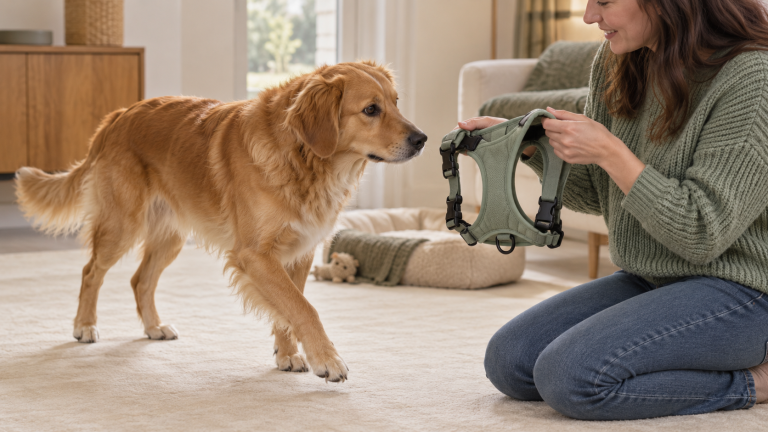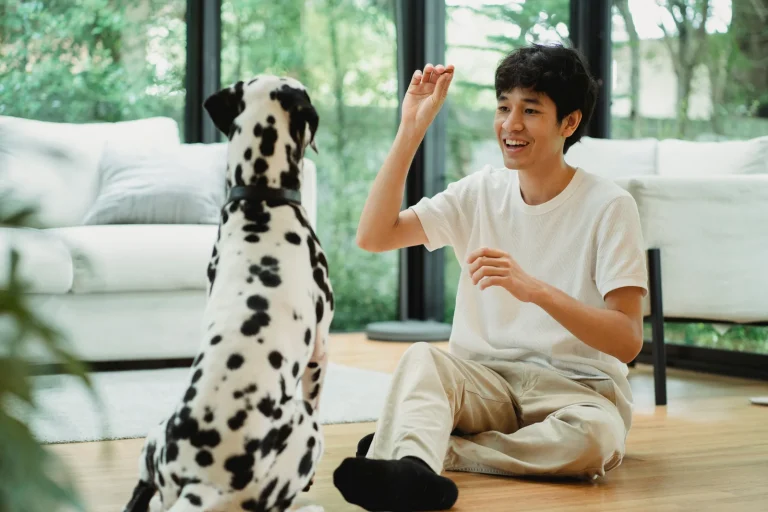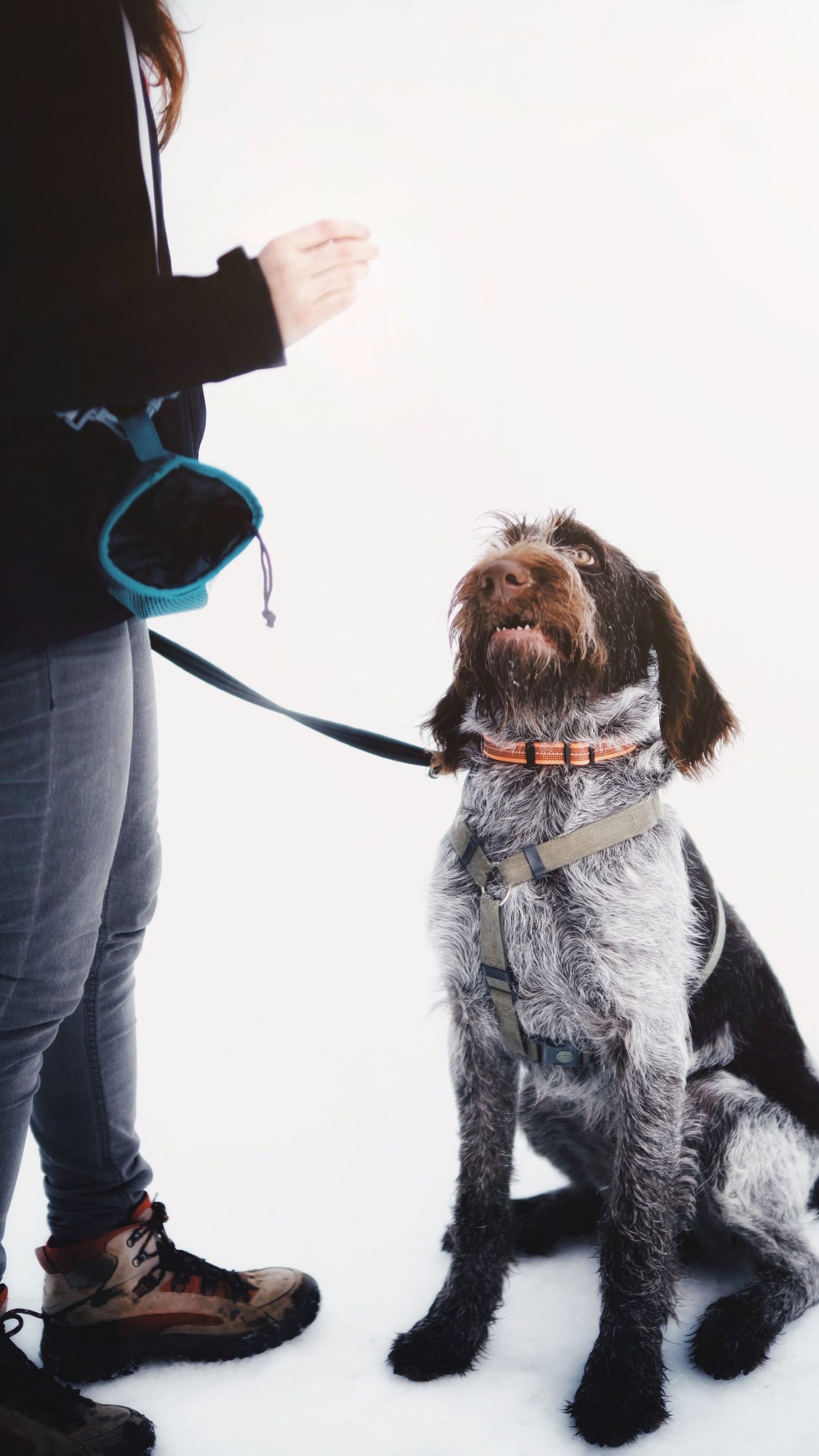
Add distractions by changing one part of an established exercise while keeping the rest easy. Distance, duration, movement, and location can all affect a response. A dog performing a cue at home has not automatically learned the same task in a busy park.
Describe the successful starting point
Write the behavior, location, distance, and surroundings that already work. Be concrete: “brief hand touch beside the sofa with no visitors” gives you something reproducible.
If the original setup is not comfortable and understandable, return to that foundation first. Our reward-based training guide explains how to prepare a simple session.
Choose a single change
- A slightly different position in the same room.
- A small increase in duration where appropriate.
- A familiar person moving at a manageable distance.
- A quiet new location with the original easy task.
Do not combine all four. Write which feature changed so you can interpret the result rather than guessing that the dog was stubborn.
Keep safety and comfort separate from performance
A distraction should be an appropriate part of a safe environment, not something deliberately frightening. Do not bring the dog closer to a trigger to test their training.
Use suitable barriers, equipment, and distance. Where fear, aggression, or chasing is involved, obtain individualized professional help rather than applying a generic difficulty ladder.
Respond to an unsuccessful attempt
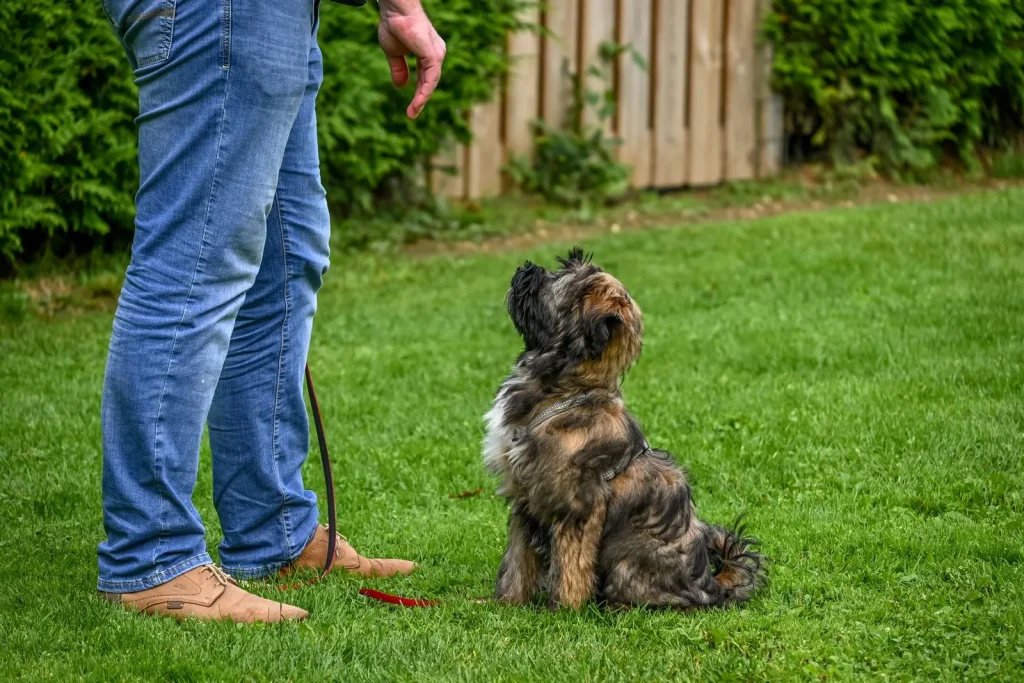
A missed response is information about the setup. Pause, reduce the challenge, or return to the previous version. Avoid repeated cues and punishment.
Reward the easier successful action when appropriate. Ending after a manageable repetition can be more useful than continuing until the dog completes the hardest version.
Record what transfers
Keep brief notes for each setting. You may find that a cue is comfortable in several quiet places while movement still makes it difficult. That tells you which feature to practice next.
Our training log provides a simple record. Progress need not follow a fixed weekly schedule, and success in one session does not guarantee safety in every real-world situation.
Sources and editorial notes
General training context: Blue Cross: dog and puppy training. The one-change framework is an Animalia planning tool, not a treatment for emotional responses to triggers.
Featured image: Illustrative walking equipment and rewards; the photo does not demonstrate every training step. Photo: Andreas Schnabl / Pexels.