A useful training log describes what happened clearly enough to repeat the comfortable parts next time. Record the behavior, setup, reward, and one adjustment. You do not need a scoring system or a long diary to make practice more consistent.
Write the behavior precisely
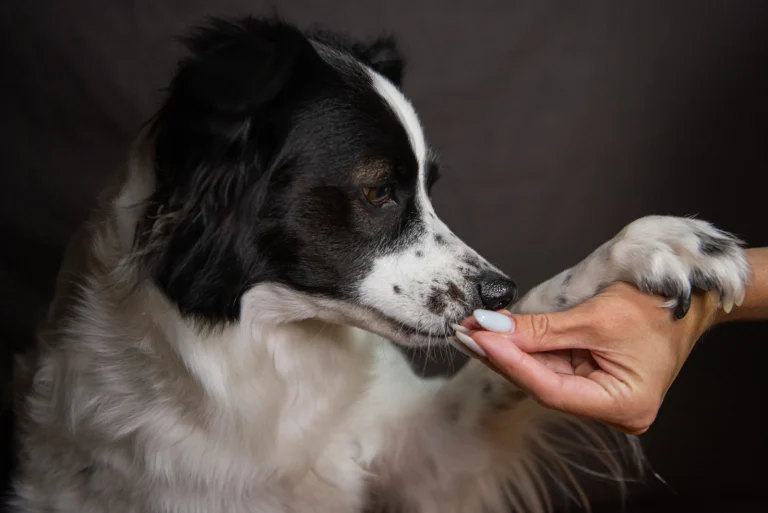
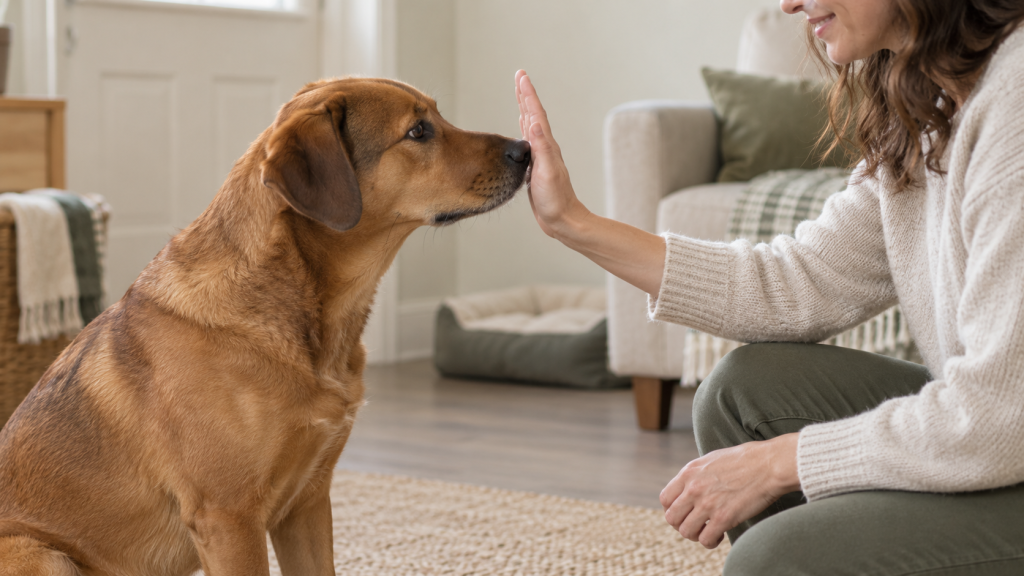
Use an observable description such as “nose touches an offered palm” instead of “obedience.” Add the cue if it has been introduced.
Choose one behavior per note. If a session included several exercises, separate their records so a difficult recall does not obscure a successful hand target.
Record the setup
- Date and caregiver.
- Location and relevant distractions.
- Starting distance or position.
- Prompt and cue used.
- Reward and delivery location.
Include only details that help explain the session. The color of a notebook is less useful than whether another dog was moving nearby.
Describe the result without judging the dog
Use neutral observations. “Turned toward the hallway after the visitor arrived” is more useful than “refused to listen.” Note whether the dog comfortably engaged and which version of the task worked.
There is no requirement to count every repetition. If numbers help, use them consistently without presenting a tiny sample as proof of reliability.
Choose one next step
For example: keep the same room and increase distance slightly, or return to the original distance while a familiar person sits nearby. Our distraction guide explains why changing one feature is easier to interpret.
If the dog was uncomfortable, the next step may be stopping that exercise and seeking advice. Progress does not always mean making a task harder.
Use this copyable example
Behavior: brief nose touch to palm. Setup: quiet living room, caregiver seated, palm close by. Reward: usual suitable food after the touch. Observation: comfortable investigation; more difficulty when the hand moved. Next step: keep the palm still in the same location.
Share useful notes with caregivers or a qualified trainer. A log supports discussion; it does not diagnose health or behavior problems or certify that a cue will work outdoors.
Sources and editorial notes
General humane-training context: AVSAB: humane dog training position statement. The log format is an original Animalia planning template, not a validated assessment scale.
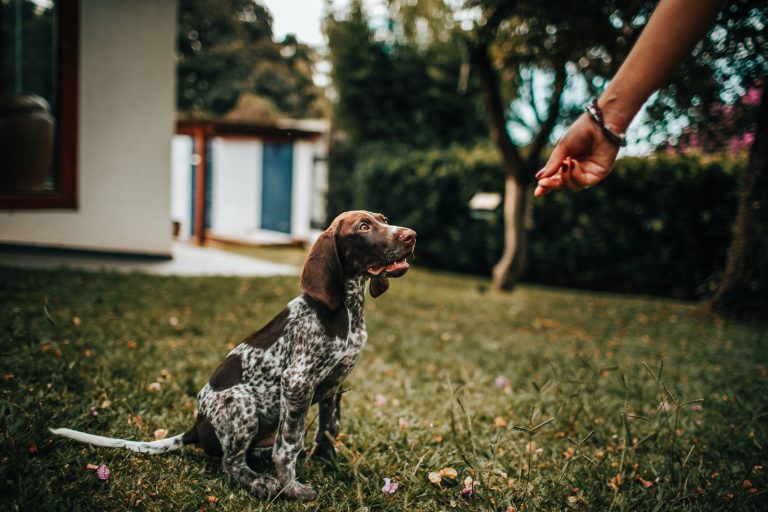
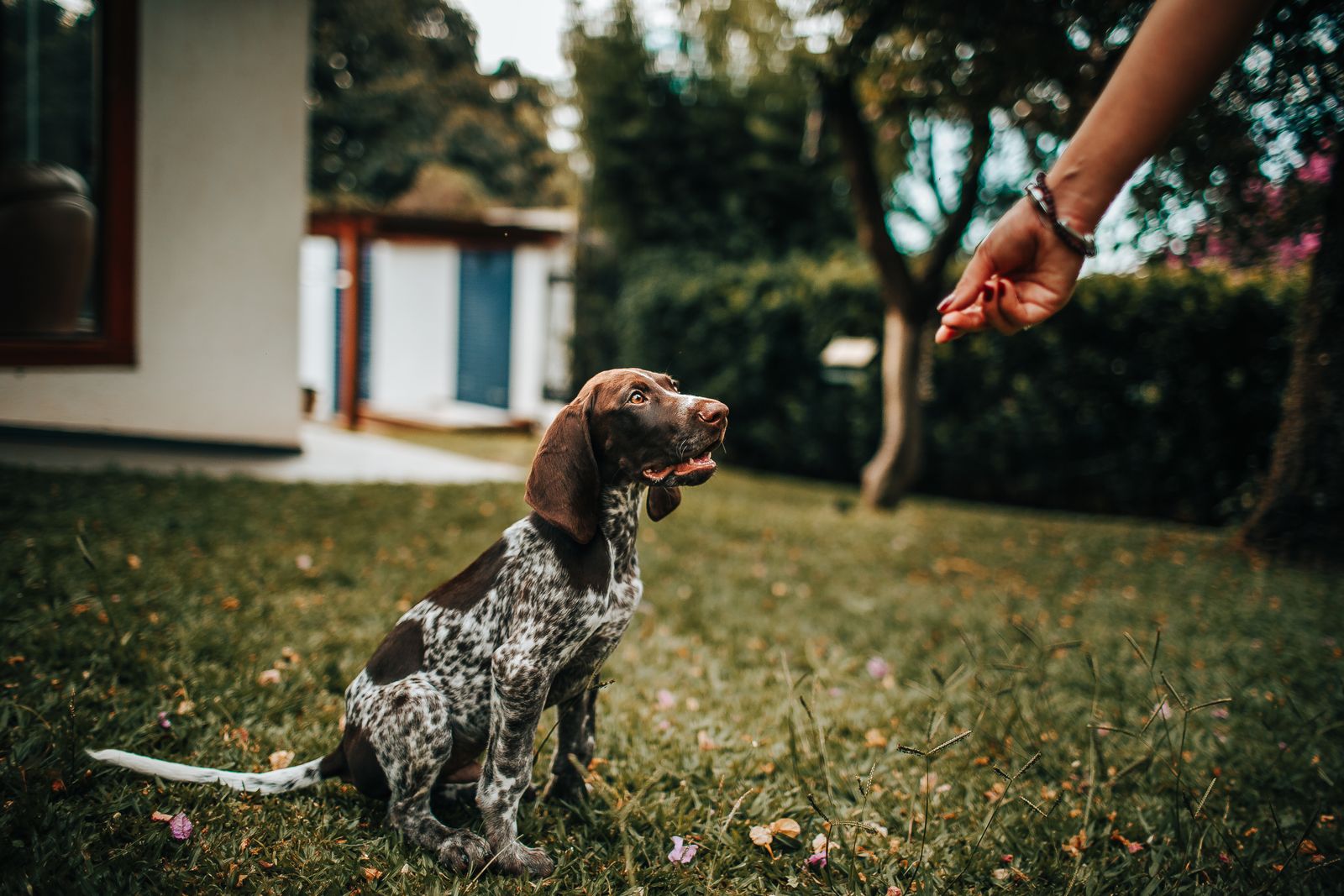
Featured image: Illustrative reward-based interaction, not a documented Animalia training session. Photo: Helena Lopes / Pexels.