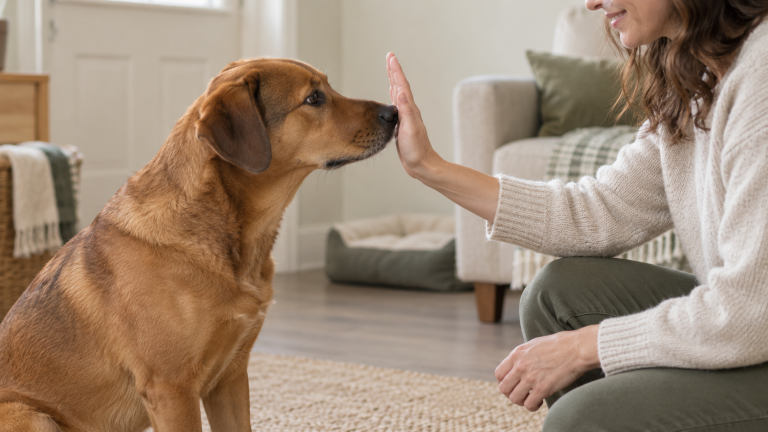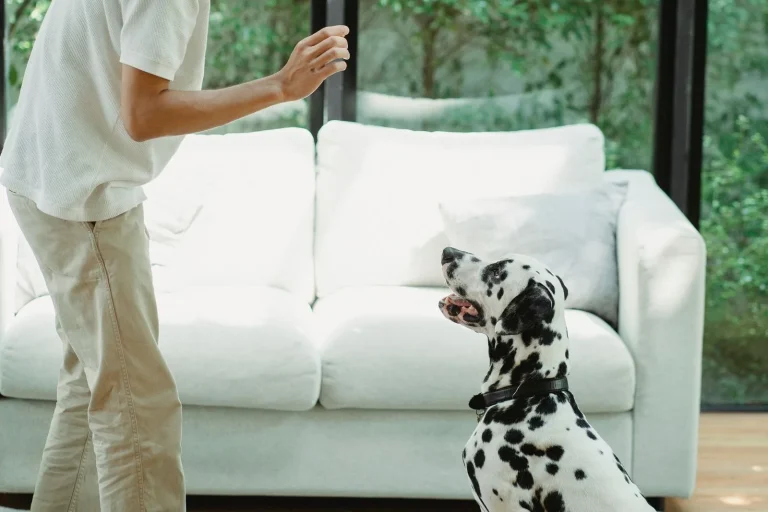
Mat training dogs means rewarding them for choosing a comfortable resting spot. Begin in a quiet room, reward small steps toward the mat, and build up to a relaxed lie-down. Add time, movement, and distractions gradually, without pushing or holding your dog in place.
A portable mat can be useful beside your desk or during a quiet family meal. It gives you a clear place to notice and reward calm behavior. This is an everyday training guide, not treatment for fear, aggression, or separation distress. Speak to your veterinarian about sudden behavior changes or signs of pain.
In this guide: Set up · Training steps · Build the skill · Troubleshoot · Common questions
What do you need for mat training?
Choose a washable mat with a surface that does not slide on your floor. It should be large enough for your dog to rest comfortably. Put it somewhere quiet, away from doors and other pets. A thin towel may work on carpet but slip on a smooth floor, so check the setup first.
Have small rewards ready, using food your dog can safely eat. Account for training food within the day’s allowance, and keep any prescribed diet in mind. You also need a calm place to sit and a few minutes when you can pay attention. Start after your dog has had an opportunity for ordinary exercise, water, and a bathroom break.
The American Veterinary Society of Animal Behavior’s humane training statement supports reward-based methods. For this exercise, that means making the mat worthwhile and changing the setup when your dog struggles. Avoid leash corrections, intimidation, and forced positioning.
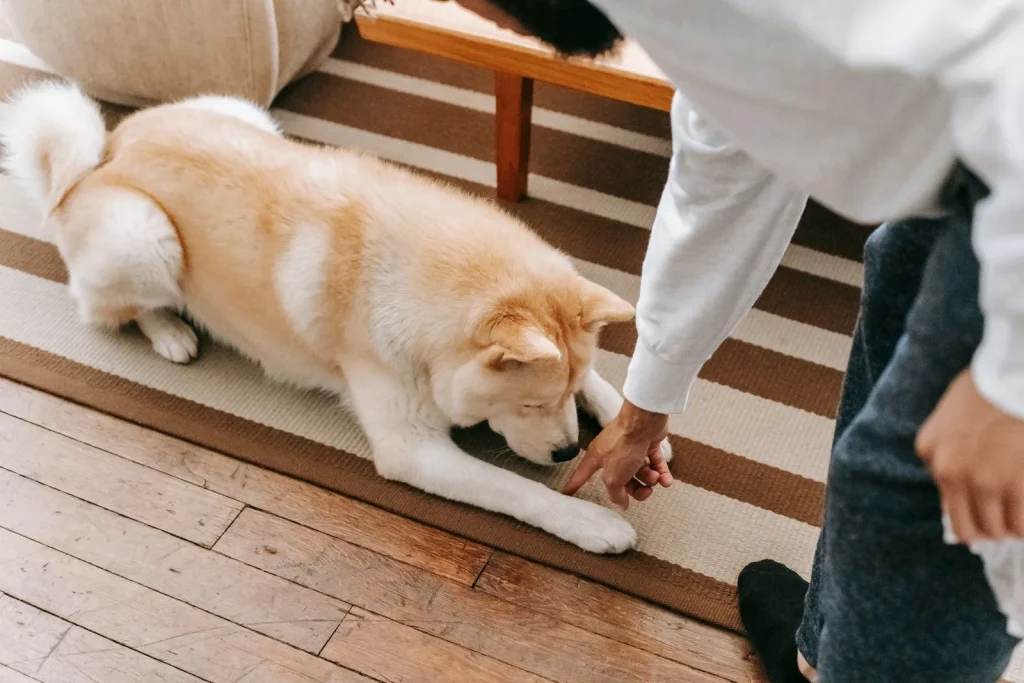
How do you teach your dog to settle on a mat?
1. Make approaching the mat rewarding
Put the mat down and let your dog investigate. Reward a glance toward it, a sniff, or a step onto it. Place the reward on the mat so your dog has a reason to return. Start with the easiest choice your dog offers.
If your dog stays away, move the mat to a familiar spot and give them room. Check whether it slides, makes a noise, or feels unusual underfoot. Do not drag your dog over. End the attempt and try an easier setup later if they remain unsure.
2. Notice calm choices
Once your dog is comfortable being on the mat, sit nearby and wait for small signs of settling. Quietly reward standing calmly, sitting, or lying down. As lying down becomes easy, reward relaxed details such as resting the head or shifting into a comfortable position.
Dogs Trust’s settle-training guide describes building from quiet behavior toward relaxed rest. A dog lying down while staring at your treat pouch may still be waiting for the next task. Give them time; the aim is comfort, not a perfect pose.
3. Make the end of a session clear
Use a simple word such as “all done” when you finish, then move away and let your dog get up. A brief break keeps the exercise from turning into a long test. You can start another easy session later.
If you want a word such as “mat” to mean going to the resting spot, introduce it once that movement is familiar. Say it once as your dog starts toward the mat, then reward. A location cue and a relaxed settle are related skills, but they are not the same thing.
4. Keep practice short and easy
Stop before either of you becomes frustrated. Blue Cross’s training guidance recommends brief sessions and rewards delivered promptly. A small success you can repeat is more useful than an ambitious session that leaves your dog uncomfortable.
You might end after your dog chooses the mat and rests briefly. That is a useful starting point, even if it does not look like a long settle yet. Note what worked: the room, reward, and level of household activity. Use that same easy setup next time.
How do you add time and distractions?
Change one part of the exercise at a time. For example, after a comfortable settle, try a slightly longer pause before the next reward. On another occasion, shift in your chair while keeping the pause short. These are practice ideas, not a fixed program that every dog must follow.
Keep new movement small enough that your dog can remain comfortable. If they stand up, reduce the challenge and reward an easier calm choice. Do not withhold a break to prove they can do it.
| Practice idea | Make it easier by |
|---|---|
| A short pause between rewards | Returning to more frequent rewards |
| You shift in your chair | Sitting still again |
| A household member walks past | Giving the mat more space from the walkway |
| The mat moves to another room | Starting with the first familiar steps |
Try another quiet room before a busy public place. At a pet-friendly venue, follow local rules, keep your dog safely under your control, and choose a spot away from foot traffic. Leave if the setting is too much for your dog. Being able to settle at home does not guarantee comfort in a café.
What if your dog will not settle?
Your dog keeps leaving the mat
Check the location and surface, then lower the goal. Reward returning or resting briefly rather than asking for a long stay. If your dog walks away repeatedly, finish and try later. The mat should remain a place your dog can choose willingly.
Your dog gets excited about the food
Keep your own movements quiet and predictable. Try a familiar reward your dog likes without becoming frantic, if it suits their diet. Put the treat pouch out of the direct line of sight. If excitement keeps rising, take a break instead of asking for more stillness.
Your dog is still but looks tense
Look at the whole body. The RSPCA’s body-language guide contrasts relaxed posture with worried signs such as lowered posture, tucked tail, avoidance, and lip licking. A single sign can have different meanings, so consider the situation and what is normal for your dog.
Give an uncomfortable dog space and an easy way to stop. Do not punish growling or reach in to take a guarded item. Keep children and other animals away, and seek qualified help when fear or guarding affects safety.
Common questions about mat training dogs
How long does mat training take?
There is no reliable deadline for every dog. Your starting point, surroundings, and dog’s comfort all matter. Track small changes in the same quiet setting before expecting the skill elsewhere. Avoid comparing your dog’s pace with a short social-media demonstration.
Do you need to use treats forever?
Rewards are useful when teaching a new skill. As your dog becomes comfortable, experiment with small pauses rather than removing rewards abruptly. Return to easier practice when the setting changes. Quiet rest may eventually become part of the routine, but do not rush that transition.
Does a mat replace exercise or help with separation anxiety?
A settle exercise does not replace walks, play, social contact, or bathroom breaks. It is also not a stand-alone treatment for separation distress. Ask your veterinarian or a qualified behavior professional for an individual plan when your dog struggles with being left alone.
Your next step: prepare a non-slip mat and reward one easy, voluntary choice today. Explore Animalia’s Training & Behavior guides for related topics, and read our editorial policy for our approach to sources and AI assistance.
Keep building everyday skills
Start with our reward-based training guide, then explore loose-leash walking and leave-it training. Add appropriate rest and activity with a practical daily routine.