Puppy enrichment means offering safe chances to sniff, chew, explore, play, and learn, as Cornell’s canine guidance explains. Start with easy activities matched to your puppy’s size and confidence, supervise new items, and leave time for sleep. The goal is a satisfying experience, not a harder puzzle or an exhausted puppy.
These puppy enrichment ideas focus on choosing the right starting level and adjusting it. For a wider collection of games, see our indoor dog enrichment guide. A young puppy needs help using an idea safely, even when it works well for an older dog.
How do you choose enrichment for a young puppy?
Pick a game your puppy can try without fear, force, or loose pieces they might swallow. Check the surface, toy size, and food before starting. Make the first task easy, then watch the puppy’s response. If they seem worried, frustrated, or ready to leave, change the setup or let them stop.
Dogs Trust recommends considering the individual dog’s abilities, preferences, and health. An activity is not better because it keeps a puppy busy longer. Difficulty can be reduced by showing where food is, leaving a toy uncovered, or removing distractions.
Prepare an uncluttered area with good footing and water available, and keep other pets apart if food or toys cause tension. Ask your vet which outdoor settings fit the puppy’s current vaccination status, and choose indoor exploration when public-ground access is not appropriate.
Six easy starting activities, with a simpler option
The activities below adapt the sniffing, foraging, play, and learning categories described by Cornell and the ASPCA. They are Animalia setup examples rather than a prescribed daily program. Use only what suits your puppy, and put away any item that becomes a chewing or swallowing risk.
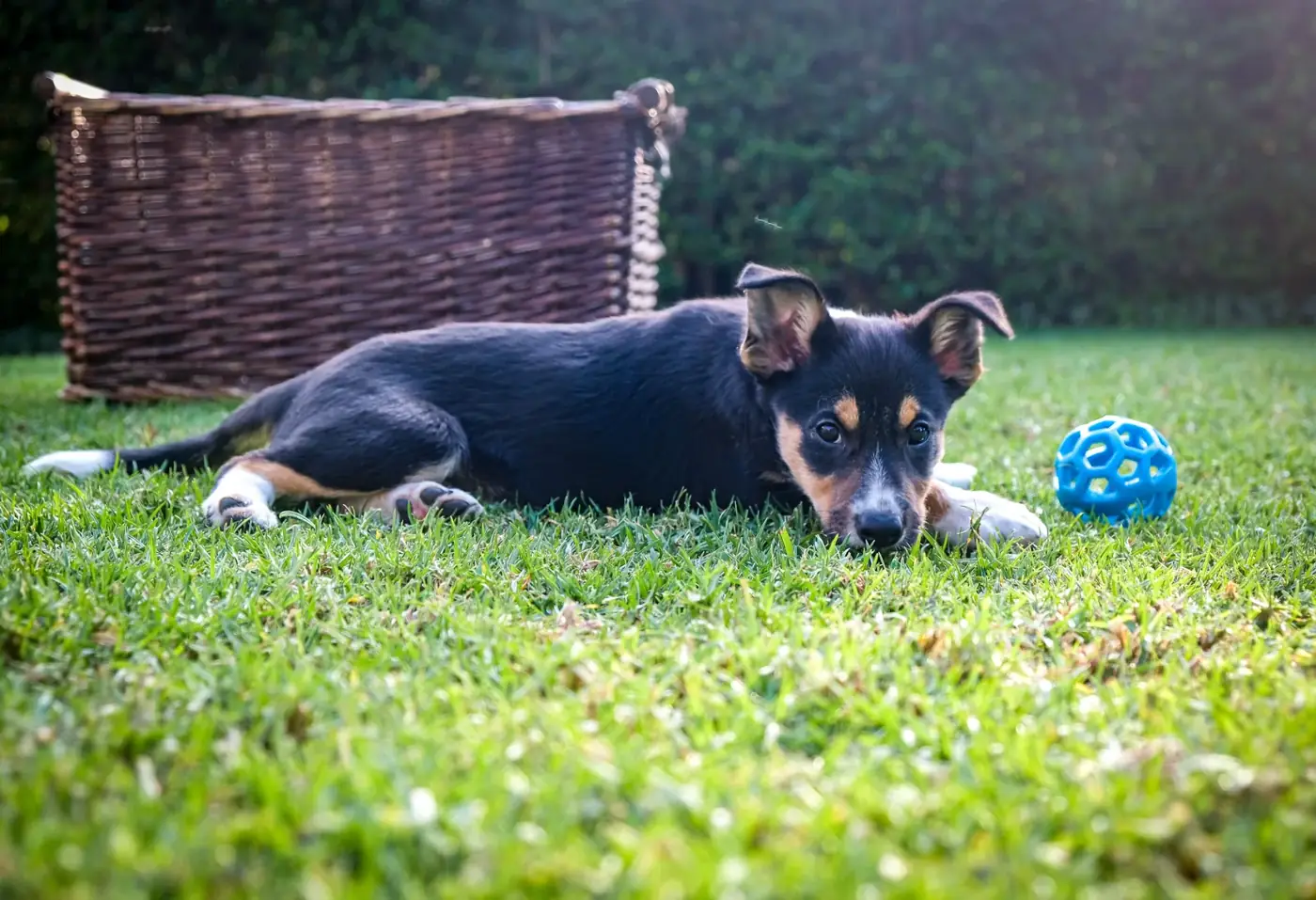
1. A visible food search
Place part of the puppy’s usual food on a clean, clear floor where they can see it. Let them investigate at their own pace. Start with food plainly visible before hiding anything, and keep the area away from stairs, small household objects, and other animals.
2. An easy food toy
Choose a puppy-appropriate feeder that releases food without a difficult struggle, show how it works if needed, and supervise. Use food from the daily allowance rather than adding endless extras. Our beginner puzzle-feeder guide explains what to check before using a new toy.
3. Find a familiar toy
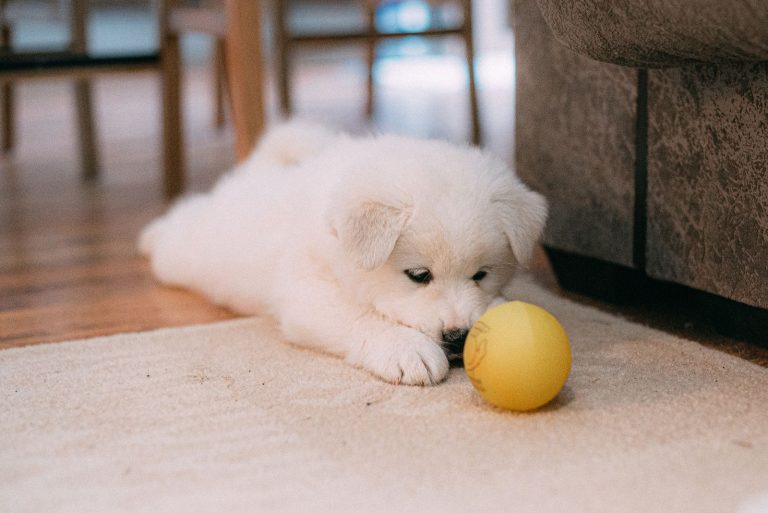
Let the puppy watch you place a favorite toy close by, with most of it still visible. Invite them to find it and enjoy a gentle game when they do. Do not begin by hiding it where the puppy must climb furniture, squeeze into a gap, or search anxiously.
4. Gentle toy play
Offer a suitable toy with space between your hands and the puppy’s mouth. Keep movement manageable and pause before the game becomes frantic. Stop if teeth reach skin, then restart more calmly when appropriate. Inspect the toy for loose fabric, stuffing, or pieces that could be swallowed.
5. A familiar reward-based skill
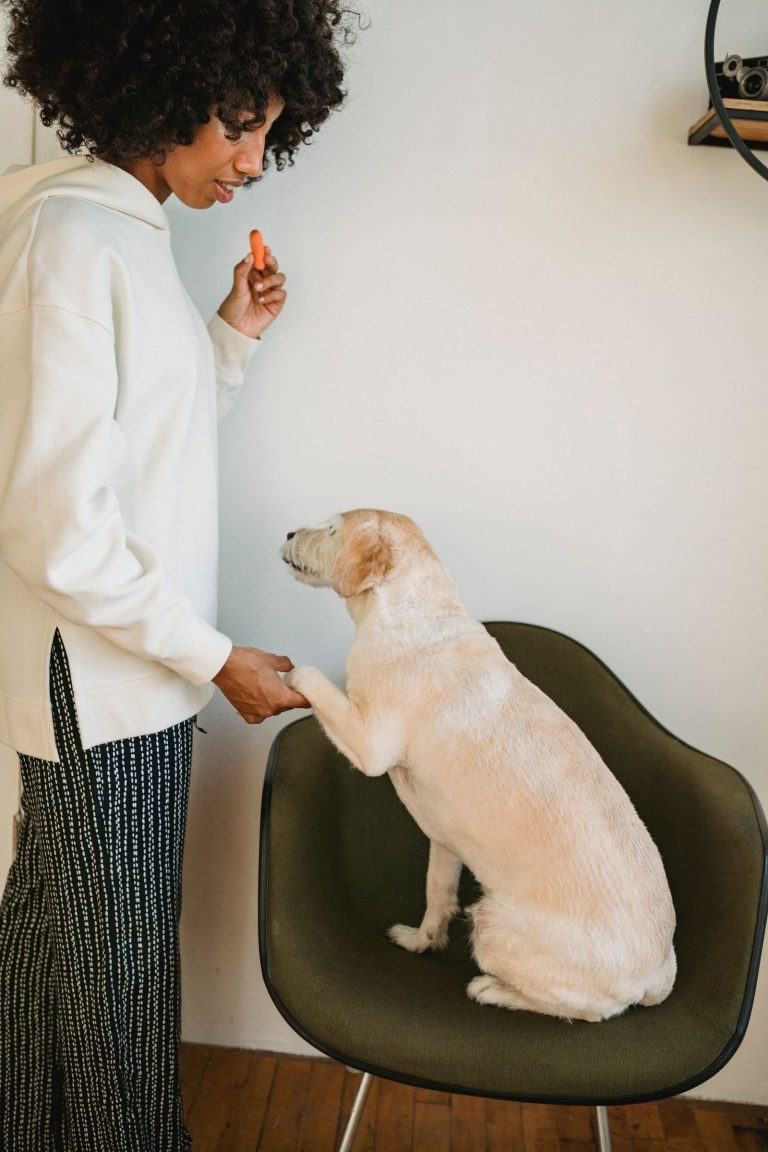
Practice an easy skill the puppy can offer comfortably, such as a brief glance toward you or a nose touch. Reward promptly, then finish while the puppy remains interested. AVSAB recommends reward-based methods; pressure, intimidation, or forcing a position do not belong in a learning game.
6. Calm exploration with an exit
Allow a puppy to investigate a safe room, a familiar garden area, or a new object from a comfortable distance, with a clear path away. A puppy watching quietly is not failing to participate. Do not place them onto an object or carry them toward something they are avoiding.
How do you make a puzzle safe and easy enough?
Watch the puppy use the item before relying on it. They should be able to investigate, reach a reward, and stop without becoming trapped or frustrated. If they chew off pieces, swallow material, or repeatedly struggle, remove the item safely and choose a simpler activity with fewer loose parts.
The ASPCA stresses active supervision for DIY enrichment. Cardboard, fabric, and plastic are not automatically safe because they came from household recycling. For a puppy who eats those materials, skip that kind of puzzle and offer another supervised outlet.
| What happens | Simplify the setup | Stop or seek help when |
|---|---|---|
| Puppy cannot reach food | Use an open, easy-access feeder | Frustration keeps increasing |
| Puppy bites loose material | Choose a different suitable item | Pieces are swallowed or may be missing |
| Puppy walks away | Allow a break or another choice | A new loss of interest comes with illness signs |
| Other dog approaches the puzzle | Use separate spaces | Guarding or conflict appears |
| Puppy becomes frantic | Pause and meet care needs | You cannot keep play safe |
This Animalia table helps you change the setup; it does not diagnose the puppy’s behavior. If you suspect an item was swallowed, contact your vet promptly. Do not try to solve a possible ingestion problem by offering another game.
How should enrichment fit around rest and care?
Fit activities between meals, bathroom breaks, sleep, and calm time with the household. A puppy does not need constant entertainment. If an activity makes it harder to settle, shorten it or choose something quieter next time. Keep necessary care available whether or not the puppy completes the game.
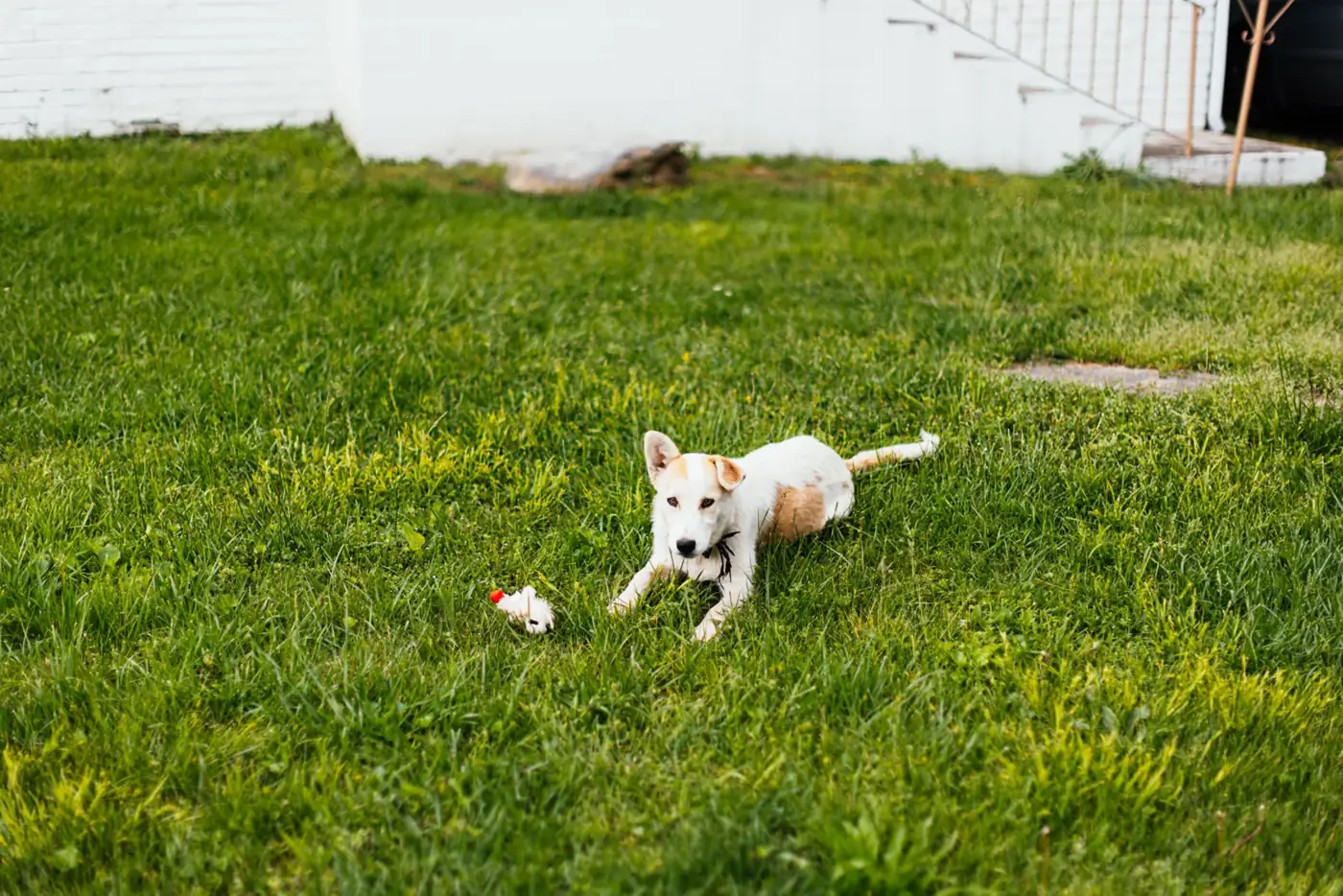
Dogs Trust specifically notes the importance of rest for puppies. Avoid using exercise or difficult puzzles to keep a tired puppy awake. A comfortable resting area and fewer interruptions may be more useful than adding another activity to a crowded evening.
Animalia example: a puppy loses interest in a food toy and starts grabbing sleeves. The caregiver pauses, offers a bathroom opportunity, and checks whether the puppy needs rest. The next attempt uses a simpler feeder earlier in the day. More difficulty is not the default response.
Record what the puppy chose, what made the task easy, and when they stopped, then rotate suitable options from our non-food enrichment ideas and protect rest with a calm evening routine. Explore the dog care hub for related planning.
Frequently asked questions
How much enrichment does a puppy need each day?
There is no useful single quota that fits every puppy. Offer suitable chances to explore, play, chew, and learn while protecting rest and routine care. Watch the individual response instead of filling every waking moment. If your puppy cannot settle or seems distressed despite a balanced routine, ask your vet and a qualified reward-based professional for help.
Can I use some of my puppy’s meals for games?
Yes, when the food and activity suit the puppy’s feeding plan; set aside part of the usual allowance and keep track of what has been used. Make food easy to reach and supervise. Do not turn every meal into a difficult puzzle or make essential nutrition depend on solving a task the puppy cannot manage.
Are cardboard puzzles suitable for all puppies?
No, some puppies tear and swallow cardboard, paper, tape, or other pieces. Closely supervise any new DIY item and choose another activity if material is being eaten. Remove staples, tape, and loose parts before considering an item. Contact your vet promptly if you think the puppy swallowed something that could cause harm.
Should I make the game harder every time?
No, familiar, easy success can still be enjoyable. Increase a challenge only when the puppy remains comfortable and interested, and change one feature at a time. If they struggle, make the activity easier rather than waiting for frustration. A puppy who walks away should be allowed to stop, even if the game is unfinished.
Does enrichment replace socialization or walks?
No single activity replaces all of a puppy’s needs. Appropriate social experiences, physical activity, sleep, feeding, bathroom care, and companionship each matter. Ask your vet how to approach outdoor exposure safely. Keep new experiences gentle and voluntary, and avoid forcing a worried puppy toward people, dogs, noises, or unfamiliar objects.
What if my puppy becomes more excited afterward?
Look at the activity’s intensity, difficulty, timing, and the puppy’s rest and care needs. Try a simpler or quieter option next time and end before play becomes hard to manage. Excitement alone does not identify the cause. Seek advice for persistent distress, painful behavior, unsafe biting, or a sudden change in your puppy’s normal pattern.
Sources and editorial notes
- ASPCA: DIY enrichment and supervision
- Dogs Trust: choosing safe, enjoyable enrichment
- Cornell Riney Canine Health Center: enrichment ideas
- AVSAB: reward-based training position statement
Animalia Editorial. Last reviewed: October 22, 2026. Activities and troubleshooting tables are editorial examples, not a tested program or a promise to prevent behavior problems. No essential oils, hard-exercise quotas, or unsupported sleep equivalences are recommended. Editorial standards: Animalia Editorial Policy.
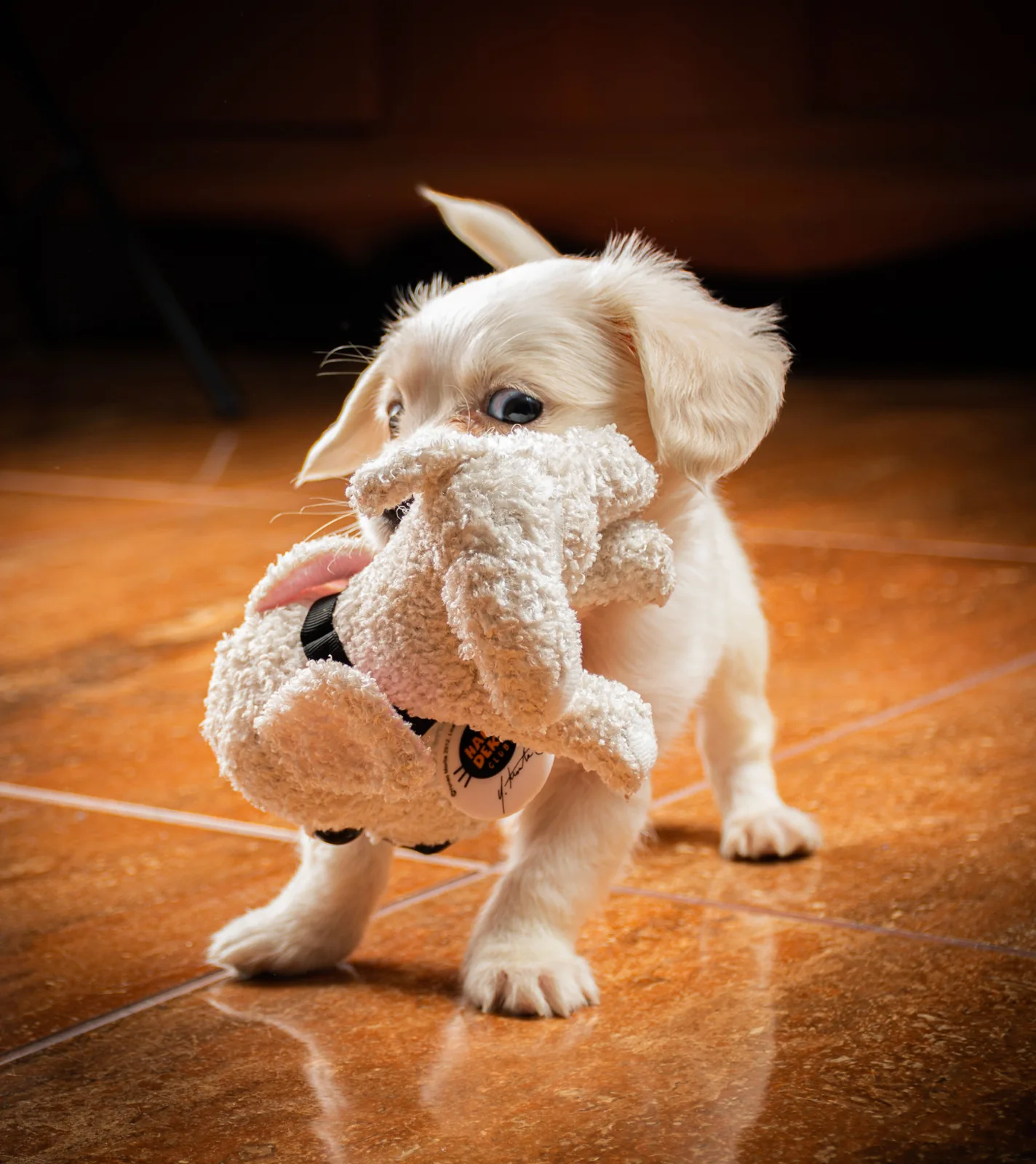
Featured photo: A puppy carries a soft toy indoors. Photo: Geofre Sampen / Pexels.
Prepared with AI assistance and reviewed against the sources above.