Indoor dog enrichment works best when the activity is safe, easy to understand, and matched to your dog’s interests. Start with visible food searches, a suitable toy, or a short training game. Give the dog choices and stop before an activity becomes frustrating.
These games can add variety on an ordinary day or when an outing must be adjusted. They do not replace bathroom access, appropriate movement, company, or rest in your dog’s daily routine.
Set up for safe, successful play
Choose an uncluttered area with good footing. Keep games away from stairs, electrical cables, and household chemicals. Use appropriately sized dog toys, inspect them before play, and supervise new activities. Separate pets when food or toys might create competition.
When food is suitable for your dog, take game portions from the usual allowance. Follow any prescribed diet. Homemade games are not designed to be left unattended, and a dog that swallows packaging needs a different setup.
A visible food search
Place a few pieces of the dog’s normal food in plain sight on a clean floor or suitable tray. Let the dog approach and find them. Begin without asking for a long wait; the first task is understanding that there is something to search for.
Later, spread pieces slightly farther apart within the same safe area. Do not hide them where the dog must squeeze behind furniture. Count what you place and collect leftovers after the game.
A shallow search tray
A clean, stable tray with several openly visible pieces of food can make a focused search space. Use wide, accessible sections if you add compartments. Avoid loose filler, small objects, and any container the dog tries to tear up and swallow.
Make access easier if the dog repeatedly paws without getting the food. Successful enrichment does not depend on the dog struggling. Switch to a purpose-made washable option if homemade materials are unsuitable.
A gentle toy find
Show a familiar favorite toy, then place it where the dog can plainly see it. Invite the dog to investigate and enjoy the toy. After several easy finds, you can place it partly behind a safe object while the dog watches.
Keep the toy reachable and avoid places that encourage climbing onto unstable furniture. If your dog is uninterested, choose a different activity; not every dog enjoys object-search games.
A short reward-based training game
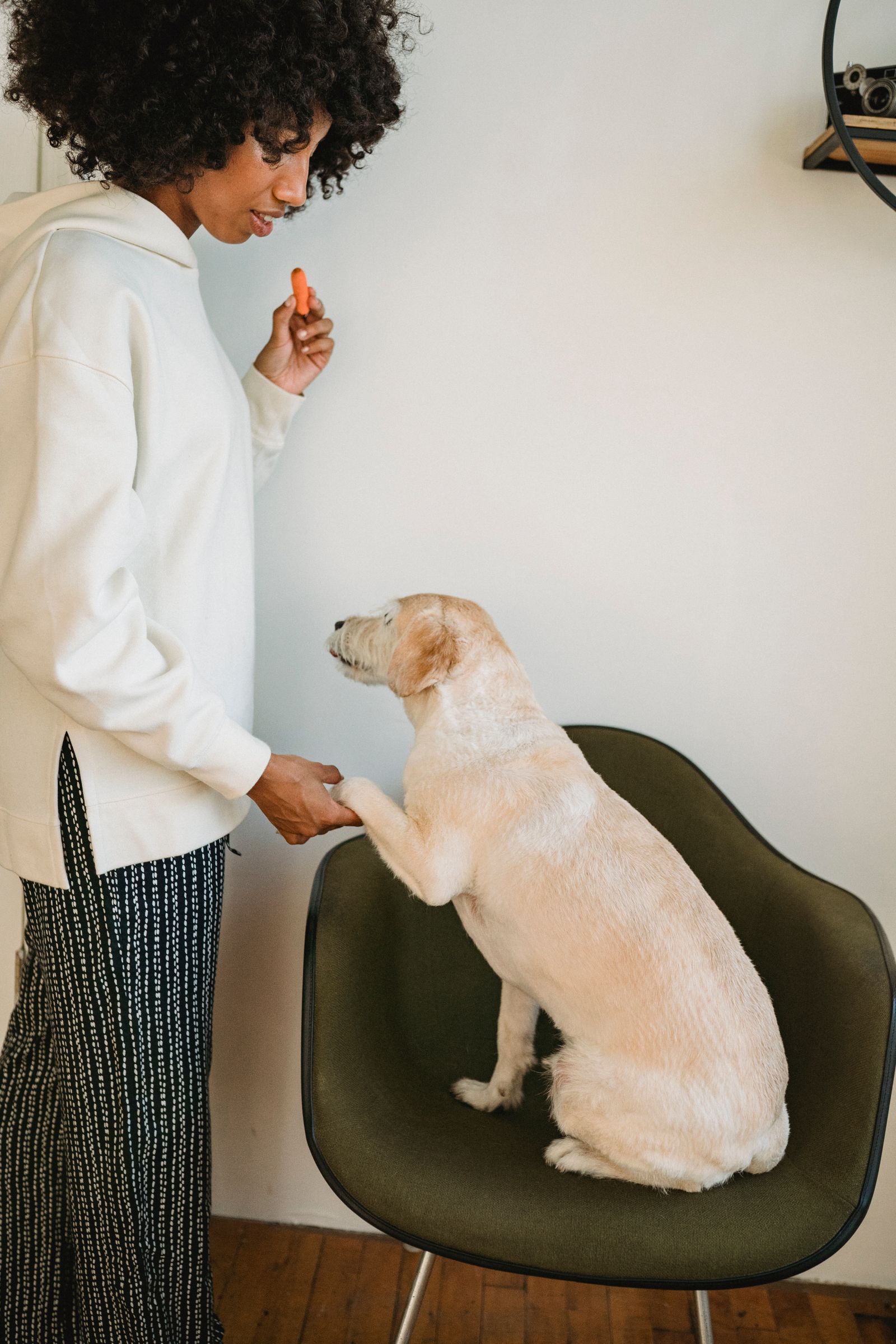
Practice one behavior the dog can succeed at, such as checking in with you or responding to a familiar cue. Reward promptly, repeat only while the dog remains comfortable, and end on an easy attempt.
Our beginner reward-based training guide explains timing and gradual progress. If you are learning a new skill, keep the environment quiet rather than using a busy living room as the first challenge.
A supervised chew or food toy
Choose an item intended for your dog’s size and chewing behavior. Follow its instructions, check its condition, and supervise the introduction. Replace it when damaged and remove it if your dog starts breaking off or swallowing unsuitable pieces.
No toy is suitable for every dog. Discuss options with your veterinary team when dental problems, dietary restrictions, or a history of swallowing objects affects the choice. Avoid treating a manufacturer’s durability claim as a reason to stop observing.
A calm mat game
Reward your dog for voluntarily approaching a comfortable mat, then build toward relaxed resting in small steps. This is a quieter activity for a household that has had plenty of excitement.
Use our step-by-step mat-training guide for the full process. The mat should be a place the dog chooses, not somewhere you physically hold the dog until they stop moving.
If you are choosing games because your dog seems restless, read our guide to recognizing possible boredom and checking other causes. It includes observation notes to help you decide which concern needs attention before adding another activity.
How to decide what to repeat
| Dog’s response | Next step |
|---|---|
| Comfortable investigation and easy success | Repeat the same game before changing one small detail |
| Repeated unsuccessful attempts | Make food or the toy easier to access |
| Chewing unsafe materials | Remove the setup and choose a different activity |
| Walking away | Allow the choice and offer rest or another suitable option later |
| Tension around another pet | Separate the activity areas and seek help if conflict persists |
Rotate a few activities your dog enjoys instead of buying a new puzzle every week. Keep a short note of favorites and practical problems. That can make enrichment simpler for every person who helps care for the dog.
Common questions
Should indoor games tire my dog out completely?
The goal is appropriate activity and enjoyable choices. A good day includes rest as well as exploration; exhaustion is not a measure of a game’s success.
Can several dogs play food games together?
Separate areas are a sensible starting point. Food competition can undermine an otherwise simple game.
Can enrichment cure separation distress?
A game may add interest, but repeated distress about being alone needs a suitable care plan and professional assessment.
Sources and editorial notes
Supporting guidance: Blue Cross: enrichment for dogs and Dogs Trust: enrichment activities. These are adaptable activity examples, not guarantees that every dog will enjoy each game.
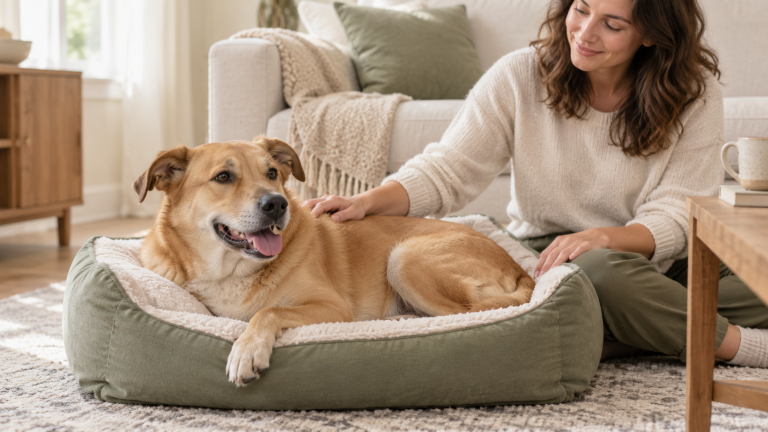
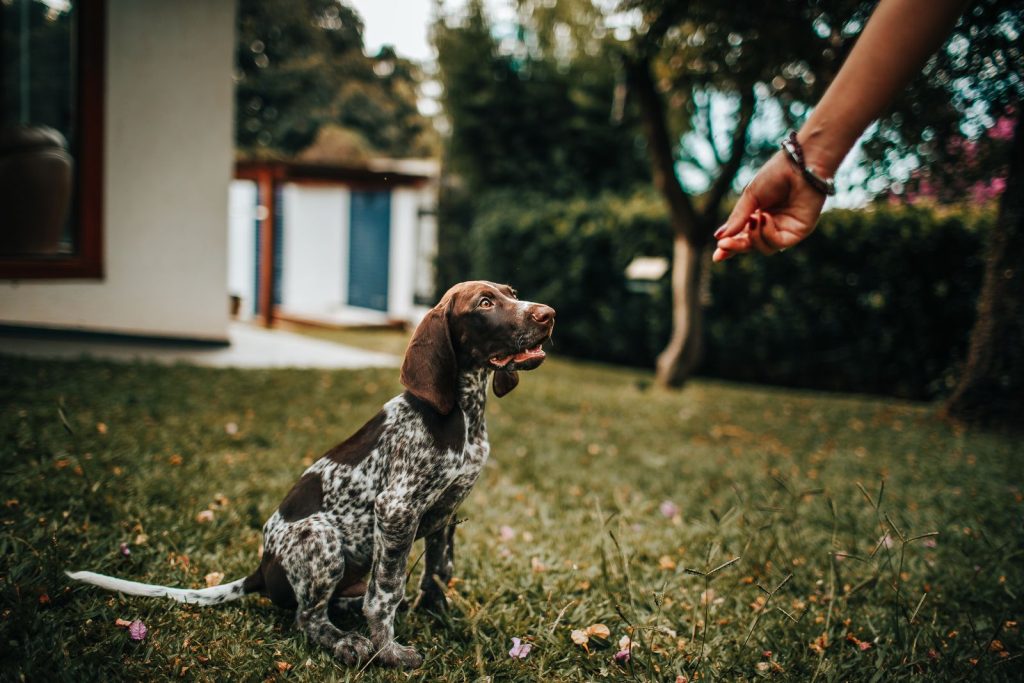
Featured image: Illustrative indoor interaction. Use a stable floor area for the games in this guide. Photo: Samson Katt / Pexels.