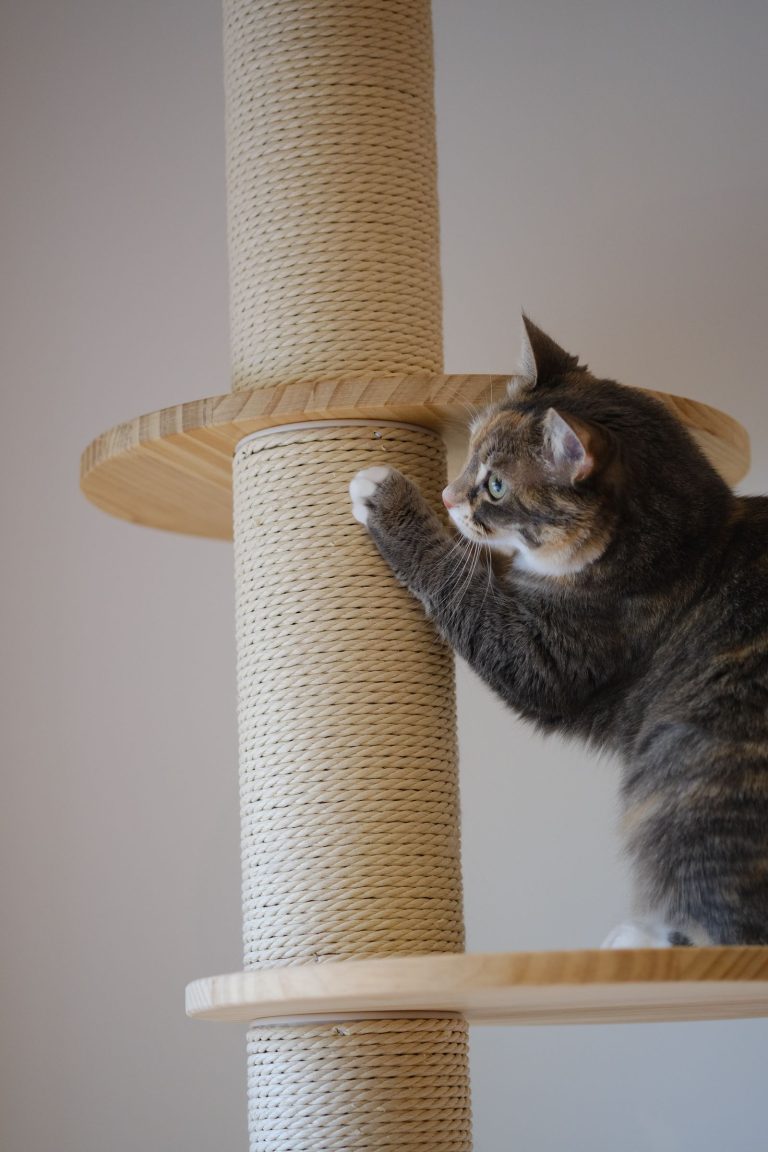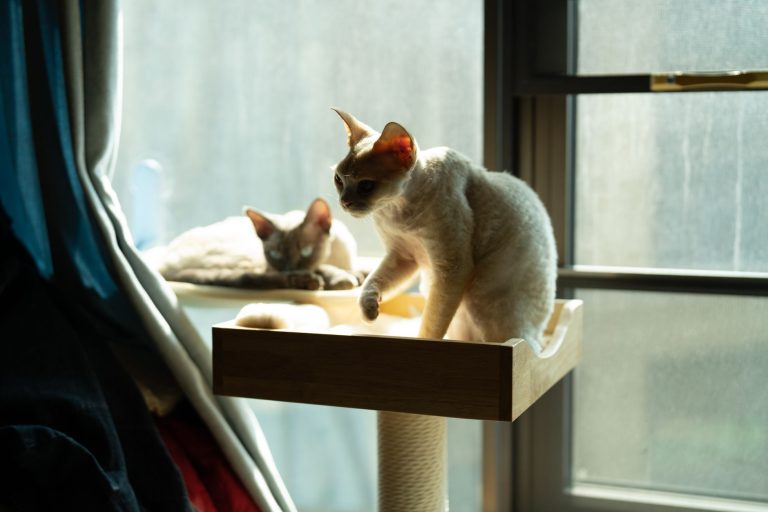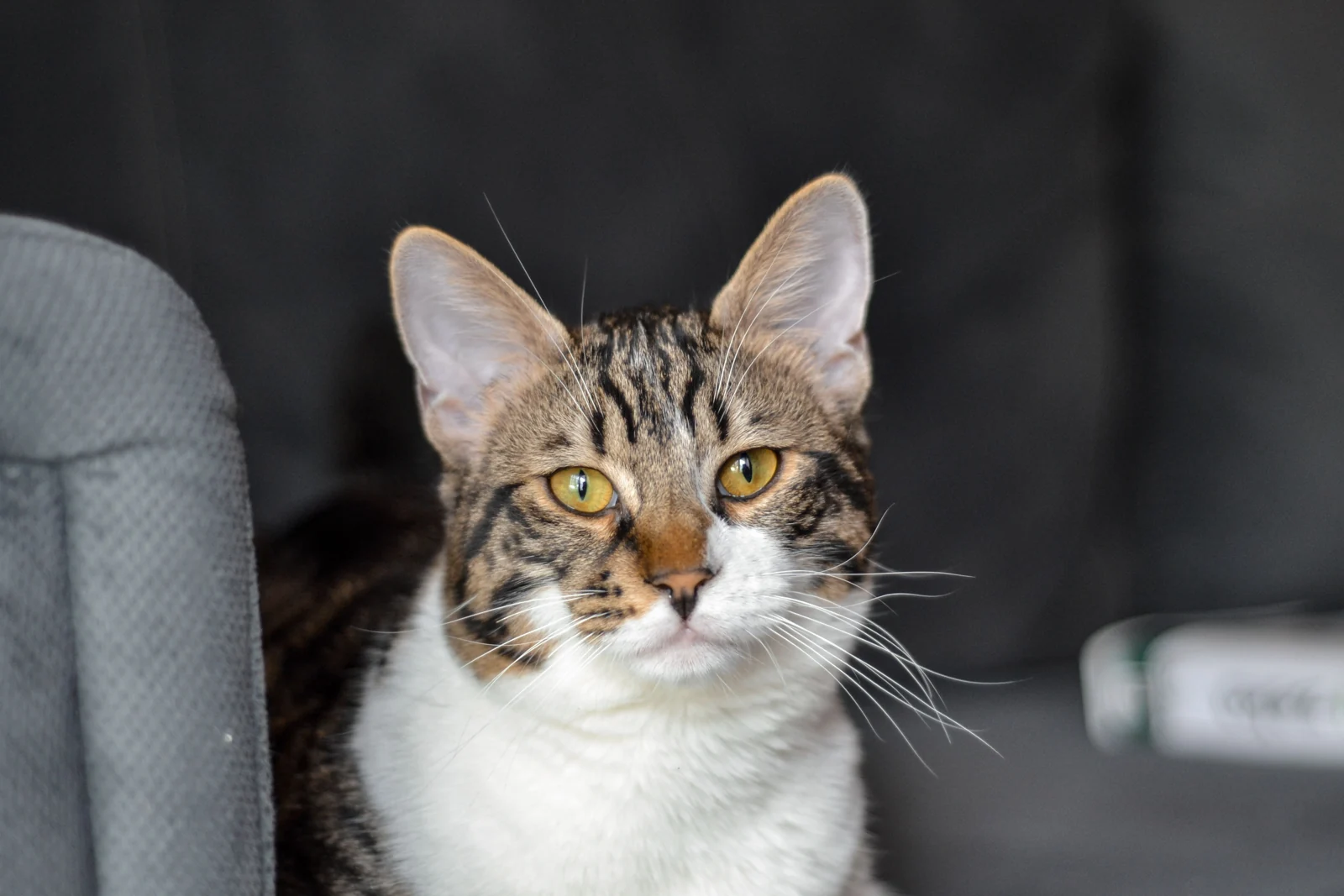
Your cat may stare at you because they have learned that looking brings food or attention, because they are watching your movements, or during relaxed social contact. Cats Protection explains these possibilities. Read the eyes alongside the ears, tail, posture, and situation before deciding whether to approach or give space.
A familiar look can still feel puzzling, especially beside an empty bowl or late at night. Use the context and your cat’s choices to guide your response.
Why does my cat stare at me without moving?
A still, watching cat may be waiting for a familiar routine, tracking an interesting movement, or simply observing from a comfortable spot. A stare by itself does not reveal the reason. Check what happened just before it, whether the body looks loose or tense, and whether your cat can leave.
Cats Protection notes that owners may teach a cat to look at them by responding with something the cat values. If a look near the kitchen often leads to a meal, that pattern may continue. This is learning, rather than proof that every stare means hunger.
Soft eyes and a loose body can accompany calm contact. In contrast, a rigid posture, ears turned back, or a lashing tail calls for space. Cats Protection’s body-language guidance emphasizes the whole picture, including the situation. Pupil size alone cannot settle the question because light also affects the eyes.
Compare the episode with your cat’s usual behavior. A cat that has always watched you make coffee differs from one suddenly staring, hiding, and eating less.
An observation-to-response table
Animalia’s table separates what you can see from an explanation you cannot confirm. Choose the least intrusive useful response, then watch whether your cat stays loose, moves closer, or leaves.
| What you notice | Possible context | A useful response |
|---|---|---|
| Looking between you and a familiar feeding area | A learned meal-related request | Check the planned meal routine; do not add food for every look. |
| Watching you from a loose, resting posture | Interest or relaxed social contact | Stay calm; let the cat choose whether to approach. |
| Crouching toward a moving foot or toy | Play-related attention | Keep feet still and offer a suitable toy away from your body. |
| Fixed gaze with tense posture or pinned ears | Discomfort, fear, or conflict | Pause contact and leave an escape route. |
| New staring plus changes in movement, appetite, or awareness | A change needing assessment | Call your veterinarian with a factual description. |
These are choices for your response, not a diagnosis or a translation chart. A look can have more than one influence. For example, the familiar kitchen may offer both social contact and the chance of food.
Should you stare back or blink at your cat?
Avoid holding a hard, direct stare, especially if your cat already looks tense. If the cat seems relaxed, you can soften your eyes, blink slowly, and turn your face slightly aside. Let the cat decide what happens next. Blinking is optional contact, never a test your cat must pass.
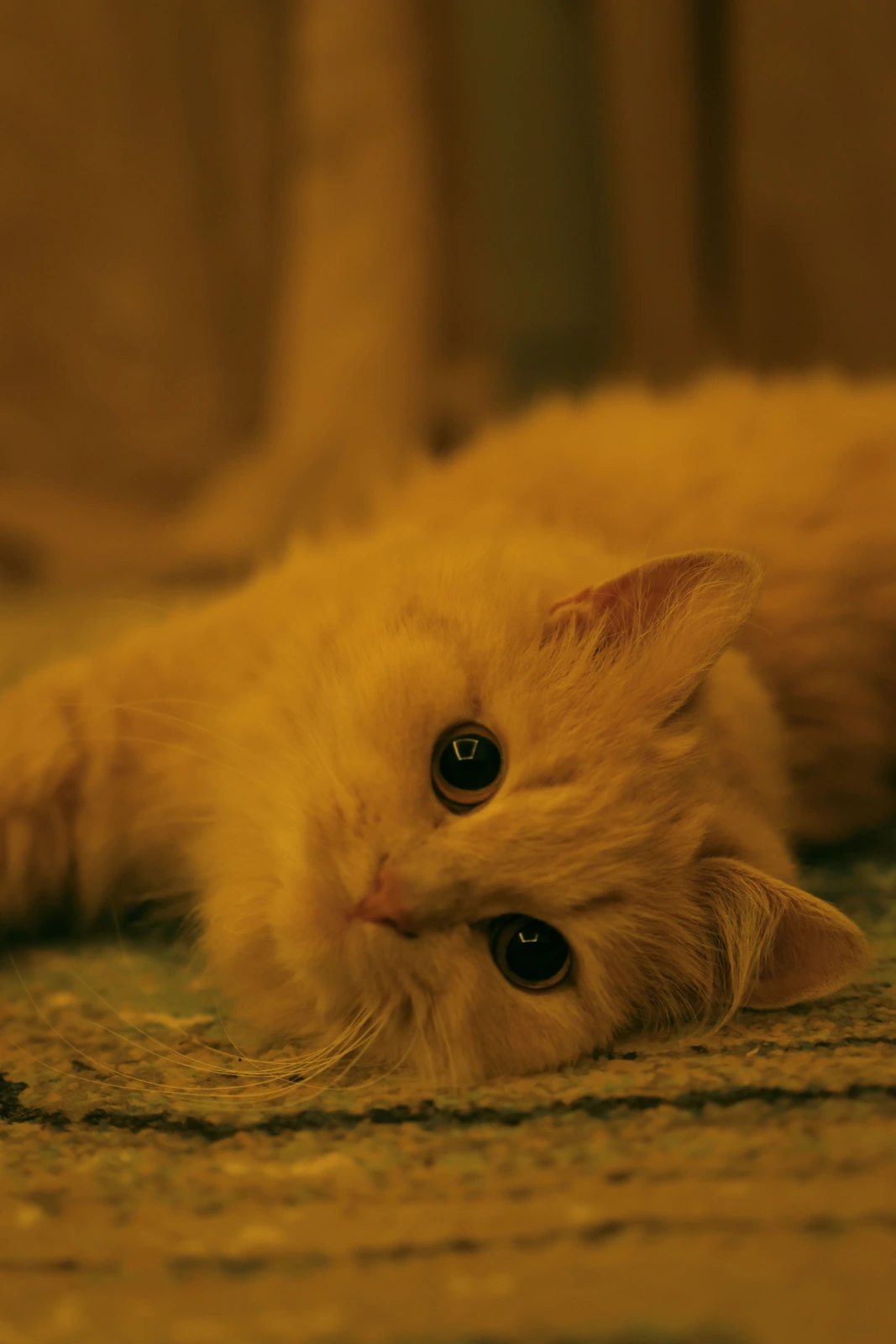
Cats Protection describes slow blinking as a friendly signal and warns that direct staring can feel threatening. You do not need to move your face close, follow a cat that turns away, or keep repeating the gesture until you receive a response.
If your cat approaches, begin with their choice rather than your assumption. A look is not permission to pick them up or rub their belly. Our guide to petting a cat with choice explains how to offer contact and pause before it becomes too much.
If the body tightens while you touch the cat, remove your hand and give room. Waiting for a hiss or swipe makes the message harder for both of you.
Nighttime, meals, and moving feet
First check whether the same setting precedes the look. Does it happen when you open your laptop, stand near the food cupboard, or move under a blanket? Animalia’s simple context log can help you avoid giving a different response to the same request each evening.
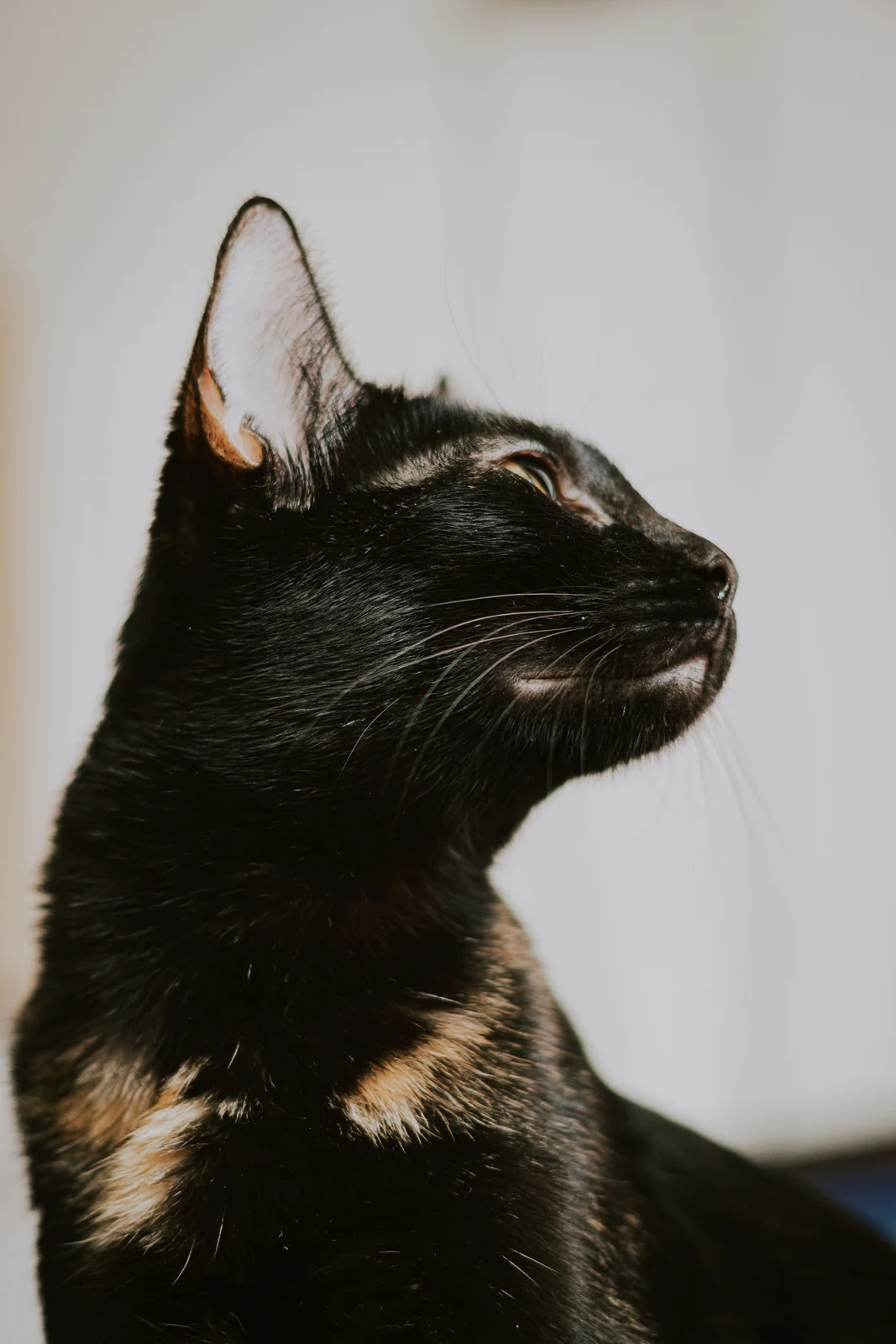
Record the setting, body posture, your response, and what happened next. “Sat beside the bowl, looked up, walked away after the planned meal” is more useful than “demanded food.” Use our cat-care household log if several people share care.
For a cat watching moving feet, keep hands and feet out of play. Offer suitable stalking and catching opportunities when the cat is interested; the daily cat play routine can help organize those sessions. Put string toys away afterward.
At night, check basic needs without turning every look into an exciting game. Avoid punishment, frightening noises, or pushing the cat away. If you need sleep, prepare comfortable resting choices and a consistent routine. A changed nighttime pattern deserves attention rather than an automatic label of misbehavior.
When should a new stare prompt a vet call?
Contact your veterinarian if staring is new or persistent alongside changes such as bumping into objects, seeming confused, hiding, eating less, or avoiding usual activities. Tell them when the pattern began, whether it happens in certain lighting, and what else has changed. A video may help if you can record without disturbing the cat.
Cats Protection advises veterinary input for unusual new staring, including possible changes in vision. That does not mean staring diagnoses vision loss. Do not shine lights into your cat’s eyes, wave objects close to their face, or deliberately frighten them to test a reaction.
Seek urgent veterinary help for difficulty breathing, collapse, or a seizure. Cornell’s emergency service lists these as reasons for emergency assessment. Do not delay urgent care while trying to capture a useful clip.
Frequently asked questions
Does my cat stare because they love me?
Relaxed looking can be part of friendly contact, especially when your cat chooses to stay near you with a loose body. It does not prove one specific feeling. Watch whether your cat approaches, rests nearby, or leaves comfortably. You can enjoy the moment without turning a stare into a demand for cuddles or a test of your relationship.
Why does my cat stare while I sleep?
The setting may involve a familiar meal routine, interesting movements, or a cat that is awake while you rest. A look alone cannot tell you which explanation fits. Check basic needs and consider the wider evening routine. If the behavior is new, or the cat also seems distressed or unwell, discuss the full change with your veterinarian.
Is staring a sign that my cat is angry?
A stare can occur with tension, but the eyes alone do not establish anger. Look for the overall picture, including a stiff body, ears back, withdrawal, or tail lashing. Pause contact and let your cat move away if you are unsure. Do not confront the cat, stare harder, or insist on touching them to prove they are friendly.
Why does my cat stare at a wall?
Start by observing what is actually happening and whether the cat returns to normal activity. You may not notice the same sounds or movement your cat notices, but that does not establish the cause. A new, repeated pattern with confusion, unusual movement, or other changes needs veterinary advice. Describe what you see rather than assigning a diagnosis from the stare.
Should I feed my cat whenever they look at me?
Follow the meal plan appropriate for your cat instead of treating every look as a food request. Cats can learn which actions bring a valued response, so repeated extra meals can create an unhelpful pattern. If appetite has changed, ask your veterinarian about it. Otherwise, consider whether your cat wants quiet company, play, or simply a comfortable place to watch.
Choose a calm next step
First check the body and setting, then offer space or an appropriate routine response. If the pattern changes, write down the details and seek advice as needed. Explore more practical guides in Animalia’s cat care collection.
Sources and editorial notes
- Cats Protection: why does my cat stare at me?
- Cats Protection: cat body language
- Cornell: emergency and critical care
The response table is an editorial decision aid, not a validated behavior assessment. Possible motives do not establish what an individual cat is thinking.
Animalia Editorial. Sources last reviewed October 22, 2026. Editorial Policy.
Featured photo: A tabby-and-white cat looks toward the camera. Read a look alongside the rest of the body and the setting. Photo: Betül Şengel / Pexels.
Prepared with AI assistance and reviewed against the sources above.