A daily cat play routine should offer enjoyable opportunities, not a target your cat must complete. Start with one brief session when your cat is alert, use a suitable supervised toy, and stop while the interaction remains comfortable. Repeat what works before adding variety.
Find a useful time to begin
Observe when your cat naturally becomes interested in movement. A cat waking from a nap may be ready to investigate, while a cat settled deeply in bed may prefer to remain there. Offer play without waking or repeatedly following a cat that walks away.
Write down the time, toy, and response for a few ordinary days. This is a household planning exercise, not a test of whether your cat plays enough. Look for a convenient window that both you and the cat can enjoy.
Structure a simple session
- Clear a small area with comfortable footing.
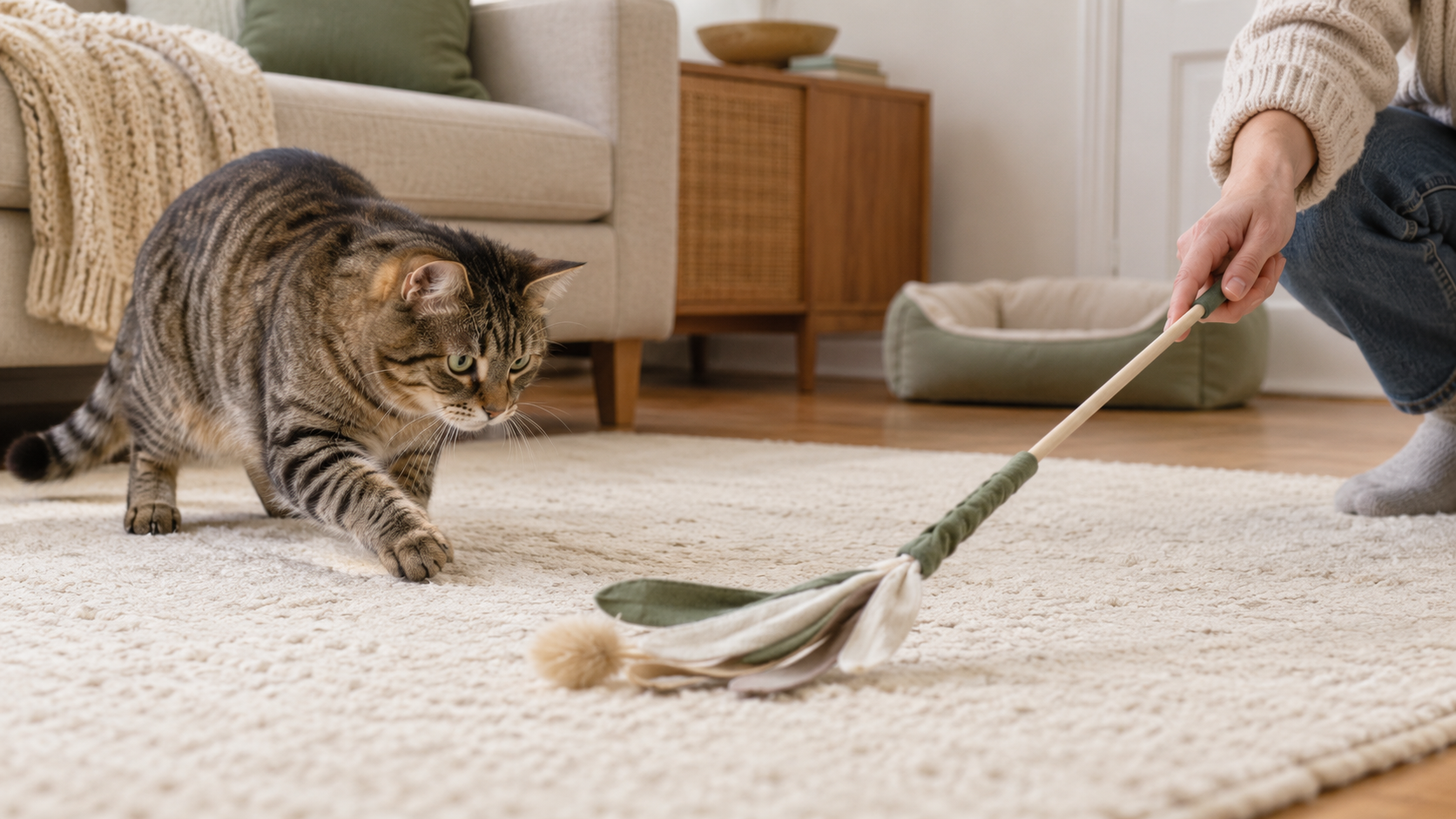
- Present a suitable toy at a distance the cat can choose to approach.
- Use slow changes of direction rather than waving directly into the cat’s face.
- Allow pauses and opportunities to engage with the toy.
- Finish before the cat becomes frustrated or loses interest.
- Put supervised toys away and leave the cat free to rest.
Do not make jumping a requirement. Floor-level movement can be an appealing starting option. A cat watching a toy is also gathering information; you do not need to turn every observation into a chase.
Choose one adjustment at a time
If the first session is ignored, change the timing, movement, or toy rather than all three. For example, try the same toy in the same space after your cat wakes naturally. That makes the result easier to interpret.
Rotate a few familiar options with our cat toy rotation plan. Keep string-based and wand toys supervised, inspect them regularly, and store them out of reach afterward.
Plan for a multi-cat household
Some cats prefer individual attention. If one cat repeatedly takes over, offer separate sessions or more space. Do not assume that two cats watching one toy are both comfortable participating.
A household calendar can assign responsibility without imposing identical play preferences. One caregiver might offer a wand session; another might arrange an easy non-food exploration game. For a wider resource plan, use our multi-cat layout guide.
What should the routine achieve?
Look for voluntary participation and practical consistency. A useful routine might simply make it easier to remember a favorite activity before dinner. Avoid judging success by a fixed number of jumps, a promised calorie burn, or total exhaustion.
If play or movement changes suddenly, discuss it with your veterinarian rather than increasing the schedule. This guide cannot determine why an individual cat becomes less active.
Sources and editorial notes
General play guidance: VCA: play and play toys. The routine and observation examples are Animalia planning suggestions. For other home activities, see indoor cat enrichment.
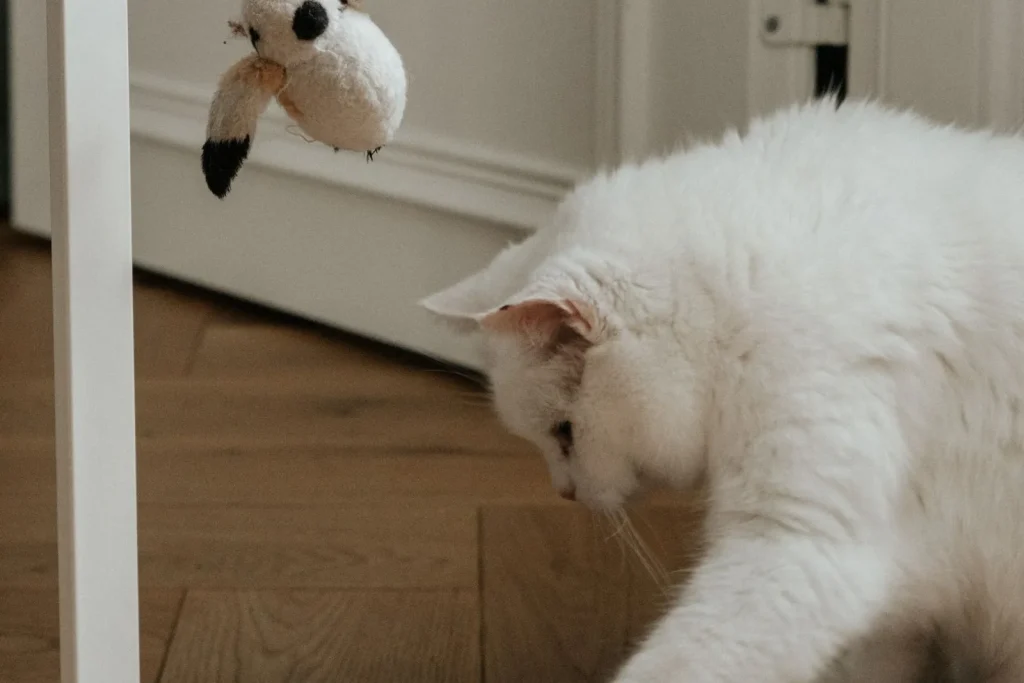
Featured image: Illustrative supervised play scene, generated with AI; not an observed Animalia session.