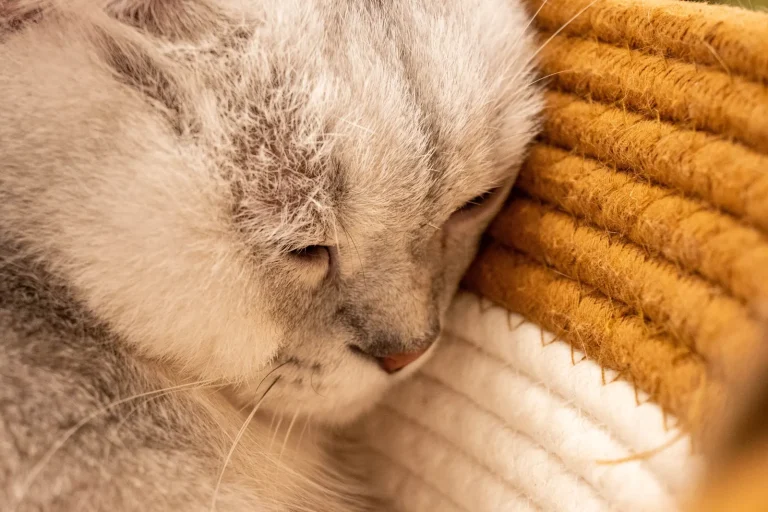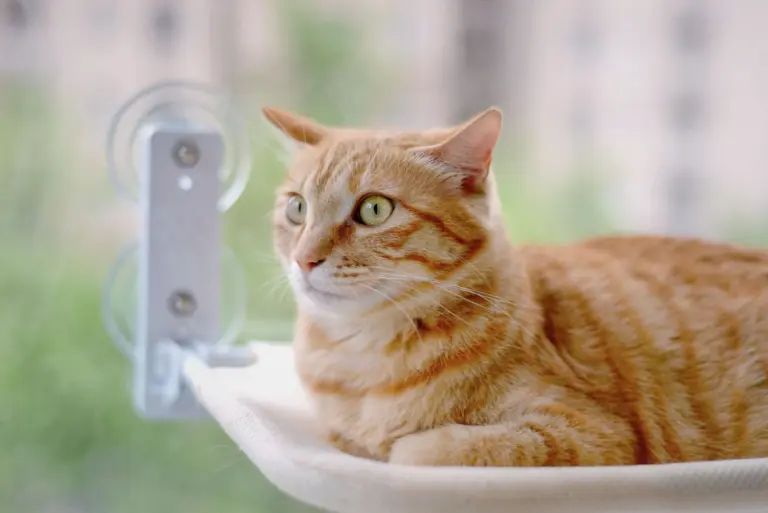
Your cat may sleep on you for warmth, a comfortable resting place, and closeness to someone familiar. Cats Protection describes warmth, bonding, and the appeal of your bed as possible reasons. The exact spot does not reveal one fixed message, and resting on you does not automatically invite petting.
Why might your cat choose you as a bed?
Your body offers warmth, a familiar smell, and a place to settle near a trusted person. The bed or chair beneath you may also be part of the appeal. More than one reason can apply, so there is no need to choose between affection and simple comfort from a single nap.
Cats Protection notes that a human bed can be warm, comfortable, and raised above the floor. If your cat already likes that spot, you may be sharing their preferred resting place. This does not mean they are trying to control you or make a statement about who owns the home.
A cat that returns to your lap may enjoy being close. But it is easy to add a story that the evidence cannot support. Their position cannot tell you that you are their only trusted person, that they are protecting you, or that they have detected a human illness. Enjoy the company without treating it as a health test.
Compare the sleeping spot with the setting
The table below is an editorial observation aid. It offers possible explanations and practical checks, rather than a way to translate every position into a message. Several rows may fit the same cat on different days.
| Where your cat settles | Possible appeal | What to check |
|---|---|---|
| Lap while you sit quietly | Warmth, closeness, and a stable surface | Can the cat leave freely, and are your hands still? |
| Chest while you recline | A warm, comfortable place close to you | Are you comfortable breathing and moving? |
| Head or pillow | Warmth, familiar scent, or less movement | Is there a suitable nearby alternative if it disturbs you? |
| Feet or the edge of the bed | A comfortable part of the shared surface | Can everyone change position without trapping the cat? |
| A different spot each day | A choice of resting places | Are several quiet, accessible beds available? |
Cats Protection suggests that your head may move less than the rest of you during sleep, while exposed skin can offer warmth. A pillow may retain your familiar scent. These are possible reasons, not proof of why one particular cat chose your head last night.
Notice the surrounding conditions before drawing conclusions. Was the room cooler? Had you just sat in the usual chair? Was the other bed in a noisy place? Ordinary changes may help explain the choice without a hidden emotional meaning.
Does sleeping on you mean your cat wants strokes?
No. A cat can want the warmth and company of your lap while wanting their sleep left undisturbed. Cats Protection advises against disturbing sleeping cats. If your cat settles on you, let the nap remain a nap rather than assuming that constant stroking will make it more pleasant.
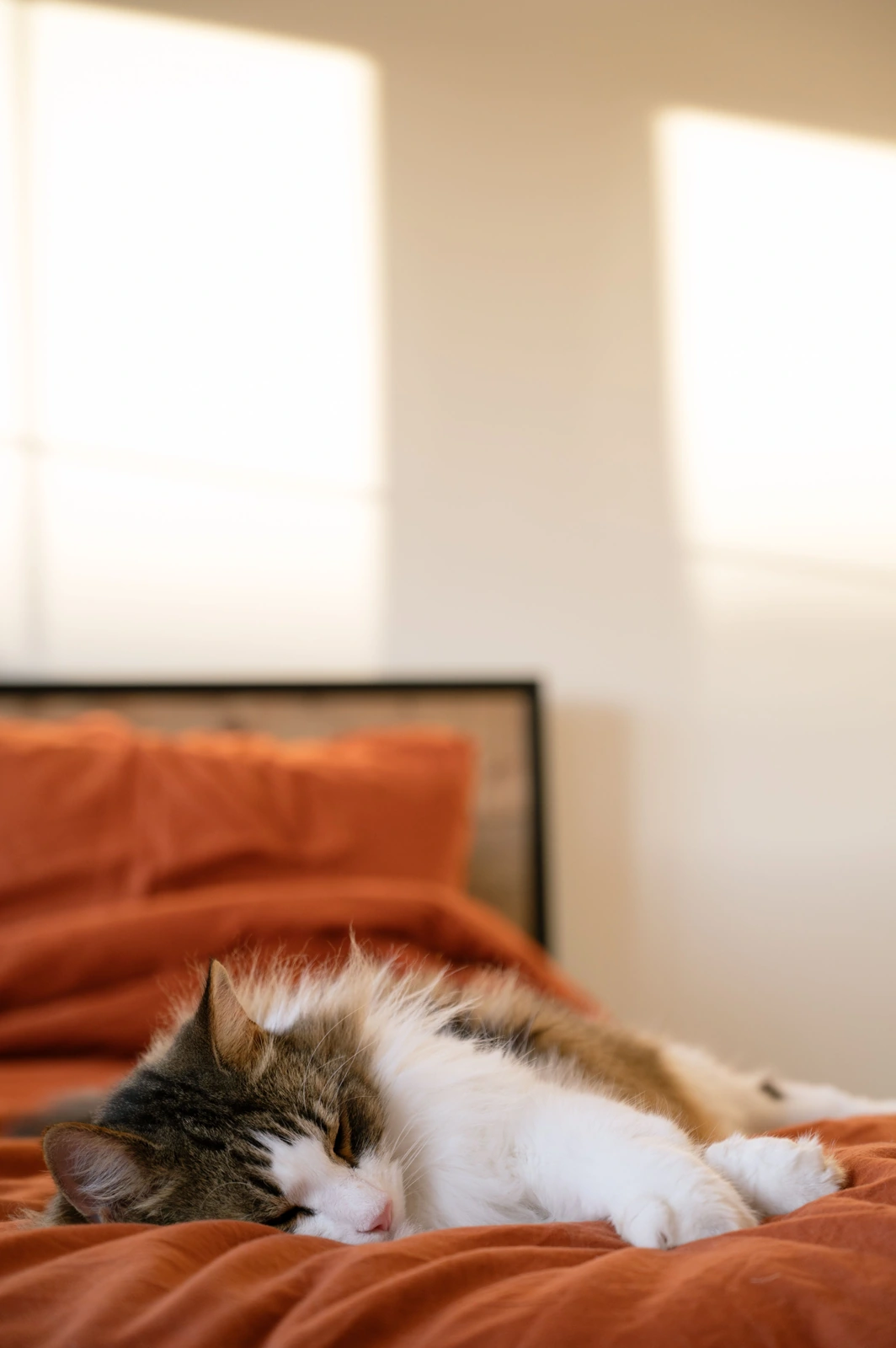
A sleepy cat may be startled by unexpected touch. Keep hands quiet and allow an easy way off your lap. If you need to stand, use a calm voice and gentle movement to give the cat a chance to wake and leave. Avoid grabbing, pushing, or holding them in place.
When your cat is awake and approaches for contact, use their current response to guide you. Leaning into an offered hand is different from simply lying beside it. Our guide to petting a cat with choice explains how to offer contact while giving the cat control over whether it continues.
Make another sleeping place appealing
You can enjoy your cat’s company and still need your lap, pillow, or bed back. Set up an alternative before the usual resting time. Cats Protection recommends comfortable, warm, private resting options and familiar bedding that already carries the cat’s scent.
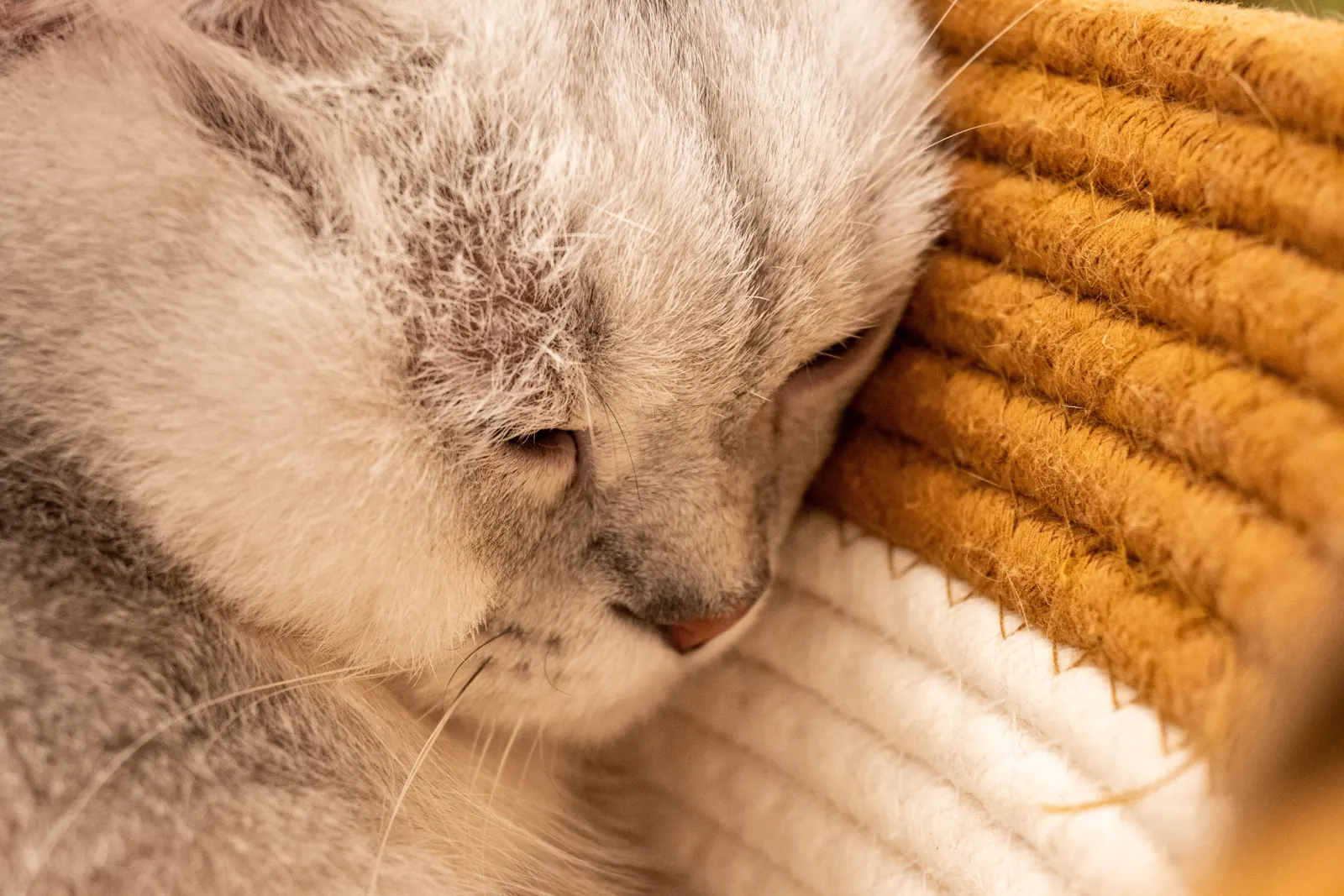
Choose an accessible spot near the place your cat already likes, rather than expecting an unused bed across a busy room to replace your lap. Keep it out of drafts and away from a route where people or pets repeatedly pass. Use a stable surface with an easy way up and down.
- Offer more than one resting place so your cat can choose.
- Place familiar, washable bedding in the alternative bed.
- Leave the cat free to approach and leave without being lifted into it.
- Keep the new place quiet instead of reaching in to pet the cat there.
- If the bedroom is off limits, provide the cat’s normal resources elsewhere before closing the door.
Our cat bed planning guide covers bed style and placement. A quiet hideout may suit a cat that prefers more privacy. Avoid trying to keep a cat awake all day to force a different night routine; Cats Protection warns that sleep disruption can cause distress.
For the bedding itself, see cats and blanket preferences. A nearby blanket can be offered as a choice; the guide explains why a resting option differs from covering or restraining the cat.
When should a change in sleeping habits prompt a vet call?
Contact your vet if your cat starts sleeping much more than usual, hides more, or shows other changes in comfort or daily habits. A new sleeping spot alone is not a diagnosis. The useful evidence is the broader change in behavior, especially alongside altered movement, appetite, or toileting.
Cats Protection cautions against identifying illness from one sleeping position. Record what changed and when, without moving or prodding the cat to test a theory. A simple note such as “now stays downstairs and hesitates at the stairs” gives your vet more useful detail than “sleeping in a sick position.”
Human comfort also matters. You can choose a cat-free bedroom if bed sharing disrupts your sleep or aggravates an allergy. Discuss personal health concerns with your own clinician. Cats Protection recommends keeping cats out of babies’ and young children’s bedrooms for safety; an adult’s preferred arrangement is not a guide for a child’s bed.
FAQ: cats sleeping on people
Why does my cat sleep on my chest?
Your chest can be a warm, comfortable place to rest close to you. That is a plausible explanation, rather than proof that your cat is monitoring your heartbeat or protecting your health. If the position is uncomfortable, give the cat a chance to move and offer a nearby bed with familiar bedding.
Why does my cat sleep by my head instead of my feet?
Your head may move less during the night, and your pillow can be soft, warm, and familiar-smelling. Cats Protection gives these as possible explanations. Your cat may also choose differently on another night. There is no reliable ranking in which one sleeping position proves greater love or trust than another.
Does my cat dislike me if they never sleep on me?
No. Cats differ in how much close physical contact they enjoy, and a separate bed may simply suit your cat better. Look at your relationship across ordinary activities rather than one sleeping habit. Quiet company, play, and choosing to spend time nearby can all be part of a comfortable routine together.
How do I stop my cat sleeping on me without punishment?
Offer a comfortable alternative near the usual spot, with familiar bedding and an easy route in and out. Let the cat investigate without placing or holding them there. If you need a bedroom boundary, provide resources outside it first. Avoid shouting, spraying water, or repeatedly waking the cat to change their preference.
What if my cat suddenly wants to sleep on me constantly?
A change may follow a different room temperature, routine, or resting setup, but you should not assume that comfort explains everything. Note any changes in appetite, movement, hiding, or toileting and contact your vet if the behavior is marked or persists. Do not diagnose your cat or yourself from increased closeness alone.
Choose a setup that allows both of you to rest comfortably. Keep a nearby alternative available and let your cat’s current choice guide contact. Animalia’s cat care guides offer related ideas for quiet spaces and daily routines.
Sources and editorial notes
- Cats Protection: Why does my cat sleep on me?
- Cats Protection: Cats and sleep
- Cats Protection: What do cat sleeping positions mean?
Animalia Editorial. Last reviewed: October 22, 2026. The tables and worked examples are editorial planning aids, not a diagnosis or reported result. See the Animalia Editorial Policy.
Featured photo: A cat rests on a person’s lap. The cat is awake in this illustrative photo; lap resting does not always invite stroking. Photo: Manolya İzgi Gezgin / Pexels.
Prepared with AI assistance and reviewed against the sources above.