Choose a cat bed by observing where and how your cat already rests. Compare usable space, access, surface, and location before choosing a style. A simple washable bed in a familiar spot may be more useful than an elaborate design your cat cannot comfortably enter.
Observe the resting preference
Does your cat stretch out on an open surface, curl in a sheltered space, or choose an elevated perch? Use those preferences as a starting point. You do not need to replace every favorite spot with a purchased bed.
Measure a comfortable resting area your cat already uses. Compare that with the bed’s interior dimensions, not just its external footprint. Raised sides and thick padding can reduce usable space.
Compare practical design features
- An entrance the cat can use easily.
- Enough room to turn and settle.
- A surface that stays stable during entry.
- Materials you can inspect and clean.
- No loose ties, exposed fasteners, or damaged filling.
Read care instructions before purchasing. A cover that is difficult to remove may be inconvenient in a busy household. Follow washing and drying directions rather than assuming every padded item can be cleaned the same way.
Make location part of the choice
Try the bed near a place your cat already enjoys, while preserving a clear approach and exit. Avoid setting the only bed beside a noisy appliance or where another pet frequently intrudes.
Keep other suitable resting options available. A retreat space and a stable perch can meet different preferences during the same day.
Introduce it without moving the cat
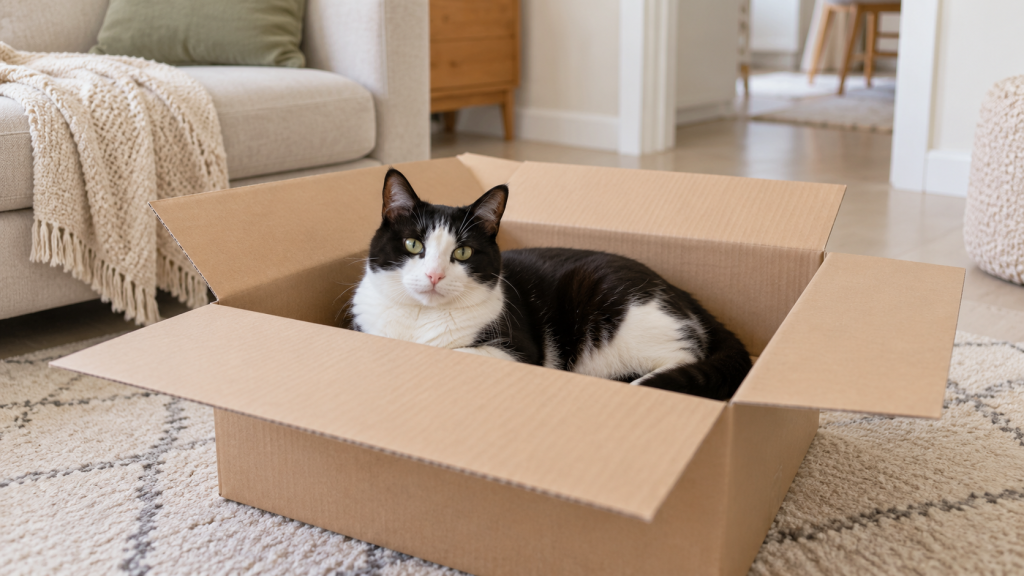
Place a familiar washable blanket inside if the design allows it, then let the cat investigate. Do not repeatedly carry the cat into the bed or hold them there for a photograph. Resting beside the item may be an initial response worth respecting.
If the bed stays unused, change its location before buying several replacements. Try one adjustment and watch the result. A successful choice is one the cat uses comfortably, not one that matches an advertisement.
Consider access when preferences change
A lower entrance or floor-level option may be easier for a cat reluctant to climb. A sudden change in movement or resting habits deserves veterinary advice; buying a different bed does not establish the cause.
In a shared home, provide separate locations rather than assuming one large bed will suit every cat. Our multi-cat resource guide explains useful access choices.
Sources and editorial notes
General resting-resource guidance: Ohio State University: resting places and perches. This is a selection framework, not a product review, clinical comfort assessment, or guarantee that any bed will be used.
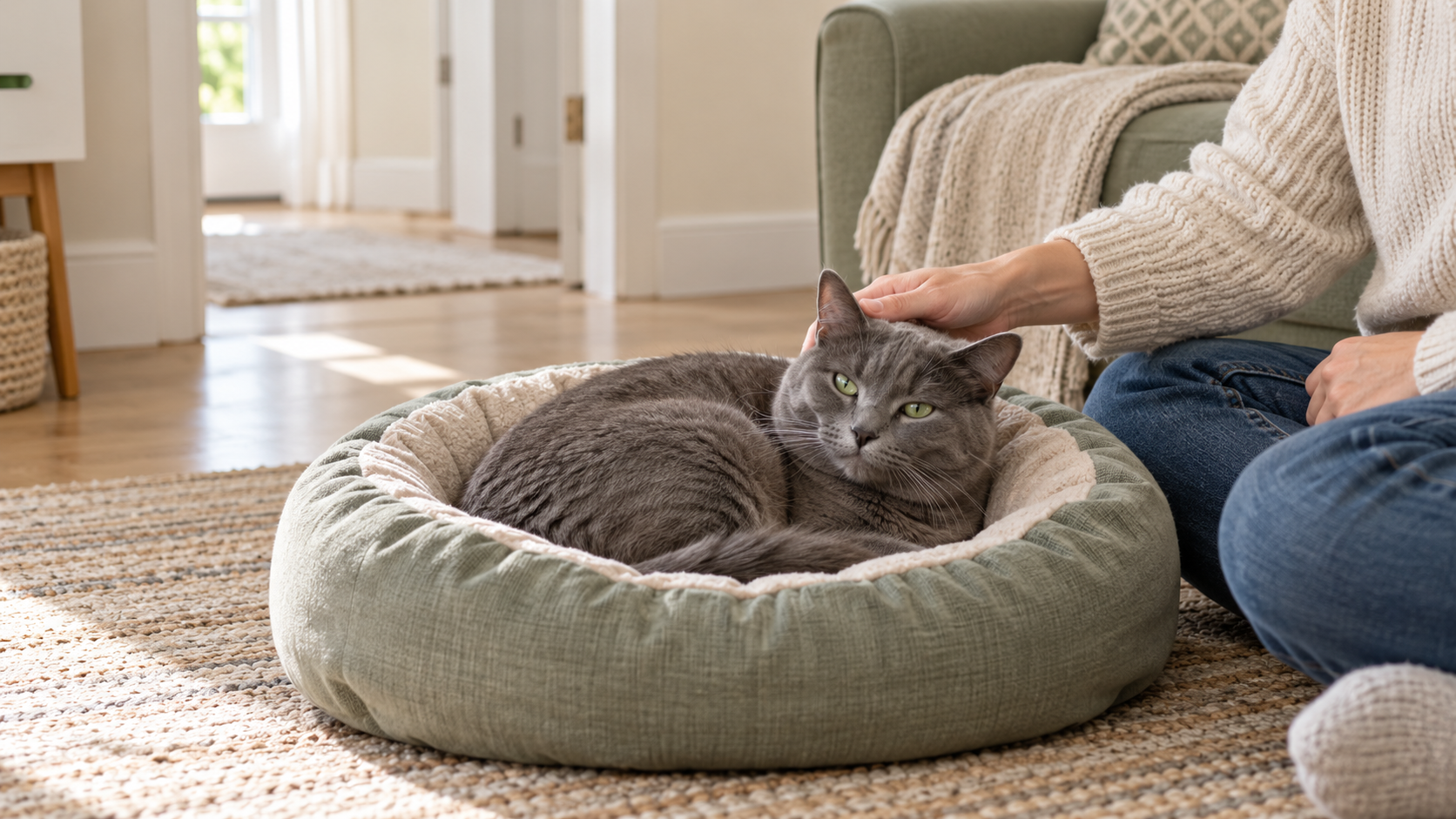
Featured image: Illustrative resting and interaction scene, generated with AI; allow the cat to choose contact.