When a cat wags its tail, the movement can reflect interest, play, irritation, or unease; it does not automatically mean happiness. Cats Protection’s tail guide distinguishes slow swishes, fast lashes, and quivers. Read the tail together with posture, ears, and the situation, then pause contact if your cat looks tense.
A tail guide can help you choose what to do next. It cannot tell you each thought behind a flick, and a still photo cannot show how fast a tail moves.
What does it mean when a cat wags its tail?
A slow swish can accompany close attention before a pounce, while fast side-to-side lashing may signal that your cat is upset. A small tip movement is less specific. Look at what the cat is watching, whether the body is loose or stiff, and whether your touch has just changed the situation.
The same word, “wagging,” describes several movements. Notice whether only the tip moves, whether the whole tail sweeps, and whether the tail is high, low, tucked, or puffed. Describe those details before assigning a feeling.
Cats also use tails for balance and sensory information, as Cats Protection explains. Every movement is not necessarily a message aimed at you. A cat tracking a toy may swish while concentrating; that is different from a resting cat lashing during unwanted petting.
Use the cat’s usual pattern as context, but remain willing to stop. A familiar movement does not make a rigid body or an attempt to leave irrelevant.
A tail-language guide with an action column
Animalia’s table offers cautious interpretations and useful choices. It combines the tail guide with Cats Protection’s whole-body guidance rather than treating one body part as a reliable emotional test.
| Visible pattern | What it may fit | What to do |
|---|---|---|
| Slow swish while watching a toy | Attention and anticipation before a pounce | Keep hands away; let the cat choose toy play. |
| Fast lashing during touch, with a tense body | Irritation or unwanted contact | Stop petting and allow space. |
| Tip flick without an obvious context | Several possibilities, including agitation or interest | Check the rest of the body and pause if unsure. |
| Tail up, curved tip, loose approach | A friendly greeting | Let the cat choose whether to approach and remain. |
| Quivering upright tail | Excitement, or a marking-related context | Notice the setting and whether urine is present. |
| Puffed tail, tense or withdrawing body | Fear or feeling threatened | Reduce pressure and keep an escape route open. |
A tail wrapped around the body is not enough to diagnose fear or illness. Look at tension, usual habits, and other changes. Equally, a high tail does not give permission to pick a cat up.
Why does my cat wag their tail while I pet them?
Tail movement during petting may be a reason to pause, especially if it becomes sharper or appears with tension, turned-back ears, or attempts to leave. Remove your hand and let the cat decide whether to return. Purring does not cancel the other signs or prove that continued touch is welcome.
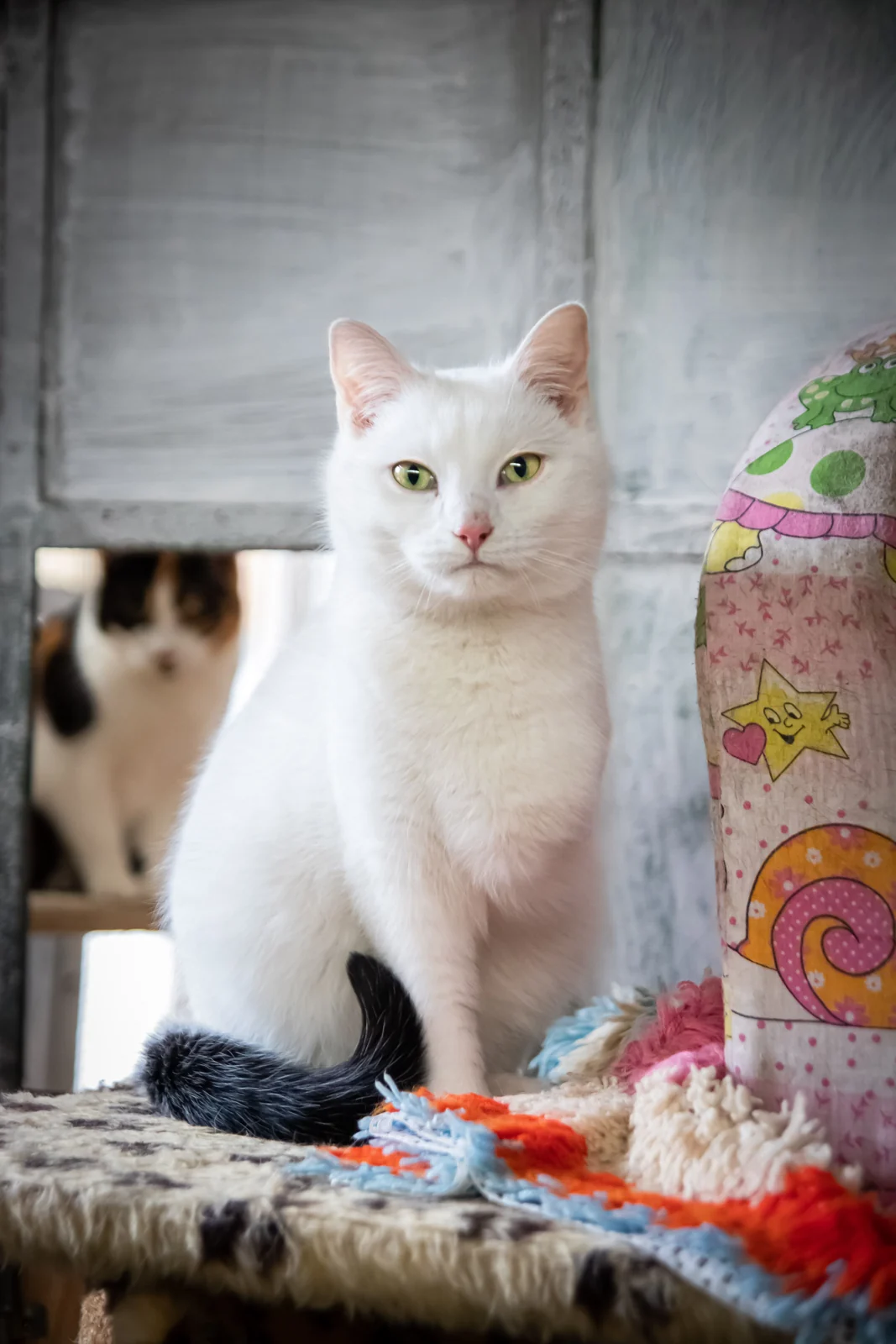
Cats Protection notes that cats can purr in situations beyond contentment, including stress or pain. Avoid using a purr as permission to ignore a lashing tail. Nor should you keep stroking until the cat hisses to find their limit.
Start future contact gently in a place the cat chooses. Pause before the body tightens and avoid following them when they leave. Our petting a cat with choice guide explains the approach without forcing affection.
If your cat stays close but does not seek more touch, quiet company is a valid outcome. The goal is a comfortable interaction, rather than a fixed amount of petting.
Quivers, puffed tails, and resting cats
An upright quiver can occur in a greeting, but Cats Protection also describes quivering during urine spraying or related marking behavior. Notice whether the cat backs toward a surface and whether urine is present. Do not diagnose the reason from a vibrating tail or punish the cat for it.
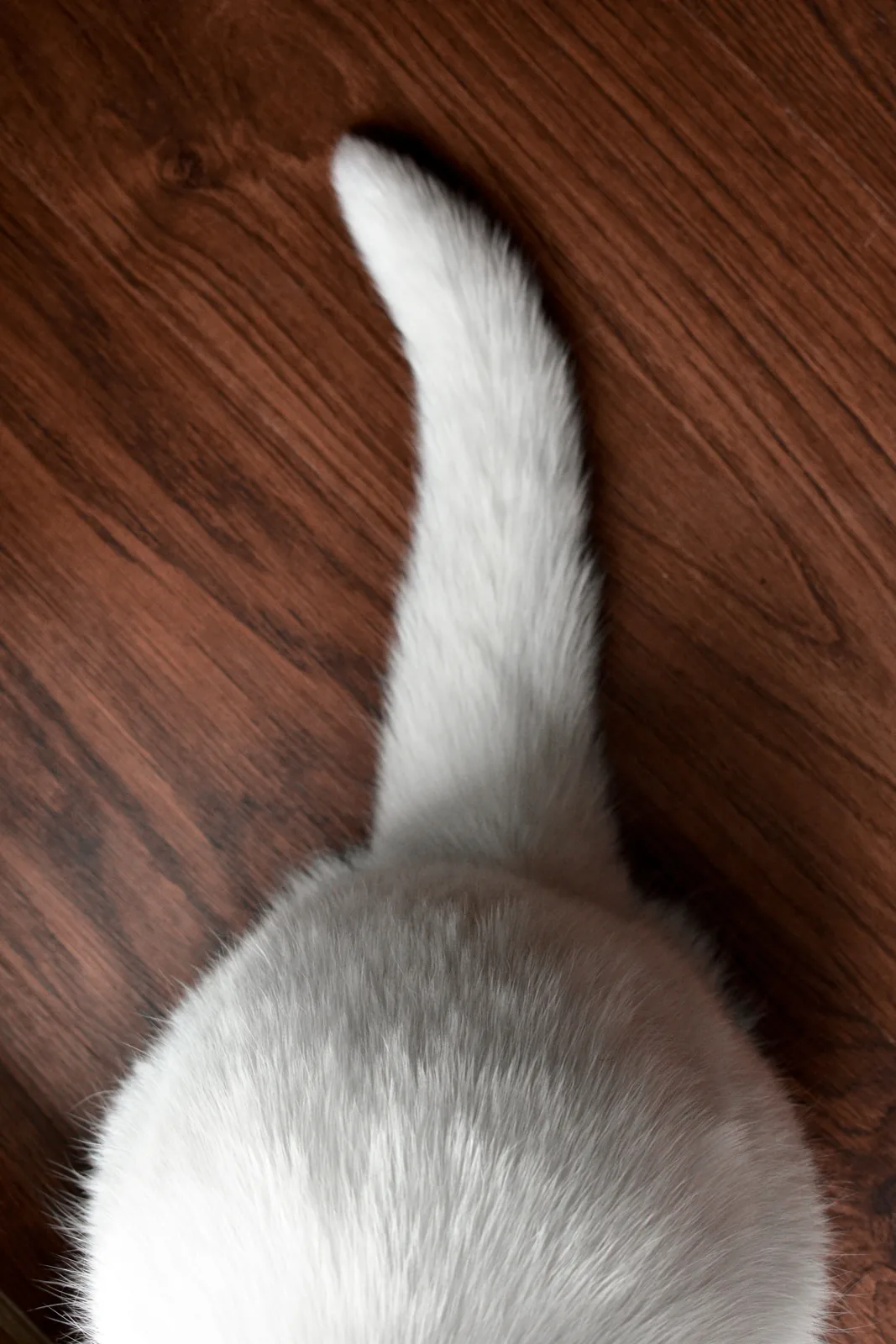
A puffed tail often accompanies feeling threatened. Create distance from the source of pressure where you can do so safely. Do not lift or restrain the cat to make the fur settle, and keep other animals from crowding the escape route. Safe cat hideouts provide a place to withdraw.
A resting or sleeping cat may move their tail, but you cannot tell what they are dreaming from the motion. Leave comfortable sleep undisturbed. If a cat lying down also seems unwell, assess that wider change with a veterinarian rather than interpreting the wag alone.
Animalia’s practical rule is to lower pressure whenever you are unsure. You do not need to identify an exact emotion before allowing more space.
When does a tail change need a vet call?
Contact your veterinarian for a new tail posture or unusual movement with other behavior changes, possible injury, or apparent discomfort. Stop the activity and describe what changed, rather than trying to manipulate the tail. Seek urgent care if the cat also collapses, cannot breathe normally, or has difficulty urinating.
Cats Protection advises veterinary review when rapid or unusual tail movements accompany other changes. A new bend, reduced movement, or sensitivity also deserves assessment. Do not pull, straighten, or repeatedly touch the tail to test whether it hurts.
Cornell’s emergency guidance lists breathing difficulty, collapse, and trouble urinating as urgent signs. A short video may help with a nonurgent behavior discussion, but collecting evidence must not delay emergency care.
Record what happened before the change, whether the cat can move normally, and changes in food, water, or litter-box habits. Our cat-care household log can help keep those observations clear.
Frequently asked questions
Does a cat wagging its tail mean they are happy?
Not automatically. A moving tail can appear during interest, play, irritation, or fear, depending on the movement and setting. A loose approach with an upright tail differs from fast lashing with a rigid body. Check the whole cat before reaching out, and pause touch if the signals are unclear. Let the cat choose whether to continue the interaction.
Why do cats flick the tip of their tails?
A tip flick is not a single-word message. It can occur with interest or agitation, so notice what the cat is watching and how the rest of the body looks. If the flick appears while you pet the cat, pause and give room. If it accompanies toy watching, keep your hands outside the game and allow chosen play.
Why do cats swish their tails before pouncing?
Slow side-to-side movement can accompany focus before a cat pounces. Watch the target and body position rather than assuming the cat is angry with you. If a toy is the target, allow safe stalking and catching with hands kept away. If moving feet have become the target, pause that movement and offer a suitable toy in a separate play space.
Why do cats shake their tails against a wall?
An upright quiver near a surface may have a marking context, especially if the cat backs toward it and urine is present. That differs from a loose greeting as you arrive. Note the setting and discuss new marking or litter-box changes with your veterinarian. Avoid punishment, and do not assume the cat is acting out of spite or needs confrontation.
Can I understand a cat with a short or missing tail?
Yes. Pay attention to the ears, eyes, posture, movement, sounds, and choices about distance. Tail signals are only one part of communication, so a cat without a long tail still has useful information to offer. If the tail’s appearance or movement changes after an injury, seek veterinary advice instead of treating the change as a new personality trait.
Respond to the whole cat
Notice the motion and setting, pause unwanted contact, and seek help for meaningful changes. Find more practical behavior and home-care guidance in Animalia’s cat care collection.
Sources and editorial notes
- Cats Protection: tails, movements, and meanings
- Cats Protection: cat body language
- Cornell: emergency and critical care
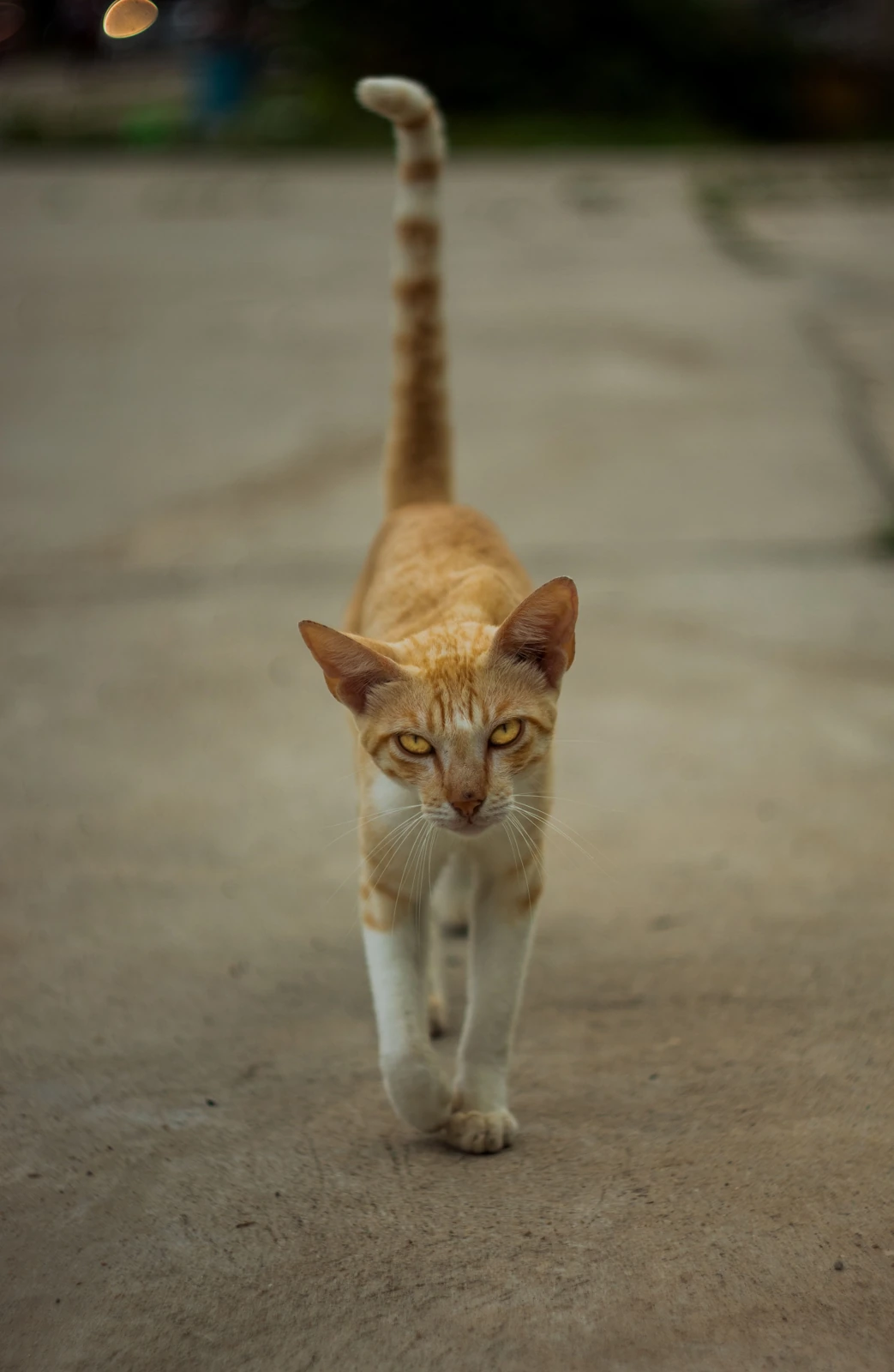
The action table is an editorial aid, not an exact translation or a diagnostic tool. Static stock photographs show tail positions; they do not establish wag speed, rhythm, or an individual cat’s feelings.
Animalia Editorial. Sources last reviewed October 22, 2026. Editorial Policy.
Featured photo: A cat walks with an upright tail. A still photo shows position, not wag speed or a certain emotion. Photo: Wallace Castro / Pexels.
Prepared with AI assistance and reviewed against the sources above.