Why does my cat chew on everything? Cats may investigate objects through play, seek comfort, or repeat a habit that needs closer attention. Cornell explains these patterns. Block access to unsafe materials first, and contact your veterinarian if chewing is new, persistent, or involves swallowing things that are not food.
A damaged charger and a briefly mouthed toy need different responses. Animalia’s practical guide separates immediate hazards from everyday observation, then helps you prepare a useful record for your veterinarian without guessing at a diagnosis.
Why does a cat keep chewing household objects?
Chewing can be part of exploration, but the object and the pattern matter more than the label. VCA defines pica as persistent ingestion of non-food items. Watching a cat mouth something does not establish its cause. Record whether material disappears, and ask your veterinarian about repeated or changing behavior.
Start with a plain description rather than deciding that your cat is naughty, deficient, or anxious. Write “bit the sleeve twice while I sat at my desk” instead of “chewed because she was jealous.” The first description gives your veterinarian something observable, while the second assumes an explanation you have not established.
Keep separate notes for chewing, sucking, and swallowing, and photograph any holes or missing pieces before storing the material somewhere secure. Avoid leaving the object available so you can film another episode. The record should support safer care, rather than create another opportunity for your cat to swallow it.
Make dangerous materials inaccessible
Use this Animalia room-check table as an organizational aid. It helps you find the next practical action, but it cannot establish whether an object was swallowed or whether your cat needs treatment. If material is missing, describe it to your veterinarian instead of assuming that removing the rest resolves the concern.
| What you find | Change the setup | Record for your veterinarian |
|---|---|---|
| Accessible charging cable | Disconnect safely and route it behind a secure barrier | Damaged coating, exposed wire, or a witnessed contact |
| Missing fabric or stuffing | Close the storage area and remove damaged soft items | Item type and the size of any missing pieces |
| Loose string or sewing supplies | Secure the entire sewing area in a closed container | Whether thread, a needle, or both may be missing |
| Chewed plant leaves | Block access and retain the plant label or a photograph | Plant identity and when chewing was noticed |
| A damaged cat toy | Remove it and inspect the other toys before use | Which components have detached or disappeared |
Check the room from floor level, then look at climbing routes and open storage. A basket on a high shelf may remain reachable from a nearby chair. Once the obvious targets are removed, review the same route with everyone who shares the home. A closed cupboard works only if each person closes it again.
How can you redirect chewing without punishment?
Prevent access first, then offer an appropriate activity that you can supervise. Ohio State recommends varied toys and checking that pieces cannot be bitten off. Match play to your cat’s interest, keep hands away from the moving lure, and remove damaged toys instead of leaving them available after play.
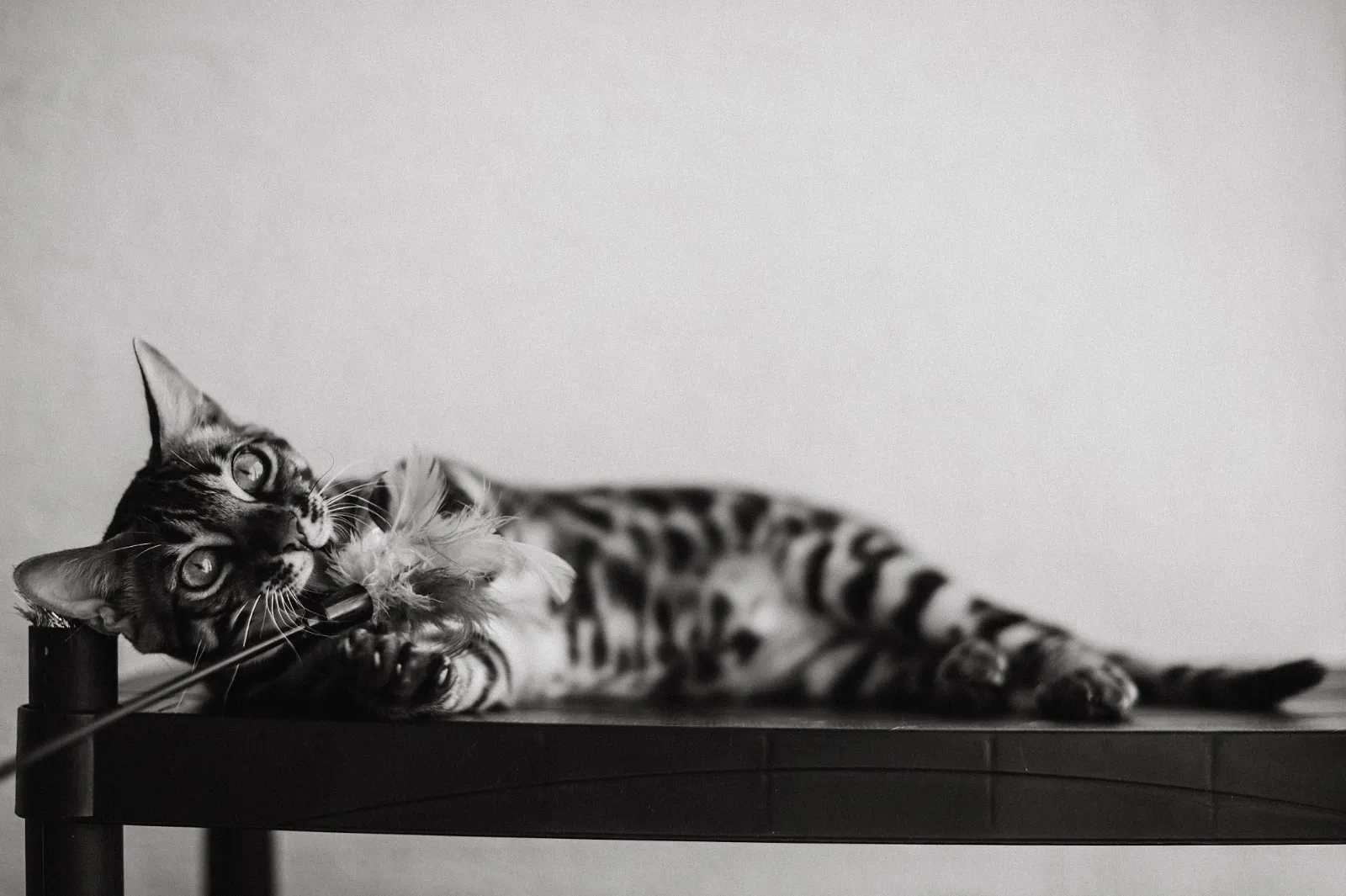
For example, set up the wand before opening the room where you usually work. Move the lure along a clear floor while your cat can follow or disengage freely. Put the wand away when you finish, including its cord. A replacement activity is useful only when its own parts remain secure and suitable for that cat.
If your cat starts chewing the substitute, stop and inspect it rather than treating the purchase as automatically safe. Our cat wand toy guide explains supervised play choices. The non-food cat enrichment guide offers other activities when food games or chewable materials do not fit your cat’s situation.
Avoid shouting, spraying water, or forcing your cat’s mouth open as a training method. VCA advises avoiding punishment because it can increase anxiety. A calm barrier and a planned activity give the household clearer actions to repeat. If those actions are difficult to maintain, discuss the setup with your veterinary team.
When should chewing prompt a veterinary call?
Contact your veterinarian if your cat may have swallowed an object, repeatedly eats non-food material, or develops a sudden change in chewing. VCA notes that swallowed objects can cause obstruction. Vomiting, reduced appetite, or obvious distress require prompt veterinary guidance. Do not wait for an enrichment experiment to answer that concern.
Changes around meals also belong in the conversation. Cornell lists drooling, reluctance to eat, and unusual head positions during eating among possible dental warning signs. These observations do not identify a condition at home. Tell the clinic what changed, when it began, and whether eating or drinking also seems different.
When calling, have the object or its packaging nearby and explain what you actually saw. Say whether you witnessed swallowing or only found damage afterward. Ask the clinic what information to bring and how urgently your cat should be seen. Follow its advice about the next step instead of trying a household remedy.
Keep a useful record and a consistent home plan
A short shared note makes it easier to notice changes without constantly watching for mistakes. Animalia suggests recording the room, the object, the observed action, and what happened just before it. Use the note to describe what you saw; it cannot tell you why your cat chews.
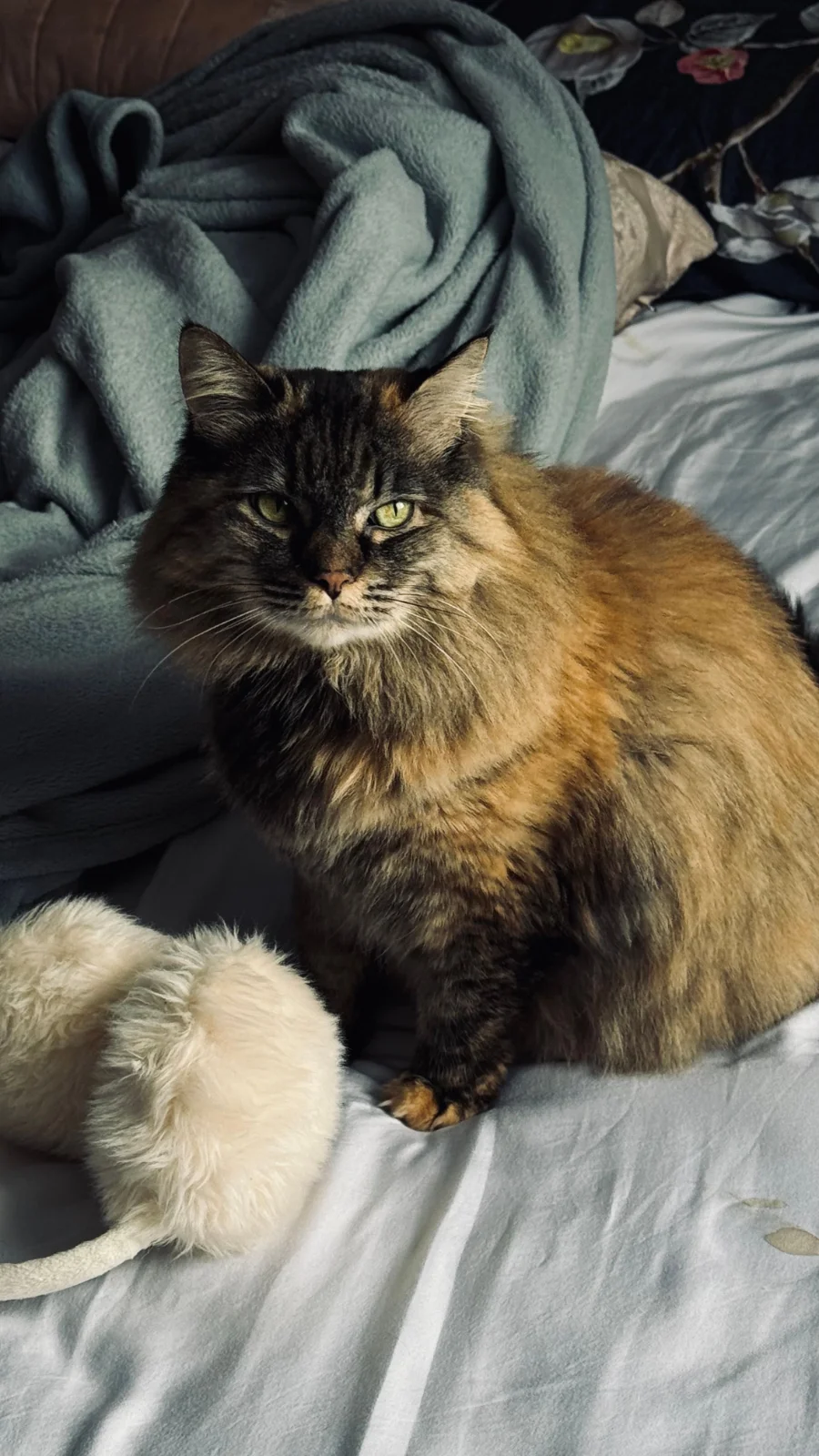
For instance: “Tuesday evening, living room, blanket corner, sucking with no missing fabric noticed, while we watched television.” A second note might show a different object or situation. Bring both descriptions to your veterinarian, including any uncertainty. Avoid turning a sequence into proof that a particular emotion or nutritional problem caused the behavior.
Write down the household action as well: “blanket stored after use; intact toy offered during supervised play.” Review whether that action is realistic for everyone. For broader room planning, use our indoor cat enrichment guide. Start with one secure storage change and one suitable activity while arranging professional advice where needed. Our cat behavior guide puts other everyday questions in context.
Frequently asked questions
Is chewing the same as pica?
No. Pica refers to persistent ingestion of non-food material, according to VCA. A cat mouthing an object does not tell you whether anything was swallowed or what caused the behavior. Record the action you saw, secure the object, and tell your veterinarian if pieces are missing or the pattern continues. Avoid assigning a diagnosis from appearance alone.
Should I offer cardboard to a cat that chews?
Do not assume cardboard is an appropriate substitute for a cat that tears off or swallows pieces. Choose activities around your individual cat’s behavior and discuss repeated ingestion with your veterinarian. If you use any object during supervised play, inspect it afterward and remove it when damaged. The aim is a safer activity, rather than exchanging one swallowed material for another.
Will a kitten grow out of chewing?
Some exploratory chewing changes as kittens mature, but waiting is not a safety plan for accessible hazards. Cornell describes exploration as one possible part of the behavior, without promising that every cat stops. Keep unsafe objects out of reach now, offer suitable supervised play, and seek veterinary advice when chewing is persistent, newly intense, or involves ingestion.
Can I tell from chewing that my cat needs supplements?
No. Chewing alone cannot establish a nutritional deficiency, and several possible explanations need veterinary assessment. VCA lists both medical and behavioral factors in persistent non-food ingestion. Bring details of your cat’s normal food and observed behavior to the appointment. Ask your veterinarian about any diet concern before making changes based on a damaged object or an online guess.
What should I change first in a shared household?
Start with the object your cat can access now, then agree on how everyone will keep it secured. A specific action, such as closing the sewing cupboard after each use, is easier to follow than “watch the cat.” Keep a shared observation note and choose a suitable supervised activity. If swallowing is possible, contact your veterinarian before treating the issue as training.
Why do cats chew on plastic?
Mouthing plastic does not establish one cause, and repeated swallowing needs veterinary assessment. Keep bags, wrappers, and other plastic out of reach instead of assuming the behavior is harmless exploration. Check for missing pieces and contact your veterinarian about suspected ingestion or a persistent pattern. A preference for plastic alone cannot prove a dietary deficiency or a diagnosis.
Why does my cat chew on my hair?
Chewing human hair does not by itself establish affection, stress, or pica. Record whether the cat mouths, sucks, or appears to swallow it, and keep your hair and hair ties out of reach without punishment. Redirect to suitable supervised activity. Ask your veterinarian about a new or persistent pattern or suspected ingestion rather than assigning a cause from this habit alone.
Sources and editorial notes
Animalia Editorial. Reviewed November 4, 2026. This guide provides practical household planning and signs to discuss with a veterinarian; it does not diagnose the cause of chewing. See our editorial policy.
Cornell: destructive behavior; Cornell: dental disease; VCA: pica in cats; Ohio State: cat toys.
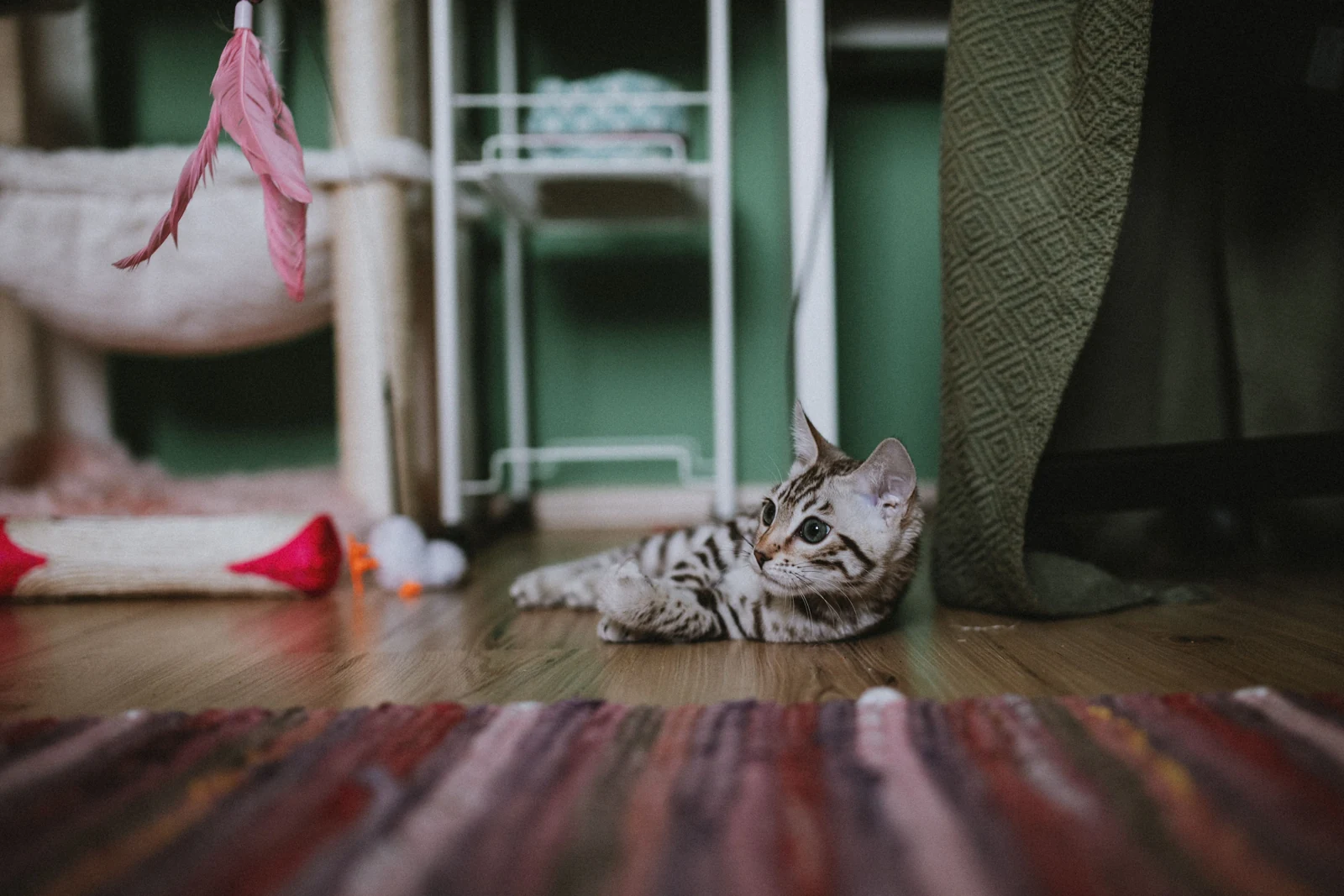
Featured photo: A kitten rests beside toys on an indoor floor. Photo: Helena Jankovičová Kováčová / Pexels.
Prepared with AI assistance and reviewed against the sources above.