Cats behave in ways shaped by exploration and play, communication, comfortable rest, and what they learn from daily routines. Cats Protection’s body-language guidance explains why the whole cat and setting matter. A familiar habit may need only a safe outlet; a sudden change with other signs deserves veterinary advice.
If you keep asking “why does my cat do that?”, start with what you can see. This guide helps you sort an observation, choose a useful next step, and find more detailed help.
Why do cats do things that seem mysterious?
A behavior can serve more than one purpose, and the same action can occur in different situations. A cat watching you may be monitoring movement or waiting for a routine; a cat withdrawing may want rest or more distance. The practical starting point is context, rather than a confident story about intent.
Cats Protection describes how cats use their ears, eyes, body, and tail to communicate. Check what is going on around the cat to help make sense of those signs. One still photo, sound, or paw movement rarely gives you the whole answer.
Write down what the cat did before you guess why. “Walked behind the sofa when the vacuum started” tells you more than “became dramatic.” “Left when I touched the belly” helps more than “betrayed me.” Clear, plain notes can help you change the setup without blame.
Your cat’s own habits matter too. If an action is new, ask what else changed before you call it a quirk. Think about age, health, the home, and who was near the cat. Share those facts with your vet when you ask about a change.
Start with this observation-to-action map
Animalia’s map groups owner questions by the first useful decision. It does not assign a definite cause to every action or replace a veterinary assessment. Use it to choose what to check next, then follow the relevant guide.
| What you notice | First useful check | A reasonable next step |
|---|---|---|
| Cat moves closer, watches, rubs, or vocalizes | Is the body loose and can the cat leave? | Offer chosen company; check familiar routines. |
| Cat hides, freezes, or avoids a route | What pressure or change preceded this? | Allow a retreat and reduce crowding. |
| Cat stalks a foot, grips a toy, or chases | What is the target, and can the game stop? | Use suitable toys and keep skin out of play. |
| Cat selects an unusual seat or sleeping spot | Is this a normal preference or a new pattern? | Provide safe resting options and observe wider habits. |
| Cat behavior changes around another animal | Can each cat reach resources and withdraw? | Prevent forced encounters; seek support for persistent conflict. |
| Behavior changes with reduced appetite, altered movement, or litter habits | Is there a health concern? | Contact a veterinarian; urgent signs need emergency care. |
If more than one row seems to fit, choose the step that gives the cat space and keeps them safe. You can leave a cat alone without first proving that they feel scared, cross, tired, or anything else.
How do you read the whole cat?
Look at the body’s tension, ear position, eyes, tail, movement, and choices about distance together. Then ask what happened just before the behavior. A loose cat approaching voluntarily differs from one held in place, even if both purr. When signals conflict, pause the interaction and let the cat choose.
Cats Protection notes that cats can purr with stress or pain too. A raised tail can be useful to notice, but it does not mean you can pick the cat up. Keep watching and stop if the cat tries to end the contact or move away.
Watch what happens in order: the cat comes close, you touch them, they turn away, you pause, they leave. This can show where your touch made things harder. If you wait for a bite, hiss, or swipe, you miss earlier chances to stop.
Do not stare to test a cat, hold them still to see if they relax, or repeat a touch that made them leave. Such tests can cause the very stress you hope to learn about. If you are unsure, give the cat space and a clear way out.
Social contact: closeness is a choice
For a cat, staying in the same room, sitting by you, or choosing a nearby chair can be enough company. Do not turn each approach into a pickup or cuddle. Offer a gentle touch and pause so the cat has a real chance to stay or leave.
Our guide to petting a cat with choice gives practical steps for those pauses. Watch whether your cat seeks more contact, stays quietly nearby, or turns away. Each outcome is useful information, rather than a result you need to change.
Rubbing, looking, or vocalizing can occur in social contact, but they do not tell you exactly what the cat expects next. Check the setting and familiar care routine. A cat beside a cupboard may have learned that standing there brings a response.
Do not treat this as a test of love. If a cat leaves your lap, let them go rather than holding them there. Calm time together that the cat can choose is a better place to start than a cuddle you have to force.
What changes when your cat is playing?
During play, cats can stalk, chase, catch, and grip suitable toys. Those movements create problems when hands, feet, or another unwilling animal become the target. Keep skin outside the game and allow breaks. The useful question is whether the activity remains chosen and safe, rather than how energetic it looks.
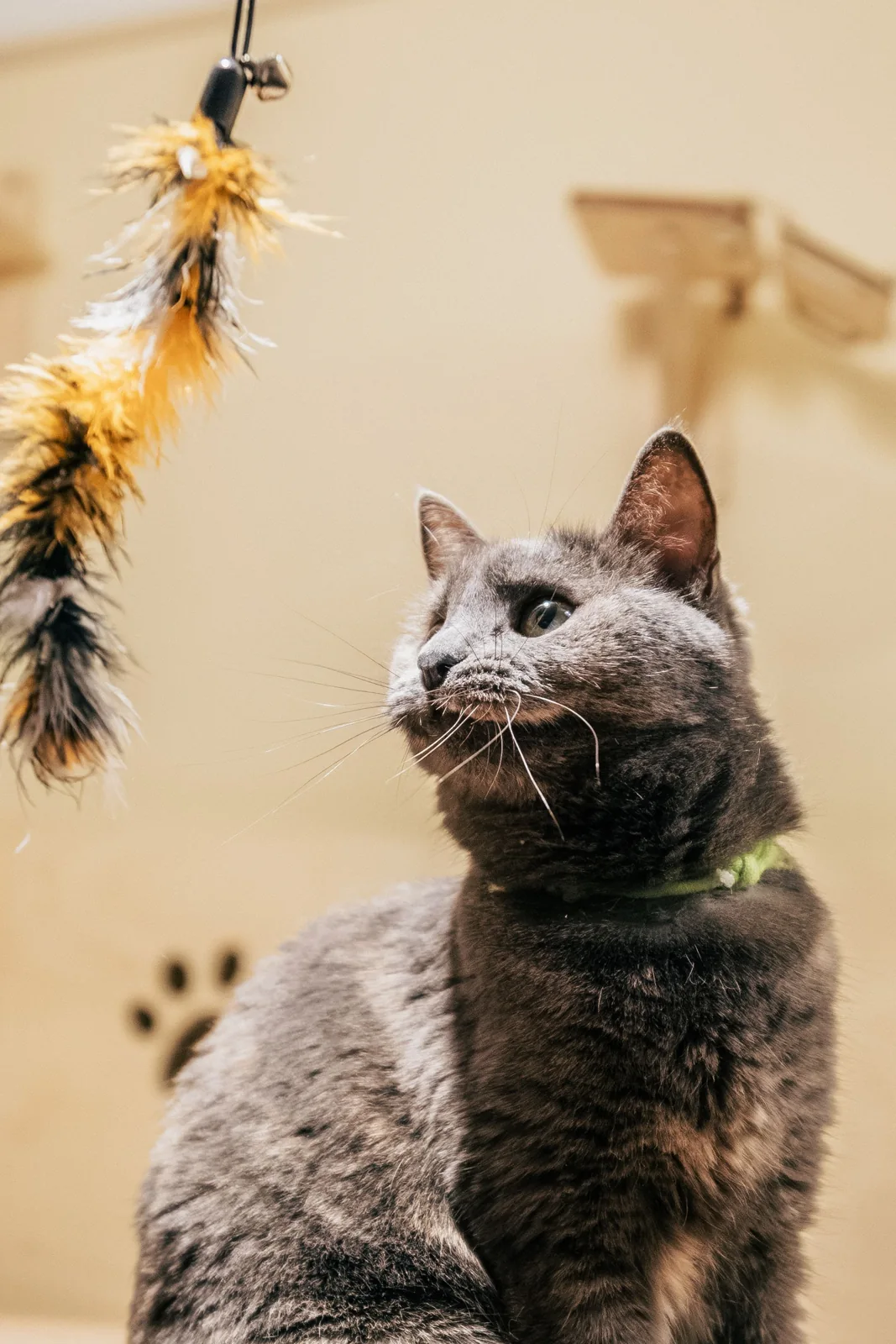
VCA’s play guidance explains the value of toys that allow hunting-related actions while keeping hands out of play. Inspect them for loose parts and damage. Store string toys after use so a play opportunity does not become an ingestion or entanglement risk.
Let the cat come to the game rather than moving a toy into their face. If they tense up, move away, or seem at risk of harm, stop. Tell your vet if your cat stops enjoying their usual games, especially if other habits have changed too.
Our daily cat play routine helps organize chosen activity without making every wakeful moment a demand to exercise. Match the setup to the individual cat instead of chasing a fixed performance target.
Rest, unusual seats, and quiet preferences
Cats can select resting spots for comfort, familiarity, warmth, and the opportunity to feel secure. Cats Protection’s sleep guidance recommends comfortable choices and leaving settled sleep undisturbed. A surprising position or seat does not on its own reveal sleep depth, a diagnosis, or a particular emotion.

Keep rest spots easy to reach and free from noise or touch that might wake the cat. A new spot can simply be a new choice. But if the cat also eats less, has trouble moving, or stops doing things they once enjoyed, tell your vet about those changes.
A new book, paper, or desk object can also draw investigation. Cats Protection’s guide to sitting on things describes possibilities including novelty, comfortable surfaces, familiar smells, and attention. You can protect important objects while offering a safe nearby alternative.
Do not keep moving a resting cat to the bed you prefer. Look at what their chosen spot offers, then make another place appealing without trapping the cat there. Keep rest spots free from hot surfaces, cords, things that could fall, and small parts the cat could swallow.
Hiding and distance: make room before investigating
A cat needs a way to leave noise, guests, touch, or other things that feel like too much. Let them use a safe retreat, and do not pull them out to meet people. Watch from a distance and check their needs while leaving them a choice about contact.

Our cat hideout ideas cover practical retreats in a home. The important feature is an easy, usable place to withdraw, rather than a hiding place that another pet or person can block. Avoid putting the only resting choice along a busy route.
If your cat hides more than usual, look at the rest of their day too. Note food, water, litter-box use, how they move, and what changed at home. Share those facts with your vet when the change is new or concerns you. Do not just assume the cat dislikes a guest.
Animalia’s approach is to reduce pressure first, then investigate the pattern. A retreat should not become a way to overlook a sick cat, but concern is not a reason to corner the cat or repeatedly drag them out for inspection.
Why does another cat change the behavior?
Another cat can change access to space, resting places, attention, and daily resources. An encounter that looks playful to a person may feel difficult for a cat that cannot leave. Watch who approaches, who withdraws, and whether either cat’s normal routine changes. Do not force proximity to improve their relationship.
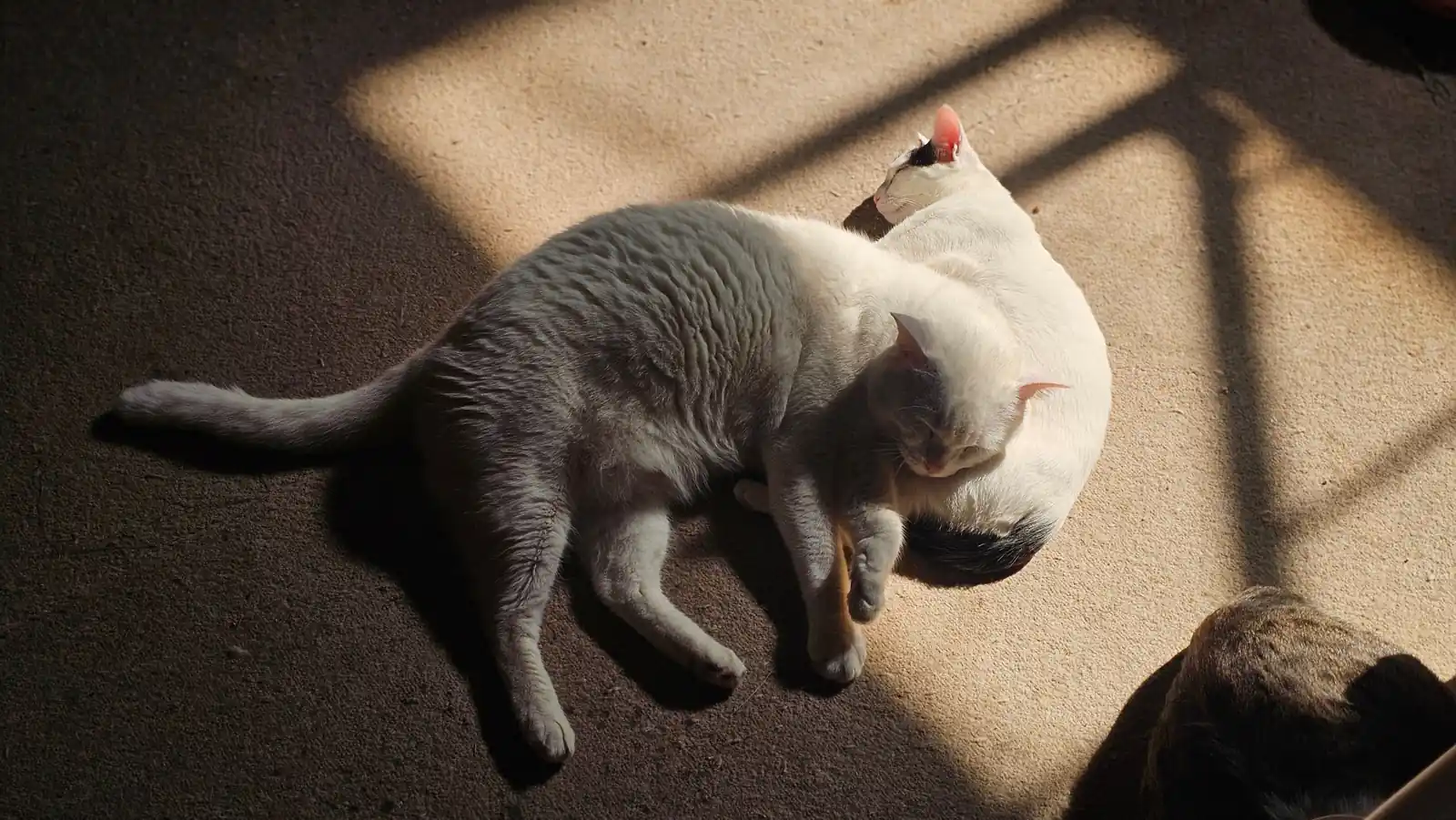
Cats in one home do not all have to share a bed or spend time together. Watch for quiet ways of keeping apart as well as noise or chasing. Does a cat wait to use a route or struggle to pass another cat? Use that clue to give them more choice.
Use our gradual cat introduction guide for structured separation and voluntary progress when introducing cats. Prevent further forced encounters while you seek help for persistent conflict or injury. Do not put bare hands between cats in a tense encounter.
Keep notes about each cat. “One hid while the other stood in the door” is clearer than “they were sorting out who was boss.” If the problem goes on, ask your vet for help from someone trained in cat behavior who uses kind, humane methods.
Keep a useful record without staging a test
Animalia’s observation log uses a plain sequence: setting, visible action, your response, and what happened next. Add changes in normal care habits if relevant. A factual record helps different caregivers compare the same pattern without turning every incident into a different story.
- Setting: where the cat was and what happened immediately beforehand.
- Visible action: posture, movement, sounds, target, and ability to leave.
- Your response: contact stopped, space offered, toy provided, or a routine need checked.
- Outcome: cat settled, left, returned, stayed tense, or showed another change.
Here is a made-up example: “At the desk, cat lay across an open book. I cleared the chair by me. Cat walked there and rested.” This suggests a useful change to try. It does not prove that the cat was jealous of a book or knew you had work to do.
Our cat-care household log can help coordinate observations. Record a short video only if it is safe and does not disturb the cat. Never repeat a frightening encounter just to get a clearer clip.
When should a behavior change lead to a vet call?
Contact your veterinarian when a new or persistent behavior change accompanies altered appetite, drinking, litter-box habits, movement, grooming, or social contact. Pain and illness can affect behavior, so avoid diagnosing from a single action. Describe the timeline and other changes, and ask how urgently your cat needs an assessment.
If a cat starts to avoid touch, struggles with a jump, or stops doing their usual things, they need more than a new toy. Stop any game or touch that seems to hurt, and call your vet. Do not put off that call while you try a new play plan.
The same applies to repeated unsafe behavior such as eating nonfood items or injuring themselves. Remove access to the immediate hazard where possible, keep the situation calm, and describe what happened to your veterinarian. Avoid home remedies, deterrent chemicals, or attempts to treat a suspected condition yourself.
Ask your vet about skilled cat behavior help if fear, fights, or bites keep happening. A useful plan should keep people and pets safe and give the cat choices they can use. Do not rely on scolding or force the cat to stay near what scares them.
Urgent signs: act before trying to interpret them
Cornell’s emergency service lists problems such as difficulty breathing, collapse, seizures, and difficulty urinating among urgent concerns. Seek emergency veterinary help for these signs. They are not behavior puzzles to watch for a better explanation, and an online guide cannot decide the cause.
If you can, call the emergency clinic as you get ready to take the cat there safely. Say what you can see and follow their advice. Do not delay care to film more, finish your notes, or see if a game changes what the cat is doing.
Tell the clinic what you know about a possible injury or something the cat may have swallowed. Take the package or a photo if it is easy to get without delay. Do not give drugs or try a home remedy while you guess at what is wrong.
Animalia’s guides help owners notice patterns and improve daily care. Emergency assessment belongs with a veterinarian. Clear referral is part of understanding behavior responsibly, especially when the change is sudden or the cat seems physically distressed.
Choose a small next step and review the result
For a familiar behavior in an otherwise comfortable cat, begin with the smallest useful adjustment. Offer a nearby resting option, stop an unwanted touch, remove an unsafe object, or provide a suitable toy. Preserve the cat’s ability to leave and keep normal care available.
Then note what happened. Did the cat use the new spot, go back to their usual day, or stay tense? If things do not get better, do not add more pressure. Look again at the setting and ask for help if the problem lasts, causes harm, or comes with health changes.
Change one part of the setup you can manage, rather than testing the cat over and over. A good result may look different from what you first wanted. Quiet company by the desk may work better than a lap, and each cat may prefer their own place to rest.
Browse Animalia’s cat care collection for the detailed guide that fits your situation. Choose help for the behavior you actually observe and keep new health concerns separate from assumptions about personality.
Frequently asked questions
Is my cat’s odd behavior usually normal?
Many familiar actions belong to ordinary exploration, play, communication, and rest. That does not make every new action harmless. Compare the behavior with your cat’s usual pattern and look for other changes in eating, movement, litter-box use, or social contact. If you are concerned, call your veterinarian with a description rather than trying to diagnose the behavior from a list.
Can one behavior have more than one reason?
Yes. A cat can choose a spot because it offers company, a comfortable surface, or an interesting new object. Those influences can overlap. You do not need to prove a single motive before making a helpful change. Offer a safe alternative, preserve choice, and observe the result without claiming that a response confirms exactly what the cat was thinking.
Does purring always mean my cat wants petting?
No. Purring does not by itself establish comfort or permission for continued touch. Look at the posture, ears, movement, and whether the cat chooses to remain or return after a pause. If the body tightens or the cat turns away, stop. Quiet company can be welcome even when additional handling is not, and a changed pattern may need veterinary advice.
Should I stop a behavior I find annoying?
First protect safety and identify what needs to change in the setup. Store fragile papers, offer a nearby resting place, or keep hands out of toy play. Avoid shouting, spraying, or forcing contact. If the behavior is new or accompanies other changes, contact your veterinarian instead of treating it as disobedience. A practical response need not depend on an exact motive.
What should I tell a cat behavior professional?
Describe what happened before, what the cat visibly did, how people or other animals responded, and what happened next. Include relevant health checks and changes in ordinary routines. A safe video can help if the professional requests it, but do not provoke another incident to make one. Ask for a plan based on humane methods, choice, and practical household safety.
How can I tell whether my changes are helping?
Look for a safer, more comfortable pattern rather than a fixed deadline. Useful observations include voluntary use of an alternative, easier access to space, and fewer tense encounters. Record setbacks as well as improvements. If the cat remains distressed, becomes injured, or changes ordinary care habits, seek professional advice rather than making the exposure longer or the consequences harsher.
Sources and editorial notes
- Cats Protection: cat body language
- VCA: cat behavior and play toys
- Cats Protection: cats and sleep
- Cats Protection: sitting on things
- Cornell: emergency and critical care
This hub organizes observations and links to currently published practical guides. Its map and log are editorial decision aids, not validated assessments or veterinary diagnoses. Examples are illustrative and do not claim personal testing or knowledge of an individual cat’s intentions.
Animalia Editorial. Sources last reviewed October 22, 2026. Editorial Policy.
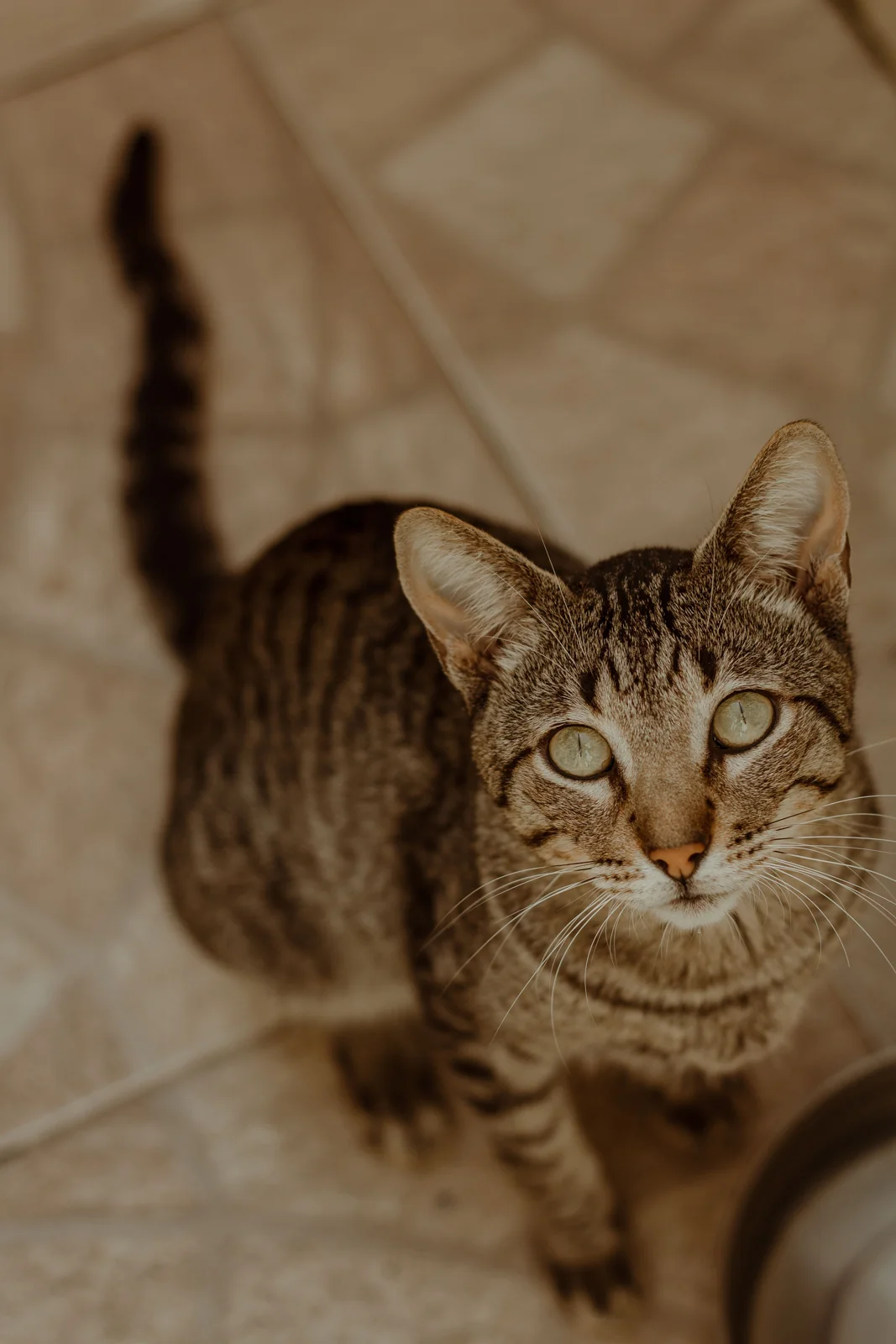
Featured photo: A tabby cat looks upward indoors. Observe the body and setting before assigning a motive. Photo: Maria Luiza Melo / Pexels.
Prepared with AI assistance and reviewed against the sources above.