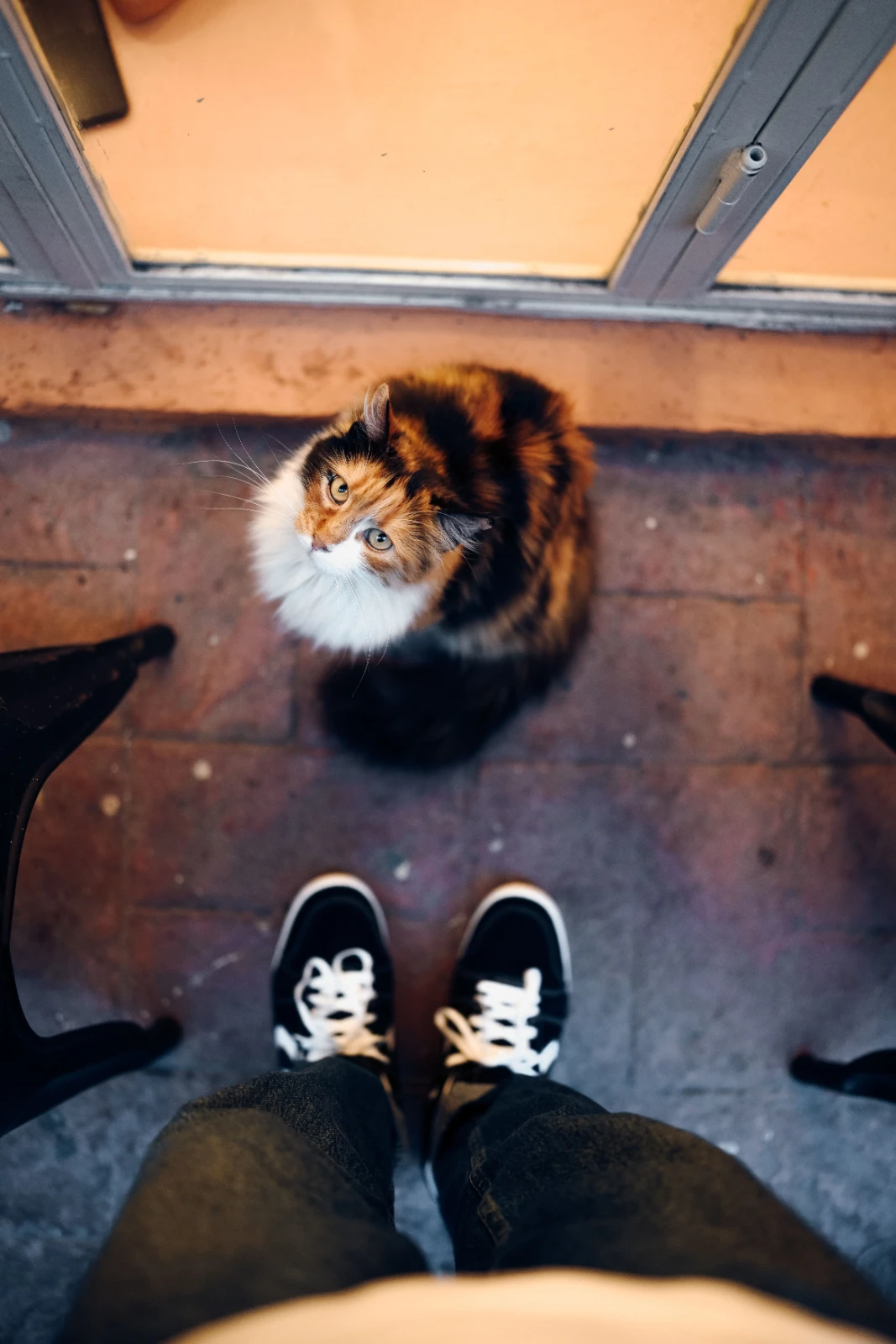
Cats may love feet because they offer interesting smells, a reachable place for friendly rubbing, and moving targets for play. Battersea explains that cats investigate and share scent. Watch the action: sniffing and cheek rubbing call for a different response than stalking toes and grabbing ankles.
A cat at your feet can be amusing until you need to walk. You can allow quiet company while setting safe limits around biting. Animalia’s guide to reading cat behavior helps you consider the whole setting before deciding what a habit means.
Why do cats love feet, socks, and shoes?
Feet and footwear put scent and movement within easy reach. A cat may investigate a new smell, rub against you, seek contact, or chase something moving. These explanations can overlap. Your cat’s posture and what happened just before the approach tell you more than a label such as “foot obsession.”
Start with the difference between looking, touching, and chasing. A cat who pauses to smell a shoe is gathering information. A cat who presses a cheek against your ankle may be making familiar contact. Neither observation proves that sweat acts like catnip or that the cat is trying to own you.
Also, do not assume that every approach invites petting. Let your cat choose whether to stay. If they move away when you reach down, stop reaching. Our choice-based approach to petting offers a simple way to keep contact comfortable.
Match the visible action to a safe response
Use this observation map to choose your next step. It suggests possibilities rather than testing a cat’s intentions. Keep your feet still when the cat is close, and avoid staging a chase to find out whether they will bite.
| What you see | Possible explanation | Useful response |
|---|---|---|
| Sniffs a shoe, then leaves | Investigation of scent | Allow a brief look if the shoe is safe to access. |
| Rubs a cheek on your ankle | Familiar social contact or scent marking | Pause and let the cat approach or leave. |
| Sits quietly beside your feet | A convenient resting place near you | Offer a nearby bed outside the walking route. |
| Crouches, tracks toes, then pounces | Play directed at movement | Stop the foot game and plan toy play away from ankles. |
| Licks or chews socks repeatedly | A habit needing closer observation | Remove loose fabric and ask your vet about repeated chewing. |
| Hisses, flattens ears, or swipes | A request for distance or another concern | Give space and investigate changes without handling the cat. |
Cats Protection describes relaxed posture, cheek rubbing, and signs of discomfort. Read these signals together. A single purr or tail movement does not settle the question. If an approach becomes threatening, use the safety steps in our guide to sudden cat attacks.
How can you stop cats from attacking your feet?
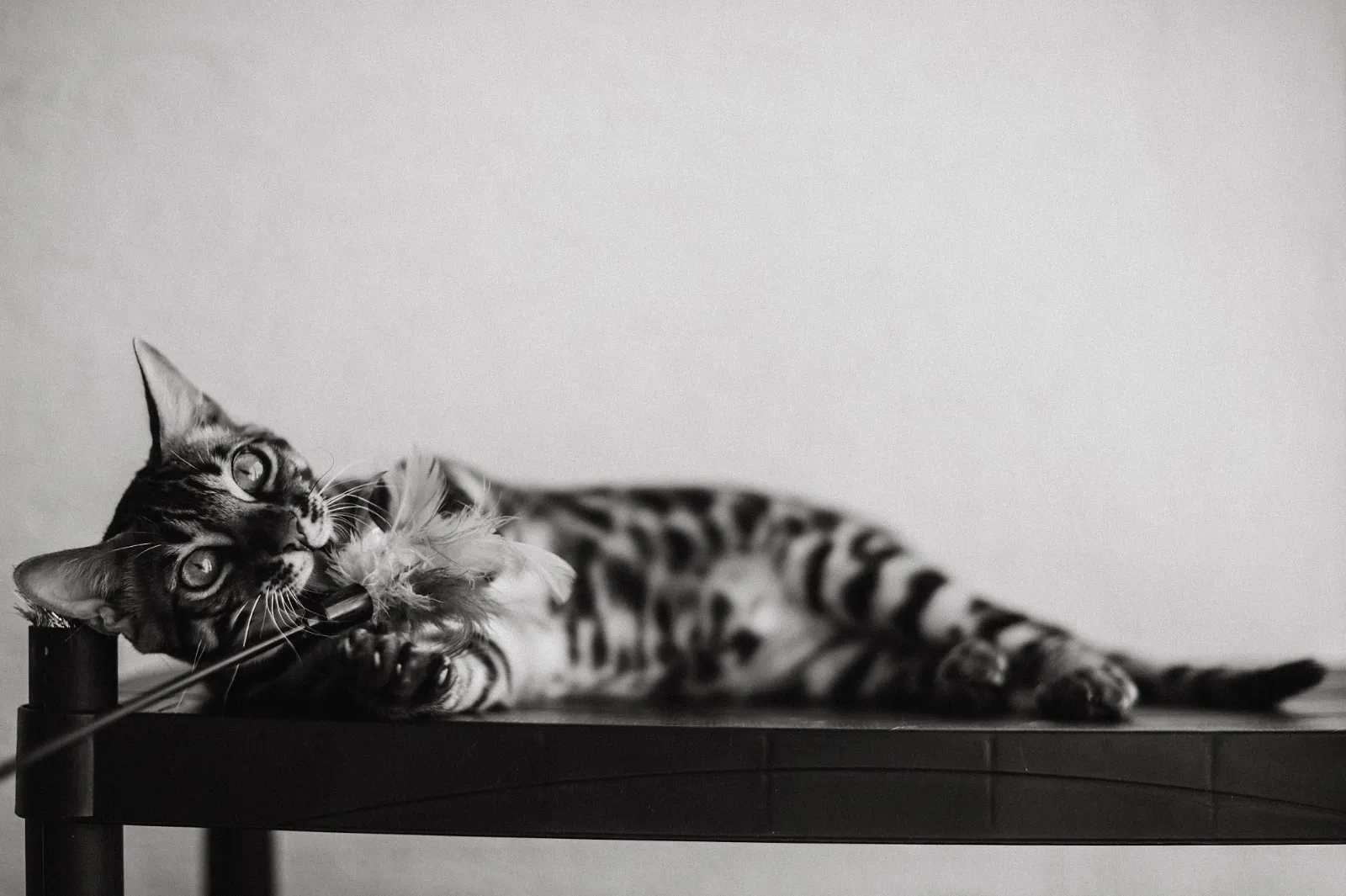
Stop using feet as toys and provide an appropriate target before the usual ambush. Battersea recommends toys that keep hands and feet out of play. When your cat is already excited, create space instead of trying to stroke or pick them up. Avoid kicking, shouting, or chasing.
- Notice the setting: hallway, bedtime, or the moment you put on shoes.
- Arrange a toy session before that routine when possible.
- Move a wand toy away from your body so the cat follows the toy.
- Let the cat catch the toy, then finish calmly.
- Store string and wand toys safely after supervised play.
- Place a resting spot beside your chair, clear of the walking path.
For example, if an ankle ambush usually happens as you cross the living room, plan play in an open area beforehand. Keep your route clear afterward. This is a prevention idea, not a promise that one session will change the habit. A repeatable daily play routine can help you make adjustments without turning toes into practice prey.
When a foot habit needs professional help
Contact your veterinarian if the interest changes suddenly, becomes intense, or comes with withdrawal, appetite changes, or discomfort. Describe what you saw rather than calling it affection or aggression. Repeated biting also deserves a household safety plan and, when advised, help from a qualified cat behavior professional.
Keep medication creams and treated skin out of reach, and do not encourage licking. The FDA warns that some human medicated creams can be dangerous to pets. Ask your vet promptly if you suspect your cat swallowed fabric or contacted a product. Meanwhile, put socks and footwear away. Animalia recommends a brief record of triggers, visible actions, and changes that made moving around safer.
FAQ: cats and human feet
Why does my cat sniff my feet after I get home?
Scent investigation is one possible reason. Your shoes and feet may smell different after a trip outside, but sniffing cannot tell you which odor interests the cat. Allow calm investigation if safe, then continue normally. You do not need to offer dirty socks or encourage licking to meet your cat’s needs.
Does rubbing against my feet mean my cat loves me?
Rubbing can fit friendly contact, but it is not a precise measure of affection. Look for a loose body and a cat who chooses to stay near you. Also consider timing: approaching at mealtime may be part of a familiar routine. Respect a cat who leaves instead of trying to extend the interaction.
Why does my cat bite feet under the blanket?
Moving toes beneath fabric can become a play target. Avoid wiggling them to entertain the cat, since that keeps the same game going. Instead, arrange suitable play before bed and store the toy afterward. If biting is sudden, severe, or linked to other behavior changes, ask your veterinarian for advice.
Is it safe to let my cat lick my feet?
You do not need to allow licking. Gently end access and offer another way to spend time together, especially when skin has a topical product on it. Do not pull the cat toward you or hold them against your foot. If licking becomes repetitive or difficult to interrupt, record the pattern for your vet.
Should I move a cat who sleeps by my feet?
Offer another resting place if the position makes walking or sleeping difficult. Let your cat move voluntarily whenever possible, and watch where you step. Resting near feet is different from stalking them. A cat who is comfortable elsewhere does not need to learn to sleep close to you to have a good relationship.
Why do cats love feet? Often scent, contact, or play provides a useful starting explanation. Choose your response from the action you see: allow calm company, prevent toe games, and get help for sudden changes. Keep the next step small enough to observe without provoking another bite.
Sources and editorial notes
- Battersea: a cat’s sense of smell
- Battersea: playing with your cat
- Cats Protection: cat body language
- FDA: fluorouracil and pet safety
Animalia Editorial. Published and last updated October 29, 2026. Editorial Policy.
Featured photo: A cat sits near a person’s shoes with space to move away. Photo: Tahir Osman / Pexels
Prepared with AI assistance and reviewed against the sources above.