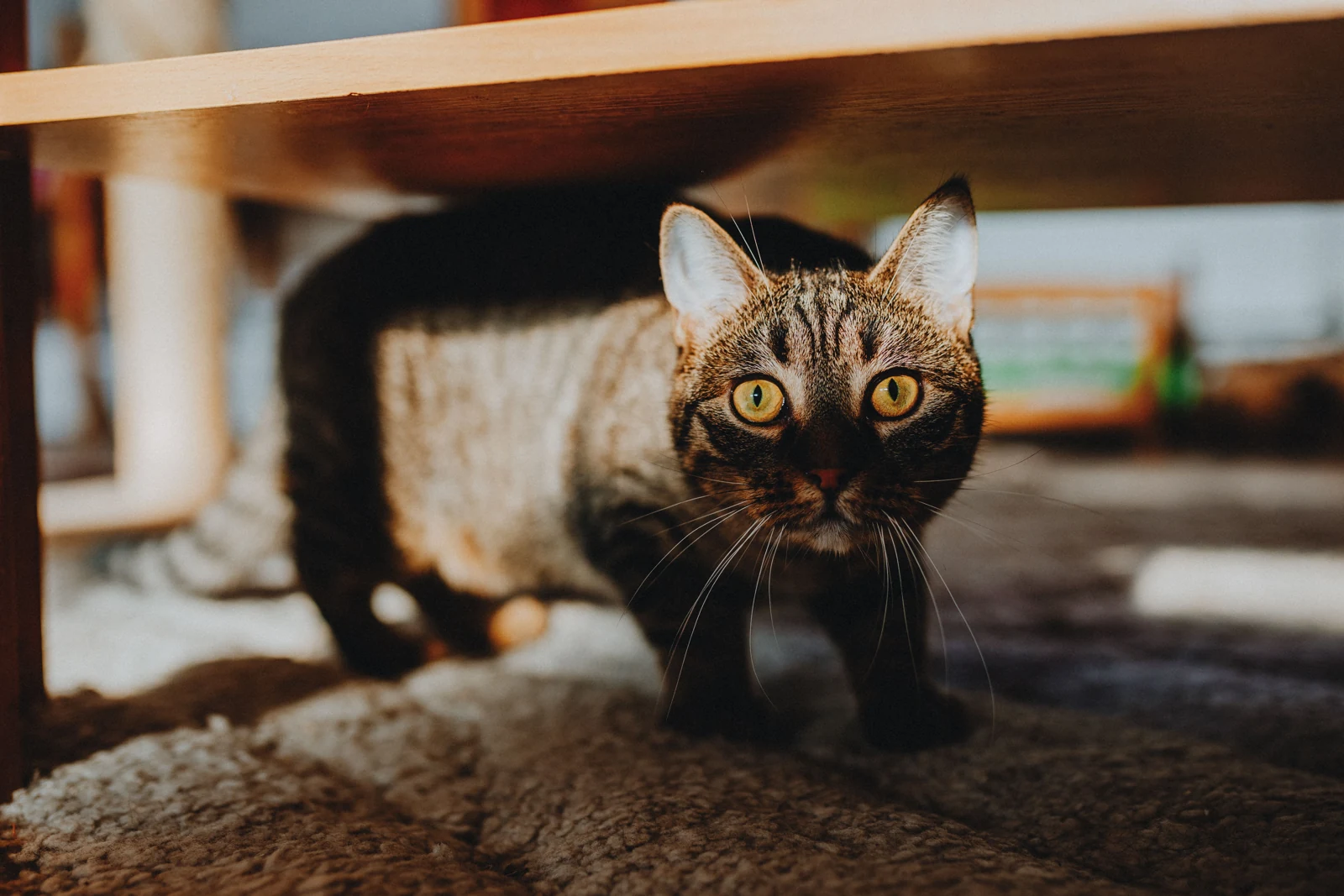
A cat that seems to attack randomly may be reacting to play, fear, too much contact, an outside trigger, or pain. The ASPCA describes several possible causes of aggression. Create space first, avoid grabbing or punishing, and arrange a vet check when the behavior is new, severe, or changing. Keep hands away.
Why can an attack look random?
The trigger may happen before the moment you notice the attack. A cat can react to an outdoor animal, a sound, movement near a hiding place, or contact that has become uncomfortable. “Random” describes what you could see, not proof that the cat had no reason or chose to be spiteful.
Cornell separates play, fear, petting-related, redirected, and pain-related aggression. These categories help a professional ask better questions; they are not a diagnosis you can assign from a single video. The same visible lunge can occur in different situations, and more than one factor may be involved.
Take a sudden change seriously even if your cat is friendly between events. A quiet spell does not prove the problem is gone. Note changes in movement, eating, hiding, toilet habits, or response to touch. Share these with your vet, without trying to examine the cat at home.
How can you make the immediate space safer?
Stop reaching toward the cat, and create distance when you can do so safely. Keep an escape route open for yourself and for the cat. If a door can separate you without approaching or trapping the cat, use it. Do not attempt to pick up an aroused cat or separate fighting animals with bare hands.
Cats Protection advises calm behavior and room to withdraw. Avoid chasing, pinning, yelling, water sprays, or loud noises intended to startle. Those responses can increase fear or excitement. If you cannot move safely, protect yourself behind a solid barrier and get help rather than attempting hands-on restraint.
Move children, guests, and other pets away. Do not send someone in to “make friends” or test whether the cat is calmer with them. Allow quiet time with no handling. There is no fixed time for every cat to settle. Ask for expert advice if you are unsure how to go back in safely.
What details help identify a pattern?
Record the setting, what happened before the event, and what the cat did afterward. A timeline is more useful than a label such as “jealous” or “dominant.” Include things the cat may have noticed that you did not, such as an animal at the window or a noise outside.
Use this checklist after the situation is safe. Never stage another attack to answer a question.
- Where was the cat, and was an exit blocked?
- What were your hands, feet, clothing, or tools doing?
- Was the cat playing, resting, eating, or being handled?
- Had another animal, visitor, or loud sound appeared?
- Which body changes came first, such as a tense posture or turn toward you?
- Were there recent changes in health, routine, or the home?
An ordinary room camera may help if it can record safely without changing the setup. Do not approach a tense cat with a phone. A short written account is enough to begin a conversation with your vet or behavior professional.
Match prevention to the setting, not a guessed motive
The table below gives examples of home adjustments to discuss with a professional. It does not tell you the cause of your cat’s aggression. Start by preventing another risky interaction while you seek help.
| Repeated setting | Possible factor to discuss | A lower-risk adjustment |
|---|---|---|
| Lunges at moving ankles from a hiding spot | Play or pursuit may be involved | Arrange suitable toy play before the usual busy period |
| Reacts after watching an outdoor cat | Redirected excitement may be involved | Reduce that view when this can be done without approaching the cat |
| Bites while being stroked or lifted | Touch may be unwelcome or uncomfortable | Stop uninvited handling and arrange a health check |
| Hisses when people approach a corner | Fear or lack of an exit may be involved | Keep distance and improve access to a quiet retreat |
| Behavior starts suddenly or grows more intense | A health or other change needs assessment | Contact the vet and describe the exact change |
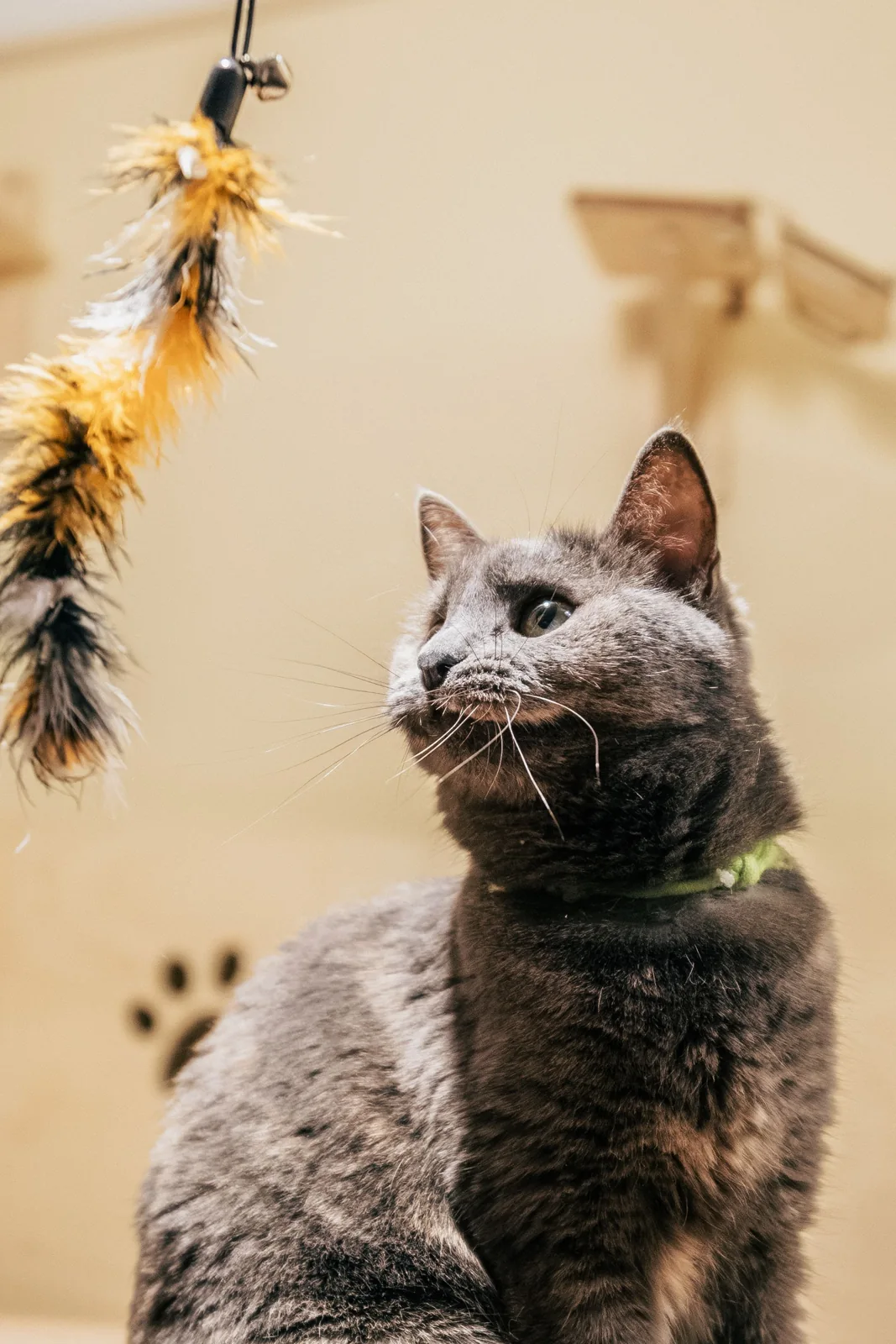
Use hiding places that let your cat withdraw without being followed. For predictable play-related patterns, review your cat play routine and keep moving toys away from hands. Avoid offering a toy right against the cat’s face during an active attack.
Get help and make a safe household plan
If a bite or scratch breaks skin, wash the wound with soap and warm water and seek medical advice promptly. Bites to the hand, foot, face, or head need urgent medical advice; severe wounds or bleeding that will not stop need emergency care. Keep the cat away from the injury. Contacting a clinician is separate from understanding the cat’s behavior.

Ask for a qualified feline behavior professional or veterinary behaviorist if needed. A good plan considers health, the home, triggers, and the safety of people and animals. It does not rely on proving who is in charge. Cat Friendly Homes explains why punishment can make protective behavior worse.
Write down who will manage doors, children, visits, and care until the situation improves. Where other cats are involved, keep them safely apart rather than making them work it out. Our gradual cat introduction guide explains a planned approach to contact, while separate resource placement can reduce unwanted close encounters.
FAQ: sudden cat attacks
Is my cat attacking me for no reason?
You may not have seen the trigger, or the relevant event may have occurred earlier. A sudden attack can have several possible explanations, including health or discomfort. Begin with distance and safety, then record the context. Do not keep approaching the cat to prove whether the behavior is deliberate or predictable.
What if my cat attacks my legs when I walk past?
Movement can become a target in play or pursuit, but that is not the only possible explanation. Keep hands and feet out of games and note where and when it happens. Plan safer routes and suitable play before the usual event. Seek professional help if contact is hard, repeated, or new.
Should I pick my cat up to calm them?
Avoid picking up or holding a cat during an aggressive episode. Touch can add risk when the cat is fearful, excited, or uncomfortable. Create space and use a door or barrier only when that can be done safely. Ask the vet for handling and transport advice if you need help getting care.
Could another cat outside cause an attack on me?
Yes, an outside animal can be one trigger for redirected aggression, according to the ASPCA. The person nearby may not have caused the original excitement. Avoid touching the cat and reduce access to the trigger safely. A repeated pattern needs a broader plan, not punishment of either cat or a forced meeting.
Will more play fix sudden aggression?
Suitable play may help when pursuit or unmet activity needs contribute, but it is not a diagnosis or a cure for every attack. Use toys at a distance from skin and stop if the setting becomes unsafe. New aggression, pain-related signs, or repeated injuries need veterinary assessment and a tailored behavior plan.
Animalia’s next step is practical: prevent another unsafe encounter, record the last event without provoking a new one, and call the vet with the details. Browse our cat care hub for related routines that support a calmer home.
Sources and editorial notes
- ASPCA: Aggression in cats
- Cornell: Feline behavior problems, aggression
- Cats Protection: Why does my cat bite me?
- Cat Friendly Homes: Preventing unwanted behaviors
- NHS: Animal and human bites
Animalia Editorial. Last reviewed: October 22, 2026. The tables and worked examples are editorial planning aids, not a diagnosis or reported result. See the Animalia Editorial Policy.
Featured photo: A tabby cat beneath a low table. A still image cannot show whether a cat is playful, worried, or about to move. Photo: Helena Jankovičová Kováčová / Pexels.
Prepared with AI assistance and reviewed against the sources above.