In a small apartment, the best litter box location is one your cat can reach easily and use without being cornered. Prioritize access, usable space, and daily cleaning before choosing an enclosure that hides the tray. A neat-looking setup is only useful if the cat is comfortable using it.
This guide covers layout and routine. A new toileting problem or signs of discomfort need veterinary advice; changing the furniture is not a substitute for checking your cat’s health.
Start with access and choice
Ohio State’s litter-box guidance recommends one box per cat plus an additional box, with boxes on each floor in multi-level homes. In a small apartment, look for genuinely separate usable locations rather than putting every tray shoulder to shoulder.
For one cat, that means planning for two accessible boxes where possible. For multiple cats, watch whether one cat controls a hallway or waits outside the other’s box. Separate approaches may be more helpful than fitting several trays into one cupboard.
If your layout makes the recommended setup difficult, discuss the individual household with your veterinary team. Do not assume an arrangement works simply because it meets a count on paper.
Compare realistic locations
| Location | Potential advantage | What to check |
|---|---|---|
| Quiet corner with an open approach | Easy access and straightforward cleaning | Cat is not trapped between furniture |
| Bathroom | Floor may be easy to clean | Door remains accessible; appliances and foot traffic do not frighten the cat |
| Separate utility area | Resources can stay apart | No noisy machine beside the tray |
| Decorative enclosure | Fits household storage preferences | Interior dimensions, ventilation, access, and the cat’s actual response |
Keep feeding and drinking areas separate from the toileting area. Avoid locations where a door can shut the cat out or where another pet can block the only exit. A washable mat may help your cleaning routine, but it should not make entry awkward.
Choose usable space inside the box
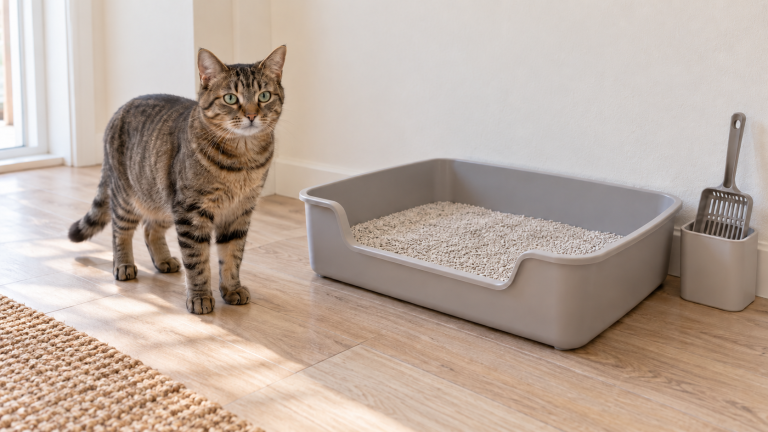
Check the inside dimensions rather than the product’s outside footprint. Your cat needs room to turn and move naturally. A bulky lid, curved walls, or storage cabinet can reduce usable space even when the whole unit looks large.
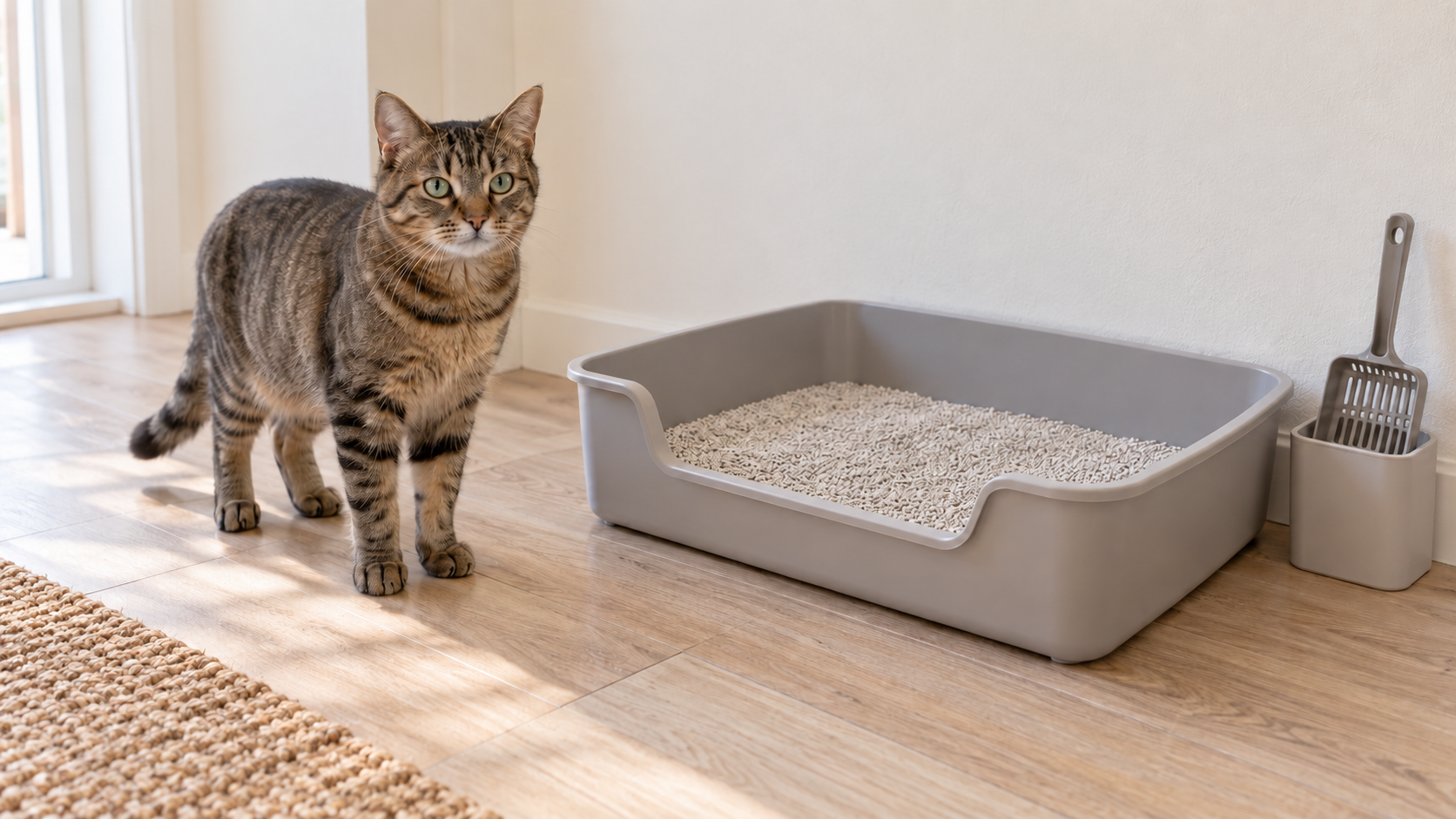
An open tray is a useful starting option because access and cleaning are easy to assess. Individual preferences differ, so observe your cat instead of assuming that a cover automatically offers privacy. A low entry may be helpful when a cat finds a tall edge difficult; ask your veterinarian about changes in mobility.
Make cleaning a repeatable routine
Check and scoop boxes daily. Keep the scoop and waste container convenient enough that cleaning actually happens, while storing cleaning products securely away from pets. Follow the tray and litter manufacturer’s guidance for fuller cleaning and replacement.
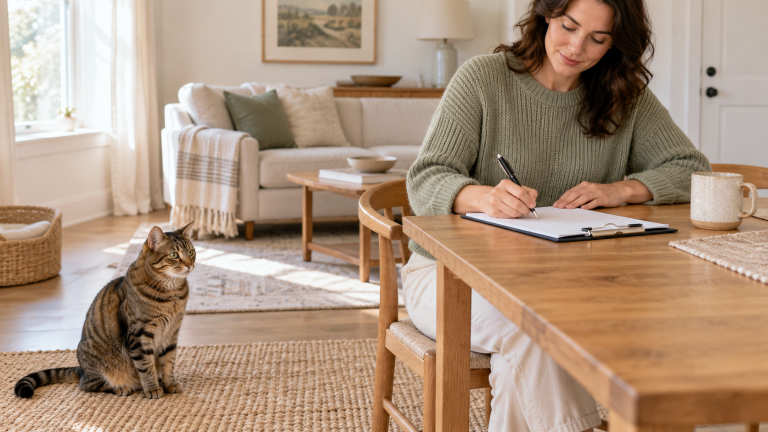
A simple household checklist can prevent gaps: who checks each tray, where supplies live, and when damaged equipment gets replaced. Strong fragrance is not a replacement for removing waste. If you change litter type, avoid an abrupt wholesale switch that removes every familiar option.
Move a box thoughtfully
If your current location is unsuitable, offer the improved location while preserving a familiar option during the transition when practical. Keep the new approach clear. Observe which tray your cat uses and whether access changes at busy times of day.
Do not carry the cat to the box and hold them there. Do not punish accidents. Review access, cleanliness, household conflict, and veterinary needs rather than making the box a stressful place.
A compact-apartment planning checklist
- Each tray has a clear, reliable approach.
- Food and water are placed elsewhere.
- No loud appliance or swinging door intrudes on the tray.
- The cat can move comfortably inside.
- Cleaning supplies are accessible to people and secure from pets.
- Other cats or dogs cannot guard the only exit.
- Changes are based on observation rather than appearance alone.
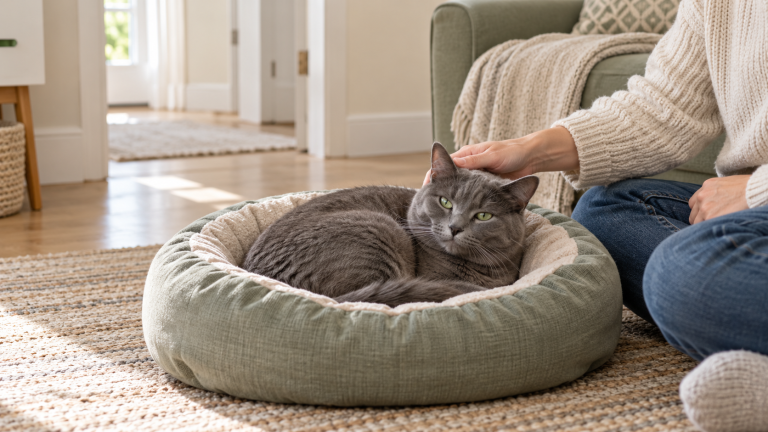
For the rest of the apartment, add separate resting and scratching resources. Our guides to compact cat trees and scratching-post placement can help you use limited space without crowding everything together.
Common questions
Can two trays sit next to each other?
They may add tray capacity, but they do not offer much location choice. Separate accessible areas are worth considering, especially when cats avoid sharing space.
Should I buy a hidden litter box cabinet?
Assess the cat’s usable space and escape route first. Choose an arrangement the cat comfortably uses, not one that only conceals the tray.
What if my cat strains or keeps trying without passing urine?
Seek urgent veterinary help. Do not wait for a new litter box or treat this as a training issue.
Sources and editorial notes
Supporting guidance: Ohio State University: litter boxes and basic indoor cat needs. This is a home-layout checklist, not a diagnosis or treatment plan.
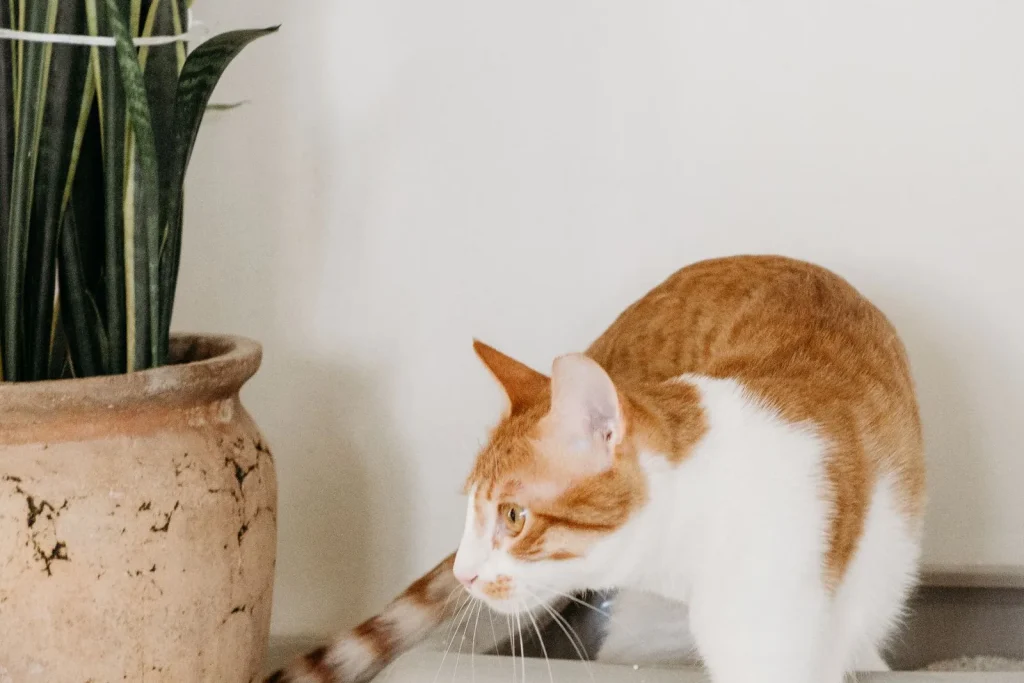
Featured image: Illustrative litter-area layout, generated with AI; adjust equipment to your cat.