Loose-leash walking starts by rewarding your dog for moving with you while the leash stays slack. Practice a few steps in a quiet place before expecting the skill on a busy walk. Keep ordinary outings manageable while the new behavior develops.
The goal is comfortable movement together, not making the dog hold a rigid position for an entire outing. Safe sniffing and exploration can still be part of the walk.
Prepare equipment and a quiet practice area
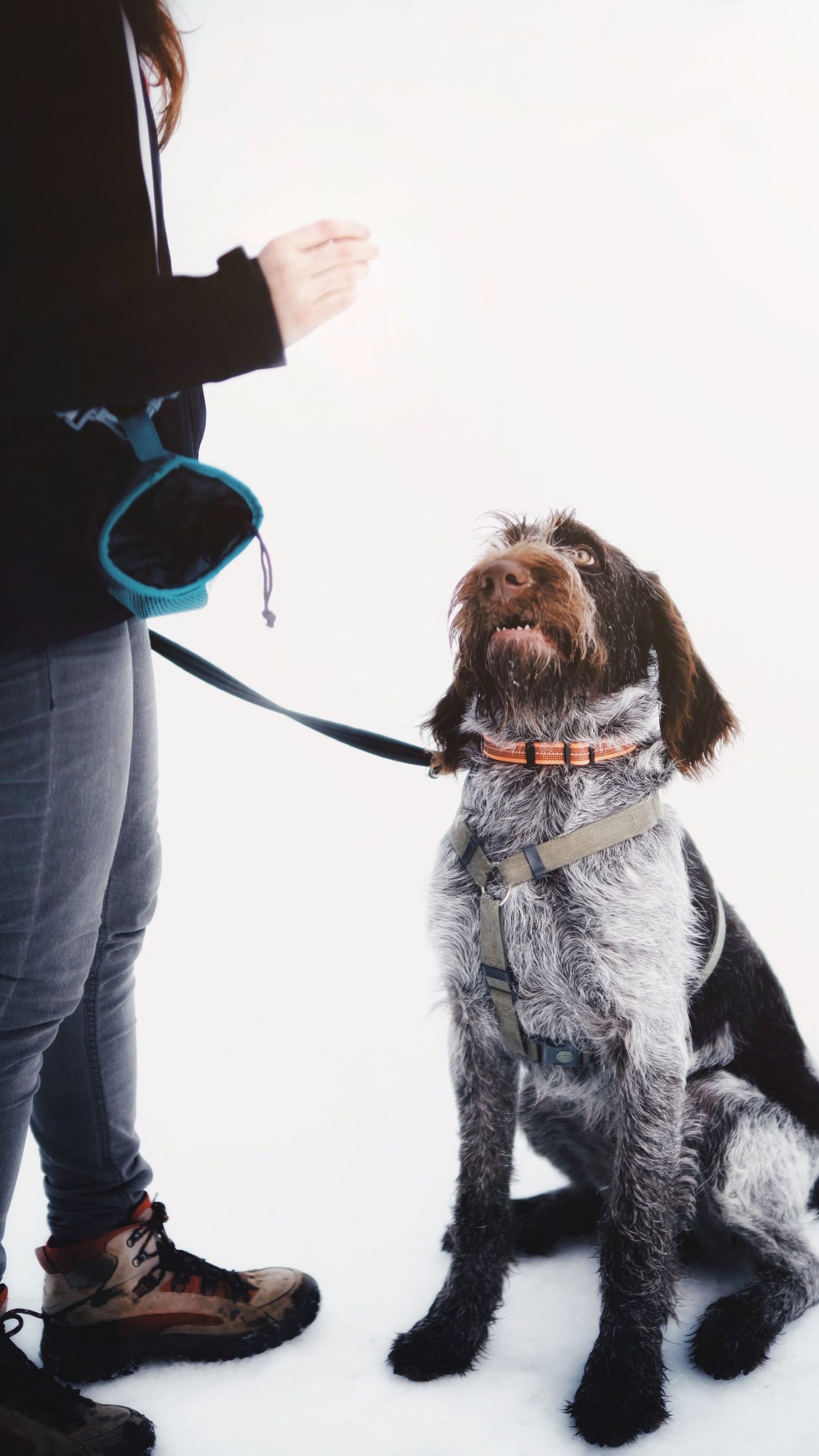
Use appropriately fitted walking equipment and a leash you can handle safely. Check fit, fastenings, and condition before practice. Avoid equipment designed to cause pain or force compliance. If your dog has a health concern that affects equipment or movement, ask your veterinary team.
Start in a quiet room, secure yard, or other suitable area with enough space to take a few steps. Have suitable rewards ready. Choose one side for initial practice so reward placement is easier to coordinate, while remembering that everyday loose walking does not require permanent precision.
Step 1: reward being near you with slack in the leash
Stand still and allow the dog to find a comfortable position near you. When the leash is loose and the dog is near your chosen side, mark the moment if you use a marker and reward close to that side.
Do not pull the dog into position. If the dog immediately moves to the end of the leash, try a less distracting place and reward smaller moments of attention. Our reward-based training guide explains how to establish timing.
Step 2: take one or two easy steps
Move a short distance. Reward while the dog is moving with you and the leash remains slack. Begin with tiny stretches so you can reward success before pulling starts.
Keep food placement near the position you want to reinforce. Reaching far ahead with the reward can encourage the dog to surge forward. Practice your own hand movements slowly; coordinating a leash and rewards is a skill for the person too.
Step 3: respond to pulling calmly
In a safe practice setting, stop moving when the leash becomes tight. Allow the dog to return to a position where the leash loosens, then continue and reward the successful movement. Do not jerk the leash or drag the dog backward.
If every step ends in pulling, lower the difficulty. Try a quieter space, shorter movement, or more frequent rewards. A lesson that becomes a constant battle is telling you the setup needs work.
Step 4: build a short comfortable stretch
Add a few steps only when the easier version is going well. Vary the easy repetitions rather than making every attempt longer. The dog should keep finding successful moments that earn a reward.
Introduce gentle changes of direction when both of you can manage them comfortably. Use your body movement and an inviting voice rather than steering with force. Stop practice before attention or comfort deteriorates.
Step 5: move to an easier outdoor route
Choose a calm location before trying the busiest street nearby. Reward more frequently again because the surroundings have changed. Keep distance from distractions your dog cannot yet handle and allow appropriate exploration.
When you must pass a difficult area, prioritize safe movement and space. Do not insist on a perfect lesson beside traffic or a dog that frightens yours. Your daily routine can include short training practice separately from the outing your dog needs.
Use access to sniffing thoughtfully
If your dog enjoys investigating a safe spot, moving toward it with a slack leash can become a useful everyday reward. Keep this simple: comfortable movement earns access where it is safe and allowed.
Do not require an extended close position before every sniff. Loose-leash walking should make exploration easier to manage, not remove it. For objects the dog should avoid, practice leave it in controlled settings first.
Troubleshoot the specific difficulty
| Problem | Adjustment |
|---|---|
| Pulling starts immediately outdoors | Choose a quieter location and reward much shorter stretches |
| Dog crosses in front repeatedly | Review your reward position and give yourself more clear space |
| Dog ignores normally valued rewards | Increase distance from distractions and check comfort |
| Person cannot coordinate equipment | Practice reward delivery slowly in the easiest setting |
| Dog freezes, lunges, or appears frightened | Create safe distance and seek appropriate professional support |
Common questions
Is loose-leash walking the same as heel?
No. Heel usually describes a more precise trained position. For everyday walks, you can prioritize slack in the leash and comfortable movement while allowing safe exploration.
How many days will it take?
There is no reliable universal timeline. Prior experience, surroundings, and practice all matter. Increase difficulty based on observed success rather than a deadline.
Should I stop normal walks until training is finished?
No. Continue meeting your dog’s care and activity needs with manageable routes and suitable support. Keep the teaching environment easy enough for productive practice.
If your puppy is still learning to accept the leash or move comfortably with it attached, begin with our puppy leash introduction and first indoor steps. Return to this loose-leash guide when those foundations are comfortable, then build the walking skill a little at a time.
Sources and editorial notes
Supporting guidance: Dogs Trust: walking nicely training, RSPCA: teaching walking without pulling, and AVSAB: using natural rewards. This guide is for introductory practice, not individualized treatment for fear or reactivity.
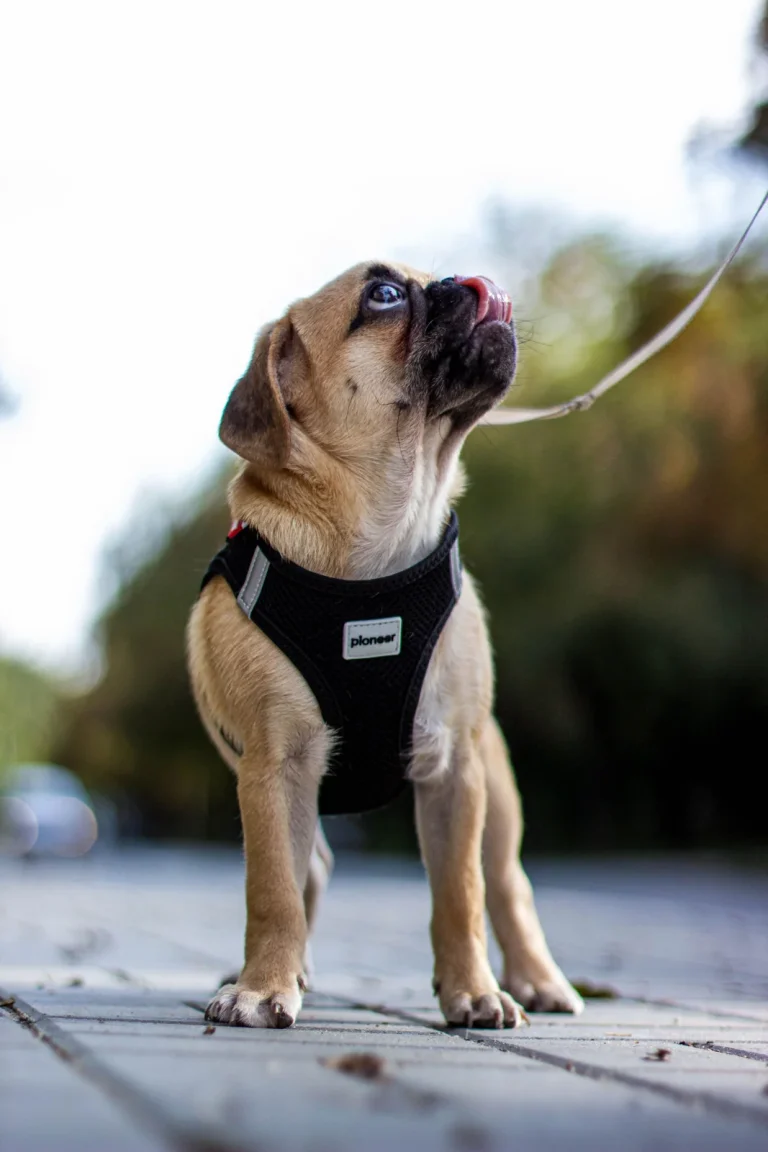
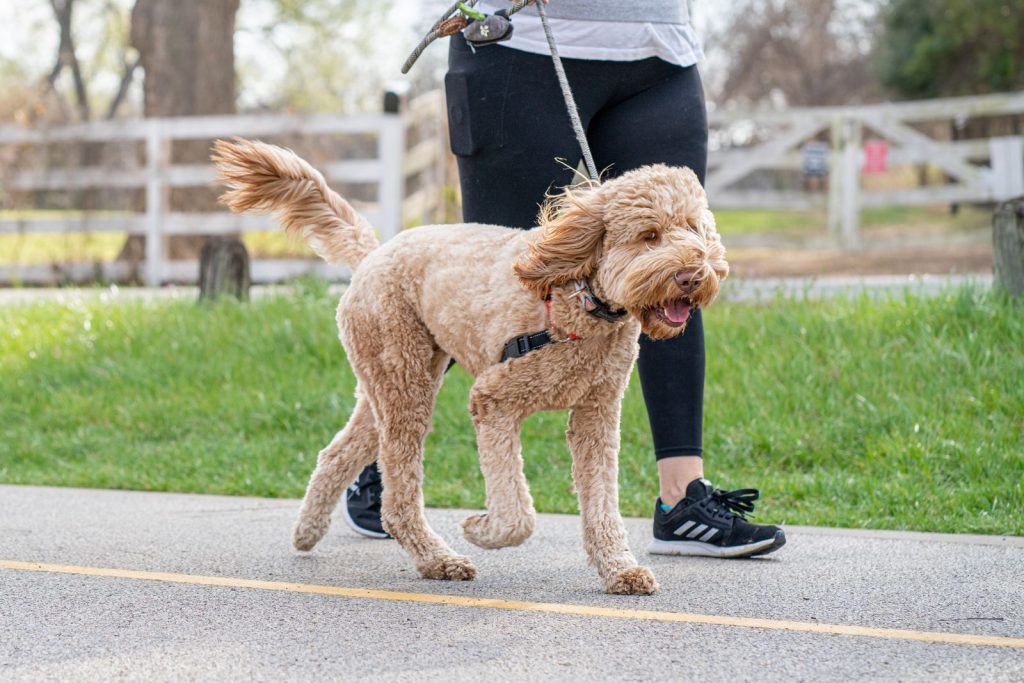
Featured image: Illustrative walking equipment and rewards; the photo does not demonstrate every training step. Photo: Andreas Schnabl / Pexels.