No, most healthy cats do not need routine baths because they keep themselves clean through grooming, as Cats Protection explains. Small areas of ordinary dirt may need only a warm damp cloth. Veterinary-directed skin care, difficult soiling, or potentially harmful substances require a different plan, with professional advice before you choose how to clean the cat.
Do cats need baths after a muddy paw, a greasy patch, or a change in grooming? The answer depends on what is on the coat and why it is there. Animalia’s guide helps you choose the least difficult useful step, with clear limits for handling and home care.
When might a cat need help getting clean?
A cat may need assistance when ordinary dirt will not come away, they cannot groom effectively, or a veterinarian prescribes a particular skin-care treatment. Potentially toxic material is a reason to call the vet promptly before trying a wash. A new grooming change also needs assessment rather than an automatic bath or a stronger cleaning product.
| Situation | Start here | Avoid |
|---|---|---|
| Small patch of ordinary dirt | Consider a soft warm damp cloth if tolerated | A full bath just because one paw is dirty |
| Possible chemical or toxic material | Call the vet promptly and describe the substance | DIY solvents or waiting for the cat to lick it clean |
| Changed grooming or skin appearance | Ask the vet to assess the change | Treating an unknown condition with shampoo |
| Prescribed bathing treatment | Follow the individual veterinary instructions | Changing the product or frequency yourself |
Anicira recommends deciding whether a bath is necessary before starting. Tell your vet if age, movement, or another concern seems to affect grooming. A clean-looking coat does not settle a medical question, and a soiled coat does not prove that a cat has stopped trying to stay clean.
Clean small areas and support ordinary grooming
Cats Protection says a soft cloth with warm water is often enough for dirt. Use it only on an appropriate ordinary mess that the cat tolerates having cleaned. If you do not know what the material is, or it may be harmful, ask the veterinary team before spreading it or applying another substance.
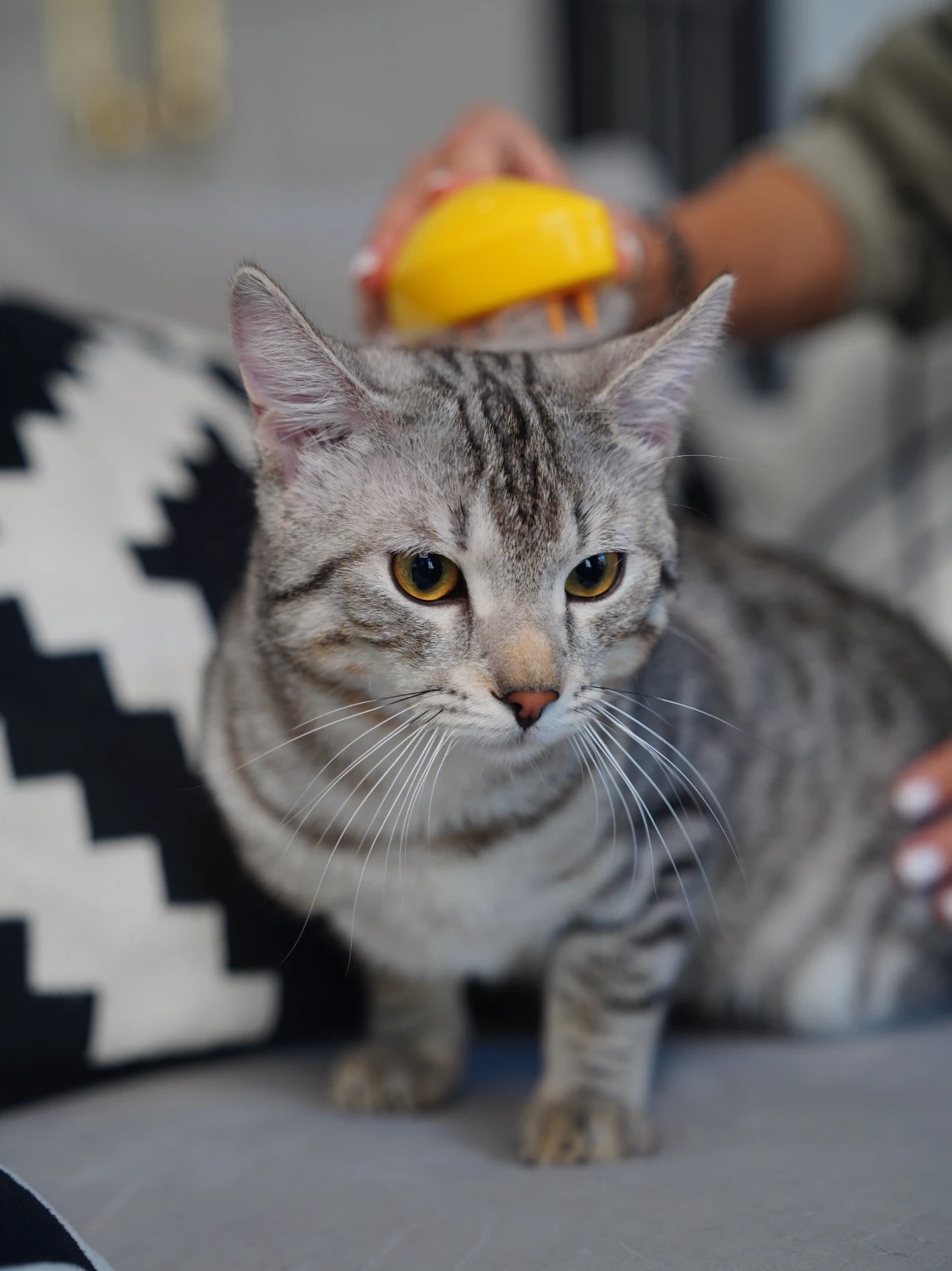
For ongoing coat care, start with the guide to introducing a cat grooming brush. Keep the task brief and chosen rather than trying to complete the whole coat at once. Stop if the cat turns away or struggles, and ask for qualified help if grooming is difficult.
The ASPCA warns against cutting mats close to the skin with scissors. Ask your vet or an experienced cat groomer how to manage tangled areas safely before bathing. Do not pull hard on knots or treat a bath as a way to fix a painful, tightly matted coat.
How can you bathe a cat when it is necessary?
First confirm that home bathing is appropriate and that you have a safe plan for this cat and the substance involved. Gather suitable supplies before bringing the cat to the area. Use a nonslip surface, warm water, and any cat-specific product your vet recommends. Stop if the cat struggles rather than forcing the task to completion.
1. Prepare before handling the cat
Have towels, the appropriate product, and clean warm rinsing water within reach. Follow product and veterinary directions rather than making a dilution recipe. Keep the room comfortable, and do not start a necessary procedure you already know you cannot manage safely.
2. Keep the head, eyes, and ears out of the wash
Anicira advises wetting from the shoulders backward and avoiding the eyes and ears. Work gently on the area that actually needs cleaning. Do not put cotton or other objects into the ears, and do not scrub the face with shampoo.
3. Rinse and stop when needed
Rinse the appropriate product thoroughly according to its directions. If the cat starts struggling or the task becomes unsafe, stop and call for professional guidance. Do not scruff, overpower, or sedate a cat yourself to finish a wash.
Dry gently and ask for help when the plan does not fit
Anicira recommends towel drying and a warm environment until the cat is dry. Avoid a hot or noisy dryer as a shortcut. Handle only as the cat tolerates and contact the vet if you cannot complete necessary care safely.
Our guide to petting and handling with choice explains pauses and withdrawal signals. A scratch-risk question calls for a safer plan, rather than heavier restraint. If a cat needs urgent cleaning but cannot cope, the veterinary team can advise on the appropriate next step.
Record any prescribed product and care instructions in the cat-care household log so another caregiver does not repeat a bath or change the treatment. Photograph the relevant packaging for the vet if contamination is involved and it is easy to do without delaying contact.
Frequently asked questions
How often should you bathe a cat?
Most healthy cats need no routine bath schedule. If a vet recommends bathing for a specific condition or care need, follow their instructions about the product and frequency. Do not assume long fur, hairlessness, age, or a social media routine establishes the right interval for your own cat. Ask how ordinary brushing and any necessary washing should fit together.
How often should you bathe a kitten?
Do not give a kitten routine baths simply to meet a weekly or monthly target. Ask your vet about a specific mess, grooming concern, or treatment need, especially when the kitten is very young or unwell. Gentle, gradual familiarity with appropriate care is different from forcing repeated baths. Keep any necessary handling manageable and seek help when the kitten struggles.
Do cats like baths?
Individual responses vary, and many cats find washing difficult. You cannot assume that a cat who plays with a tap will tolerate being washed or restrained. Anicira recommends gradual introductions when bathing will be needed and stopping if the cat struggles. Do not force a bath as an experiment to find out whether your cat can learn to enjoy it.
Can I use human shampoo or a homemade cleaner?
Use a product specifically suitable for cats and follow your veterinarian’s advice when treatment or contamination is involved. Do not substitute human shampoo, solvents, essential oils, or an improvised cleaning mixture. What is on the coat matters because cats groom themselves afterward. If you are unsure about either the substance or product, call the veterinary team before applying it.
How do I give a cat a bath without getting scratched?
There is no method that guarantees an unwilling cat will not scratch. Prevent the struggle by checking whether a bath is needed, preparing the space, and stopping when the cat cannot cope. Ask your veterinarian or an experienced cat groomer for help with necessary cleaning. Do not use tighter restraint or unprescribed sedatives to make the task possible at home.
How should I wash a very young kitten?
For small patches of ordinary dirt, use a warm damp cloth and gently towel-dry any wet fur. Stray Cat Alliance warns that kittens can become cold after washing. Ask your veterinarian for a specific cleaning plan if the kitten is very young, unwell, flea-infested, or heavily soiled. Do not substitute dish soap, baby shampoo, flea products, or a dryer based on social-media advice.
What is the next useful step for your cat?
Decide whether this is ordinary local dirt, a changed grooming pattern, or a situation needing prompt veterinary advice. Choose the smallest appropriate care step and avoid forcing a full bath. Animalia’s cat behavior and care hub can help you organize observations while keeping health questions with the veterinary team and ordinary grooming manageable.
Sources and editorial notes
- Cats Protection: Grooming and bathing your cat
- Anicira Veterinary Center: Can I give my cat a bath?
- ASPCA: Pet grooming guidance and mat safety
Animalia Editorial. Publication date: October 30, 2026. Sources checked October 29, 2026. See our Editorial Policy. This guide supports everyday care and does not provide veterinary diagnosis or treatment.
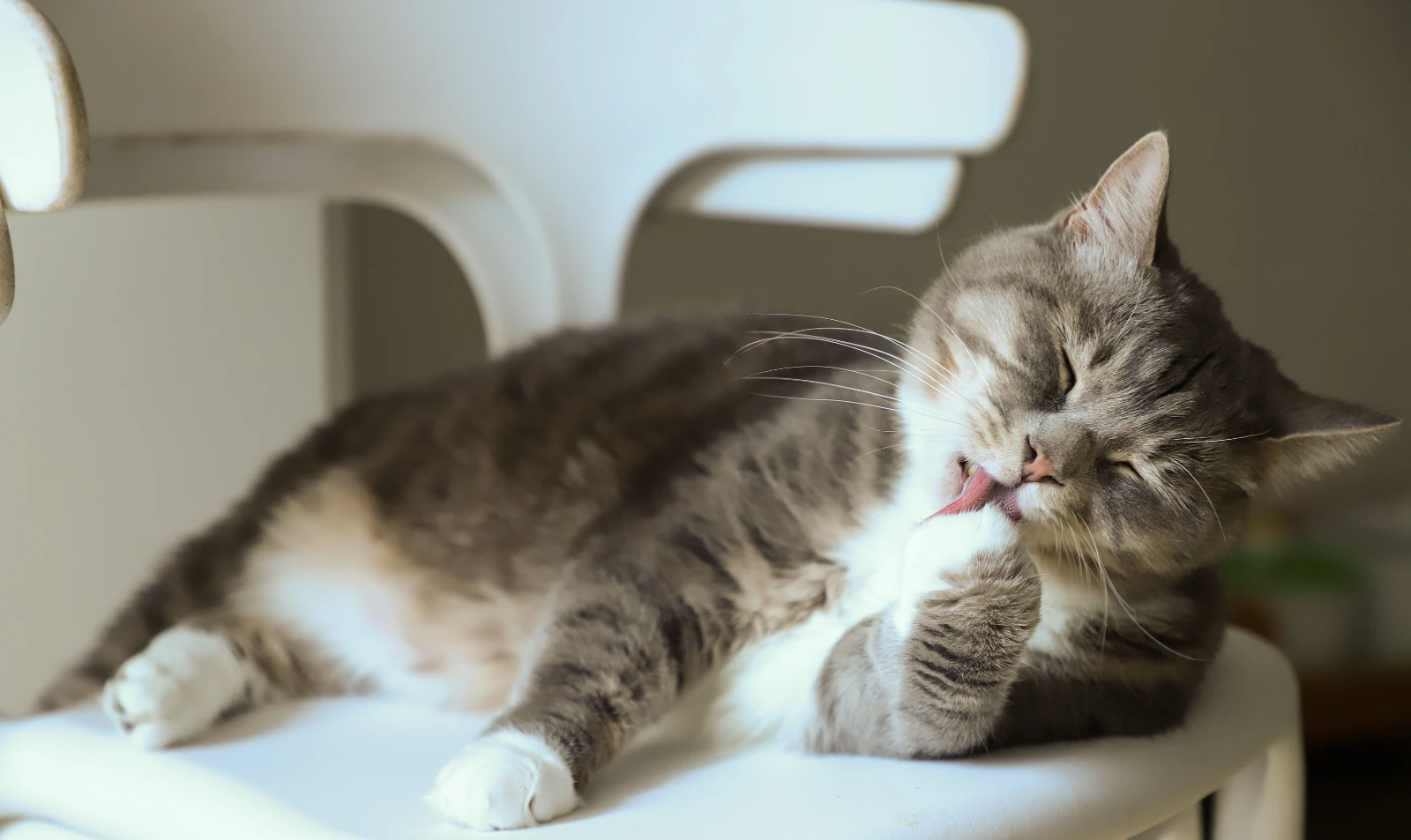
Featured photo: A tabby cat licks its front paw while reclining on a chair. Photo: Cats Coming / Pexels.
Prepared with AI assistance and reviewed against the sources above.