Why do cats stick their tongue out? A brief tongue tip can appear during grooming or relaxed rest, as Hill’s veterinary-reviewed guidance explains. The same appearance does not identify every cause. Check the context and what changed, and contact your veterinarian about a persistent new pattern, drooling, eating changes, or any breathing concern.
A tongue tip showing is different from breathing through an open mouth. PDSA advises contacting a veterinarian straight away for mouth breathing, struggling to breathe, or collapse. Animalia’s guide helps you organize observations; do not delay that urgent call to collect a video.
Why might a relaxed cat leave its tongue showing?
A cat may pause during grooming or relax with a little tongue showing. Hill’s describes both everyday situations, along with a brief scent-investigating expression called the Flehmen response. Context matters: a small tongue tip during otherwise comfortable rest is different from a new persistent change or visible difficulty breathing.
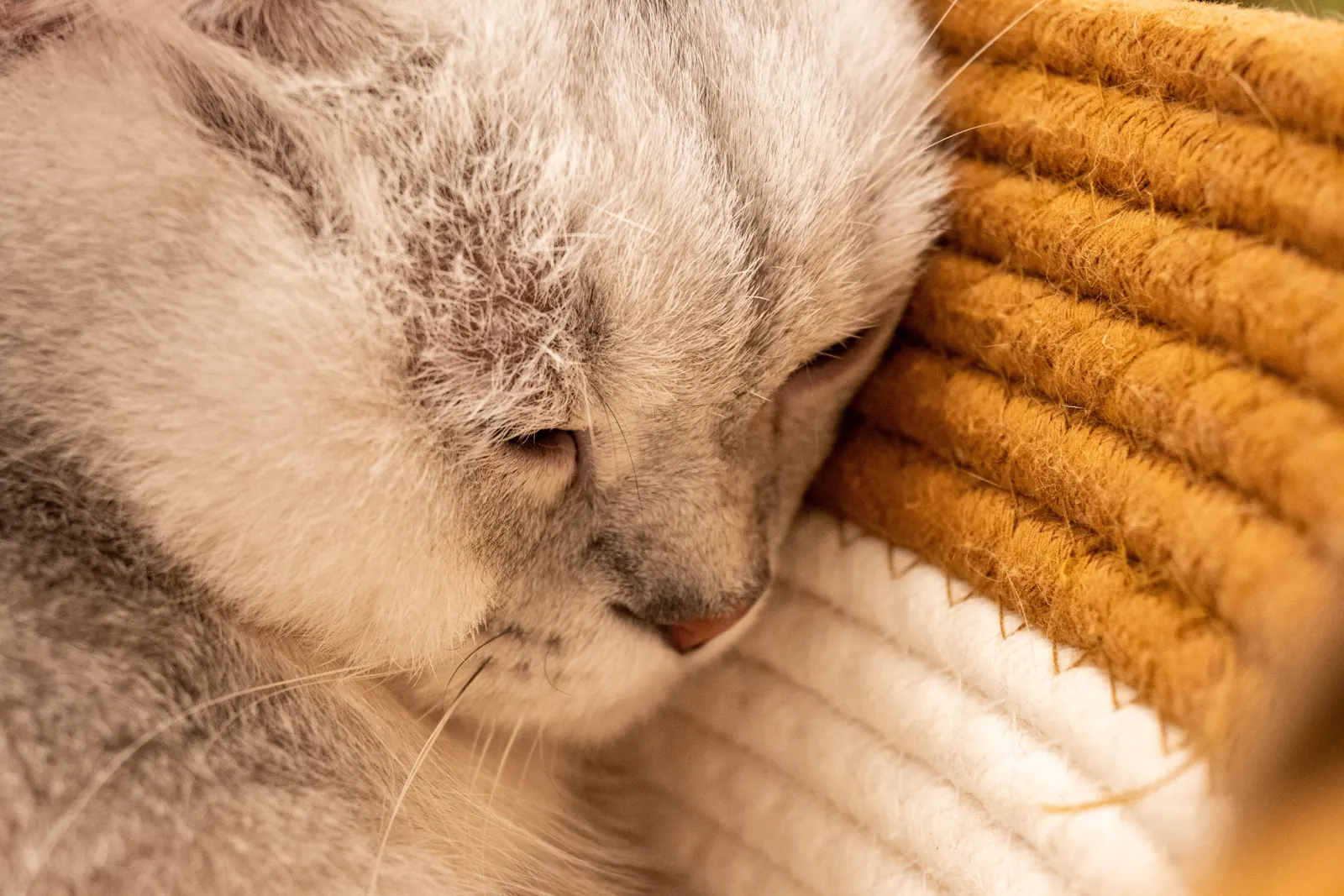
“Blep” is a casual internet label, not a diagnosis. Use a plain description when you discuss it with the clinic: whether the cat was asleep or awake, whether it happened during licking, and whether the tongue returned inside normally. You do not need to touch the tongue or wake the cat just to complete a description.
A scent-investigating expression may include a briefly open mouth and curled lips, according to Hill’s. That explanation should not be used to dismiss breathing that looks unusual. If you are unsure what you are seeing, describe it to your veterinarian. Avoid replaying a tempting smell or another trigger to make the expression happen again.
Our cat licking guide covers everyday tongue use, while the sleep posture guide explains why a resting pose alone cannot establish health or a specific emotional state. Keep those normal behavior questions separate from a changed pattern that needs individual assessment.
Compare the whole situation before choosing a response
Animalia suggests noting the context without assigning a cause. The table below is a communication aid, not a diagnostic chart. It avoids treating every tongue-out photograph as equivalent and gives you a simple way to explain a change. If the breathing row fits, make the call immediately rather than completing the rest of the table.
| What you notice | What to describe | Next practical action |
|---|---|---|
| A small tip during a grooming pause | The activity and whether it returned inside | Observe the usual pattern without manipulating the mouth |
| A tip showing during sleep | Whether this is familiar and breathing appears normal | Leave a comfortable cat undisturbed; ask about changes |
| A new persistent tongue position | When it began and what else changed | Contact your veterinarian |
| Drooling or difficulty eating | What was observed at the meal | Arrange veterinary advice rather than a home mouth examination |
| Open-mouth or difficult breathing | Describe the breathing and any collapse | Contact a veterinarian straight away, following PDSA guidance |
A photograph can show position, but it cannot reliably show the sequence, how your cat is breathing over time, or whether eating has changed. If your cat is comfortable and you already have a brief clip, it may help the clinic understand your description. Do not create another episode or wait for a better recording when the cat needs help.
Keep the description factual. “Tongue visible after licking, then back inside” gives more useful context than “looked silly again.” In a shared household, ask the person who saw the event directly what happened. Mark uncertainty clearly instead of turning a secondhand description into an assumed normal pattern.
When should a tongue-out change prompt veterinary help?
Seek veterinary advice for a new persistent change, drooling, altered eating, or apparent mouth discomfort. Cornell describes drooling, unusual chewing, and reluctance to eat among dental warning signs. These signs do not identify a condition at home. Open-mouth breathing or struggling to breathe requires an immediate veterinary call, as PDSA advises.
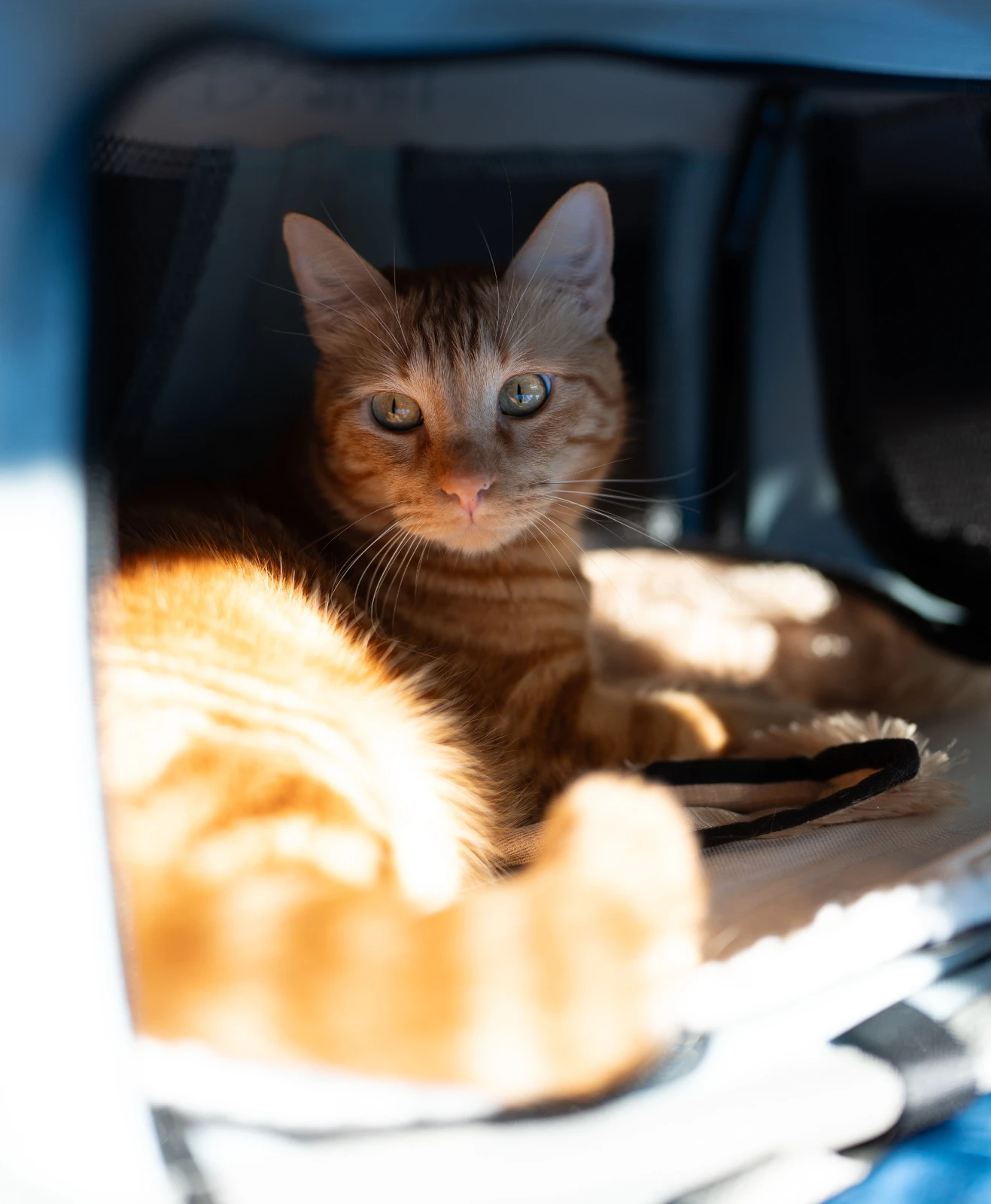
Your veterinarian can assess the mouth and the wider context safely. Do not force the jaws open, pull the tongue, probe a suspected object, or start a dental routine on a mouth that seems painful. Tell the clinic about possible exposure to a damaged toy, plant, cleaner, or medication, including what you know and what you did not witness.
A missing tooth or a flat face should not become a blanket explanation for a new problem. Provide your cat’s history to the veterinary team, including recent procedures or any instructions you were already given. Ask whether the current observation fits the expected course for that individual cat instead of relying on a breed photograph or another owner’s experience.
If the clinic advises a visit, ask how urgently to attend and what information to bring. Follow its transport guidance, especially if breathing is a concern. Animalia’s carrier comfort guide is for routine preparation; it is not a reason to postpone care while practicing a training exercise.
Prepare a clear account for your veterinary team
Write down when the change began, whether it happens at rest or during an activity, and whether it is brief or persistent. Include the last normal meal and any change in eating, drinking, movement, or social behavior. These details help you communicate; they do not give you a way to rule out a problem yourself.
For example: “I first noticed it after lunch, it stayed visible while awake, and food fell from the mouth at dinner.” A different description might be: “a brief tip after licking, then it went back inside; no other change noticed.” Do not assume these examples cover every situation or establish the urgency for your own cat.
If you contact the clinic, use its advice to choose the next step rather than comparing the photograph with a list of diseases. Keep any relevant packaging available, and explain whether an exposure was observed or merely possible. Do not give a home remedy or change prescribed medication while waiting for an online explanation.
Animalia suggests checking the breathing context first, then making a concise factual note if your cat is comfortable. Use our cat behavior hub for related everyday questions, and bring new or persistent concerns to your veterinarian. A useful observation supports professional care without becoming a home diagnosis.
Frequently asked questions
Is a tongue tip during sleep always harmless?
It can occur during relaxed rest, but a photograph cannot establish that every cat is comfortable or healthy. Compare it with your cat’s usual pattern and check for other changes. Contact your veterinarian if the position is new or persistent, or if eating, breathing, or behavior seems different. An urgent breathing concern should be assessed immediately rather than treated as a sleep quirk.
Should I touch the tongue to make it go back in?
You do not need to manipulate a comfortable cat’s tongue to complete an observation. Leave the mouth alone and describe what happens naturally. If the tongue seems persistently exposed or you think something is wrong, ask your veterinarian for advice. Pulling, pushing, or forcing the jaws open can make a worried or uncomfortable situation more difficult and does not establish the cause.
Can a mouth problem be present if my cat still eats?
Eating does not give you a reliable way to exclude a mouth problem. Cornell describes changes such as reluctance to eat, drooling, and unusual head positions during chewing as reasons for attention. Tell your veterinarian what changed, even if some food is still being eaten. Avoid making a diagnosis from one meal or waiting for complete food refusal before asking for advice.
Does sticking the tongue out mean my cat is thirsty?
Tongue position alone does not tell you whether your cat needs more water or has a particular health problem. Keep fresh water accessible and tell your veterinarian about a changed drinking pattern. Do not force water into the mouth or use the tongue as a home hydration test. Breathing concerns, persistent exposure, or other changes require their own assessment rather than an assumed thirst explanation.
How do I tell scent investigation from breathing trouble?
A brief expression around a smell may be part of scent investigation, but a written description cannot reliably assess an individual cat’s breathing. If you see mouth breathing, obvious effort, collapse, or anything you cannot confidently describe, contact your veterinarian promptly. PDSA advises an immediate call for mouth breathing or struggling to breathe. Do not wait for the expression to match an online example.
Sources and editorial notes
Animalia Editorial. Reviewed November 4, 2026. This guide supports observation and veterinary communication; it does not diagnose tongue or breathing changes. See our editorial policy.
Hill’s veterinary-reviewed tongue guidance; PDSA: breathing problems; Cornell: feline dental disease.
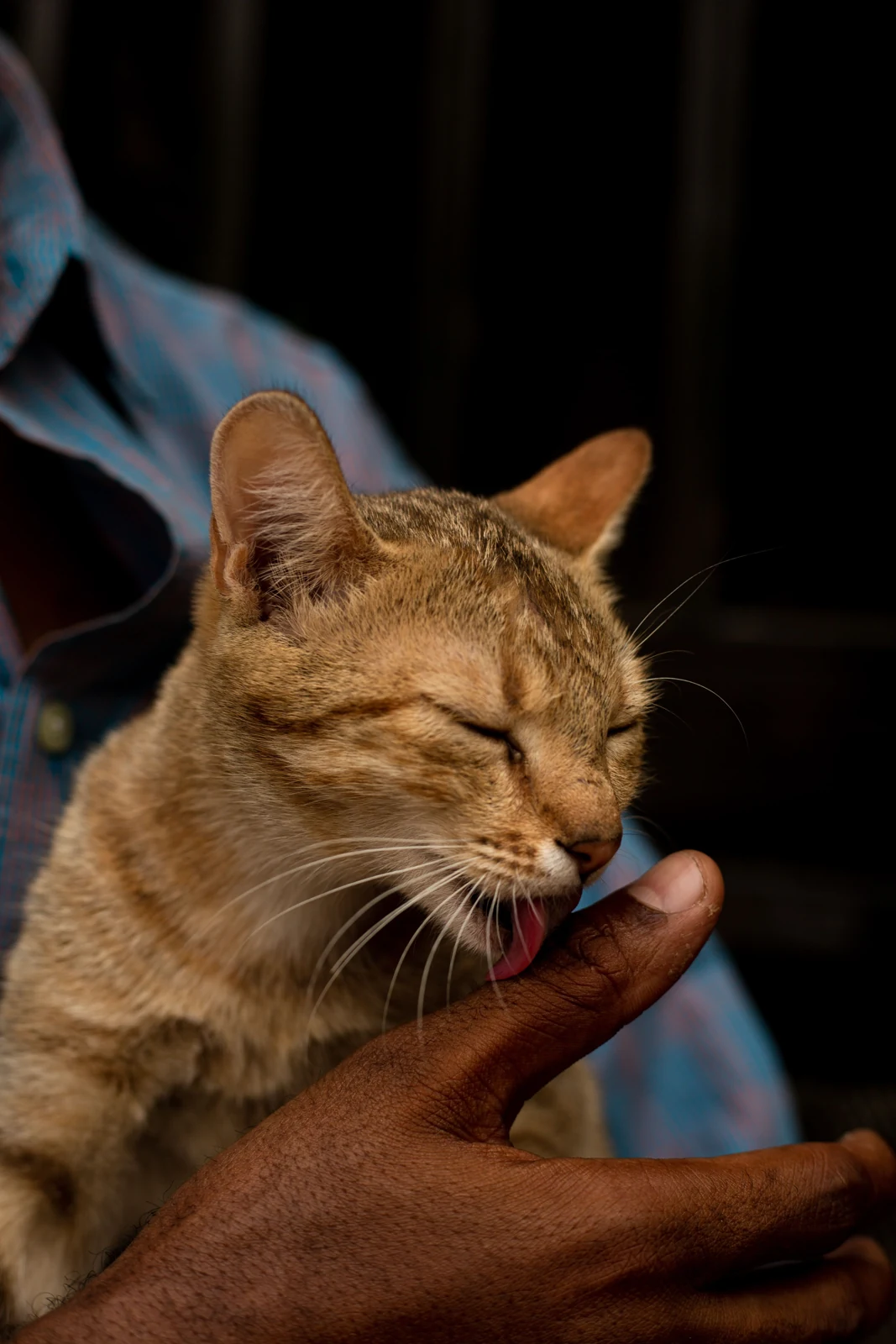
Featured photo: A ginger cat licks an open hand, showing normal active tongue use. Photo: Awobo Oluwapelumi / Pexels.
Prepared with AI assistance and reviewed against the sources above.