Cats lick you for several possible reasons: social grooming, attention, or an interesting taste or scent. VCA describes these possibilities alongside stress or discomfort. Watch the whole situation before deciding what a lick means. A new, intense pattern deserves a vet check, and licking does not automatically invite more handling.
Animalia’s guide separates ordinary social licking from a change that needs attention. You can enjoy company without letting your skin become a target. If teeth enter the sequence, use the bite-then-lick guide for that specific interaction, rather than assuming the lick cancels a bite.
Why do cats lick you during relaxed contact?
Cats Protection explains that cats may groom bonded companions and share scent. Licking a person may be part of that social contact, especially when the cat has approached freely and remains comfortable. It is a possible explanation rather than proof of a particular feeling or a test of how much your cat loves you.
VCA also notes that licking can attract attention or follow an interesting scent or taste. Look at what happened beforehand: were you resting together, preparing food, or repeatedly responding with strokes? Several explanations can fit the same moment, so an exact body part does not reveal a secret message.
| What you observe | Possible context | A useful response |
|---|---|---|
| A brief lick while resting together | Social grooming or familiar contact. | Let the cat choose company, with no need to extend touch. |
| Licking starts when your attention moves away | A learned way to get a response may be involved. | Offer ordinary attention and another suitable activity. |
| Licking after food preparation or a new product | Scent or taste may have drawn interest. | Remove access to the substance and check safety. |
| Licking with tension or attempts to leave | Handling may no longer be welcome. | Stop touch and give the cat space. |
The table is an observation aid, not a diagnosis. Avoid calling your cat dominant, possessive, or ungrateful because they lick or stop licking. Keep the next interaction easy instead of repeating it to see which explanation wins.
What if a cat licks your face, hair, or hands?
Treat the context and any product on your skin or hair as more useful than the exact body part. VCA notes that scents and tastes can attract licking. Do not encourage access to topical medicines, and move your face or hand away calmly when contact is unwanted or difficult to read.
The FDA warns that some pain medicines applied to human skin can seriously harm pets. This is a reason to prevent access to treated skin, applicators, and residue, rather than assuming a familiar grooming behavior is always harmless. Follow your own prescriber’s product instructions and ask about preventing pet exposure.
If you think your cat licked a medicine or another concerning substance, contact your vet promptly and provide the product details. Do not wait for a change in licking before seeking advice. Keep the packaging available, and follow the veterinary team’s directions rather than trying a home remedy.
For ordinary unwanted licking, move out of reach without pushing or grabbing your cat. A quiet pause is enough to end the contact. Use the guide to petting with choice when you want to offer touch again, and leave the cat free to decline.
When should licking lead to a vet call?
Blue Cross recommends veterinary advice when licking becomes excessive or comes with skin changes. Ask about a sudden or persistent change, especially with reduced activity, eating changes, or discomfort. A lick is not a diagnosis of anxiety or illness, but a marked change should not be explained away as affection.
Notice whether the licking is directed at you, at the cat’s own coat, or at both. Bald patches, scabs, or red skin are reasons to speak to your vet. Record what changed and when, without repeatedly touching a sore-looking area or trying to name the cause yourself.
Cats Protection also warns that licking during unwanted handling can precede biting or scratching. Stop if the body becomes tense, the ears move back, or the tail becomes active. Your cat does not have to escalate to a bite before you let them move away.
Animalia suggests noting the setting, contact before the lick, body language, and any other change in ordinary care. Keep the account factual: “started licking after a long stroke” is more useful than “became jealous.” Your vet can assess health concerns and advise whether a qualified feline behavior professional should help.
Offer other ways to spend time together
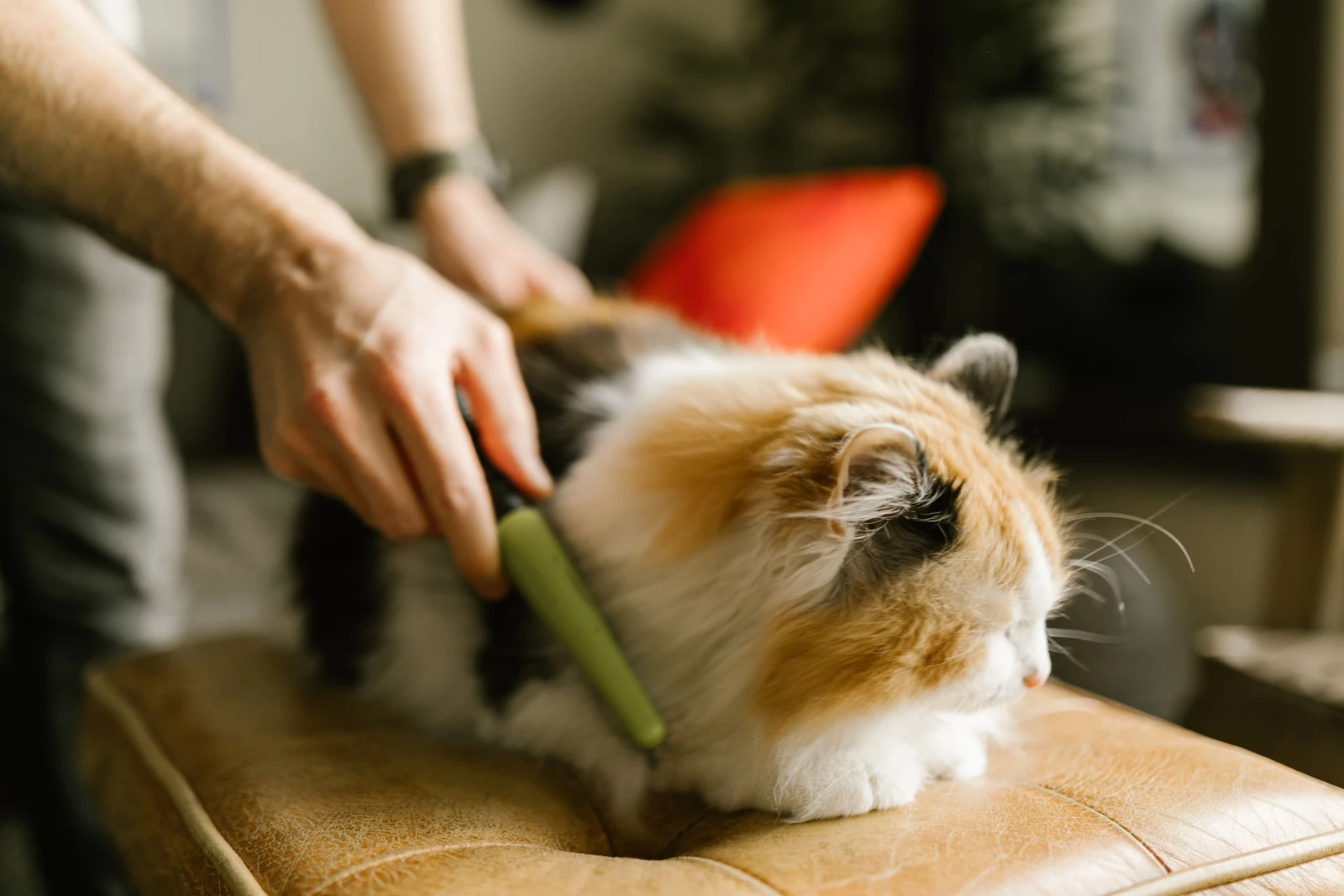
Cats Protection advises redirecting unwanted licking toward an enjoyable activity instead of punishment. Offer a toy when the cat is awake and interested, or sit nearby without touching. A cat who likes brushing may enjoy a gentle grooming session, but do not replace unwanted licking with handling they also dislike.
Keep hands out of play and use a suitable toy instead. The wand-toy guide helps you choose a setup that keeps fingers away from the lure. Put string toys away after use, and adapt the game to your cat’s comfort rather than chasing an exhausted finish.
If brushing suits your cat, use the gentle brush-introduction steps and pause when they move away. The aim is a comfortable shared activity, not paying the cat to tolerate an unwanted session. Resting nearby without contact can be a useful choice too.
For your next step, notice the context of an ordinary lick and choose an easy response. Return to Animalia’s cat behavior hub for related questions, while asking your vet about a new or intense pattern. You do not need to prove affection by accepting contact you or your cat do not enjoy.
Frequently asked questions
Does licking mean my cat loves me?
It may be part of friendly social contact, but a lick alone cannot measure love or prove one exact feeling. Look at the cat’s choice to approach, the surrounding activity, and whether the body stays comfortable. A cat who does not lick can still enjoy your company. Let them choose how that company looks without testing their affection.
Why does my cat lick my hair or nose?
An interesting smell or taste may be involved, or the licking may occur during familiar social contact. The location alone cannot tell you the reason. Keep skin and hair products out of reach, especially medicines, and end unwanted contact calmly. A new or persistent pattern should be discussed with your vet rather than assigned a special meaning.
Why does my cat lick and then bite me?
The interaction may have changed, or the cat may no longer want the contact. Do not treat the lick as proof that the bite is friendly or harmless. Stop touching, leave an easy way for the cat to move away, and review what happened beforehand. Repeated or painful mouth contact merits veterinary and behavior advice.
How can I stop my cat licking my hand without punishment?
Move your hand out of reach calmly and offer a different activity when the cat is ready. A suitable toy, comfortable brushing, or quiet company may work better than continued contact with skin. Avoid pushing, shouting, spraying, or holding the cat still. If licking is new or intense, seek veterinary advice while making interactions easier.
Is frequent licking always a sign of stress?
No, the amount and context matter, and you cannot diagnose stress from licking alone. Notice whether the pattern is new, interrupts normal activity, or comes with changes in eating, skin, grooming, or behavior. Tell your vet what you observe. They can assess health concerns and help decide whether a qualified behavior professional should become involved.
Why do some cats seem to like earwax?
Scent, taste, or grooming may be involved, but these are possible explanations for an individual cat. Feline behavior specialist LeeAnna Buis describes them as educated assumptions, rather than a known earwax craving. Keep used cotton swabs in a secure bin and do not offer them as toys. Move away from unwanted ear licking calmly and offer another suitable activity.
Sources and editorial notes
- Cats Protection: licking people: social grooming, body language, and gentle alternatives
- Blue Cross: licking people: health changes and unwanted handling
- VCA: why cats lick humans: attention, taste, scent, and possible health concerns
- FDA: exposure to human skin medicines: why pet exposure to some topical pain medicines requires prevention and veterinary advice
Animalia Editorial. Publish date: October 31, 2026. Last updated and sources checked: October 29, 2026. The context table is an original observation aid, not a diagnosis or a claim to know a cat’s feelings. See the editorial policy.
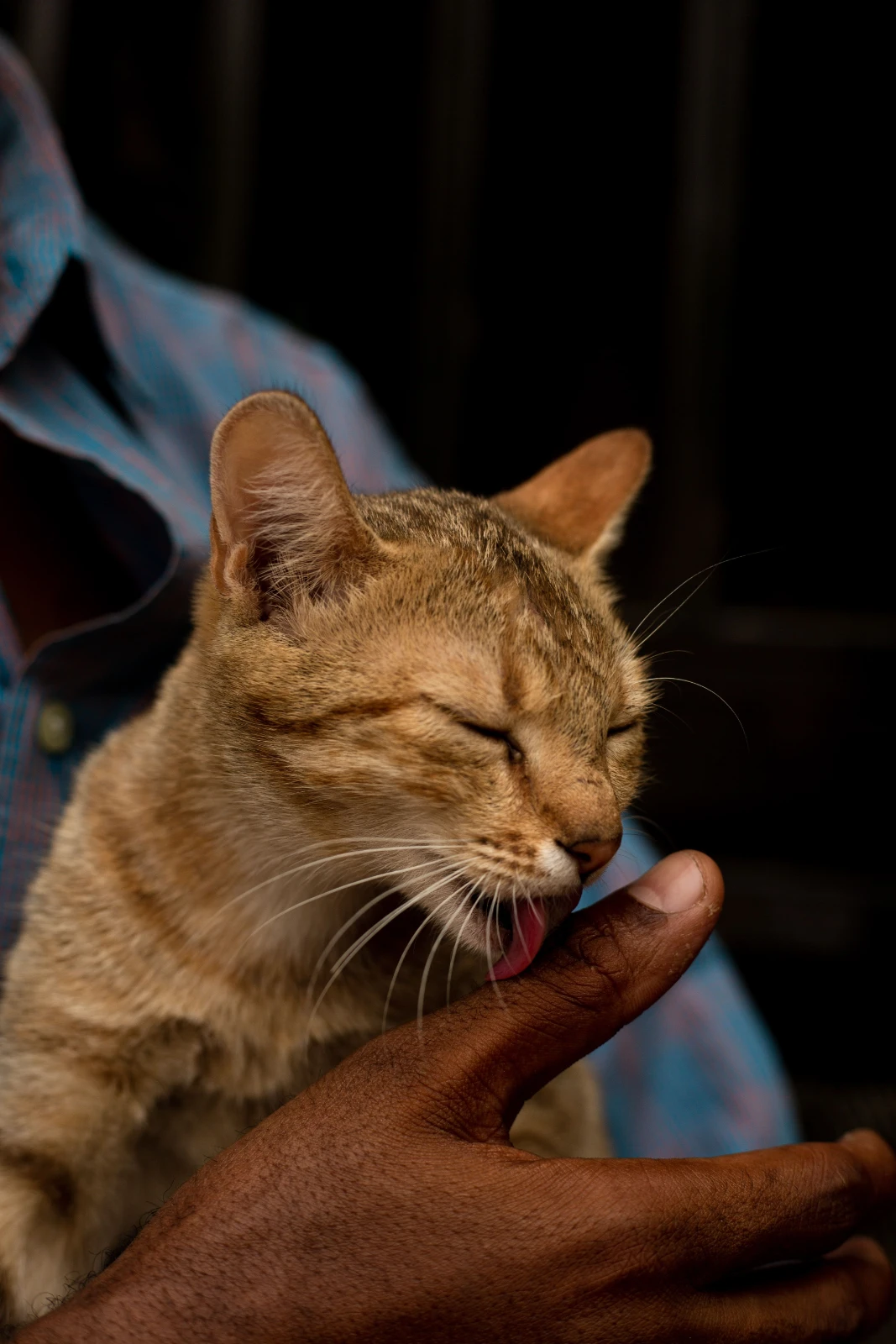
Featured photo: A ginger cat licks a hand. Stock illustration of the visible action, not a diagnosis of the cat’s motivation. Photo: Awobo Oluwapelumi / Pexels.
Prepared with AI assistance and reviewed against the sources above.