Do cats need sunlight? Cats do not need sun exposure to make vitamin D: published veterinary research explains that they depend on dietary intake. Many enjoy comfortable resting spots, but sunbathing needs care because overheating and sunburn are risks. Offer usable shade, fresh water, and resting choices rather than trying to meet an invented sunlight quota.
Animalia’s guide helps you check rest locations, shade, and water while keeping a nutritional question separate from the brightness of your room.
Do cats need sunlight to get vitamin D?
No. Cats obtain vitamin D through food rather than making it in their skin after sun exposure. Crossley and colleagues describe this distinction in their veterinary paper. A sunny window is therefore not a nutrition plan. Ask your veterinarian about the diet if you are concerned about what your individual cat receives.
That paper also reports illness associated with excessive vitamin D in a complementary kitten food. The useful owner lesson is to discuss the whole feeding history with the veterinary team, including treats and supplements. It does not provide a reason to diagnose a deficiency or change foods from the amount of sunlight in your living room.
Write down what your cat normally eats and drinks before the conversation, including products that are given only occasionally. Avoid adding a vitamin product because another website describes sunshine as essential nutrition. Your veterinarian can assess the feeding plan and advise whether anything needs to change. No supplement dose or home nutritional test is provided here.
Offer comfortable resting places with an easy retreat
Cats Protection describes cats choosing warm, comfortable resting places. That supports planning usable choices, rather than moving your cat into the brightest patch. Check the place at different times and make sure your cat can leave it freely. A comfortable-looking photograph does not assess the conditions throughout the day.
| Home check | What to look at | Practical adjustment |
|---|---|---|
| Resting choice | A comfortable spot away from direct sun | Keep that option available as the light changes |
| Exit route | Whether the cat can leave the warm area easily | Clear the route and avoid trapping the cat there |
| Water access | Fresh water reachable without crossing a blocked route | Refresh it and review the location |
| Window setup | Secure installation and closures | Check the actual perch and exit gaps |
| Changing conditions | The same room later in the day | Review shade and ventilation again |
The table is Animalia’s room-planning aid. It does not certify a particular temperature, window product, or safe exposure duration. Use our window perch guide when assessing installation, and the hideout guide for a quiet alternative away from a busy view.
How can you reduce sunburn and heat risks?
Provide shade and fresh water, and limit exposure when the sun and heat are strongest. Cats Protection notes that pale skin and sparsely haired areas are especially vulnerable to sunburn. Ask your veterinarian about individual protection. Do not assume that a cat choosing a sunny place makes every exposure safe.
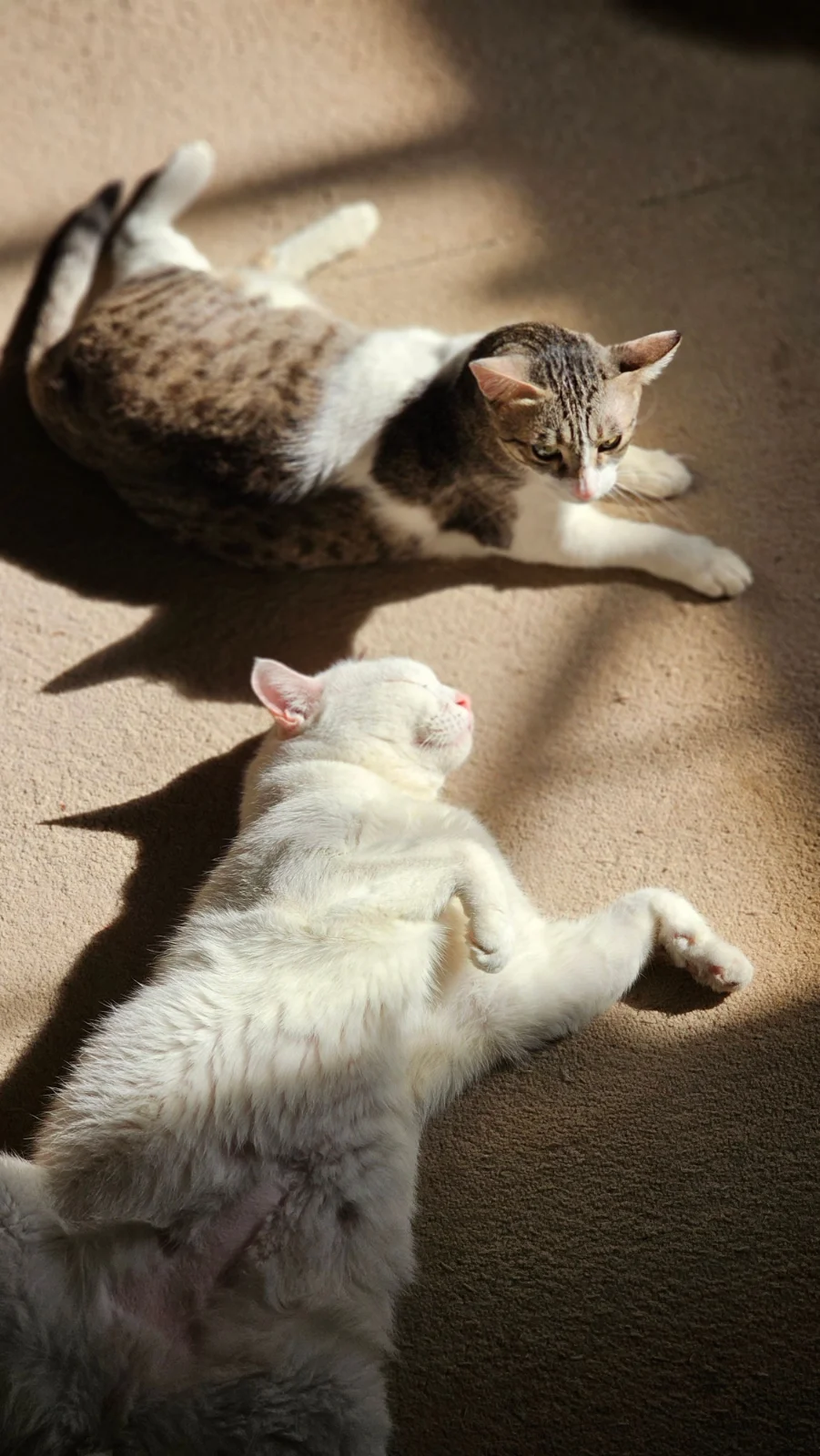
Check the room itself as well as the bed. A route to shade is useful only when the cat can reach it, and someone closing a door may change that arrangement. If a cat has mobility or health concerns, discuss the setup with your veterinarian rather than relying on the cat to solve an unsuitable environment by moving.
Contact your veterinarian promptly if skin looks red, sore, blistered, or peeling after exposure, as Cats Protection advises. Ask before applying sunscreen or another skin product; the clinic can recommend an appropriate option for your cat. If your cat seems unwell or has a breathing concern, seek veterinary guidance immediately rather than treating the situation as an ordinary nap.
Choose the next home change around a real need
A home with little direct sun can still offer several usable resting locations. Check the comfort, access, quiet, and routine around each place. For the different question of nighttime lighting, see our cats and darkness guide. Neither question should be reduced to a universal number of minutes beside a window.
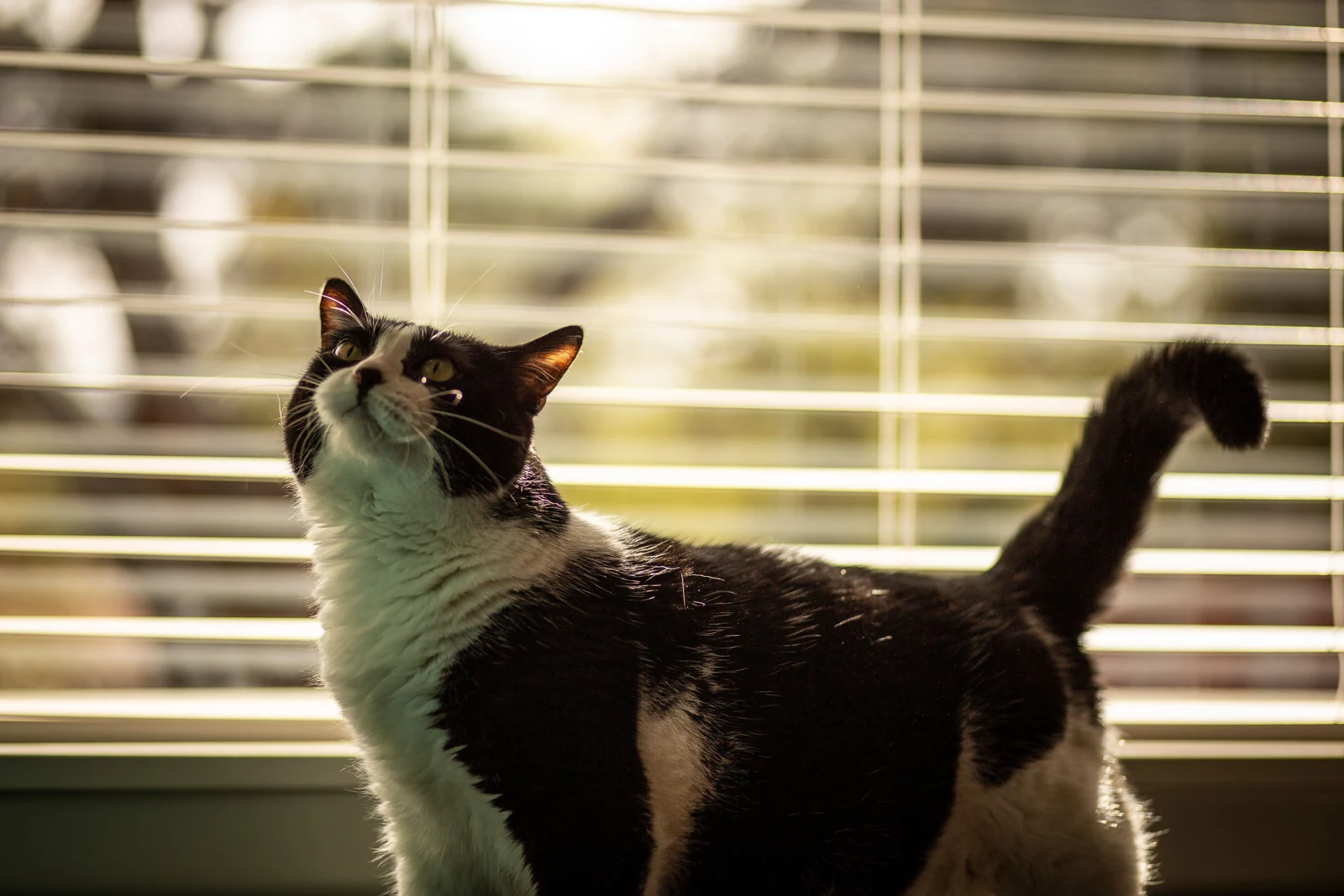
If your cat begins resting much more, hiding more, or showing another persistent change, discuss the observation with your veterinarian. Cats Protection recommends checking changed sleep patterns rather than assuming a nap location explains them. Note when the change began and what else you have observed, without moving the cat repeatedly to compare different patches of sun.
Animalia suggests checking one resting route and one shaded alternative today, then confirming that fresh water remains easy to reach. Return to the cat behavior hub for related questions. If nutrition or health is the concern, bring that question directly to your veterinary team instead of adding sun exposure or supplements.
Frequently asked questions
Why do cats lie in the sun?
Cats often choose warm, comfortable resting places. That preference does not mean they need sunshine for vitamin D or that every sunny spot is safe. Offer shade and an easy exit, and review the room as conditions change. Do not move a sleeping cat into sun or keep it there to reach an exposure target.
How many minutes of direct sun does a cat need?
The sources used here do not establish a universal daily sunlight quota for pet cats. Vitamin D comes from the diet, while comfortable resting conditions and exposure risks depend on the setting and the individual cat. Offer suitable choices and seek veterinary advice about specific concerns. Do not force a cat into direct sun to reach a target invented for the whole species.
Is a window without direct sunlight a problem?
Lack of a direct sunbeam does not by itself identify a nutritional or health problem. Review the whole indoor environment, including comfortable rest, resources, play, and access. Ask your veterinarian about a diet or welfare concern instead of assuming brighter exposure is the answer. You can also offer another suitable viewing or resting place without making the cat use it.
Does a sunny window replace outdoor enrichment?
A view can be one part of an indoor environment, but it does not address every need or establish that outdoor access is appropriate. Plan around the individual cat and the home. Check installation and secure closures before using a window location. If the cat is distressed or repeatedly seeking an exit, ask for help reviewing the whole situation rather than relying on the view alone.
Should I buy vitamin D because my cat stays indoors?
Do not use indoor status as a reason to add vitamin D. The veterinary paper cited here explains dietary dependence and reports harm from excessive intake in affected cats. Discuss your cat’s complete feeding history with your veterinarian before making changes. A supplement is not a replacement for assessing the current diet, and an online sunlight discussion cannot determine an individual nutritional requirement.
Can I use my own sunscreen on the cat?
Ask your veterinarian which protection is appropriate before applying a product. Cats Protection advises choosing a cat-safe option with veterinary guidance because some ingredients can be harmful. Shade and reducing unsuitable exposure remain practical parts of the plan. If the skin is already sore or damaged, contact the clinic for advice rather than trying a household cream or assuming sunscreen treats the injury.
Sources and editorial notes
Animalia Editorial. Reviewed November 4, 2026. Room checks are illustrative; no diet assessment or treatment is provided. See our editorial policy.
Crossley and colleagues: vitamin D paper; Cats Protection: warm weather; Cats Protection: sleep.
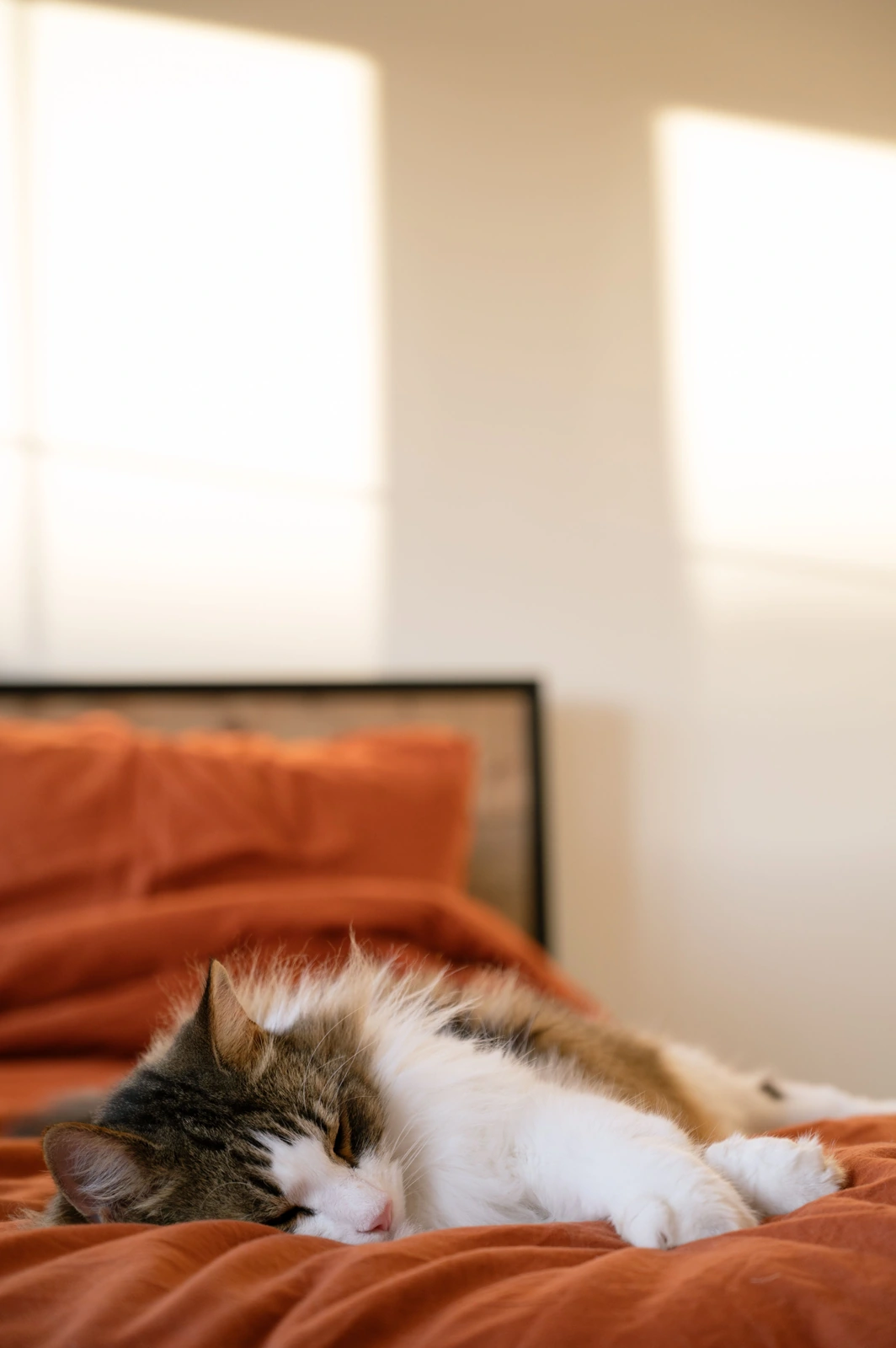
Featured photo: A cat rests on an orange bed in a bright room. Photo: Anete Lusina / Pexels.
Prepared with AI assistance and reviewed against the sources above.