Why do cats get zoomies? These sudden bursts of running can be part of ordinary feline activity, especially around active periods or after rest. Cats Protection describes them as frenetic random activity periods. Give your cat safe space and suitable play opportunities, but ask your veterinarian about a new pattern, distress, or other changes.
Notice what happens around the sprint rather than relying on a funny nickname. Animalia’s guide connects ordinary bursts with a room check, a manageable activity plan, and a clear boundary for seeking help when something differs from your cat’s usual behavior.
What explains an ordinary burst of zoomies?
Cats are naturally active in short bursts, and their play can include chasing and pouncing. PDSA explains that activity often increases at the beginning and end of the day. A run through the room may fit that pattern, but the movement alone cannot prove happiness, boredom, anxiety, or a medical cause.
Notice the starting situation: waking from a nap, noticing a toy, hearing a noise, or leaving the litter box. These are observations, not explanations by themselves. Keep them separate from a claim that a particular hormone, emotion, or physical event must have caused the run. The same label can describe different-looking episodes.
A room check for running, resting, and escape routes
Use this Animalia table before adding a faster game. It helps you remove an avoidable hazard while preserving places to rest. Make changes when the cat is elsewhere or settled, rather than stepping into their path or reaching toward them during a sudden dash.
| Check | Practical adjustment | Avoid |
|---|---|---|
| The running route | Clear fragile objects and secure items that can fall | Chasing the cat to make the sprint stop |
| Windows and doors | Check screens, access points, and nearby climbable furniture | Assuming a closed-looking window is secure |
| Toys on the floor | Use suitable intact toys; store string and wand toys after supervised play | Leaving swallowed-piece hazards as entertainment |
| Another pet or person nearby | Keep an easy route away and separate activities when needed | Blocking or cornering the cat to inspect their mood |
| A resting place | Keep a quiet retreat available | Turning every pause into another game |
A safe route does not require buying a larger set of toys or encouraging higher jumps. Start with the room you already use, and choose the adjustment that matters there. If a lamp or trailing charger sits on the usual route, secure it before trying to change the cat’s behavior through more demanding play.
How can you offer activity without chasing your cat?
Offer short, suitable play opportunities when your cat is interested, then allow rest and withdrawal. Use toys rather than hands or feet, and let the cat catch an appropriate physical target. Follow your cat’s response instead of using a fixed exercise quota or making an already excited cat keep running.
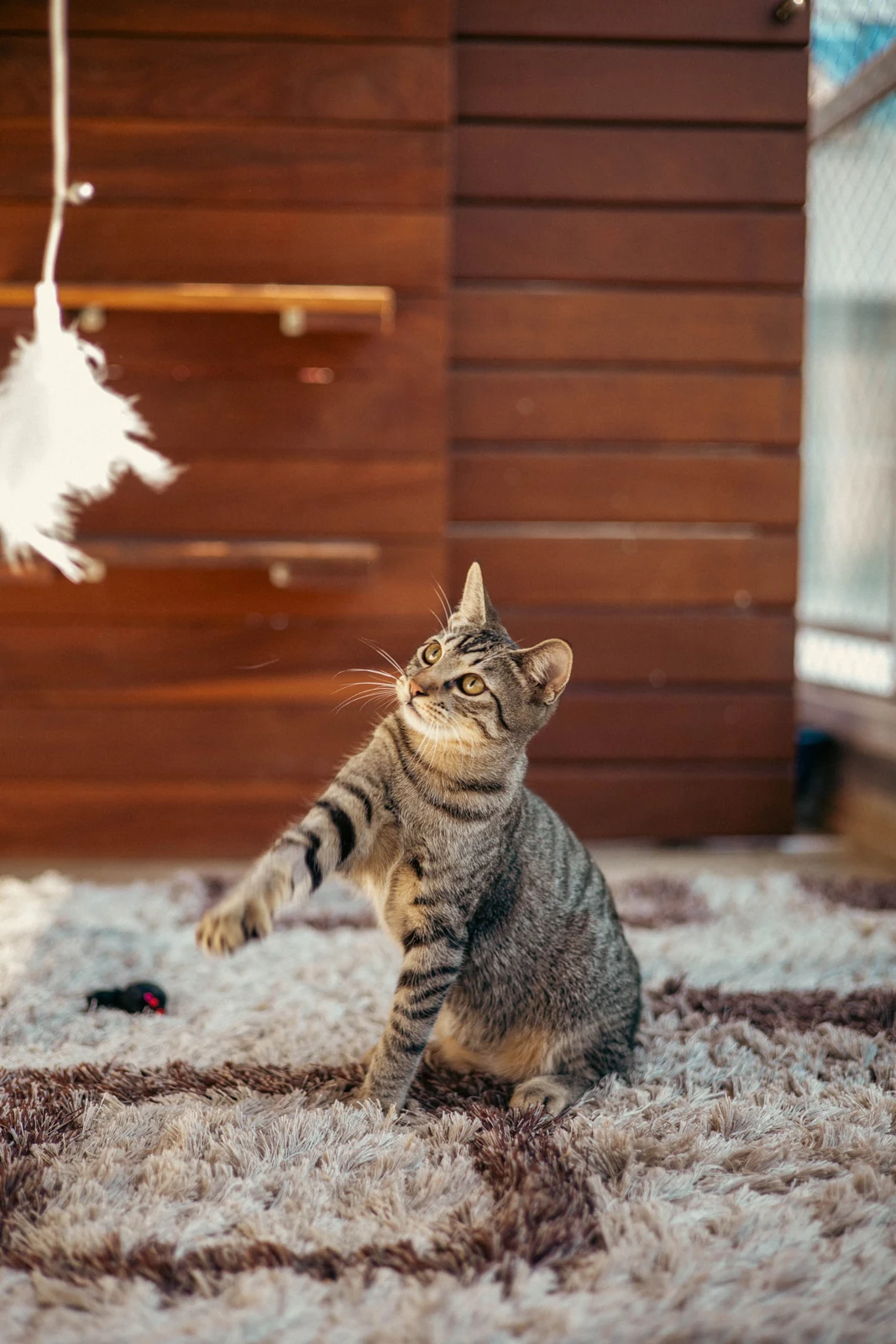
Our daily cat play guide helps you build a routine around observation and choice. For equipment, use the wand-toy selection guide and inspect the toy before each session. Supervised play and secure storage are separate tasks: a toy that works while you hold it may be unsuitable to leave unattended.
If the cat is already sprinting, give space rather than reaching in with your hands. Wait for a comfortable opportunity to offer activity. Do not use a laser, loud interruption, water spray, or blocked doorway to test whether the cat will stop. You can improve the next session without controlling every movement in the current one.
Nighttime routines and post-litter-box running
For nighttime disruption, review the broader daily routine and provide suitable activity before your own rest period. That does not guarantee uninterrupted sleep, and keeping a cat awake all day is not the goal. Our non-food enrichment guide gives other options that can sit alongside play and quiet time.
A dash after using the litter box has several proposed explanations in popular articles, but the timing alone does not confirm one. Avoid presenting a “poop high” or vagus-nerve story as an established cause for your cat. Notice whether toileting appears comfortable and whether anything about the pattern has changed.
Contact your veterinarian promptly if the running accompanies discomfort, unusual toileting, or another concerning change. Do not dismiss it as a personality quirk, and do not wait for a full behavior diary before asking for help. A brief description of what happened is useful even when you are uncertain about the cause.
When should a change in activity prompt a vet call?
Ask your veterinarian about a sudden, repeated, or concerning change from your cat’s usual activity, especially alongside altered appetite, movement, toileting, or comfort. A “zoomies” label is not an assessment. If your cat appears acutely unwell or distressed, contact the clinic promptly rather than trying another game or waiting to establish a pattern.
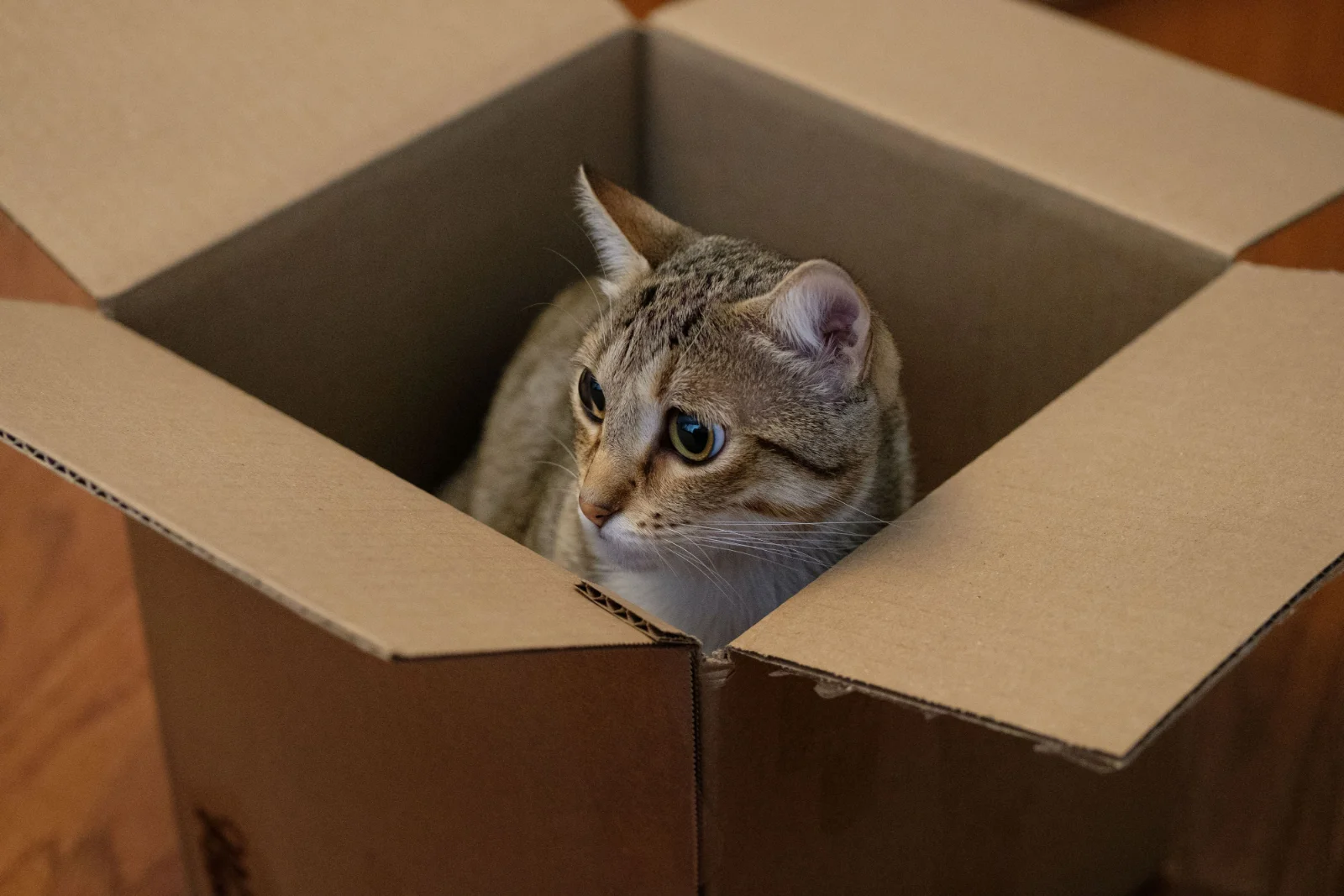
Animalia suggests a short record of the setting, visible movement, nearby events, and what happened afterward. Start with one room improvement and one manageable play opportunity, then review the response. Keep a quiet retreat available and return to the cat behavior hub for related questions.
Frequently asked questions
Do zoomies always mean my cat is bored?
No. A burst of running can fit ordinary activity, and the movement alone does not establish boredom. Review the cat’s opportunities for suitable play, exploration, and rest without deciding that every sprint has one cause. If the behavior is new, unusually intense for that cat, or paired with discomfort or other changes, ask your veterinarian for advice.
Should I chase my cat during a sprint?
Give your cat space instead of turning the episode into pursuit. Chasing, grabbing, or blocking a route can make an already energetic interaction harder to manage. Offer a suitable toy at a comfortable opportunity and let the cat decide whether to engage. Keep your hands and feet out of the game, and allow quiet rest afterward.
Can I guarantee that evening play stops nighttime zoomies?
No. A manageable evening activity routine may help meet your cat’s needs, but it is not a promise of uninterrupted sleep. Consider the whole day, ordinary care, other animals, and suitable resting places. Avoid forcing play or keeping the cat awake to meet your schedule. Discuss persistent or changing nighttime behavior with your veterinarian when appropriate.
Is running after pooping proof of a specific hormone response?
No. The sequence tells you when the run happened, not why it happened. Popular explanations include several theories, and a home observation cannot establish a particular internal mechanism. Check whether the cat seems comfortable and whether toileting has changed. If there is discomfort or another concern, contact your veterinarian rather than relying on a familiar nickname.
Do I need to time every episode?
A simple observation can help when you discuss a change, but there is no universal sprint duration that proves health or illness. Record what you can without recreating the event, chasing the cat, or delaying care. The individual pattern and accompanying changes matter more than comparing your cat with a video or a promised normal number of minutes.
When do kittens calm down?
Expect lively play throughout the first year, with changes as your cat matures rather than a guaranteed calm-down birthday. The AAHA/AAFP guidelines describe a high play drive in kittens and warn that age boundaries are not absolutes. Keep suitable play, quiet rest, and safe space available. Sudden listlessness or another concerning change needs veterinary advice; it is not proof your kitten has simply grown up.
Sources and editorial notes
Animalia Editorial. Reviewed November 4, 2026. The room-check table and observation plan are practical aids. Proposed post-toileting mechanisms are not presented as established explanations. See our editorial policy.
Cats Protection: zoomies and activity opportunities; PDSA: feline exercise, choice and toy safety.
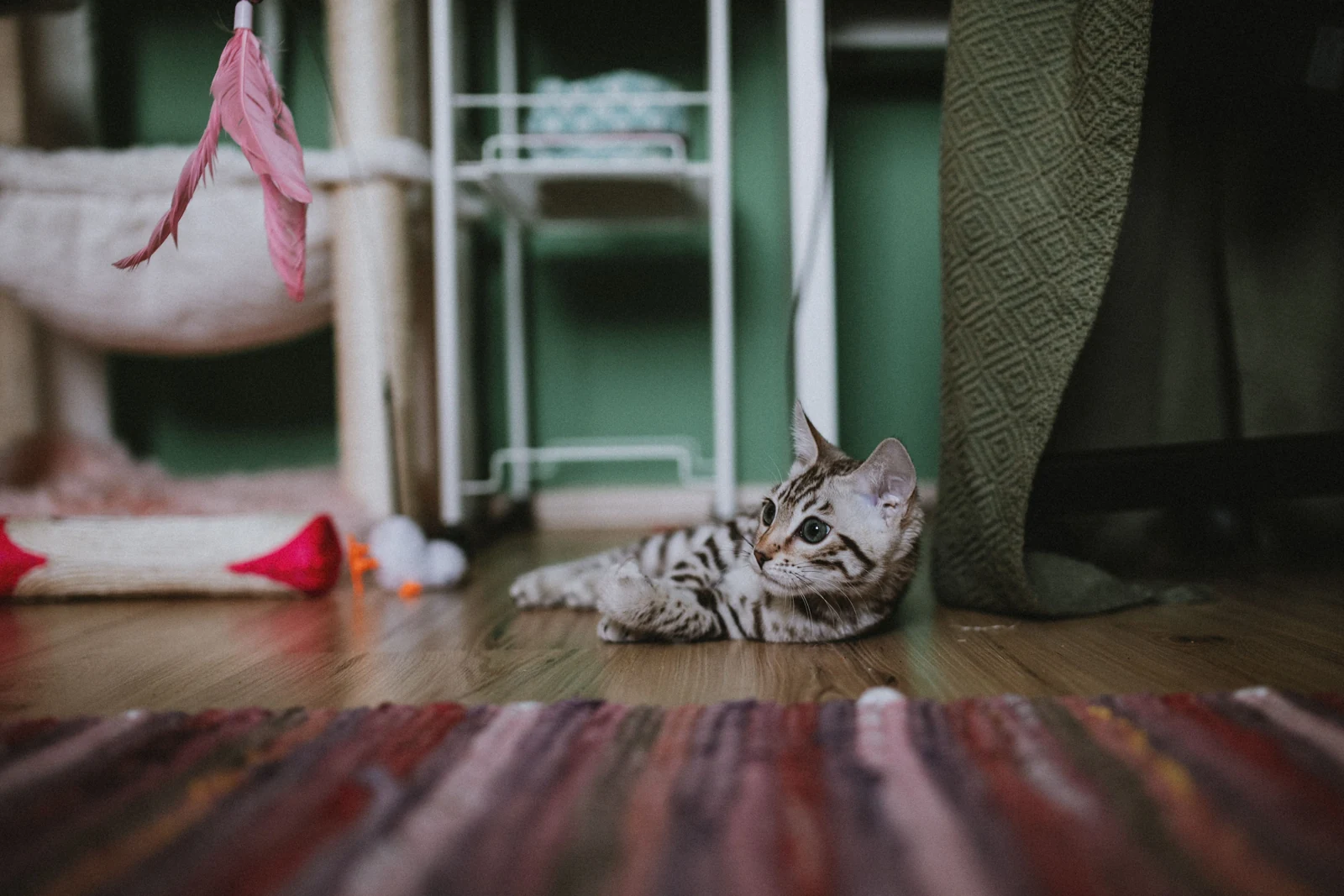
Featured photo: A kitten watches a feather toy on the floor. A still photo cannot establish the cause of a sprint. Photo: Helena Jankovičová Kováčová / Pexels.
Prepared with AI assistance and reviewed against the sources above.