Why does my cat tap me with her paw? A tap may get your attention or occur during an interaction, but it has no single guaranteed translation. Cats Protection describes how attention-related behaviors can be reinforced by a response. Check the setting, respect withdrawal, and seek veterinary advice about a new, painful, or persistent change.
A brief touch, repeated kneading, and a tense swipe are different movements. Animalia’s guide helps you describe which one you saw, review ordinary care, and choose a response without deciding that every paw means affection, hunger, or a request to be picked up.
What does the setting tell you about a paw tap?
Notice what happened before the tap, what your cat did next, and how you responded. A tap near a familiar meal routine may have different context from a raised paw during unwanted handling. These details help guide a practical response, but they do not prove the cat’s exact emotion or establish a medical cause.
Start with the observable action: “touched my arm while I sat at the desk” is more useful than “demanded affection.” Then check ordinary care and available choices. Does your cat have access to water, their usual toilet area, a comfortable retreat, and suitable interaction? A response plan should not overlook a real need in an effort to stop a behavior.
Learning can matter when a particular action repeatedly brings a valued response, but that does not mean every tap is deliberate manipulation. The Cats Protection guide also emphasizes checking medical causes before treating a persistent problem solely as behavior. Avoid applying a blanket ignore-the-cat rule when comfort, health, or ordinary access is uncertain.
Separate tapping, kneading, and a warning
RSPCA’s body-language guidance includes a raised front paw within a tense posture ready to swipe. That is different from assuming any raised paw means the same thing. Look at the whole interaction and allow distance whenever your cat seems uncomfortable, rather than reaching closer to verify your interpretation.
| Movement or context | Observe next | Calm response |
|---|---|---|
| One light touch on your arm | Body posture, nearby care routine, and whether the cat moves away | Check needs and offer appropriate contact with choice |
| Rhythmic alternating pressure on a soft surface | Whether the pattern is kneading rather than a single tap | Use the separate kneading guide; keep contact comfortable |
| A paw rises while the cat is tense | Your reaching, restraint, other animals, and available exits | Stop the interaction and provide space |
| A paw reaches toward a moving hand | Whether your hand has become the play target | Keep hands out and offer an appropriate toy separately |
| A new or painful pattern | Other changes in movement, care, or behavior | Ask your veterinarian for advice |
The table organizes observations rather than diagnosing intent. A still photograph can show a paw raised without showing what happened before it. Do not recreate an upsetting interaction to complete the row or ask another person to approach a tense cat so you can obtain a clearer video.
For rhythmic pressing, our cat kneading guide covers that separate action. Keep the distinction useful: the aim is to choose a comfortable response, rather than force every paw movement into one label. If you are uncertain, describe the sequence and let the veterinary or behavior professional ask follow-up questions.
How can you respond without encouraging hand play?
Check ordinary care, pause if the interaction is tense, and offer suitable activity when your cat is comfortable. Use a toy rather than fingers or toes as a target. Let the cat choose whether to approach or leave, and stop contact if they withdraw instead of holding them still to finish the interaction.
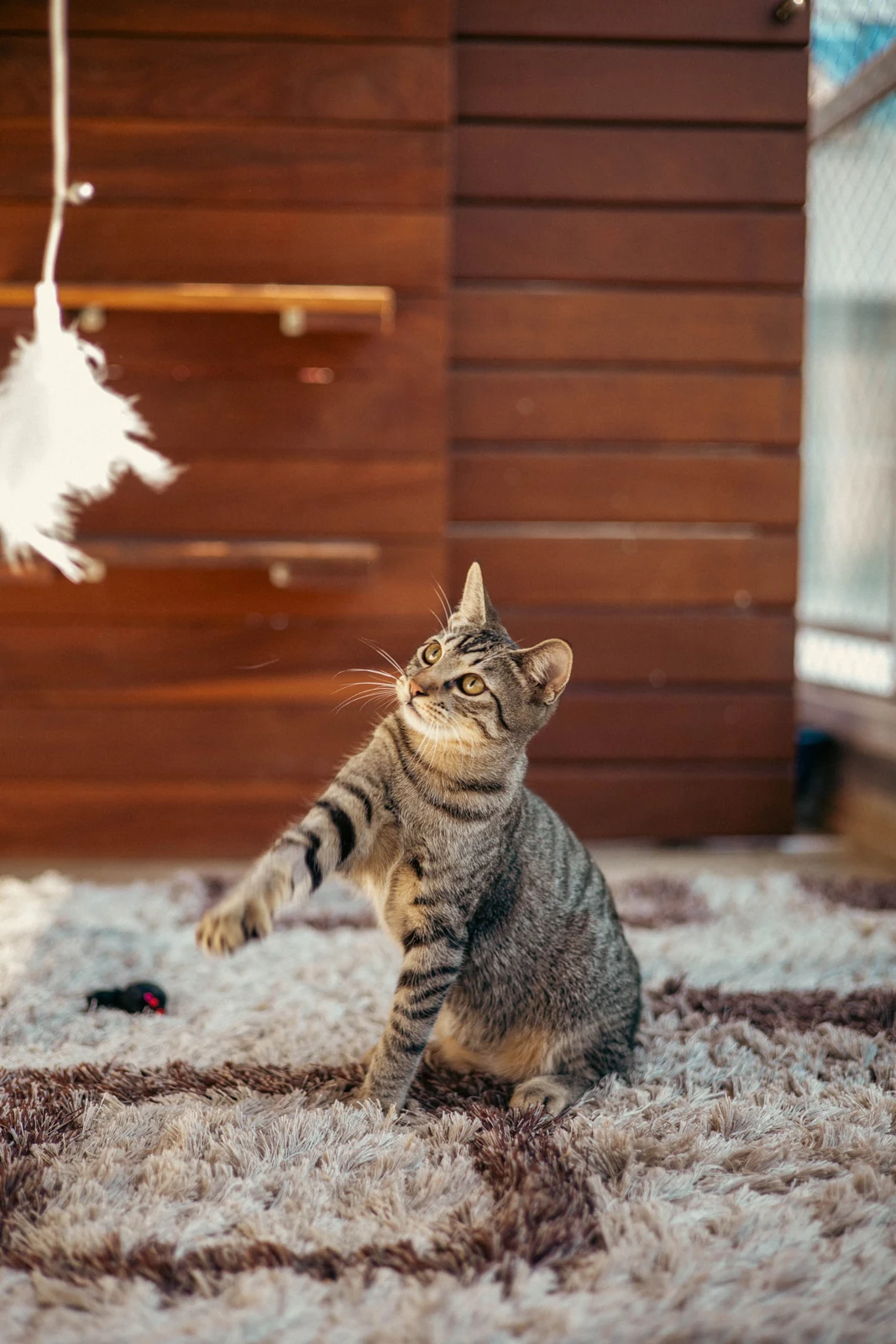
PDSA advises keeping hands and feet out of cat play. Our wand-toy guide helps you select a physical target and store it safely after supervised use. A paw on your hand does not require a faster game, and an uninterested cat does not need to keep playing to satisfy a routine.
For social contact, offer a manageable opportunity and pause rather than automatically picking the cat up. Our petting-with-choice guide covers that approach. If the tap occurs while you are already touching or holding the cat, review whether they need the interaction to stop before interpreting it as a request for more affection.
Make the household response clear and kind
Choose a plan that every caregiver can follow. For example, keep normal meals on the agreed plan, make suitable play available, and respond to signs of discomfort with space. Do not let one person use hands as toys while another tries to prevent scratches; those different interactions make a consistent routine harder.
If the pattern is frequent or difficult to manage, note the context and ask for appropriate support. Animalia suggests recording the tap, your response, and what happened afterward without adding a motive. A simple note may show that a particular handling task needs review, while a diagnosis or detailed behavior plan requires individual assessment.
Avoid punishment, shouting, spraying water, or forcing a “paw” trick as an alternative when the cat is tense. You can move your own hand away from the interaction and give room without creating a confrontation. Seek help when safety is uncertain rather than repeatedly testing how firmly your cat will touch or whether claws appear.
When should a pawing change prompt professional advice?
Ask your veterinarian about a new, painful, repeated, or escalating pattern, especially with other changes in movement, appetite, toileting, or ordinary contact. A tapping label does not rule out discomfort. If the concern is behavioral after health has been assessed, ask about a suitable qualified professional and an individual plan for your home.
Start by describing what you saw and protecting comfortable access to care. You do not need to identify the exact cause before ending unwanted handling or requesting help. Return to our cat behavior hub for related questions, while keeping your own cat’s response at the center of the next decision.
Frequently asked questions
Does a gentle tap always mean my cat loves me?
No single movement establishes a particular emotion. A tap can occur during social contact or a familiar routine, so look at the whole setting and what your cat chooses next. Offer appropriate interaction without restraining them or assuming they want to be picked up. If they move away or become tense, pause and respect the change.
Is paw tapping the same as kneading?
A single touch differs from the repeated alternating pressure commonly called kneading. Describe the movement you see rather than treating every use of a paw as one behavior. That helps you choose a comfortable response and ask a useful question if something changes. If the movement appears painful or unusual for your cat, discuss it with your veterinarian.
Should I feed my cat after every tap?
Follow the meal plan appropriate for your cat instead of treating every touch as proof of hunger. Check that ordinary care has not been missed, then consider the setting and other needs. If appetite or the pattern has changed, seek veterinary advice. Avoid withholding needed food to test a theory or adding repeated extras to settle every interaction.
What if my cat puts a paw near my face?
Keep the interaction comfortable and avoid encouraging contact near your eyes or using your face as a play target. Give space if the cat seems tense, and offer suitable interaction separately. A paw near your face does not prove affection or establish that further handling is welcome. Discuss persistent or difficult-to-manage contact with your veterinary team.
Should I hold the paw to make my cat stop?
Avoid gripping the foot or adding restraint to an uncertain interaction. Move your own hand away when safe, pause contact, and give the cat space. If ordinary handling or repeated pawing is difficult, ask your veterinary team for an individual plan. A comfortable response should not depend on forcing the cat to tolerate a paw hold.
Sources and editorial notes
Animalia Editorial. Reviewed November 4, 2026. The movement table and household examples are practical observation aids, not a translation dictionary or diagnosis. See our editorial policy.
Cats Protection: behavior, learning and individual assessment; RSPCA: tense posture and raised paws; PDSA: suitable play and choice.
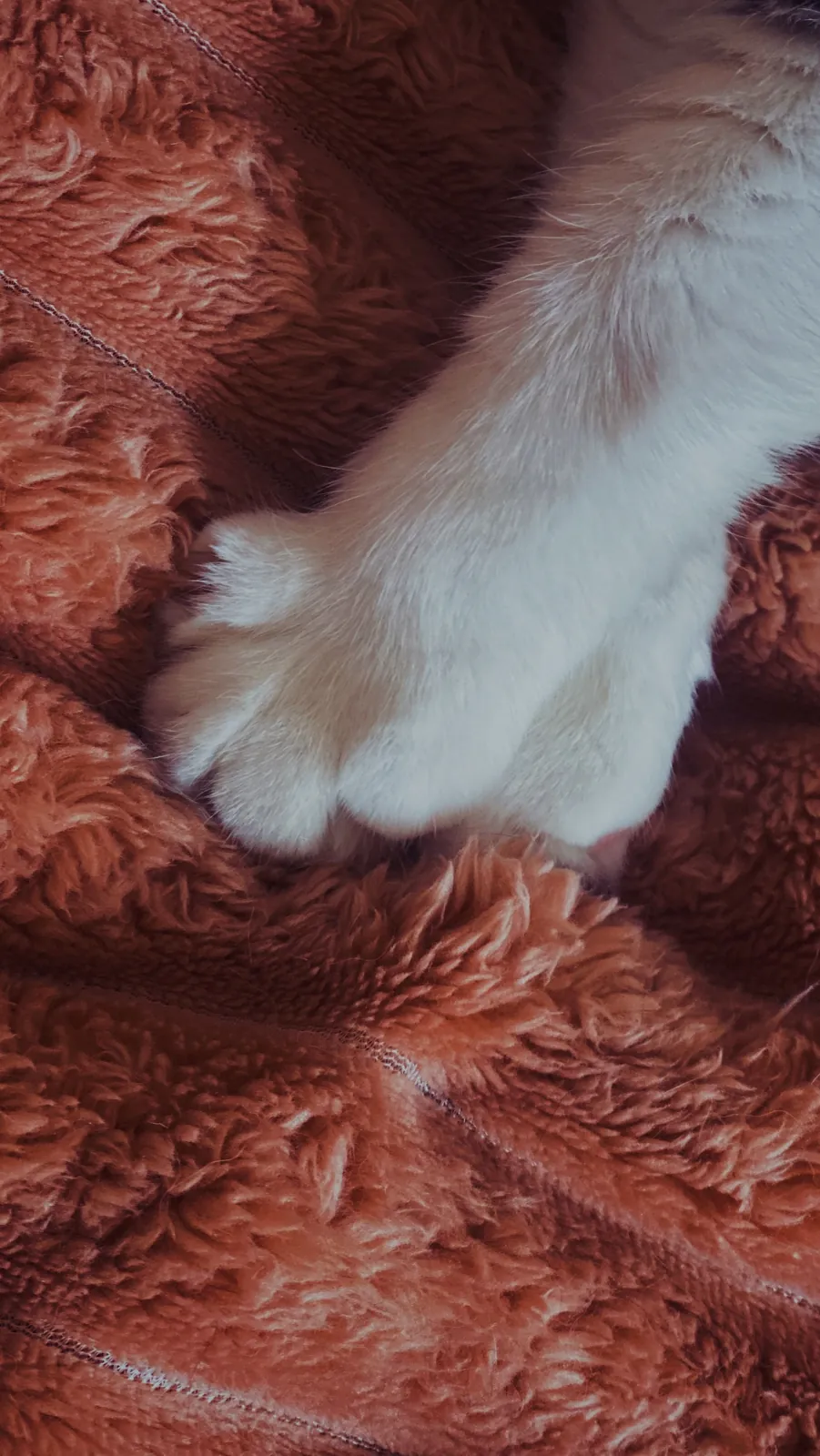
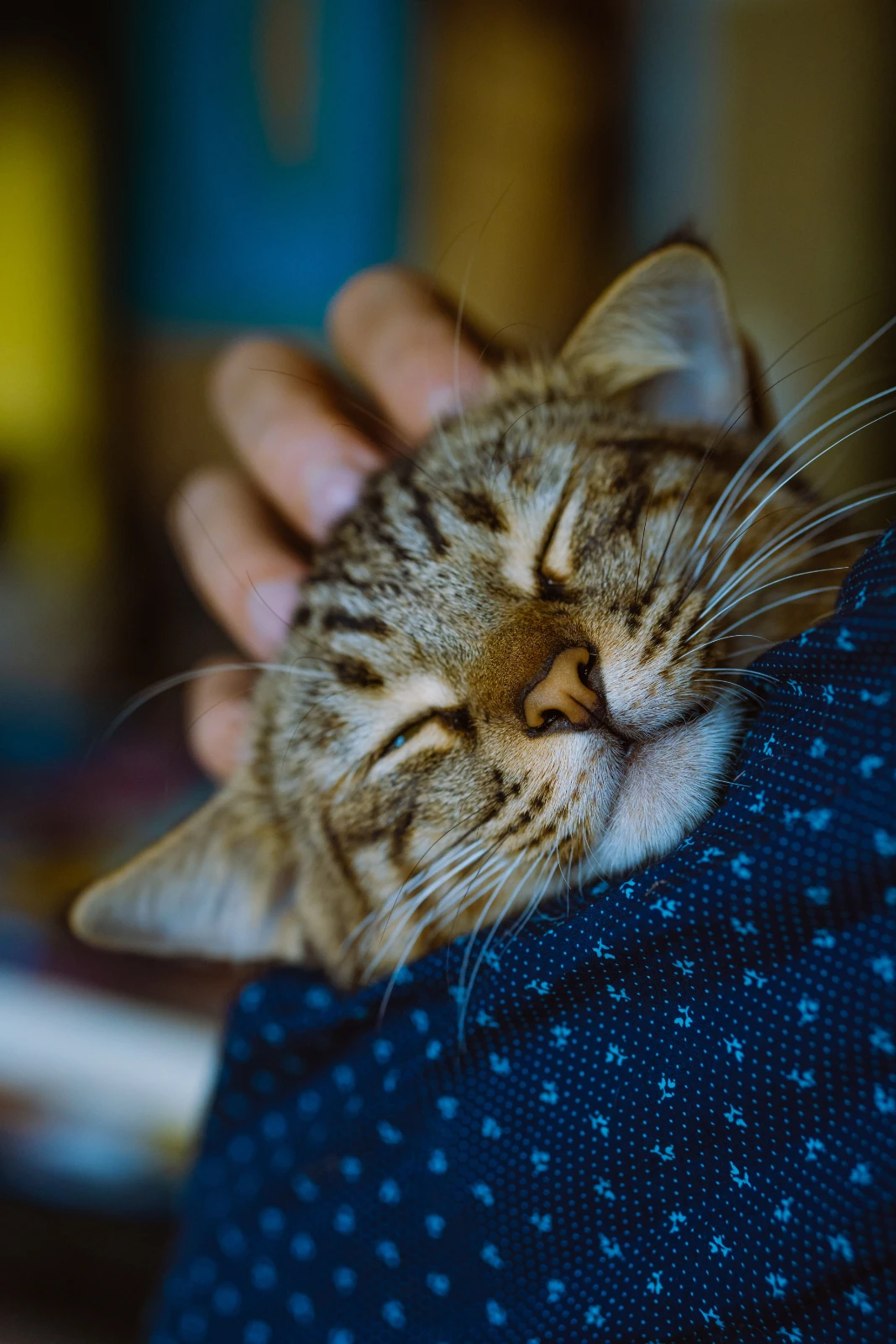
Featured photo: A cat’s paw rests on a blanket. A still photo does not show the sequence or meaning of a tap. Photo: Kateryna Hnidash / Pexels.
Prepared with AI assistance and reviewed against the sources above.